The Delta Dispatch

Handling Bone Fractures: Essential Tips for First Responders

At Delta Emergency Support Training, we ensure that our students are fully prepared to handle emergencies with confidence. Through our Red Cross workbooks, teaching resources, study tips, and in-person classes for EMR and AFA, we provide the practical knowledge necessary to deal with fractures and other emergencies.

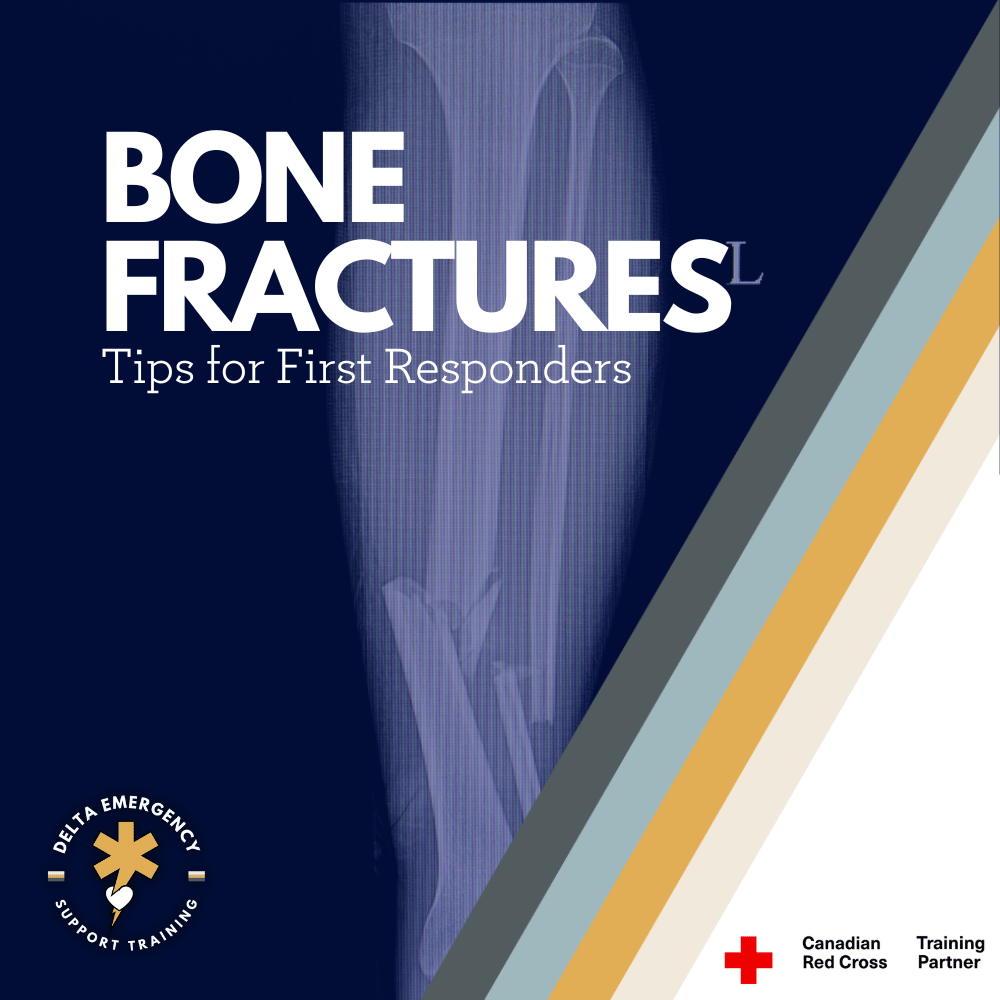
XRAY OF BROKEN TIB FIB

Fractures are common injuries that medical first responders frequently encounter, and proper management is critical in ensuring the patient's safety and minimizing long-term complications. This guide covers essential protocols for handling fractures, emphasizes the importance of checking distal pulses, and provides specific management tips for different types of fractures. At Delta Emergency Support Training, we provide access to Red Cross workbooks, hands-on training, and in-person classes for EMR and AFA, ensuring that you're well-prepared to manage fractures effectively.

General Approach to Fracture Management

  1. Assess the Scene: Ensure your safety first and perform a quick primary assessment. Look for life-threatening conditions (e.g., breathing, bleeding, and consciousness).

  2. Immobilize the Injury: Fractured bones must be stabilized to prevent further injury. Do not attempt to realign a displaced bone unless it is absolutely necessary to restore circulation.

  3. Check Circulation: Always check for a distal pulse (e.g., radial pulse for upper limbs, dorsalis pedis pulse for lower limbs). The absence of a pulse could indicate compromised circulation and require immediate intervention.

  4. Pain Management: Administer pain relief within your scope of practice and ensure comfort during transport.

Fracture Types and Management Protocols

Upper Limb Fractures

Clavicle Fracture

  • Symptoms: Pain, visible bump, limited range of motion.

  • Management: Use a sling or figure-eight bandage to immobilize. Check for a radial pulse to assess circulation. If no pulse, realign gently to restore blood flow.

Humerus Fracture

  • Symptoms: Pain, swelling, abnormal positioning.

  • Management: Immobilize with a splint or sling. Check radial pulse. A lack of pulse suggests potential nerve or vessel damage, requiring immediate intervention.

Radius and Ulna Fractures

  • Symptoms: Swelling, bruising, and inability to move the wrist or fingers.

  • Management: Use a splint, ensuring the wrist and elbow are stabilized. Always check the radial pulse; absence of pulse indicates compromised circulation and requires urgent realignment.

Lower Limb Fractures

Femur Fracture

  • Symptoms: Severe pain, swelling, inability to move.

  • Management: Use a traction splint to stabilize. Check the femoral pulse. Absence of pulse demands immediate medical intervention.

Tibia and Fibula Fractures

  • Symptoms: Pain, bruising, and difficulty moving.

  • Management: Apply a splint to stabilize the leg. Check the dorsalis pedis pulse; absence indicates possible vascular damage and requires urgent attention.

Ankle and Foot Fractures

  • Symptoms: Pain, swelling, deformity.

  • Management: Stabilize with a splint. Check pulses at the dorsalis pedis and posterior tibial sites. Absence of pulse requires immediate action to restore blood flow and prevent limb loss.

Spinal and Pelvic Fractures

Spinal Fractures

  • Symptoms: Neck or back pain, possible numbness or tingling in limbs.

  • Management: Immobilize the spine with a cervical collar and prevent movement. Check femoral and radial pulses. Absence of pulses may indicate spinal cord injury or severe vascular damage.

Pelvic Fractures

  • Symptoms: Severe pelvic pain, bruising, difficulty moving.

  • Management: Apply a pelvic binder to reduce movement. Check femoral pulse. Absence of pulse indicates potential severe internal bleeding and requires immediate medical intervention.

Why Checking for Distal Pulse is Critical

When dealing with fractures, checking for distal pulses is a vital step in ensuring the injured limb is receiving adequate blood flow. Absence of a pulse can suggest that a major artery or vein is compromised, risking tissue necrosis or limb loss. Repositioning the limb or gently realigning the fracture can sometimes restore circulation, but if pulses are absent, it's important to seek advanced medical help immediately.

Delta Emergency Support Training

At Delta Emergency Support Training, we ensure that our students are fully prepared to handle emergencies with confidence. Through our Red Cross workbooks, teaching resources, study tips, and in-person classes for EMR and AFA, we provide the practical knowledge necessary to deal with fractures and other emergencies. Our training will guide you through how to assess injuries, check circulation, immobilize fractures, and effectively manage patients in critical situations.

Whether you're just starting out or looking to sharpen your skills, our comprehensive training resources will give you the expertise needed to provide quality care in high-pressure situations.

Read More

Essential Acronyms and Medical Terms Every EMS Professional Should Know

Mastering medical acronyms and terminology is essential for every Emergency Medical Services (EMS) professional. From understanding basic patient care concepts like ABCs (Airway, Breathing, Circulation) to advanced procedures and diagnoses, knowing the right terms can make all the difference in high-pressure situations. This guide highlights key acronyms and terms, alongside study aids and tips to help you quickly memorize and apply them in real-life emergency scenarios.
Entering the world of Emergency Medical Services (EMS) can be overwhelming at first — there’s a lot of information to process, and mastering medical terminology is a huge part of the learning curve. One of the most effective ways to communicate in high-pressure situations is by using standardized acronyms and medical terms. Understanding these abbreviations is crucial for providing timely care, collaborating with your team, and ensuring patient safety.

Here, we’ve compiled a list of essential acronyms and terms every EMS professional should know. To make it easier to learn, we’ve divided the terms into categories, and we’ve also provided study aids that can help you retain this critical knowledge.

1. Basic EMS and Patient Care Acronyms

These acronyms are fundamental to understanding the basics of patient care and emergency response.

ABCs

  • Meaning: Airway, Breathing, Circulation

  • What It Means: The first steps in any patient assessment to determine if life-threatening issues exist.

SMR

  • Meaning: Spinal Motion Restriction

  • What It Means: A method used to stabilize the spine of a trauma patient to prevent further injury.

GCS

  • Meaning: Glasgow Coma Scale

  • What It Means: A scoring system used to assess a patient’s level of consciousness based on eye, verbal, and motor responses.

BPM

  • Meaning: Beats Per Minute

  • What It Means: A measure of heart rate. Crucial for assessing cardiovascular function.

BP

  • Meaning: Blood Pressure

  • What It Means: The force of blood pushing against the walls of the arteries. Monitored to assess cardiovascular health.

SOB

  • Meaning: Shortness of Breath

  • What It Means: A common symptom indicating potential respiratory distress or other underlying conditions such as heart failure.

2. Medical History and Symptoms Acronyms

Understanding a patient’s medical history and recognizing symptoms is crucial for accurate diagnosis and treatment.

TIA

  • Meaning: Transient Ischemic Attack

  • What It Means: A temporary blockage of blood flow to the brain, often referred to as a "mini-stroke."

LOC

  • Meaning: Level of Consciousness

  • What It Means: An assessment of the patient's responsiveness and awareness.

MOI

  • Meaning: Mechanism of Injury

  • What It Means: The method or cause of injury (e.g., fall, motor vehicle accident) that helps responders assess potential injuries.

ETOH

  • Meaning: Ethanol (Alcohol)

  • What It Means: Refers to alcohol consumption or intoxication, which is important for understanding potential contributing factors to the patient’s condition.

Hx

  • Meaning: History

  • What It Means: Refers to a patient’s past medical history, which is critical for accurate diagnosis and treatment.

Tx

  • Meaning: Treatment

  • What It Means: Refers to the care given to the patient during the emergency response.

3. Emergency Response and Medical Procedure Acronyms

These terms relate to the actions and procedures performed during an emergency.

MCI

  • Meaning: Mass Casualty Incident

  • What It Means: A situation where there are too many casualties for the available resources, requiring triage and coordination.

ROSC

  • Meaning: Return of Spontaneous Circulation

  • What It Means: When the heart begins to beat again after being in cardiac arrest, usually following CPR or defibrillation.

EMR

  • Meaning: Emergency Medical Responder

  • What It Means: The initial level of EMS provider trained to provide immediate care at the scene of an emergency.

PCP

  • Meaning: Primary Care Paramedic

  • What It Means: A level of paramedic providing basic and some advanced care before hospital arrival.

ACP

  • Meaning: Advanced Care Paramedic

  • What It Means: Paramedics with additional training in advanced airway management, medication administration, and critical care techniques.

CCP

  • Meaning: Critical Care Paramedic

  • What It Means: Paramedics trained to manage patients requiring the highest level of care, including the use of complex equipment and advanced treatments.

4. Common Medical Terminology

These are important medical terms you’ll need to know for a deeper understanding of specific conditions and procedures.

PEARL

  • Meaning: Pupils Equal and Reactive to Light

  • What It Means: A quick neurological assessment where the patient's pupils are examined for abnormalities.

HR

  • Meaning: Heart Rate

  • What It Means: The number of heartbeats per minute, a crucial indicator of cardiovascular health.

CNS

  • Meaning: Central Nervous System

  • What It Means: The brain and spinal cord, responsible for processing information and controlling bodily functions.

MI

  • Meaning: Myocardial Infarction

  • What It Means: The medical term for a heart attack, caused by a blockage in one of the coronary arteries.

Syncope

  • Meaning: Fainting

  • What It Means: Temporary loss of consciousness, often caused by a drop in blood pressure or inadequate blood flow to the brain.

5. Study Aids for Memorizing Acronyms and Terms

Now that we’ve covered the essential acronyms and medical terms, let’s talk about how to effectively memorize them and apply them in real-world scenarios. Here are some practical study guides and tools that will help you retain this information:

Flashcards

Flashcards are one of the best ways to memorize medical terms and acronyms. Create a set for yourself and quiz yourself regularly. You can make your own flashcards using index cards or use digital apps like Quizlet, where you can search for pre-made sets or create your own.

Example:

  • Front: "ABCs"

  • Back: Airway, Breathing, Circulation

  • Tip: Test yourself or have a study partner quiz you.

Mnemonics

Using mnemonics is an effective way to remember lists of acronyms. For example:

  • "ABCs": “Always Be Calm” — helps remind you that the first thing to check is Airway, then Breathing, and Circulation.

  • "PEARL": “Pupils Equal And Reactive Light” — helps remember the steps for checking pupils during a neurological exam.

Quizzes and Practice Exams

Regularly take quizzes and practice exams to reinforce your knowledge. Many EMS training programs offer practice tests that simulate real-life emergency scenarios. Websites like EMTprep.com and MedPage also provide quizzes specifically designed for EMS students.

Group Study

Studying with a group can help reinforce your knowledge and expose you to different ways of remembering terms. Set aside time to review acronyms together and test each other’s knowledge in a quiz format.

Interactive Learning Tools

Apps and websites like Anki (a flashcard app with spaced repetition), Quizlet, and Brainscape can make studying more interactive and help you retain information over time. They can also help you track your progress.

6. Tips for Applying Terminology in Real-Life Scenarios

When you're out in the field, it’s not just about memorizing acronyms — it’s about applying them quickly and accurately under pressure. Here are some ways to put your knowledge into practice:

  • Practice in Mock Scenarios: Use role-playing and simulations to practice how you'd assess a patient and use these acronyms and terms in real-time.

  • Team Communication: Use acronyms during team briefings, ensuring that everyone understands the terms. It’s important to speak in the same language for effective communication.

  • Know When to Ask Questions: Don’t hesitate to ask senior responders or your instructors for clarification if you don’t understand a term or acronym in a particular context. It’s better to ask than risk misunderstanding.

Conclusion: Why Knowing These Acronyms and Terms is Crucial in EMS

Mastering medical acronyms and terms is more than just memorization — it’s about ensuring patient safety, improving communication with your team, and providing high-quality care under pressure. By understanding these critical terms and incorporating them into your EMS training, you’ll be better prepared to act quickly and decisively in any emergency.

At Delta Emergency Support Training, we make sure our students are equipped with the knowledge and skills to perform confidently in any situation. Whether you’re a beginner just learning CPR or an advanced practitioner, mastering medical terminology is a key step toward becoming an effective EMS professional.

Read More

Free Lifesaving Knowledge at Your Fingertips: Introducing Our Comprehensive Guide for First Aid & CPR

Delta Emergency Support Training is excited to offer the "Comprehensive Guide for First Aid & CPR" as a free digital resource, empowering Canadians with the skills to handle emergencies confidently. This guide covers everything from CPR techniques to injury management and legal considerations, making it a vital tool for anyone looking to be better prepared in critical situations. Download your free copy today and help create a safer, more prepared community.

Ensuring Safety and Preparedness Across Canada

In our commitment to fostering a safer and more prepared community, Delta Emergency Support Training is proud to introduce a groundbreaking resource: the "Comprehensive Guide for First Aid & CPR." This extensive, digital book is offered entirely free of charge, aimed at equipping Canadians from all walks of life with the essential skills needed to respond effectively to emergencies.

What's Inside the Guide?

Our digital guide is a thorough compilation covering all aspects of first aid and CPR. Here are just a few sections that could make a critical difference in an emergency situation:

  • Emergency Preparedness: Learn how to equip your home and office to handle emergencies, from basic first aid kits to understanding the signs of medical distress.

  • CPR Techniques: Our guide provides step-by-step instructions for performing CPR on adults, children, and infants, ensuring you can act confidently when seconds count.

  • Managing Medical Emergencies: Whether it's dealing with severe allergic reactions, cardiac arrests, or other medical emergencies, our guide has you covered with expert advice.

  • Injury Prevention and Management: From treating burns to handling fractures, learn the most effective techniques to manage and mitigate injuries.

  • Legal Considerations: Understand the Good Samaritan laws that protect you when providing emergency aid and the responsibilities you hold as a caregiver or first responder.

Why a Free Digital Book?

Accessibility is key in emergency preparedness. By making this guide available digitally at no cost, we ensure that every individual, family, and organization in Canada has the opportunity to learn lifesaving techniques. This initiative is part of our mission to enhance community safety and empower individuals through education.

How to Access the Guide

Getting your copy of the "Comprehensive Guide for First Aid & CPR" is easy and instant. Simply visit our website at Delta Emergency Support Training, navigate to our resources section, and download your free copy today. Keep it on your mobile devices, computers, or print it out for quick reference.

Conclusion

We believe that knowledge is power, especially when it comes to saving lives. That's why we are thrilled to offer this valuable resource for free. Whether you're a parent, teacher, professional responder, or a concerned citizen, this guide is for you. Download your free copy today, and take a significant step toward becoming a more prepared, capable, and confident member of your community. Let's work together to keep Canada safe, one informed individual at a time!

Read More

Elevating Emergency Response: The Canadian Red Cross Emergency Care for Professional Responders Textbook

The "Canadian Red Cross: Emergency Care for Professional Responders" textbook is a must-have resource for those working in high-pressure environments like emergency medical services, firefighting, and law enforcement. Packed with in-depth medical content and real-world scenarios, this guide equips professionals with the advanced skills needed to handle critical emergencies effectively. Whether you're performing airway management or assessing trauma, this textbook ensures you're ready to respond with confidence in any situation.

Advanced First Aid Knowledge for Those Who Face the Most Demanding Situations

In the fast-paced world of emergency medical services, having the right knowledge can make the difference between life and death. The "Canadian Red Cross: Emergency Care for Professional Responders" textbook is specifically designed for individuals who operate in high-stakes environments where advanced first aid and emergency care are required. This textbook is an indispensable resource for firefighters, police officers, lifeguards, and advanced first aid personnel.

Depth of Medical Content

This textbook dives deep into the complex and critical conditions that professional responders encounter. With chapters written by experts in emergency care, the content covers a broad spectrum of medical emergencies, from trauma to acute medical conditions, providing detailed procedures for each. This comprehensive approach ensures that responders have the depth of knowledge necessary to make informed decisions quickly.

Real-World Scenarios and Techniques

One of the standout features of this guide is its emphasis on practical, real-world application. It includes:

  • Detailed scenario-based training examples that simulate actual emergency situations.

  • Step-by-step guides for advanced techniques such as airway management, support for spinal injuries, and emergency childbirth.

  • Best practices for scene management and patient assessment to ensure effective and efficient care.

These elements are designed to prepare responders not just to perform their duties, but to excel in their roles with confidence and competence.

Tailored for Professional Use

Each section of the textbook is tailored to the needs of professional responders, with considerations for the challenges they face in the field. The material is not only comprehensive but also accessible, with clear diagrams, quick-reference tables, and bullet points that make crucial information easy to locate and recall under pressure.

Why Choose This Textbook?

  • Expertise: Authored by leading medical professionals with extensive experience in emergency response.

  • Relevance: Updated regularly to include the latest techniques and best practices in emergency medical care.

  • Durability: Manufactured to withstand the rigors of field use, ensuring reliability when it’s needed most.

Conclusion

For those in demanding and critical roles, the Canadian Red Cross Emergency Care for Professional Responders textbook is more than just a learning tool—it's a crucial ally in the field. By integrating this textbook into your training program, you ensure that your team is equipped with the knowledge and skills to handle complex emergencies effectively.

Elevate your professional response capabilities today by obtaining your copy from Delta Emergency Support Training at Delta Emergency Support Training. Equip your team with the knowledge that saves lives, enhances safety, and ensures that when the call comes, you are ready to respond with the best care possible.

Read More

Essential Gear for the Trail: The Canadian Red Cross Wilderness and Remote Field Guide

The "Canadian Red Cross: Wilderness and Remote Field Guide" is a must-have resource for anyone venturing into the great outdoors. Designed for durability and quick reference, this waterproof and tear-resistant guide covers everything from first aid techniques to survival strategies. Compact and easy to use, it's perfect for outdoor enthusiasts, professionals, and anyone responsible for safety in remote areas. Equip yourself with the knowledge and confidence to handle wilderness emergencies—get your copy today at Delta Emergency Support Training.
The Ultimate Companion for Outdoor Safety and Emergency Preparedness

When venturing into the great outdoors, whether you're an avid hiker, a professional guide, or a part of a search and rescue team, having the right tools at your disposal is crucial. The "Canadian Red Cross: Wilderness and Remote Field Guide" is not just any textbook; it's a vital resource designed for the realities of outdoor challenges and emergencies.

Designed for Durability and Accessibility

Understanding that nature's elements can be unforgiving, this field guide is built to last. With waterproof and tear-resistant pages, it stands up to the toughest conditions, ensuring that you have access to critical information regardless of weather or terrain. Its compact design allows it to easily fit into any backpack or emergency kit, making it a practical choice for any outdoor enthusiast.

Quick Reference for Fast Action

Time is of the essence when dealing with emergencies in remote locations. This field guide is organized for quick access, allowing you to rapidly find the information you need when every moment counts. Detailed yet concise, the guide covers a wide range of situations from minor injuries to critical emergency responses.

A Tool for Every Wilderness Scenario

The guide includes comprehensive sections on:

  • Basic first aid techniques

  • Emergency procedures specific to remote settings

  • Navigation tips for lost or disoriented individuals

  • Survival strategies for various climates and terrains

These topics are illustrated with clear, easy-to-understand diagrams and instructions, making the guide an indispensable educational tool for anyone responsible for safety in wilderness areas.

Enhancing Your Outdoor Safety Skills

In addition to its practical applications, the Wilderness and Remote Field Guide serves as an educational resource that enhances your skills and confidence. It supports your outdoor activities by providing essential knowledge that can prevent emergencies or help manage them effectively until professional help is available.

Ideal for Both Enthusiasts and Professionals

Whether you're a casual nature lover or a professional working in challenging environments, this field guide is tailored to support your needs. It's an essential part of any safety training for outdoor professionals and a reliable resource for adventurers who take their wilderness activities seriously.

Conclusion

Invest in your safety and preparedness with the Canadian Red Cross Wilderness and Remote Field Guide. Available at Delta Emergency Support Training at competitive prices, this guide is not just a purchase—it's an investment in your ability to handle the unexpected with expertise and confidence.

Prepare for your next adventure by securing your copy today at Delta Emergency Support Training. Equip yourself with the knowledge to navigate the wilderness safely and respond effectively in emergencies. Your adventure awaits, and with the right preparation, you're ready to meet it head-on.

Read More

Understanding Medical Terminology: A Guide to Prefixes, Suffixes, and Roots for First Responders

Mastering medical terminology is essential for first responders. Understanding common prefixes, suffixes, and roots will help you communicate more effectively, make informed decisions, and provide quicker, more effective care. In this guide, we break down essential medical terms that will boost your confidence on the job and improve patient outcomes.
In the fast-paced world of Emergency Medical Services (EMS), effective communication and quick thinking are crucial. One way to improve both is by mastering medical terminology. As a first responder, understanding the building blocks of medical terms — prefixes, suffixes, and roots — will allow you to interpret unfamiliar terms quickly, leading to better patient care and more effective communication with other healthcare professionals.

In this guide, we’ll break down the most common prefixes, suffixes, and roots in medical terminology, with a focus on how these parts come together to help you understand the language of medicine. By familiarizing yourself with these building blocks, you’ll be equipped to navigate the world of medical terminology with confidence.

What Are Prefixes, Suffixes, and Roots?

Medical terms often seem complex, but most are built from smaller components that convey specific meanings. Understanding how these components work will help you quickly decode medical terms.

  • Prefix: A prefix is added at the beginning of a word to modify its meaning. It typically indicates time, location, quantity, or status.

  • Suffix: A suffix is placed at the end of a word to alter its meaning. It often refers to a condition, disease, procedure, or part of the body.

  • Root Word: The root is the central part of the word that provides the core meaning. It typically refers to a body part, function, or medical concept.

By breaking down terms into these components, you can understand what a word means without needing to memorize every single term.

Why EMS Professionals Need to Understand Prefixes, Suffixes, and Roots

As a first responder, you’ll often encounter long, unfamiliar medical terms during patient care. Breaking these terms down into their prefixes, suffixes, and roots helps you:

  1. Interpret Symptoms Faster: For example, recognizing terms like “tachypnea” (rapid breathing) or “bradycardia” (slow heart rate) allows you to quickly assess the situation and respond accordingly.

  2. Improve Communication: Whether you’re talking to a doctor, paramedic, or other healthcare professionals, using the correct medical terminology ensures clear, efficient communication, which leads to better patient outcomes.

  3. Streamline Documentation: Accurate medical documentation is essential in EMS. Knowing medical terms ensures you can write reports that are both precise and comprehensive.

Common Medical Prefixes Every First Responder Should Know

Here are some of the most common prefixes you’ll encounter in EMS. These prefixes provide important information about the patient's condition and can help you make quicker decisions in the field.

1. “Hyper-”

  • Meaning: Excessive, above normal

  • Example: Hypertension (high blood pressure)

2. “Hypo-”

  • Meaning: Below normal, deficient

  • Example: Hypoglycemia (low blood sugar)

3. “Brady-”

  • Meaning: Slow

  • Example: Bradycardia (slow heart rate)

4. “Tachy-”

  • Meaning: Fast

  • Example: Tachypnea (rapid breathing)

5. “Pre-”

  • Meaning: Before

  • Example: Preoperative (before surgery)

6. “Post-”

  • Meaning: After

  • Example: Post-traumatic (after trauma)

7. “Sub-”

  • Meaning: Under, beneath

  • Example: Subcutaneous (beneath the skin)

8. “Inter-”

  • Meaning: Between

  • Example: Intercostal (between the ribs)

9. “Intra-”

  • Meaning: Within

  • Example: Intravenous (within the vein)

10. “Exo-”

  • Meaning: Outside, outward

  • Example: Exoskeleton (external skeleton)

Common Medical Suffixes for EMS Professionals

Suffixes are essential for understanding the nature of a medical condition, procedure, or diagnosis. Below are key suffixes that are frequently used in EMS:

1. “-itis”

  • Meaning: Inflammation

  • Example: Arthritis (inflammation of the joints)

2. “-ectomy”

  • Meaning: Surgical removal

  • Example: Appendectomy (removal of the appendix)

3. “-algia”

  • Meaning: Pain

  • Example: Neuralgia (nerve pain)

4. “-pathy”

  • Meaning: Disease or condition

  • Example: Neuropathy (nerve disease)

5. “-emia”

  • Meaning: Blood condition

  • Example: Anemia (low red blood cell count)

6. “-plasty”

  • Meaning: Surgical repair

  • Example: Rhinoplasty (surgical repair of the nose)

7. “-scopy”

  • Meaning: Viewing or examination using a scope

  • Example: Endoscopy (examination of a body cavity)

8. “-logy”

  • Meaning: The study of

  • Example: Cardiology (study of the heart)

9. “-osis”

  • Meaning: Abnormal condition or disease

  • Example: Cirrhosis (a liver disease)

10. “-graphy”

  • Meaning: The process of recording

  • Example: Cardiography (recording heart activity)

Common Medical Roots in EMS Terminology

Roots form the core of medical terms and typically describe body parts, organs, or functions. Here are some important roots you’ll encounter in your training and practice:

1. “Cardi/o”

  • Meaning: Heart

  • Example: Cardiology (study of the heart)

2. “Gastr/o”

  • Meaning: Stomach

  • Example: Gastritis (inflammation of the stomach lining)

3. “Hemat/o”

  • Meaning: Blood

  • Example: Hemorrhage (excessive bleeding)

4. “Neuro/o”

  • Meaning: Nerve, nervous system

  • Example: Neurology (study of the nervous system)

5. “Oste/o”

  • Meaning: Bone

  • Example: Osteoarthritis (arthritis of the bone)

6. “Pulmon/o”

  • Meaning: Lungs

  • Example: Pulmonary edema (fluid buildup in the lungs)

7. “My/o”

  • Meaning: Muscle

  • Example: Myocardial (related to the heart muscle)

8. “Derm/a”

  • Meaning: Skin

  • Example: Dermatitis (inflammation of the skin)

9. “Ren/o”

  • Meaning: Kidney

  • Example: Renal failure (kidney failure)

10. “Rhin/o”

  • Meaning: Nose

  • Example: Rhinoplasty (surgical procedure on the nose)

Study Strategies for Mastering Medical Terminology

While learning prefixes, suffixes, and roots can seem overwhelming, there are several effective study techniques to help you retain and apply these concepts:

1. Use Flashcards

Flashcards are an excellent way to reinforce your understanding of prefixes, suffixes, and roots. Use physical cards or apps like Quizlet to test your knowledge on the go. Write the term on one side and its meaning on the other.

2. Create Mnemonics

To help remember terms, create memorable associations. For example, remember “tachy-” by thinking of “tachometer,” which measures speed (fast). For “brady-” (slow), think of Brady the tortoise from the classic story.

3. Break Down Terms

Whenever you encounter an unfamiliar term, break it down. Start with the root word, then look at the prefix and suffix. For example, Tachycardia:

  • Tachy- = fast

  • Cardi/o = heart

  • -ia = condition So, Tachycardia = a condition of a fast heart rate.

4. Group Study and Practice

Group study sessions help reinforce what you've learned. Discuss terms with classmates or colleagues and quiz each other regularly to ensure you understand the material.

5. Use Interactive Tools

Interactive quizzes and apps can make learning more engaging. Tools like Anki or MedTerm offer practice exercises that reinforce your understanding of medical terminology in a fun, interactive way.

Conclusion: Mastering Medical Terminology for EMS Professionals

In EMS, quick decision-making and clear communication can save lives. Understanding medical terminology, including prefixes, suffixes, and roots, allows you to decode complex terms on the fly and makes you a more effective responder. It’s a skill that will improve your ability to assess patients, document care, and work with your team efficiently.

At Delta Emergency Support Training, we understand the importance of a solid foundation in medical terminology. Our comprehensive Red Cross Babysitting course and First Aid training cover essential medical concepts that will set you up for success in the field. Whether you're just getting started or looking to advance your skills, mastering medical terminology is a key step in becoming a top-tier first responder.

Read More

Empowering Learning Through Essential Textbooks: Continuing Education

Discover a World of Learning with Our Essential Textbooks

At Delta Emergency, we're thrilled to present our diverse collection of textbooks, each crafted to meet unique learning needs. Whether you're embarking on wilderness adventures, nurturing young minds as a babysitter, mastering life-saving techniques, or aiming to elevate your emergency care skills, our textbooks are here to empower and educate. The tactile pleasure of flipping through the pages of our physical copies enhances the learning experience, making each topic come to life. Dive into our range and unlock a wealth of knowledge today.

At Delta Emergency Support Training, we're excited to offer a versatile collection of textbooks that cater to a wide array of learning needs. Whether you're a wilderness explorer, an aspiring babysitter, a medical professional, or someone seeking vital lifesaving skills, our textbooks are thoughtfully designed to impart knowledge and empower individuals.For those who appreciate the feel of physical paper copies, we have just the thing for you. Let's dive into our selection:

Woman using a textbook to take notes and study.

Wilderness First Aid: Navigating Nature's Challenges with Confidence

Embark on outdoor adventures fully equipped with our "Wilderness First Aid" textbook. Priced at CA$74.97, this guide not only covers emergency response but also emphasizes safeguarding patients from the elements. From creating basic shelters to regulating body temperature, this resource ensures patient well-being in harsh environments. Learn to assess the ABCs (Airway, Breathing, Circulation) and identify and treat life-threatening emergencies. With a focus on both patient safety and effective response, this guide prepares you for the unexpected challenges of the wild.

Babysitter First Aid: Nurturing Safety and Confidence

Designed for young caregivers, our "Babysitter First Aid" textbook is a crucial resource that is a great tool for babysitters. Priced at CA$31.45 (Original Price: CA$34.95), this guide empowers budding babysitters with engaging activities, game ideas, and practical checklists. It equips you with the confidence and knowledge necessary to ensure children's safety and well-being. Not only does it cover babysitting essentials, but it also imparts vital babysitter first aid skills, expanding your capabilities and making you a trusted and reliable caregiver.

Basic Life Support: Mastering Lifesaving Techniques

BLS goes beyond the basics, offering practical insights such as oxygen flow rates for different levels of hypoxia, airway adjunct techniques, and CPR rates and compression depths. Whether you're familiarizing yourself with ventilation devices or learning the intricacies of CPR, this guide provides invaluable information to ensure your readiness in critical situations. Priced at CA$31.45, this comprehensive guide delves into the art of preserving life.

Professional Responder: Elevate Your Emergency Care Skills

Tailored for First Responders, Advanced First Aid, and Emergency Medical Responder courses, this comprehensive resource leaves no stone unturned. This textbook will give you the knowledge, skills and confidence to pursue your career as a firefighter, paramedic or any other professional responder. Encompassing topics from anatomy to physiology, this guide equips you with real-life scenarios, intricate charts, diagrams, and photographic illustrations. Designed to elevate your capabilities, it readies you for a gamut of challenging scenarios, ensuring your competence in emergency situations. Elevate your expertise with the "Professional Responder" textbook, available for CA$212.35 (Original Price: CA$235.95).

The Power of Knowledge

At Delta, we recognize the power of a physical textbook in an increasingly digital era. Our textbooks are carefully curated to enrich your understanding, bolster your skills, and guide you toward mastery. Seize the opportunity to learn, grow, and excel. Your transformative journey starts here.

Read More
Textbooks, Clothing, First Aid Kit, Certificates, CPR Mask Jarrett Chisholm Textbooks, Clothing, First Aid Kit, Certificates, CPR Mask Jarrett Chisholm

Textbooks: The Foundation of Education

Absorb More Information. Improve Comprehension.

Readers of print books absorb and remember more of the plot than readers of e-books do, according to a study that was presented in Italy in 2014. Studies have also shown it’s less disruptive to turn a page than to scroll down on a tablet or a screen, so your concentration level is higher with text. Printed textbooks also allow…

Printed Textbooks Improve Comprehension

There are many reasons printed textbooks lead to better comprehension. One is that students read at a slower pace when reading from a printed textbook rather than an online version. Reading slowly gives the material more time to sink in.

Studies have also shown it’s less disruptive to turn a page than to scroll down on a tablet or a screen, so your concentration level is higher with text. Printed textbooks also allow for greater engagement with the material. Students can underline facts, highlight key ideas and make notes in the margin, and they can flip back and forth between pages to review material or enhance their learning. (source)

You absorb more information.

Readers of print books absorb and remember more of the plot than readers of e-books do, according to a study that was presented in Italy in 2014. In an earlier study, print readers also scored higher in other areas, such as empathy, immersion in the book, and understanding of the narrative. Scientists believe this effect is related to the tactile sensation of holding a book in your hands.

Seeing and feeling how much progress you’ve made in the story can help readers feel like they’re unfolding the story—both literally and figuratively. Plus, with a print book, it’s easier to go back and confirm information you may be unsure of without losing your place and having to scroll or click back on your device. (source)

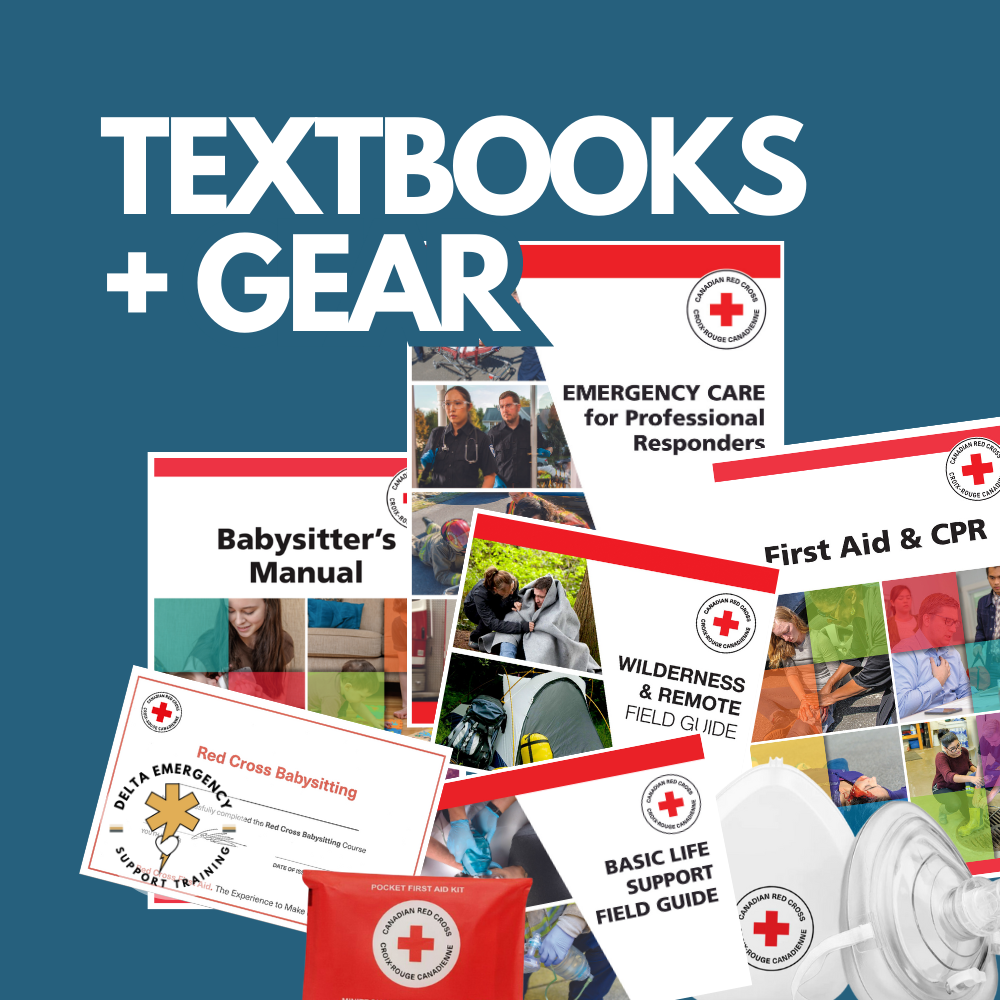
Delta Emergency Support Training offers a variety of Red Cross textbooks.

Textbooks include

● Emergency Care for Professional Responders

● Basic Life Support Field Guide

● First Aid and CPR Manual

● Babysitters Manual

● Wilderness and Remote Field Guide

As a Red Cross Training Partner, we offer a 10% discount on most of our textbooks!

Wilderness First Responder Course Package (THREE textbooks together):

Wilderness & Remote Field Guide (164 pages, 13.97cm X 11.43cm; 5.5" X 4.5"), Emergency Care for Professional Responders Reference Text (464 pages 21.5cm X 30.2cm, 8 1/2" X 10 7/8"), and Basic Life Support Field Guide (56 pages, 11.43 cm x 13.97 cm, 4.5" x 5.5").

Wilderness & Remote Field Guide:

A handy quick reference guide for first aid and CPR skills in Canadian remote and wilderness settings. Ideal for those who live or work in a wilderness or remote workplace or community, or who are outdoor recreation enthusiasts. Content includes prevention, causes, signs, assessment and treatment for minor, major and critical emergencies, and how to provide extended care for more than 24 hours including evacuation and transportation. This field guide is a great addition to any wilderness first aid kit. Coil bound on water resistant paper. (164 pages, 13.97 cm X 11.43 cm; 5.5" X 4.5").

Emergency Care for Professional Responders Reference Text:

A comprehensive all-Canadian resource for professional responders. Content organized for progressive learning, real-life scenarios, skills summary, charts and diagrams, and includes hundreds of colour photographs and bio-medical illustrations. Meets Paramedic Association of Canada National Occupational Competency Profile for Emergency Medical Responder and meets Transport Canada Training Program Standards in Marine First Aid. A new English Manual for Professional Responders regarding Emergency Care. Utilized by First Responder, Advanced First Aid, and Emergency Medical Responder course students.

Basic Life Support Field Guide:

A portable, informative guide on BLS skills. Basic Life Support Skills included in the manual are as follows; airway management, oxygen therapy, how to deliver quality CPR, AED protocol and recognition of life threatening emergencies. Coil bound on water resistant paper.

Babysitter’s Manual

A practical guide for babysitters offering checklists, activities and game ideas, sample résumé, and business cards. Presented in a youthful and energetic style, the content covers babysitting for different age-groups and is colour-coded for quick reference.

First Aid and CPR Manual

A step-by-step guide to first aid and CPR for home and work. Content includes responding to emergencies, what to look for and what to do for airway, breathing and circulation emergencies in adults, children and infants, wound care, head and spinal injuries, bone, muscle and joint injuries, sudden medical emergencies and environmental emergencies. This manual is a great addition to any home or workplace first aid kit.

Gear

Stay prepared with the proper First Aid gear. We’re about to release more items for your first aid and Fire/EMS kits, so keep your radios on! Our current gear includes:

● Pocket First Aid Kits

● CPR Masks

● Babysitter Wallet Certificate

Pocket First Aid Kits

The portable first aid kit contains first aid essentials for small wounds. Its small size and lightweight design make it ideal for handbags, backpacks or in the glove box of your car. Its price makes it the perfect give away gift and its quality and content make it desirable for all. Ideal for anyone in a childcare setting, parents and guardians, or simply the prepared individual on the go.

CPR Mask with O2 Inlet

Supplies included; CPR mask with O2 inlet and adjustable head strap, Red Cross branded clamshell and an instruction sheet. The CPR Mask with a one-way valve is used during respiratory and cardiac emergencies as a physical barrier device when administering rescue breaths to a person. The one-way valve prevents bodily fluids and airborne pathogens from reaching the rescuer. The medical-grade thermoplastic mask has a soft inflated cuff for a leakproof seal and adds to the patient’s comfort as well as an elastic head strap allowing the rescuer to secure the mask to the patient’s face. Also included, is an oxygen inlet for optional supplemental oxygen. Complete with a hard shell carrying case easy to carry in its compact size.

Babysitter Certificates

The cost of your first physical Babysitter certificate is included in the course fees. If you lose, damage, or want a second physical copy of your Wall Certificate or Wallet Card, contact us. We always print them on thick card stock! They can be at your house in about 2 weeks - and let us know if you would like a digital Babysitter Certificate in the meantime - we’re here to help.


Upcoming Wisdom Webinar


At Delta Emergency Support Training we are happy to answer any questions you may have about textbooks and gear. We provide training sessions for individuals or classes. We have options for in person, hybrid or online classes for Standard First Aid (SFA) Advanced First Aid (AFA) and Emergency Medical Responder (EMR) courses. For all inquiries please email info@deltaemergency.com

As always thank you for your support, stay safe!

Read More