
Oxygen Therapy is a one-hour evening class in Calgary for responders who carry emergency oxygen, or who are about to start. It currently runs 19:30 to 20:30, immediately after our Airway Management hour, so you can walk out of one evening with both skills instead of giving up a day.
Read more about this courseShow less
It is taught by working paramedics, firefighters and emergency professionals, and it pairs naturally with Airway Management or a full responder certificate. We also run it in the Leduc and greater Edmonton area, and we can deliver it onsite at your worksite across Canada, or internationally on request, for an additional fee.
Course details
- Certificate
- Canadian Red Cross Oxygen Therapy
- Certificate valid for
- Per Canadian Red Cross standard, confirmed at registration
- Issued by
- Canadian Red Cross
- Duration
- Approx. 1 hour
- Prerequisites
- None
- Locations
- Leduc, AB, 4810 50th Ave, Calgary, AB, 1550 5 St SW #300
- Price
- $130.00 + GST & applicable taxes (charged at checkout for your province)
How this course runs
- In person: one or two days at our location. Nothing to do online beforehand.
- How it runs
- One day in class. Nothing online.
- Whole course
- 1 hour
Upcoming dates, choose your cohort
Edmonton regionNov 15, 2026 · Leduc, AB, 4810 50th Ave
- Sun, Nov 15 · 10:00 a.m. to 11:00 a.m.in class
Registration closes November 14, 2026.
November 2026
SMTWTFS123456789101112131415161718192021222324252627282930In person: 1 class day, nothing online
In person(no online sessions)
- 1 full day in class
Edmonton regionIn person: one or two days at our location. Nothing to do online beforehand.CalgaryNov 22, 2026 · Calgary, AB, 1550 5 St SW #300
- Sun, Nov 22 · 7:30 p.m. to 8:30 p.m.in class
Registration closes November 21, 2026.
November 2026
SMTWTFS123456789101112131415161718192021222324252627282930In person: 1 class day, nothing online
In person(no online sessions)
- 1 full day in class
CalgaryIn person: one or two days at our location. Nothing to do online beforehand.Edmonton regionNov 30, 2026 · Leduc, AB, 4810 50th Ave
- Mon, Nov 30 · 7:30 p.m. to 8:30 p.m.in class
Registration closes November 29, 2026.
November 2026
SMTWTFS123456789101112131415161718192021222324252627282930In person: 1 class day, nothing online
In person(no online sessions)
- 1 full day in class
Edmonton regionIn person: one or two days at our location. Nothing to do online beforehand.Edmonton regionDec 6, 2026 · Leduc, AB, 4810 50th Ave
- Sun, Dec 6 · 7:30 p.m. to 8:30 p.m.in class
Registration closes December 5, 2026.
December 2026
SMTWTFS12345678910111213141516171819202122232425262728293031In person: 1 class day, nothing online
In person(no online sessions)
- 1 full day in class
Edmonton regionIn person: one or two days at our location. Nothing to do online beforehand.Edmonton regionJan 4, 2027 · Leduc, AB, 4810 50th Ave
Waitlist only- Mon, Jan 4, 2027 · 7:30 p.m. to 8:30 p.m.in class
Registration is closed for these dates.
January 2027
SMTWTFS12345678910111213141516171819202122232425262728293031In person: 1 class day, nothing online
In person(no online sessions)
- 1 full day in class
Edmonton regionIn person: one or two days at our location. Nothing to do online beforehand.Waitlist only. Join the waitlist and we’ll email you the moment a seat is available.
CalgaryJan 25, 2027 · Calgary, AB, 1550 5 St SW #300
- Mon, Jan 25, 2027 · 7:30 p.m. to 8:30 p.m.in class
Registration closes January 24, 2027.
January 2027
SMTWTFS12345678910111213141516171819202122232425262728293031In person: 1 class day, nothing online
In person(no online sessions)
- 1 full day in class
CalgaryIn person: one or two days at our location. Nothing to do online beforehand.CalgaryJan 31, 2027 · Calgary, AB, 1550 5 St SW #300
- Sun, Jan 31, 2027 · 10:00 a.m. to 11:00 a.m.in class
Registration closes January 30, 2027.
January 2027
SMTWTFS12345678910111213141516171819202122232425262728293031In person: 1 class day, nothing online
In person(no online sessions)
- 1 full day in class
CalgaryIn person: one or two days at our location. Nothing to do online beforehand.Edmonton regionFeb 14, 2027 · Leduc, AB, 4810 50th Ave
Waitlist only- Sun, Feb 14, 2027 · 10:00 a.m. to 11:00 a.m.in class
Registration is closed for these dates.
February 2027
SMTWTFS12345678910111213141516171819202122232425262728In person: 1 class day, nothing online
In person(no online sessions)
- 1 full day in class
Edmonton regionIn person: one or two days at our location. Nothing to do online beforehand.Waitlist only. Join the waitlist and we’ll email you the moment a seat is available.
CalgaryFeb 16, 2027 · Calgary, AB, 1550 5 St SW #300
- Tue, Feb 16, 2027 · 7:30 p.m. to 8:30 p.m.in class
Registration closes February 15, 2027.
February 2027
SMTWTFS12345678910111213141516171819202122232425262728In person: 1 class day, nothing online
In person(no online sessions)
- 1 full day in class
CalgaryIn person: one or two days at our location. Nothing to do online beforehand.Edmonton regionFeb 21, 2027 · Leduc, AB, 4810 50th Ave
Waitlist only- Sun, Feb 21, 2027 · 7:30 p.m. to 8:30 p.m.in class
Registration is closed for these dates.
February 2027
SMTWTFS12345678910111213141516171819202122232425262728In person: 1 class day, nothing online
In person(no online sessions)
- 1 full day in class
Edmonton regionIn person: one or two days at our location. Nothing to do online beforehand.Waitlist only. Join the waitlist and we’ll email you the moment a seat is available.
CalgaryMar 7, 2027 · Calgary, AB, 1550 5 St SW #300
- Sun, Mar 7, 2027 · 10:00 a.m. to 11:00 a.m.in class
Registration closes March 6, 2027.
March 2027
SMTWTFS12345678910111213141516171819202122232425262728293031In person: 1 class day, nothing online
In person(no online sessions)
- 1 full day in class
CalgaryIn person: one or two days at our location. Nothing to do online beforehand.Edmonton regionMar 8, 2027 · Leduc, AB, 4810 50th Ave
Waitlist only- Mon, Mar 8, 2027 · 7:30 p.m. to 8:30 p.m.in class
Registration is closed for these dates.
March 2027
SMTWTFS12345678910111213141516171819202122232425262728293031In person: 1 class day, nothing online
In person(no online sessions)
- 1 full day in class
Edmonton regionIn person: one or two days at our location. Nothing to do online beforehand.Waitlist only. Join the waitlist and we’ll email you the moment a seat is available.
CalgaryMar 28, 2027 · Calgary, AB, 1550 5 St SW #300
- Sun, Mar 28, 2027 · 7:30 p.m. to 8:30 p.m.in class
Registration closes March 27, 2027.
March 2027
SMTWTFS12345678910111213141516171819202122232425262728293031In person: 1 class day, nothing online
In person(no online sessions)
- 1 full day in class
CalgaryIn person: one or two days at our location. Nothing to do online beforehand.Edmonton regionApr 11, 2027 · Leduc, AB, 4810 50th Ave
Waitlist only- Sun, Apr 11, 2027 · 7:30 p.m. to 8:30 p.m.in class
Registration is closed for these dates.
April 2027
SMTWTFS123456789101112131415161718192021222324252627282930In person: 1 class day, nothing online
In person(no online sessions)
- 1 full day in class
Edmonton regionIn person: one or two days at our location. Nothing to do online beforehand.Waitlist only. Join the waitlist and we’ll email you the moment a seat is available.
CalgaryApr 26, 2027 · Calgary, AB, 1550 5 St SW #300
- Mon, Apr 26, 2027 · 7:30 p.m. to 8:30 p.m.in class
Registration closes April 25, 2027.
April 2027
SMTWTFS123456789101112131415161718192021222324252627282930In person: 1 class day, nothing online
In person(no online sessions)
- 1 full day in class
CalgaryIn person: one or two days at our location. Nothing to do online beforehand.Edmonton regionMay 2, 2027 · Leduc, AB, 4810 50th Ave
Waitlist only- Sun, May 2, 2027 · 10:00 a.m. to 11:00 a.m.in class
Registration is closed for these dates.
May 2027
SMTWTFS12345678910111213141516171819202122232425262728293031In person: 1 class day, nothing online
In person(no online sessions)
- 1 full day in class
Edmonton regionIn person: one or two days at our location. Nothing to do online beforehand.Waitlist only. Join the waitlist and we’ll email you the moment a seat is available.
CalgaryMay 16, 2027 · Calgary, AB, 1550 5 St SW #300
- Sun, May 16, 2027 · 7:30 p.m. to 8:30 p.m.in class
Registration closes May 15, 2027.
May 2027
SMTWTFS12345678910111213141516171819202122232425262728293031In person: 1 class day, nothing online
In person(no online sessions)
- 1 full day in class
CalgaryIn person: one or two days at our location. Nothing to do online beforehand.Edmonton regionMay 31, 2027 · Leduc, AB, 4810 50th Ave
Waitlist only- Mon, May 31, 2027 · 7:30 p.m. to 8:30 p.m.in class
Registration is closed for these dates.
May 2027
SMTWTFS12345678910111213141516171819202122232425262728293031In person: 1 class day, nothing online
In person(no online sessions)
- 1 full day in class
Edmonton regionIn person: one or two days at our location. Nothing to do online beforehand.Waitlist only. Join the waitlist and we’ll email you the moment a seat is available.
CalgaryJun 6, 2027 · Calgary, AB, 1550 5 St SW #300
- Sun, Jun 6, 2027 · 10:00 a.m. to 11:00 a.m.in class
Registration closes June 5, 2027.
June 2027
SMTWTFS123456789101112131415161718192021222324252627282930In person: 1 class day, nothing online
In person(no online sessions)
- 1 full day in class
CalgaryIn person: one or two days at our location. Nothing to do online beforehand.CalgaryJun 14, 2027 · Calgary, AB, 1550 5 St SW #300
- Mon, Jun 14, 2027 · 7:30 p.m. to 8:30 p.m.in class
Registration closes June 13, 2027.
June 2027
SMTWTFS123456789101112131415161718192021222324252627282930In person: 1 class day, nothing online
In person(no online sessions)
- 1 full day in class
CalgaryIn person: one or two days at our location. Nothing to do online beforehand.Edmonton regionJun 27, 2027 · Leduc, AB, 4810 50th Ave
Waitlist only- Sun, Jun 27, 2027 · 7:30 p.m. to 8:30 p.m.in class
Registration is closed for these dates.
June 2027
SMTWTFS123456789101112131415161718192021222324252627282930In person: 1 class day, nothing online
In person(no online sessions)
- 1 full day in class
Edmonton regionIn person: one or two days at our location. Nothing to do online beforehand.Waitlist only. Join the waitlist and we’ll email you the moment a seat is available.
CalgaryJul 11, 2027 · Calgary, AB, 1550 5 St SW #300
- Sun, Jul 11, 2027 · 7:30 p.m. to 8:30 p.m.in class
Registration closes July 10, 2027.
July 2027
SMTWTFS12345678910111213141516171819202122232425262728293031In person: 1 class day, nothing online
In person(no online sessions)
- 1 full day in class
CalgaryIn person: one or two days at our location. Nothing to do online beforehand.Edmonton regionJul 26, 2027 · Leduc, AB, 4810 50th Ave
Waitlist only- Mon, Jul 26, 2027 · 7:30 p.m. to 8:30 p.m.in class
Registration is closed for these dates.
July 2027
SMTWTFS12345678910111213141516171819202122232425262728293031In person: 1 class day, nothing online
In person(no online sessions)
- 1 full day in class
Edmonton regionIn person: one or two days at our location. Nothing to do online beforehand.Waitlist only. Join the waitlist and we’ll email you the moment a seat is available.
Edmonton regionAug 8, 2027 · Leduc, AB, 4810 50th Ave
Waitlist only- Sun, Aug 8, 2027 · 10:00 a.m. to 11:00 a.m.in class
Registration is closed for these dates.
August 2027
SMTWTFS12345678910111213141516171819202122232425262728293031In person: 1 class day, nothing online
In person(no online sessions)
- 1 full day in class
Edmonton regionIn person: one or two days at our location. Nothing to do online beforehand.Waitlist only. Join the waitlist and we’ll email you the moment a seat is available.
Edmonton regionAug 22, 2027 · Leduc, AB, 4810 50th Ave
Waitlist only- Sun, Aug 22, 2027 · 7:30 p.m. to 8:30 p.m.in class
Registration is closed for these dates.
August 2027
SMTWTFS12345678910111213141516171819202122232425262728293031In person: 1 class day, nothing online
In person(no online sessions)
- 1 full day in class
Edmonton regionIn person: one or two days at our location. Nothing to do online beforehand.Waitlist only. Join the waitlist and we’ll email you the moment a seat is available.
CalgaryAug 29, 2027 · Calgary, AB, 1550 5 St SW #300
- Sun, Aug 29, 2027 · 10:00 a.m. to 11:00 a.m.in class
Registration closes August 28, 2027.
August 2027
SMTWTFS12345678910111213141516171819202122232425262728293031In person: 1 class day, nothing online
In person(no online sessions)
- 1 full day in class
CalgaryIn person: one or two days at our location. Nothing to do online beforehand.CalgaryAug 30, 2027 · Calgary, AB, 1550 5 St SW #300
- Mon, Aug 30, 2027 · 7:30 p.m. to 8:30 p.m.in class
Registration closes August 29, 2027.
August 2027
SMTWTFS12345678910111213141516171819202122232425262728293031In person: 1 class day, nothing online
In person(no online sessions)
- 1 full day in class
CalgaryIn person: one or two days at our location. Nothing to do online beforehand.Edmonton regionSep 7, 2027 · Leduc, AB, 4810 50th Ave
Waitlist only- Tue, Sep 7, 2027 · 7:30 p.m. to 8:30 p.m.in class
Registration is closed for these dates.
September 2027
SMTWTFS123456789101112131415161718192021222324252627282930In person: 1 class day, nothing online
In person(no online sessions)
- 1 full day in class
Edmonton regionIn person: one or two days at our location. Nothing to do online beforehand.Waitlist only. Join the waitlist and we’ll email you the moment a seat is available.
CalgarySep 26, 2027 · Calgary, AB, 1550 5 St SW #300
- Sun, Sep 26, 2027 · 7:30 p.m. to 8:30 p.m.in class
Registration closes September 25, 2027.
September 2027
SMTWTFS123456789101112131415161718192021222324252627282930In person: 1 class day, nothing online
In person(no online sessions)
- 1 full day in class
CalgaryIn person: one or two days at our location. Nothing to do online beforehand.
What you’ll be able to do
- Recognize when a patient needs supplemental oxygen and when they do not
- Assemble, pressure-check and safely break down a cylinder and regulator
- Choose the right delivery device for the patient in front of you
- Set and adjust flow so a mask or cannula actually does its job
- Support ventilations with a bag-valve mask connected to oxygen, within your scope
- Estimate remaining cylinder time and plan for a longer transport
- Store, secure and transport cylinders without creating a second emergency
- Document what you gave and hand over clearly to arriving EMS
Ready to take this course?$130.00 + GST & applicable taxes
What the Oxygen Therapy course actually covers
Oxygen Therapy is a one-hour skill session, run in Calgary as an evening class currently scheduled 19:30 to 20:30. It teaches you to set up, deliver and manage emergency oxygen safely for a patient who needs it. One hour is enough because the course is deliberately narrow: you are not learning patient assessment from scratch, you are learning to do one important intervention properly, with the equipment you will actually find in a response bag, a trailer or a wall cabinet. The Canadian Red Cross sets the hour requirement and it can change, so check the exact hours published with the run you are booking, the scheduled times for each session are listed beside the date on the registration page.
The classroom portion is short because the theory is short, and in a sixty-minute class it has to be. You look at why low oxygen levels hurt people, how to tell the difference between a patient who is breathing adequately and one who is not, and what oxygen does and does not fix. From there it is equipment: cylinder types and safe handling, attaching and leak-checking a regulator, choosing between a nasal cannula, a simple mask, a non-rebreather and a bag-valve mask, and estimating how long a cylinder will last at a given flow so you are not caught empty halfway through a transport.
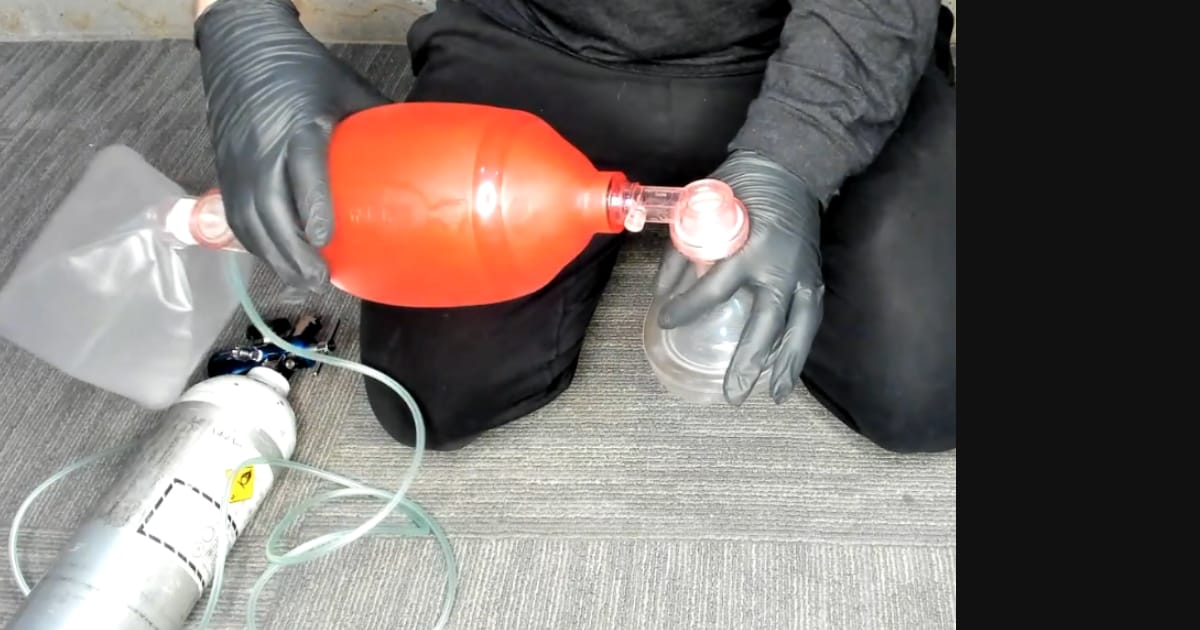
Most of the hour is spent with your hands on gear rather than watching a slide deck. You will assemble and break down systems, put devices on live partners, troubleshoot the failures that actually happen, a cracked O-ring, a hissing seal, a reservoir bag that will not fill, and practise handing over to arriving EMS with a clear account of what you gave and when. The pace is brisk and the groups are kept small so that everyone gets a turn on the equipment instead of watching someone else have one.
There is no prerequisite for the course itself. Successful candidates receive a Canadian Red Cross Oxygen Therapy certificate; Delta is a Canadian Red Cross Training Partner. As with any of our courses, sitting through the session is not the same as being certified, certification requires full attendance and a successful evaluation, and in a one-hour class full attendance means the whole hour.
Real oxygen, real equipment, yours to keep
You train on real medical oxygen, compressed gas from a proper cylinder, not an empty bottle you are asked to imagine is working. Your fee includes a brand-new nasal cannula and a brand-new non-rebreather mask, opened from the packaging in class. You fit and run them on yourself and on fellow students, the way you would on a patient, and they are yours to take home afterwards.
That is a real supplies cost and it is deliberate. The first time you crack a regulator, seat a mask and watch a reservoir bag fill should not be on a real call.
Who takes Oxygen Therapy in Calgary
Many candidates already hold a responder-level certificate and have found that their worksite, contract or client expects an oxygen credential on top of it. Industrial and oilfield medics working remote Alberta sites are the clearest example: the cylinder is in the truck, the site medical plan assumes someone can use it, and the paperwork has to show who was trained. The same pattern turns up on mine sites, mills, plants and construction projects. For people on rotation, an evening hour is often the only training slot that does not cost them a shift.
It also suits clinical and semi-clinical teams whose emergencies are rare but real, dental offices, medi-spas, physiotherapy and chiropractic clinics, veterinary staff, and anyone who keeps an emergency kit on the wall for the one bad day a year. Event medical staff working Calgary and Leduc venues take it for a similar reason: after positioning an airway, oxygen is one of the few things you can actually do for a patient on a first-aid deck while you wait for EMS.
Finally, there are people building toward something bigger. Students working through Advanced First Aid, an EMR certificate, or a paramedic program often add Oxygen Therapy early because it takes one evening hour, costs less than the certificates around it, and is immediately useful in casual or event work while they finish their longer training.
How the session runs and how you are assessed
Sessions are taught in person in Calgary, at 1550 5 St SW #300, and they are scheduled in the evening so you can come after a day shift instead of booking time off. Because the whole class is one hour, nothing in it is padding: a tight theory block, then straight onto equipment stations, then scenario practice where you are handed a patient and expected to make an oxygen decision under a bit of time pressure rather than reciting a list. From the first minute to the last you are either being shown something or doing something yourself.
Assessment is practical and continuous, which is the only way it could work in an hour. Your instructor is watching whether you can set a system up correctly and safely, whether you pick a delivery device that suits the patient in front of you, whether you notice when your patient is not improving, and whether you can explain what you did afterwards. Corrections come on the spot rather than being saved for a debrief at the end: if something is not right, you get told and you get another go, what we are after is a responder who can be trusted with a cylinder, not a signature on a sheet.
Our instructors are working paramedics, firefighters and emergency professionals, so the coaching tends to be blunt and practical. Expect corrections about things that matter on scene, where you park the cylinder, how you secure it in a moving vehicle, what you do when the regulator will not seat, rather than a scripted read-through.
Where it fits: Airway Management, AFA and EMR
Be clear about what this course is not. Oxygen Therapy on its own does not make you a workplace first aid attendant, a site medic or a responder. It is a one-hour add-on skill that assumes something else, usually a first aid or responder certificate such as Intermediate First Aid, Advanced First Aid or EMR, is providing the assessment and treatment framework underneath it. If you have no first aid training at all, take a responder course first, or take both and be honest with your employer about the order.
The natural companion is Airway Management, and in Calgary we run the two back-to-back on the same evening: Airway Management 18:30 to 19:30, Oxygen Therapy 19:30 to 20:30. Oxygen answers "this patient needs more oxygen than room air"; airway management answers "this patient's airway will not stay open long enough for that to matter." Together they cover both halves of the same breathing problem, and taking them in one two-hour evening means one trip, one parking spot and two certificates. Some industrial and event medical postings ask for both, read the wording of the posting or contract, and confirm with the employer before you book.
Above that sit the full responder certificates. Advanced First Aid (AFA) is a common next step for industrial and site work. Emergency Medical Responder (EMR) is the longer option. One caveat we state plainly on every page that mentions it: a Canadian Red Cross EMR certificate is not an Alberta College of Paramedics-approved program, it does not confer College registration, and it does not give you a practice permit in Alberta. It may meet selected PCP-school admission requirements, verify your exact school and intake before you spend the money.
On employer acceptance, we do not make promises on anyone else's behalf. Many Alberta employers, prime contractors and event organizers accept a Red Cross Oxygen Therapy certificate as evidence of oxygen competency, confirm your specific requirement with your employer, site medical director or contract holder before you register. Whether you may actually administer oxygen at work is usually governed by your site's medical direction and protocols, not by the certificate alone.
Calgary, Leduc, onsite and travel delivery
Calgary is our home market and where most public Oxygen Therapy sessions run, at 1550 5 St SW #300. We also deliver regularly in Leduc, at 4810 50th Ave, and across the greater Edmonton region, which suits crews working the airport corridor, Nisku and the industrial parks south of Edmonton.
If you have a group, onsite delivery is usually the better answer. We bring instructors and equipment to your facility, camp or event site anywhere in Alberta, elsewhere in Canada, and internationally on request. Onsite delivery carries an additional fee to cover travel and setup, and it lets us run the scenarios in your actual space, with your actual cylinders and your actual response plan, which teaches more than the same drill run on our gear in a rented room.
Because the class is one hour, it drops into a shift schedule almost anywhere: run it at the end of a day shift, run it twice in one evening so both crews get through, or bolt it onto the front or back of a longer responder course you are already running for your people. Onsite, Airway Management and Oxygen Therapy together are a two-hour block, a realistic ask for a site that cannot afford to lose a day of production to training.
How to prepare and what to bring
There is no pre-study requirement and no prerequisite certificate. Come rested, wear clothes you can kneel and work in, and bring water. If you wear contact lenses or have any mobility or medical consideration that affects floor-level work, tell us in advance so the instructor can plan around it rather than improvise in an hour that has no spare time in it.
Bring identification and, if you already hold one, your current first aid, CPR or responder certificate, not because it is required to enrol, but because it helps the instructor pitch the scenarios at the right level and helps us keep your records tidy for future recertification reminders.
If your workplace uses specific oxygen equipment, a particular cylinder size, a manual resuscitator, a demand valve, a regulator with an unusual fitting, tell us when you register, or bring it with you if it can be safely transported. Practising on the gear you will actually reach for on shift is worth more than practising on ours.
Arrive a few minutes early and plan for the full scheduled hour. A one-hour class has no slack in it: late arrivals and partial attendance cannot be certified, because certification depends on both attendance and a completed evaluation. If you are taking Airway Management the same evening, block out from 18:30 through 20:30 rather than just the second hour. Current session dates, the current fee and any group or onsite quote are shown on the registration page; if the schedule does not show a date that works for you, contact us and we will tell you what is coming up or what a private session would look like.
Who this course is for
- Oilfield and industrial medics on remote Alberta sites
- Site first aid attendants whose trailer already has a cylinder
- AFA and EMR holders adding an oxygen credential
- Dental, clinic and med-spa teams responsible for in-office emergencies
- Event and festival medical staff in Calgary and Leduc
- Security and loss-prevention staff with medical response duties
- Students working toward a paramedic program who want casual event work
- Employers arranging onsite refresher training for a whole crew
English isn’t your first language?
Our instructors teach in English, with live-translated classroom text available in supported languages. You can follow explanations on screen while participating in the same hands-on training as the rest of the class.
Because translated explanations require additional reading and processing time, your instructor may occasionally pause before moving to the next topic. This can make the instructional pace slightly slower.
Optional preparation materials may also be available before class to help you become familiar with common English first aid terminology.
Languages are confirmed course by course, so none is guaranteed until we confirm it with you.
Contact us before registering to confirm that your preferred language is available for your course.
Related reading
- The Five-Minute Check That Finds the Empty CylinderA short routine for a site response kit that catches the failures you would otherwise discover with a patient in front of you.
- When Oxygen Helps, and When It Does NotOxygen is not a general-purpose treatment. Here is the reasoning behind reaching for it, and the cases where it changes nothing.
- Stroke Is a Clock: Why Last Known Well MattersLast known well is the first question the hospital asks. What happens to brain tissue during the delay, and why the answer decides the treatment.
Where we teach this course
Public sessions run in Calgary, with dates in Leduc through the year.
We also deliver this course at your worksite for groups, useful for crews who can’t release staff to travel. Onsite delivery carries an additional fee on top of per-person pricing. Request an onsite quote.
We travel for private and group training across Canada, and internationally by arrangement. If you’re outside Alberta, tell us where you are and we’ll price it.
Ready to take this course?$130.00 + GST & applicable taxes
Common questions
- Do I need a first aid certificate before I take this course?
- No. There is no prerequisite to enrol. But be realistic about what you get: an hour on Oxygen Therapy teaches one intervention, not patient assessment. If you have no first aid training, pair it with a first aid or responder course such as Intermediate First Aid or Advanced First Aid so you know when to reach for the cylinder in the first place.
- Is Oxygen Therapy enough on its own to work as a site medic?
- No. Industrial and site medic roles are usually built on a responder certificate, often Advanced First Aid or EMR, with oxygen and airway credentials added on top. We cannot tell you what any particular site will accept, so check the exact wording of the posting or contract and confirm with the employer before you book training.
- How long is the course and how much does it cost?
- It runs as a single one-hour evening class, currently 19:30 to 20:30 in Calgary, you do not need to take a day off work for it. The Canadian Red Cross sets the hour requirement and it can change, so check the exact hours published with the run you are booking. The current fee and the scheduled hours for each date are shown on the registration page, so you are always looking at the live figure rather than one written into an article. Contact us for group or onsite pricing, which carries an additional travel and setup charge.
- Will my employer accept this certificate?
- Many Alberta employers, prime contractors and event organizers accept a Canadian Red Cross Oxygen Therapy certificate as evidence of oxygen competency, but we cannot speak for any specific one. Confirm your exact requirement with your employer or site medical director first. Being certified is also not the same as being authorized to administer oxygen at work, that usually comes from your site's medical direction and protocols.
- Should I take Airway Management at the same time?
- If you can, yes, and in Calgary it is easy, because the two run back-to-back on the same evening: Airway Management 18:30 to 19:30, then Oxygen Therapy 19:30 to 20:30. That is two certificates in one two-hour evening, one trip and one parking fee. The two courses solve adjacent problems, and some industrial and event medical postings ask for both. Check what your own employer or contract actually requires before you pay for both, and confirm the times published with the dates you are booking.
- How long does the certificate last, and can I renew it?
- Validity follows the current Canadian Red Cross standard, and we confirm the exact period with you at registration rather than quoting a number that may change. Most people renew it alongside their responder recertification, and we can send you a reminder before it lapses if you register through our system.
- Can I take this course if English isn't my first language?
- Yes. Our instructors teach in English, and live-translated classroom text is available for this course in supported languages. Contact us before registering to confirm that your language is available for your course.
- Can I register on the same day as the course?
- Online registration closes at 11:59 PM the night before an in-person course. If you need training today, call or text 825-883-3582 before class starts. We may be able to fit you in, depending on space and the instructor's approval. It is not guaranteed.
- Online registration is closed. Does that mean the course is full?
- No. Closed online only means the online booking window has ended. A seat may still be open, or open up if someone cancels. Call or text 825-883-3582 to check.
- What if I arrive late?
- Certification needs full attendance and every required skill. Arriving late can mean we cannot certify you that day. If you are running late, call or text as early as you can so we can tell you what is possible.
Where to go next
Ready to register?
Pick your cohort above, or start here and choose your dates on the registration page.
Cancellation, transfer, and refund terms are shown before payment and confirmed at registration. Not sure which course fits? Email us and we’ll help.
Sources
- On successful completion you receive a Canadian Red Cross Oxygen Therapy certificate. Canadian Red Cross (verified 2026-07-23).
← All courses · Last reviewed 2026-07-23