ABOUT DELTA EMERGENCY SUPPORT TRAINING
The Responder-Led Team Behind Delta Emergency
First aid and responder training shaped by frontline experience, professional standards, and instructors who know how to build real confidence.
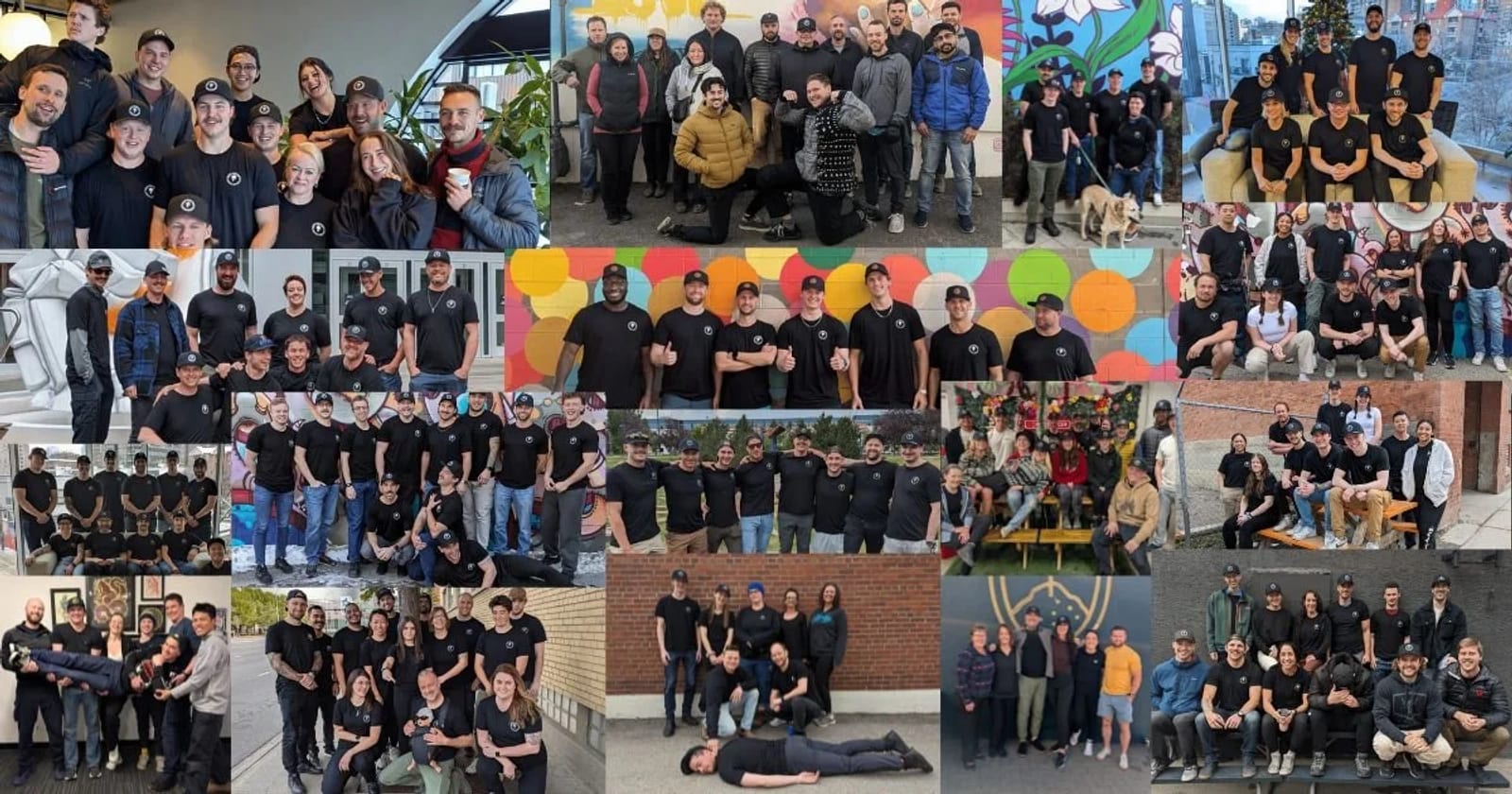
Delta Emergency Support Training was built by experienced emergency responders and Canadian Red Cross instructors who believe first aid training should be practical, clear, and useful beyond the certificate. Our team brings together paramedicine, fire response, community care, education, mentorship, and real-world coaching to help students become more confident, capable, and ready to act.
We Create Professionals
Meet the People Behind Delta Emergency
Instructor Bios
Open a team member’s bio to learn more about the experience, teaching style, and responder background behind Delta Emergency’s courses.
-
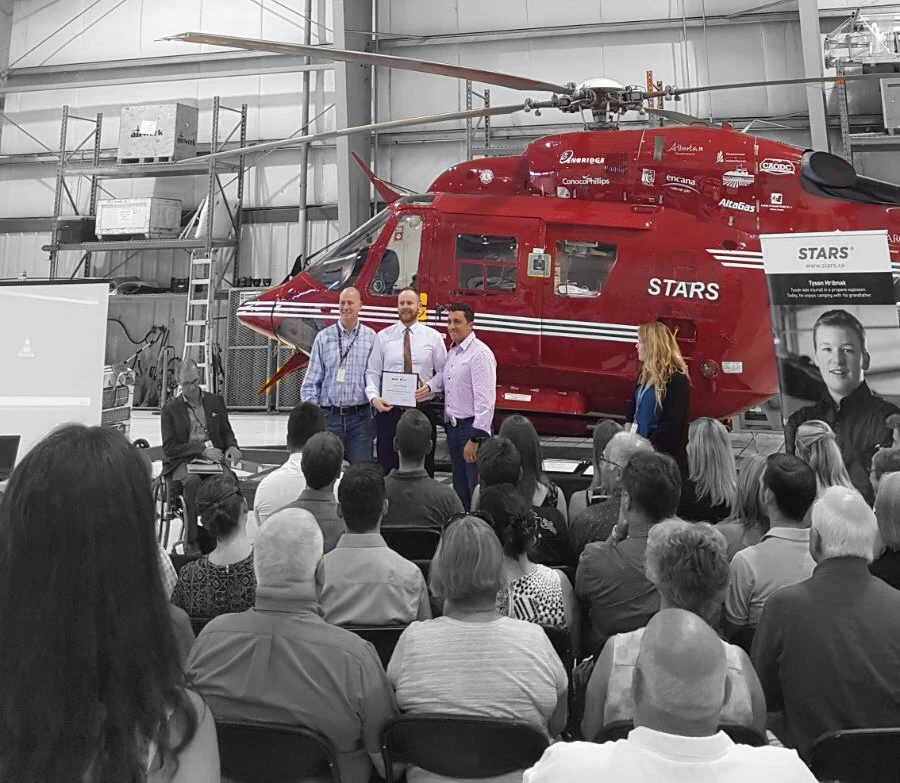
Jarrett is the owner of Delta Emergency Support Training and an Advanced Care Paramedic with 19 years in EMS. His background includes frontline paramedicine, EMS operations supervision, AHS Mobile Integrated Healthcare Community Paramedicine, and completion of the STARS and University of Calgary Critical Care & Transport Medicine Academy.
Jarrett brings a multidisciplinary approach to first aid and responder education. His teaching connects real emergency response, clinical judgement, communication, confidence, and practical skill development. Many of his students are working toward careers in EMS, fire, healthcare, or public safety, and he takes pride in helping them build the foundation to get there.
His classes are structured, practical, and high-expectation, but never cold. Jarrett keeps training approachable, direct, and memorable, with enough humour to keep students engaged while still respecting the seriousness of what they are learning.

-
Nickie is an Advanced Care Paramedic with 19 years in EMS and currently serves as an AHS Mobile Integrated Healthcare Community Paramedic. She is a respected educator across EMR, PCP, and ACP training environments, bringing deep clinical knowledge and a calm, supportive teaching presence to the students she works with.
At Delta, Nickie contributes her experience in patient care, paramedicine education, community health, and professional responder development. Students benefit from her ability to explain complex ideas clearly and make challenging material feel manageable.
Nickie brings warmth, patience, and real expertise into the classroom. When she joins a course, students get the benefit of a clinician and educator who knows how to support learners while still holding them to a professional standard.
-
Michael is an Advanced Care Paramedic with 25 years in EMS and one of Delta’s main Canadian Red Cross instructors. Students will often find him teaching in Calgary, Leduc, and advanced responder-focused courses.
Mike’s teaching style is direct, practical, and skill-focused. He brings extensive clinical experience into the classroom and uses clear coaching to help students turn repeated practice into reliable performance. His goal is not just for students to understand a skill, but to perform it with confidence when it matters.
Mike sets a high bar because the work matters. Students trained by Mike leave with stronger habits, sharper skills, and a better understanding of what competent care should look like.
-
Kumari is a registered Emergency Medical Responder in British Columbia, Canadian Red Cross instructor, and an integral part of the Delta Emergency team. Originally from British Columbia, she now teaches in Calgary, Leduc, and onsite courses across Alberta.
Kumari brings energy, clarity, and approachability into the classroom. Students appreciate her ability to keep training engaging while still helping them practise the skills, build confidence, and stay focused on the course standard.
Her teaching style is upbeat, practical, and student-centred. She brings the kind of personality that helps students relax enough to learn, while still making sure they leave stronger than they arrived.

-
Stephen is a Calgary Firefighter and a former Delta Advanced First Aid student who now contributes back to the program as an instructor. His path gives students something valuable: a teacher who has been through the same training pathway many of them are now starting.
Steve brings experience from fire response, first response, wildfire crew leadership, and ski patrol into the classroom. He understands what students are preparing for and helps connect course skills to the real expectations of public safety work.
Steve is also an outdoor sports enthusiast, which makes his wilderness, injury prevention, and real-world scenario perspective especially useful. His suspiciously strong survival record may or may not be linked to a steady intake of rotisserie chicken.

-
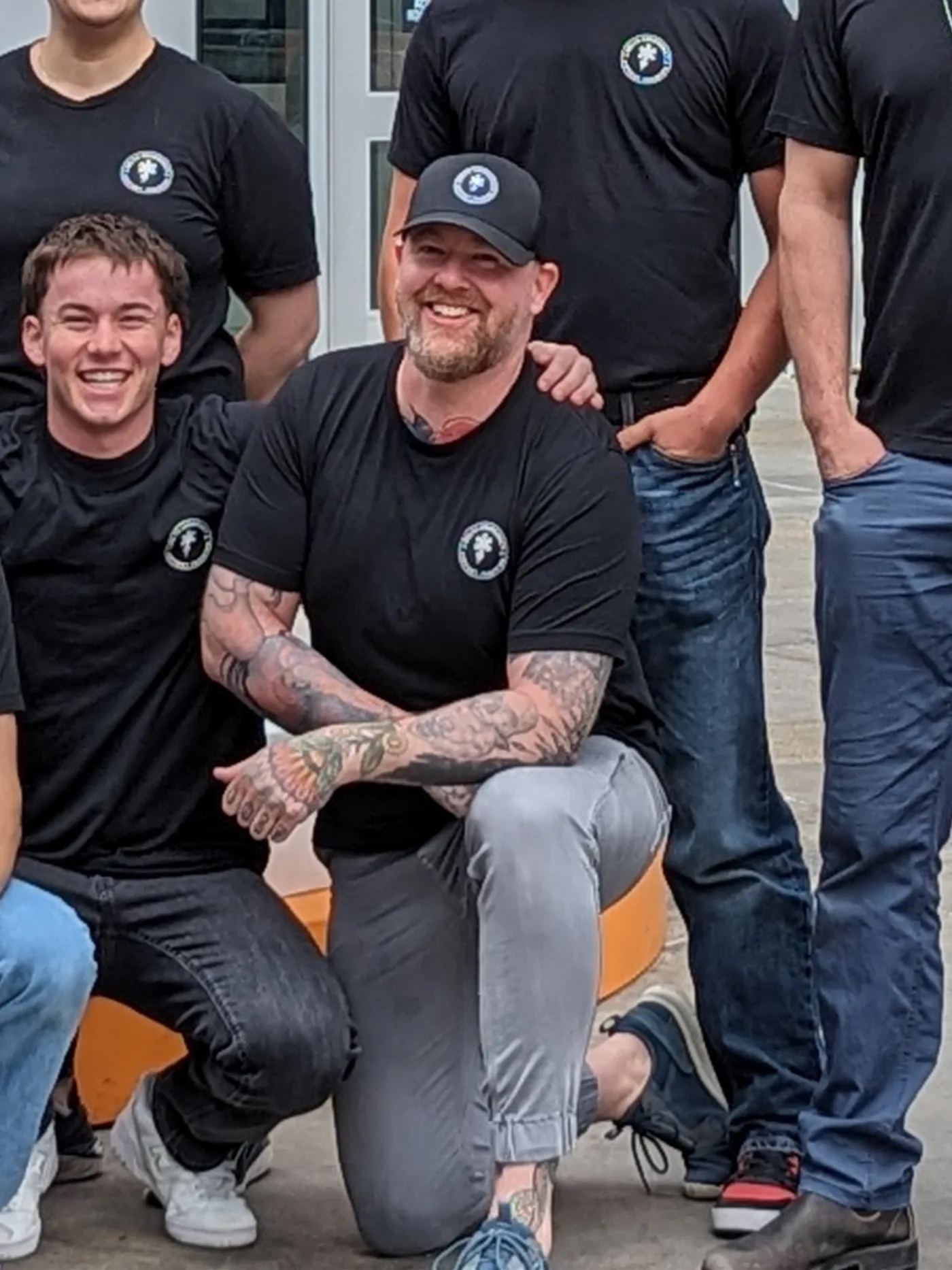
Connor is a Calgary Firefighter and former Delta Advanced First Aid student who now teaches and mentors with the team. Because he has moved through the same early steps many Delta students are preparing for, he brings a grounded and relatable perspective to the classroom.
Connor helps students understand not only the course material, but the mindset, preparation, and consistency required for public safety pathways. He has become a strong mentor for learners preparing for fire, responder, and emergency services careers.
Outside the classroom, Connor is a technical climbing coach and brings that same attention to safety, movement, coaching, and precision into his teaching. He also has an exceptional moustache and a permanent unresolved account with the Tooth Fairy.
About Delta Emergency Support Training
First Aid & Professional Responder Training in Calgary
Start with First Aid. Build Toward Response.
Delta Emergency Support Training delivers Canadian Red Cross First Aid, CPR, Basic Life Support, Advanced First Aid, and Emergency Medical Responder training in Calgary, Leduc, and through private onsite delivery across Alberta and beyond.
We train workplaces, childcare providers, fire applicants, industrial teams, future paramedics, healthcare providers, and community members who want their training to mean something beyond the certificate.
We Create Professionals.
Trusted Medical Training. Real Responder Experience.
Delta Emergency is a Canadian Red Cross Training Partner built by experienced emergency responders.
Our courses are taught by paramedics, firefighters, and emergency professionals who bring real patient care experience into the classroom. That matters because first aid is not just a list of steps. It is recognition, decision-making, communication, confidence, skill, and action under pressure.
Students at Delta do not simply sit through a course. They practise. They ask questions. They work through scenarios. They handle equipment. They receive coaching. They learn how to move from uncertainty into action.
We teach the standard, then we teach students how to use it.
Training for People Who Expect More From Themselves
Some people need first aid because a workplace, school, employer, fire department, licensing body, or application process requires it.
That is valid.
But at Delta Emergency, the certificate is not the finish line. It is the visible proof that a student met the required standard. The deeper goal is competence.
Competence is what matters when someone is injured, unconscious, bleeding, choking, deteriorating, or depending on the person in front of them to act.
Delta Emergency is built for students and organizations who want training that holds up beyond the classroom. We do not compete on shortcuts. We do not dilute the course to make it feel easier than it should. We do not present basic exposure as meaningful preparation.
We train with structure, purpose, and respect for what these skills are for.
A first aid room should be safe and supportive, but it should not be casual about the responsibility. Students should leave encouraged, but also sharper. They should understand the skill, the reason behind the skill, and the standard expected of them.
That is the Delta difference.
Canadian Red Cross Training Partner
Delta Emergency delivers Canadian Red Cross programs through a recognized national training system.
Canadian Red Cross courses are built around evidence-based education, current first aid and resuscitation guidelines, required competencies, practical skill development, and certification standards. These programs are used across Canada for workplace first aid, CPR, Basic Life Support, youth training, Advanced First Aid, and Professional Responder education.
The Red Cross provides the program framework.
Delta Emergency provides the delivery.
That combination is the strength of our training. Students receive Canadian Red Cross certification through a trusted national program, delivered by instructors with real emergency response experience and a practical understanding of what these skills look like outside the classroom.
Red Cross standards. Delta execution.
Real Experience Behind Every Course
240,000+ Frontline Patient Care Hours
Our instructional team brings experience built through emergency response, clinical decision-making, and real patient care.
14+ Years as a Canadian Red Cross Training Partner
Delta Emergency has been delivering Canadian Red Cross training since 2013.
110+ Years Combined Emergency Experience
Our team includes paramedics, firefighters, and responder instructors with deep experience in the field and in the classroom.
Thousands Certified Across Alberta and Canada
Students have trained with Delta through public courses, private workplace programs, onsite delivery, responder pathways, and virtual youth programs.
These numbers are not decoration. They explain why our courses feel different.
The people teaching the course have done the work.
Built for Workplaces, Childcare, Fire Applicants, Industrial Teams, and Future Paramedics
Delta Emergency trains a wide range of students, but our approach is especially valuable for people who need their training to stand up under pressure.
Workplaces choose Delta because they need staff who can respond before EMS arrives.
Childcare providers choose Delta because they are trusted with children and need calm, practical emergency skills.
Fire applicants choose Delta because Advanced First Aid, BLS, and responder-level preparation are part of a serious career pathway.
Industrial teams choose Delta because remote sites, trades, oilfield, construction, utilities, forestry, and high-risk workplaces need training that is practical, realistic, and equipment-focused.
Future paramedics choose Delta because they want a stronger foundation before entering PCP, EMR, or higher-level emergency response education.
Healthcare providers choose Delta because BLS, CPR, airway, oxygen, and resuscitation skills need to be clear, current, and professionally taught.
Different students. Same standard.
Train properly. Practice seriously. Leave prepared.
Our Origin
Delta Emergency was founded in 2013 by Alberta Advanced Care Paramedics who saw the same problem repeatedly in the field.
People wanted to help, but hesitation stopped them.
Some were afraid of doing the wrong thing. Some had taken first aid years earlier and no longer trusted their skills. Some had never practised enough to feel capable. Some had been taught the information, but not the confidence to use it.
We built Delta Emergency to close that gap.
Our courses were designed to help students become more capable in the moments where people often freeze: approaching a patient, checking responsiveness, calling for help, starting CPR, using an AED, controlling bleeding, recognizing deterioration, communicating with a team, and continuing care until help arrives.
The goal was never to create a room full of people who could only pass a test.
The goal was to create people willing and able to respond.
That remains the purpose of Delta Emergency.
Why “Delta”?
In emergency medical dispatch, calls are prioritized by urgency. Two of the highest levels are Delta and Echo.
Echo calls are rare and immediately life-threatening.
Delta calls are serious, time-sensitive, and far more common. These are the calls where responders spend much of their careers. They are unpredictable, demanding, and often decided by what happens in the first few minutes.
That is the space Delta Emergency trains for.
Delta represents serious response.
Emergency represents the moments we prepare students to face.
Support represents the care that begins before an ambulance, fire crew, or medical team arrives.
Training is the foundation that turns hesitation into action.
Our name is not a slogan. It is a standard.
Delta Emergency exists for the gap between “someone should do something” and “I know what to do.”
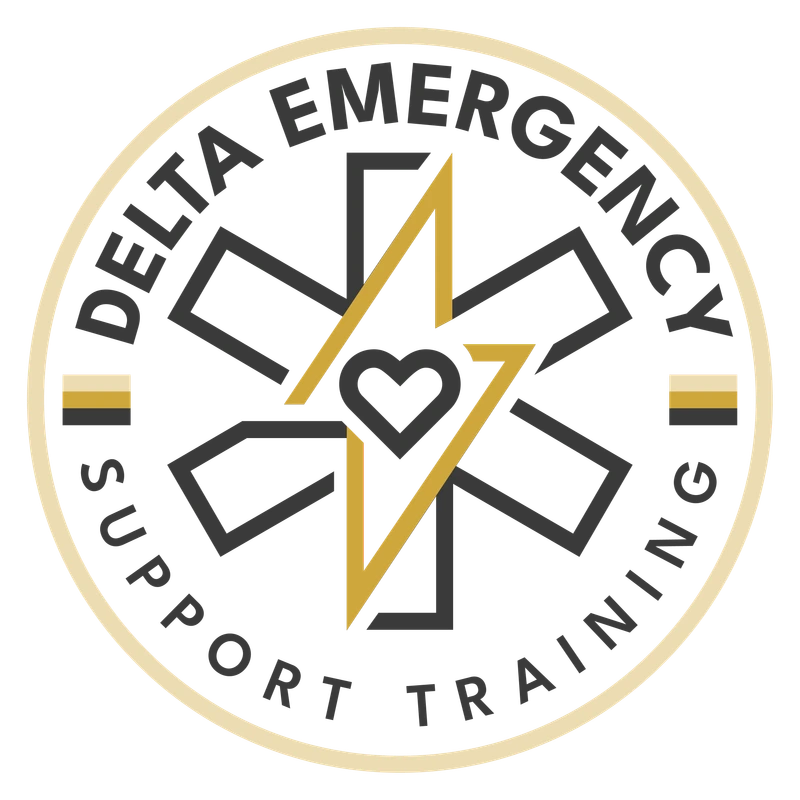
The Delta Lifebolt
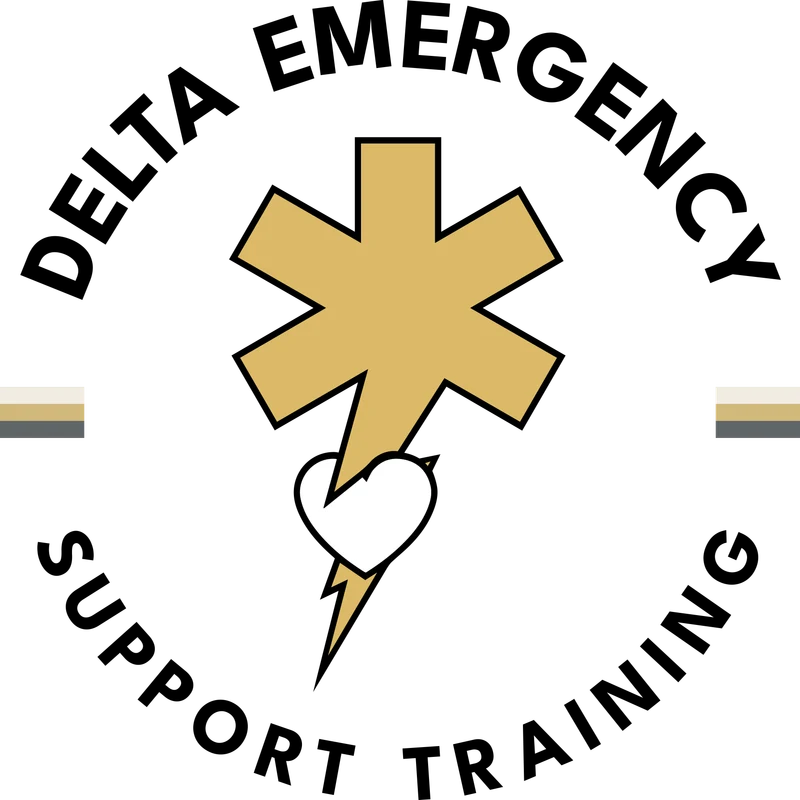
Our logo brings together the EMS Star of Life, a lightning bolt, and a heart.
The Star of Life represents the chain of emergency medical care: recognition, reporting, response, on-scene care, care in transit, and transfer to definitive care.
The lightning bolt represents speed, CPR, AED use, early action, and the energy required to intervene before advanced help arrives.
The heart represents the person at the centre of every emergency.
Together, the Delta Lifebolt reflects the broader chain of survival. Outcomes are rarely created by one person alone. They are built through connected actions: someone recognizes the emergency, someone calls for help, someone starts CPR, someone applies an AED, Fire and EMS arrive, paramedics continue care, and hospital teams take over.
Each link matters.
Delta Emergency exists to strengthen the first links in that chain.
What We Stand For
Competence Over Appearance
We are not interested in training that only looks good on paper. Students need to leave with skills they can perform, not just terms they can repeat.
Standards Without Shortcuts
Canadian Red Cross programs have defined teaching hours, skill expectations, equipment requirements, and certification standards. We respect those standards because they protect the student, the patient, the workplace, and the profession.
Real Practice
Students need time with equipment. They need repetition. They need feedback. They need scenarios. They need to make decisions while someone is watching, coaching, and correcting them.
Professional Instruction
Our instructors bring real emergency response experience into the classroom. We teach with the perspective of people who have managed actual patients, actual scenes, actual uncertainty, and actual consequences.
Respect for the Learner
A serious course does not need to be intimidating. Students learn best when the room is structured, clear, supportive, and professionally run. We set expectations, then help students meet them.
Reputation Through Results
We do not build trust by chasing attention. We build it by preparing people well. Reviews, referrals, returning students, workplace clients, and responder applicant success are outcomes of the work, not substitutes for it.
Scenario-Based Training
Emergencies are rarely clean, quiet, or perfectly organized.
That is why Delta Emergency uses scenario-based training to help students connect knowledge to action. Students practise assessment, communication, patient positioning, CPR, AED use, bleeding control, splinting, spinal motion restriction, oxygen, airway skills, vital signs, team roles, and decision-making at the level appropriate to their course.
Scenarios help students learn what a checklist cannot teach on its own.
How do you approach the patient?
What do you notice first?
What needs to happen now?
Who is calling 911?
What equipment do you need?
What changed?
What are you going to do next?
That is where confidence is built.
Not by pretending emergencies are simple, but by giving students enough structure and practice to move through them.
Public Courses and Private Onsite Training
Delta Emergency offers public courses in Calgary and Leduc, with private onsite training available across Alberta and beyond.
Our public courses support individuals, workplaces, healthcare providers, fire applicants, EMR students, future paramedics, childcare providers, and people who need recognized Canadian Red Cross certification.
Our onsite training supports companies, municipalities, industrial sites, clinics, dental teams, First Nations communities, fire departments, camps, remote worksites, and private organizations that need group training delivered where their people work.
Training can be adapted to the audience while still respecting the required course standards.
That distinction matters.
Good instruction is not generic. It is grounded in the course standard, then shaped around the people in the room.
Students Notice the Difference
Students consistently point to the same things after training with Delta: experienced instructors, realistic scenarios, hands-on practice, clear explanations, supportive coaching, and training that feels useful beyond the certificate.
That is the reputation we care about.
Not noise. Not gimmicks. Not inflated claims.
Useful training. Strong instruction. Professional standards. Students who leave more capable than when they arrived.
Start with First Aid. Build Toward Response.
Delta Emergency Support Training exists for people who want their training to mean something.
For workplaces that need staff who can act before help arrives.
For childcare providers trusted with other people’s children.
For fire applicants preparing for a competitive career.
For industrial teams working where backup may not be close.
For future paramedics building the foundation before the uniform.
For parents, caregivers, and community members who refuse to be helpless when something goes wrong.
Some students begin with Emergency First Aid.
Some need Standard First Aid for work, school, or childcare.
Some move into Basic Life Support, Advanced First Aid, Emergency Medical Responder, or a professional responder pathway.
The starting point may be different.
The standard is not.
Delta Emergency brings Canadian Red Cross training together with real responder experience, practical coaching, and scenario-based instruction built around the moments where people usually hesitate.
We do not train people to collect certificates.
We train people to recognize the emergency, take control of the first few minutes, and respond with confidence.
Start with First Aid. Build Toward Response.
We Create Professionals.