
Advanced First Aid Recertification is the short route back to a current AFA certificate for people who already hold one.
Read more about this courseShow less
It is scheduled at 40 hours across five days instead of the 80 hours of the full course, Basic Life Support is included, and it runs in person in Calgary with instructors who work as paramedics, firefighters and emergency professionals. Your expiry date determines your eligibility. Recertification is only available while your certificate is still valid on the day of the course. Once it has expired, you need the full course, at a higher cost and with twice the classroom time. Check your expiry date and book before it.
Course details
- Certificate
- Canadian Red Cross Advanced First Aid (recertification)
- Certificate valid for
- 3 years (BLS component 1 year)
- Issued by
- Canadian Red Cross
- Duration
- Approx. 40 hours (5 days)
- Prerequisites
- A current Canadian Red Cross Advanced First Aid certificate. It must not have expired.
- CPR / BLS
- What is BLS?BLS is Basic Life Support CPR, also known as Healthcare Provider CPR. It covers adults, children, babies and neonates.It is a professional level CPR course, used by firefighters, nurses, paramedics, doctors and other healthcare workers.More about the ages this covers
- Locations
- Calgary, AB, 1550 5 St SW #300, Leduc, AB, 4810 50th Ave
- Price
- $700.00 + GST & applicable taxes (charged at checkout for your province)
How this course runs
- Traditional: three days or more, every day in person. Nothing to do online.
- How it runs
- Five days in class.
- Class times
- 9:00 a.m. to 6:00 p.m.
- Whole course
- 40 hours in total
Upcoming dates, choose your cohort
CalgaryApr 12 – Apr 16, 2027 · Calgary, AB, 1550 5 St SW #300 (Papa)
- Session 1: Mon, Apr 12, 2027 · 9:00 a.m. to 6:00 p.m.in class
- Session 2: Tue, Apr 13, 2027 · 9:00 a.m. to 6:00 p.m.in class
- Session 3: Wed, Apr 14, 2027 · 9:00 a.m. to 6:00 p.m.in class
- Session 4: Thu, Apr 15, 2027 · 9:00 a.m. to 6:00 p.m.in class
- Session 5: Fri, Apr 16, 2027 · 9:00 a.m. to 6:00 p.m.in class
Registration closes April 11, 2027.
April 2027
SMTWTFS123456789101112131415161718192021222324252627282930Traditional: 5 class days, all in person
Traditional format(in person, no online sessions)
- 5 full days in class
CalgaryTraditional: three days or more, every day in person. Nothing to do online.Edmonton regionApr 12 – Apr 16, 2027 · Leduc, AB, 4810 50th Ave (Bravo)
Waitlist only- Session 1: Mon, Apr 12, 2027 · 9:00 a.m. to 6:00 p.m.in class
- Session 2: Tue, Apr 13, 2027 · 9:00 a.m. to 6:00 p.m.in class
- Session 3: Wed, Apr 14, 2027 · 9:00 a.m. to 6:00 p.m.in class
- Session 4: Thu, Apr 15, 2027 · 9:00 a.m. to 6:00 p.m.in class
- Session 5: Fri, Apr 16, 2027 · 9:00 a.m. to 6:00 p.m.in class
Registration is closed for these dates.
April 2027
SMTWTFS123456789101112131415161718192021222324252627282930Traditional: 5 class days, all in person
Traditional format(in person, no online sessions)
- 5 full days in class
Edmonton regionTraditional: three days or more, every day in person. Nothing to do online.Waitlist only. Join the waitlist and we’ll email you the moment a seat is available.
Edmonton regionDec 13 – Dec 17, 2027 · Leduc, AB, 4810 50th Ave (Uniform)
Waitlist only- Session 1: Mon, Dec 13, 2027 · 9:00 a.m. to 6:00 p.m.in class
- Session 2: Tue, Dec 14, 2027 · 9:00 a.m. to 6:00 p.m.in class
- Session 3: Wed, Dec 15, 2027 · 9:00 a.m. to 6:00 p.m.in class
- Session 4: Thu, Dec 16, 2027 · 9:00 a.m. to 6:00 p.m.in class
- Session 5: Fri, Dec 17, 2027 · 9:00 a.m. to 6:00 p.m.in class
Registration is closed for these dates.
December 2027
SMTWTFS12345678910111213141516171819202122232425262728293031Traditional: 5 class days, all in person
Traditional format(in person, no online sessions)
- 5 full days in class
Edmonton regionTraditional: three days or more, every day in person. Nothing to do online.Waitlist only. Join the waitlist and we’ll email you the moment a seat is available.
CalgaryDec 13 – Dec 17, 2027 · Calgary, AB, 1550 5 St SW #300 (Echo)
- Session 1: Mon, Dec 13, 2027 · 9:00 a.m. to 6:00 p.m.in class
- Session 2: Tue, Dec 14, 2027 · 9:00 a.m. to 6:00 p.m.in class
- Session 3: Wed, Dec 15, 2027 · 9:00 a.m. to 6:00 p.m.in class
- Session 4: Thu, Dec 16, 2027 · 9:00 a.m. to 6:00 p.m.in class
- Session 5: Fri, Dec 17, 2027 · 9:00 a.m. to 6:00 p.m.in class
Registration closes December 12, 2027.
December 2027
SMTWTFS12345678910111213141516171819202122232425262728293031Traditional: 5 class days, all in person
Traditional format(in person, no online sessions)
- 5 full days in class
CalgaryTraditional: three days or more, every day in person. Nothing to do online.
What you’ll be able to do
- Run a full structured patient assessment at working speed again, without hunting for the next step
- Repeat that assessment over a long wait and notice the change in a patient who is deteriorating
- Manage an airway with adjuncts and suction, and ventilate someone who is not moving enough air
- Deliver oxygen with the equipment the course covers and choose the right device for the patient
- Control life-threatening bleeding and catch shock early enough to act on it
- Perform BLS-level CPR and use an AED inside a working team to the current standard, not the one you learned at your last course
- Immobilize and move an injured patient with the equipment and the help actually on hand
- Give an organized handover to arriving EMS and leave documentation someone else can use
What comes with your seat
Registering opens the Delta student portal: your course drawn as a step-by-step path, chapter flashcards that unlock as you finish each one, a personal weak-spots deck built from the cards you miss, and a readiness view so you walk into class knowing where you stand.
581
flashcards across 25 chapters
50
field guides & references
Includes the full decks for The Delta Model, Advanced First Aid — the material builds on itself, so you get every level under the one you registered for.
Study material is part of your enrolment and opens in your portal when you register.
Ready to take this course?$700.00 + GST & applicable taxes
Recertification is a renewal, not a repeat of the whole course
This course exists for one group of people: those who already hold a Canadian Red Cross Advanced First Aid certificate and need it current again. It is scheduled at 40 hours across five days and runs in person in Calgary. The Canadian Red Cross sets the hour requirement and it can change, so check the exact hours, dates and daily start times published with the run you are booking before you request time off. It is shorter than the full course because it assumes you already know the material, not because it asks less of you.
Do not mistake it for a review lecture. It is an evaluated course with the same standard at the end, run at a faster pace and with far less teaching from zero. Most students find the first day humbling. Skills fade in a predictable order: the assessment discipline goes first, while the hands-on techniques usually survive. You remember how to put on a tourniquet. You are slower than you think at working through a patient in an order that finds the thing that will kill them first, and slower still at doing it a second time when the patient changes.
The Canadian Red Cross owns this curriculum and we teach to it. We are not going to reprint their lesson list here. If a safety manager or a hiring file needs the current official outline, ask us and we will point you at the official Red Cross course description instead of at our paraphrase of it. What we can describe is the shape of the work you will be doing: structured patient assessment, airway and breathing management, serious bleeding and shock, medical and trauma emergencies, moving an injured person, and handing over to arriving EMS, all of it practised repeatedly rather than demonstrated once.
What a Delta recertification class adds is the room itself. It is a room of people who already hold the certificate and work in places where help is not close: leases, shop floors, rinks, camps. The instructors work as paramedics, firefighters and emergency professionals, so the scenarios get built around what actually went wrong on those calls: the assessment that was never repeated, the handover nobody could follow, the equipment that was not where the label said it was.
Your expiry date decides which course you are allowed to take
The prerequisite is a Canadian Red Cross Advanced First Aid certificate that is still valid on the first day of the course. That rule is set by the Canadian Red Cross, not by us: once the certificate has expired, recertification is closed and the full course is the way back. That single date is the difference between a five-day, 40-hour renewal and the full 80-hour program, so it is worth thirty seconds of checking rather than a guess.
Do not go from memory. Find the actual certificate, the wallet card or the PDF, and read the expiry printed on it. People are routinely a year out in either direction when they estimate, and the direction that hurts is the one where you book a renewal, take time off, and find out you were never eligible for it. Send us the certificate number, the issue date and the expiry date before you pay and we will check it against the current rules.
If you took your Advanced First Aid somewhere other than Delta, that is fine, and it is common. We still need the same details, because what matters is the Red Cross certificate and its dates, not which training partner delivered it. If you cannot find your record at all, tell us early. Tracing a certificate takes time you will not have in the last week before it expires.
If your certificate will have expired by the course date, we will tell you plainly and we will not sell you the recertification anyway. That is a smaller booking for us and an honest one for you, and it beats having you discover the problem on day one of a course you cannot be certified from.
What the 40 hours actually feel like
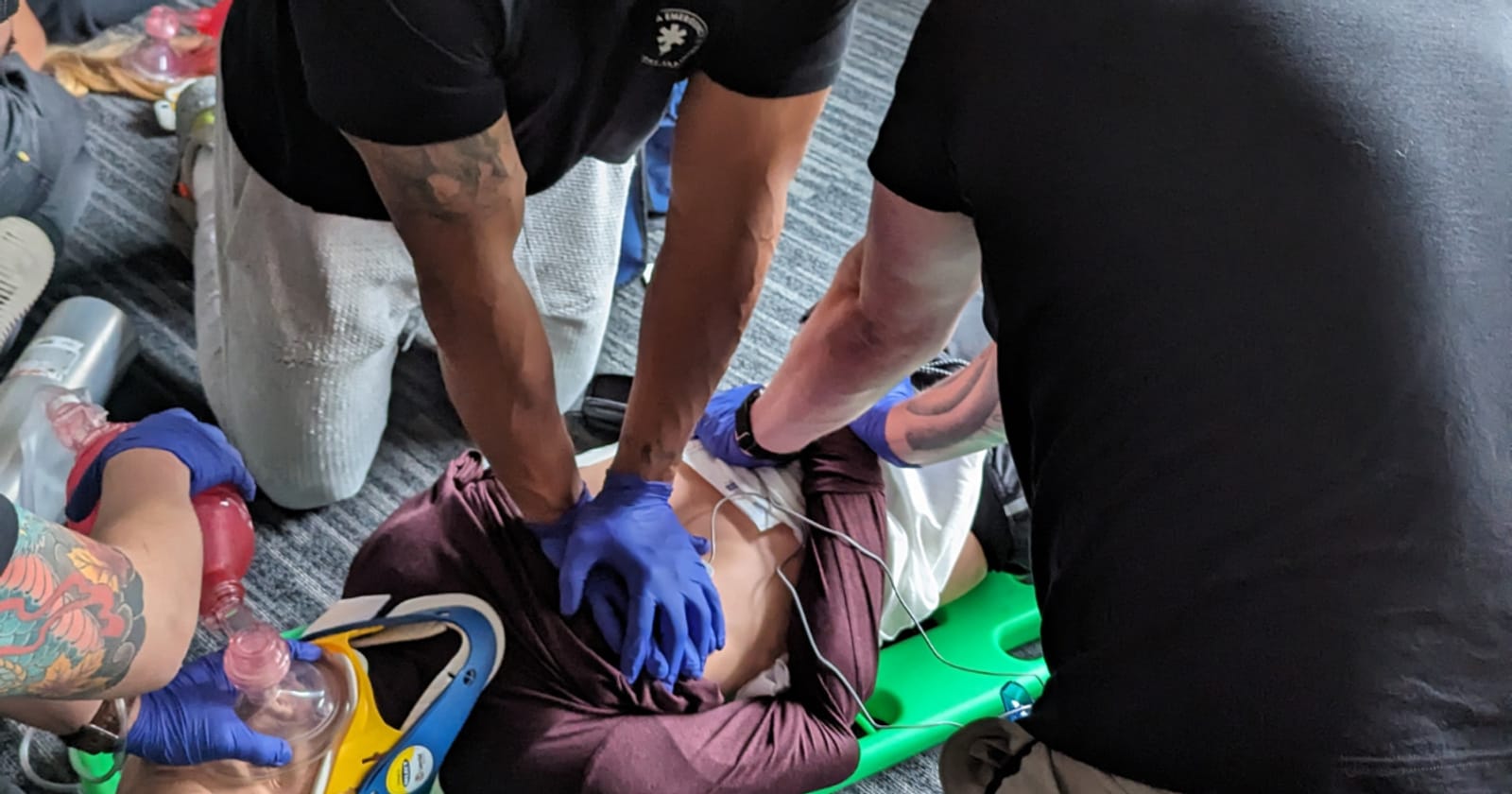
Physical and fast. Five full days, averaging something like eight and a half hours a day, so expect long stretches on your knees, on the floor, with your hands on a patient, and expect to be moved through material at a pace that assumes prior knowledge. There is very little watching. The point of a condensed renewal is repetition, so you will do the same skills more times in fewer days than you did the first time through.
Certification is not automatic. Finishing the hours is not the same as being certified: you have to meet the attendance requirement for the course and pass the evaluations, which include written and hands-on components, demonstrating each skill to standard in front of an instructor. Nobody is passed on effort or on the fact that they held the certificate before. If you know in advance that you will miss part of a run, tell us before it starts rather than during it, because the options are much better at that point.
The parts people are usually rustiest on are the unglamorous ones. Ongoing reassessment over a long wait for transport. The airway adjuncts and suction you have not touched since the last course. Choosing an oxygen delivery device instead of defaulting to the one you used last. Team CPR, which is a genuinely different skill from working alone on a mannequin. Documentation, and a handover a paramedic crew can absorb in thirty seconds. Those are the ones we push hardest, because they are the first to decay and the most visible when they fail.
Come honest about your gaps. Instructors would far rather hear on the first morning that you have not ventilated anyone since your last course than find it out in a final evaluation. Nobody in a recertification class is impressed by someone pretending to be current, and the whole reason the course exists is that being out of practice is normal.
What letting it lapse actually costs you
The consequence here is concrete. If your certificate expires before you recertify, the route back is the full Advanced First Aid course: 80 hours, at a materially higher fee and twice the classroom time of the renewal. Confirm both the recertification and full-course fees with the runs you are comparing before you decide. That is not a penalty we invented. It is simply what starting over costs.
There is a second cost people forget, and it lands before the first one. Between your expiry date and your next course, your certificate is simply not current. We cannot tell you what your site, your shift schedule or a contractor's paperwork requires, because that is set by whoever wrote the rule. What we can tell you is the date on your certificate, so if anyone in your organization tracks first aid coverage, give them notice well before it passes rather than after. Renewing three months early is a calendar problem. Renewing three months late is somebody else's paperwork problem.
If an employer is paying, start earlier still. Purchase orders, training budgets and approval chains move on their own schedule, and a certificate does not wait for accounts payable. Get the approval moving well before the expiry rather than treating booking as the first step.
The practical habit worth building: the week you finish, put the expiry date in your calendar with reminders at six months and three months out. The Basic Life Support component runs on its own shorter clock and needs its own reminder. People who do this renew calmly. People who do not end up calling us in a bad week.
What the renewed certificate does, and what it does not do
Certificate validity is set by the Canadian Red Cross and printed on the certificate you receive. The Advanced First Aid certificate and the Basic Life Support component run on their own clocks, and the shorter of the two is the one people miss. Read the dates on your own certificate rather than trusting a number on any website, ours included, and diarize both.
We will not tell you that this course meets, satisfies or is approved for a particular regulation, standard, occupational health and safety designation, employer policy, fire service posting or school admission requirement. That claim belongs to whoever wrote the rule, not to a training provider. Alberta employers set first aid requirements from a mix of provincial rules, industry practice, prime-contractor expectations and their own internal standards, and those shift with the hazard, the crew size and the distance to medical care. Send us the exact wording you were given and we will tell you honestly whether this course matches it, including when the honest answer is that it does not.
If your longer plan runs toward Emergency Medical Responder, keeping Advanced First Aid current is usually the sensible first move, because the bridge into EMR depends on holding a current AFA certificate. Be clear-eyed about what a Canadian Red Cross EMR certificate is, though. It is not a program approved by the Alberta College of Paramedics, it does not make you registrable as an EMR in Alberta, and it does not confer a practice permit. It may meet selected admission requirements at some Primary Care Paramedic schools, and you need to verify that with your exact school and your exact intake before you build a plan on it.
The honest framing on the renewal itself: it restores what you had. It is an advanced first aid credential, not a licence to practise medicine, and it does not authorize restricted activities or widen your scope at work. Your actual scope on a job is set by your employer, your site medical direction and any applicable regulation, never by a certificate. What the renewal gives you is a current, documented, evaluated level of training and enough recent repetition that you move instead of freezing.
Booking, crew renewals and how to prepare
Runs are held in person in Calgary, and we also train in Leduc for the greater Edmonton region, so ask us what is scheduled where if a commute is the deciding factor. For groups we deliver at your own worksite for an additional fee covering travel and setup, across Alberta, elsewhere in Canada, and internationally on request. Onsite delivery is the same course with the same hours, equipment, attendance requirement and evaluations. The location changes, the standard does not. If you have several people whose certificates come due in the same quarter, a single onsite run is usually easier to schedule than sending them out one at a time.
Tuition for the Calgary recertification is $700 plus GST at the time of writing. Treat that as a reference figure, not a final price. Confirm the current amount, what it includes, and the refund and transfer terms with the specific run before you register.
Register under the legal name exactly as it appears on your existing Advanced First Aid certificate. Renewal records get matched against that name, and a mismatch is a slow thing to unpick afterwards compared with typing it carefully once. Bring the certificate details with you as well.
Come dressed to work: clothing you can kneel, crawl and lift in, closed shoes, hair tied back. Bring water, food for long days, a pen and something to write in. There is a real physical component, so if you have an injury, a mobility limitation, a hearing consideration or anything else that affects how you take part, tell us before the course starts rather than on the first morning. We can plan around most things when we know in advance. If you have time beforehand, the most useful revision is your assessment sequence, not the individual skills.
Your own oxygen kit in scenarios
Oxygen is taught with equipment that is yours: a nasal cannula and a non-rebreather mask, opened from the packaging in front of you. You work with them through the course, and you wear them when you play the patient in scenarios, so nobody trains with a mask that has been on someone else's face.
They go home with you afterwards. Keep them with your kit; you have already fitted them once.
Who this course is for
- Advanced First Aid holders whose certificate expires this year and who want the short route
- Oilfield and remote-site medics keeping a current card between rotations
- Industrial and construction responders named as the first aid attendant on a site
- Safety coordinators and HSE advisors tracking a crew's renewal dates
- Security, event and camp staff who need to stay certified without sitting the full 80-hour course again
- Fire-service applicants whose recruitment posting names an advanced first aid certificate, who can send us the exact posting wording so we can tell them whether this course matches it
- Students heading toward the EMR bridge who need their AFA certificate current first
- Leduc and greater Edmonton workers renewing closer to home than a Calgary commute
English-language requirements
This course is taught and assessed in English. Professional responder training involves extensive medical terminology, clinical abbreviations, patient assessment, rapid communication, and complex practical scenarios.
Live classroom translation is not offered for this program.
Students must be able to understand instructions, communicate effectively during practical scenarios, and complete the required assessments in English.
Contact us before registering if you have questions about the language requirements.
Related reading
- How First Aid Recertification Actually WorksA recert is shorter and cheaper than the full course, but only while your card is current. How the window works, and how to read the dates on your card.
- Your First Aid Certificate Expired. Now What?Recertification is shorter and cheaper than the full course, but only if you catch it in time. Here is how the timing works.
Where we teach this course
Public sessions run in Calgary, with dates in Leduc through the year.
We also deliver this course at your worksite for groups, useful for crews who can’t release staff to travel. Onsite delivery carries an additional fee on top of per-person pricing. Request an onsite quote.
We travel for private and group training across Canada, and internationally by arrangement. If you’re outside Alberta, tell us where you are and we’ll price it.
Your course materials
Digital access opens the moment you register. Physical manuals live in our classroom library for you to use during class. Want one of your own to keep? Buy it here at a discount.
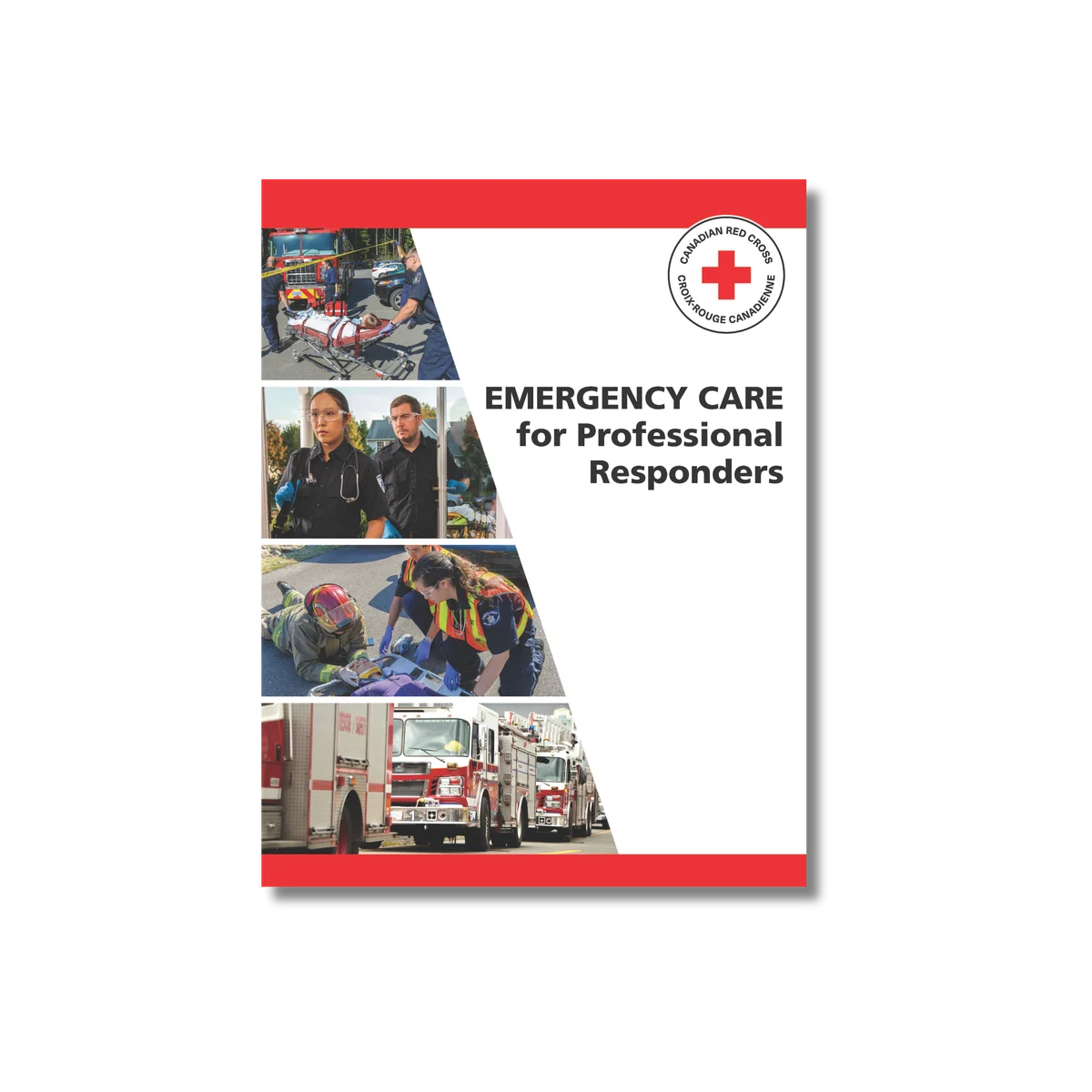
Canadian Red Cross Emergency Care for Professional Responders
$197.96 (10% off when you add it while registering)
$219.95Add it when you registerSee what this book covers
Bought on its own from the shop, it ships to you at full price. The discount exists only at registration.
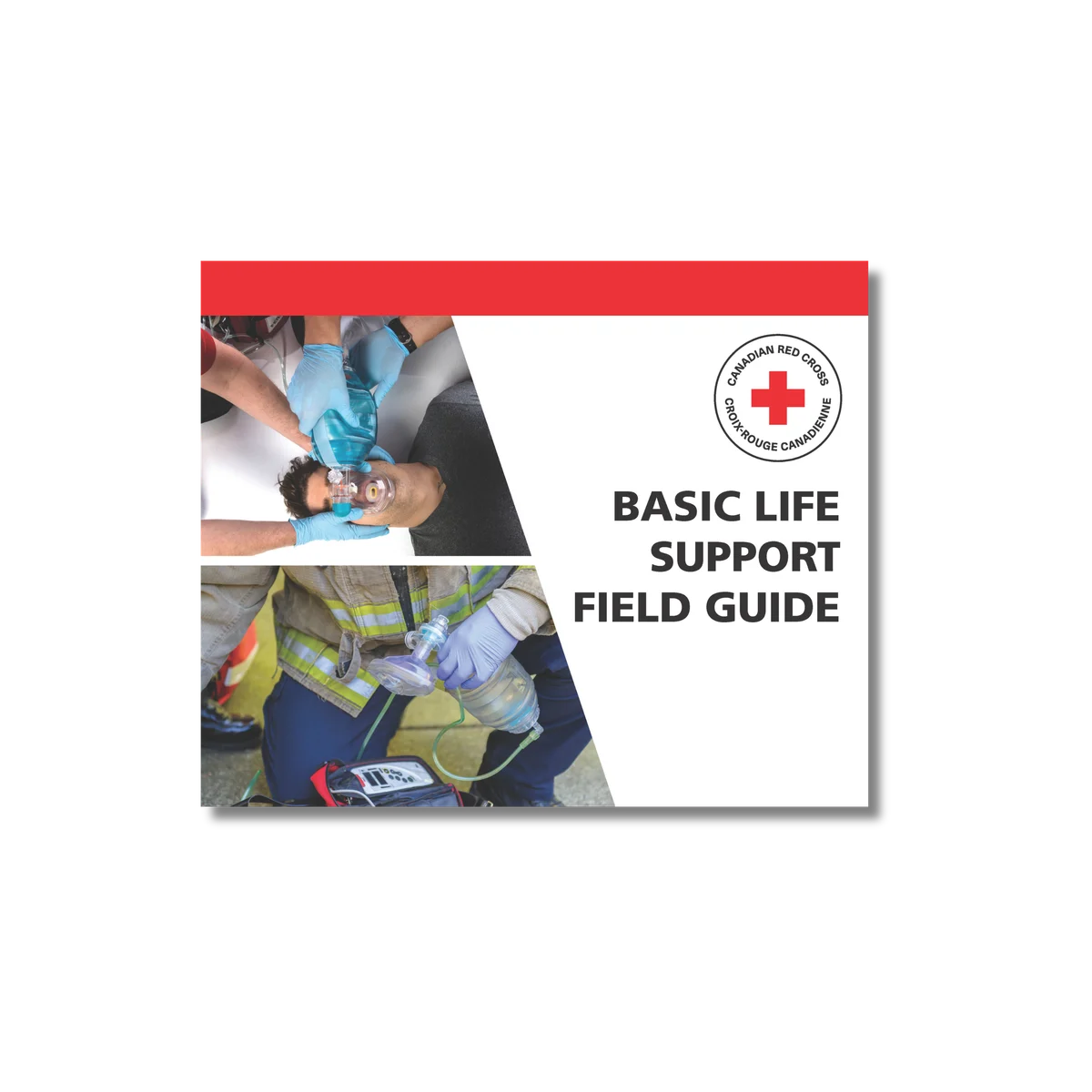
Canadian Red Cross Basic Life Support Field Guide
$35.96 (10% off when you add it while registering)
$39.95Add it when you registerSee what this book covers
Bought on its own from the shop, it ships to you at full price. The discount exists only at registration.
Ready to take this course?$700.00 + GST & applicable taxes
Common questions
- How long is Advanced First Aid Recertification, and how is it scheduled?
- It is scheduled at 40 hours over five days in person in Calgary, against 80 hours for the full course. The Canadian Red Cross sets the hour requirement and it can change, so check the exact hours, dates and daily start times published with the run you are booking before you arrange time off.
- My certificate expires soon. How early should I book?
- Earlier than feels necessary. Aim for two to three months before the expiry date, and earlier again if an employer is funding it, because purchase orders and approvals move on their own schedule. Booking early also protects you from a run filling up in the one window your shift rotation allows.
- Am I still eligible if my Advanced First Aid certificate has already expired?
- No. The Canadian Red Cross only allows recertification for a certificate that is still valid on the day of the course. Once it has expired, the way back is the full Advanced First Aid course. If you are not sure of your date, send us your certificate number, issue date and expiry date before you pay and we will check it.
- What happens if I have left it too late to recertify?
- You go back to the full Advanced First Aid course: 80 hours, at a materially higher fee and twice the classroom time of the renewal. Confirm both the recertification and full-course fees with the runs you are comparing before you decide. That gap is the concrete reason to book before your expiry date rather than after it.
- I took my original Advanced First Aid with a different provider. Can I recertify with Delta?
- Yes. What matters is the Canadian Red Cross certificate and its dates, not which training partner delivered the original course. Send us the certificate number and dates and we will confirm your eligibility before you register. If you cannot locate your record, start looking early, because tracing it takes time.
- Is Basic Life Support included, and how long does the renewed certificate last?
- Basic Life Support is included in the course. The Canadian Red Cross sets the validity periods, and the exact expiry dates are printed on the certificates you receive. The Advanced First Aid certificate and the BLS component do not run on the same clock, so track both rather than assuming one date covers you.
- Will renewing satisfy my employer's or a prime contractor's first aid requirement?
- We will not promise that, and you should be wary of any provider who does. Requirements in Alberta come from occupational health and safety rules, industry practice, prime contractors and individual employers, and they change. Send us the exact wording you were given and we will tell you honestly whether this course matches it, including when it does not.
- Does holding a current Advanced First Aid certificate let me register or work as an EMR in Alberta?
- No. Advanced First Aid is an advanced first aid credential, not a licence to practise. Even the Canadian Red Cross EMR course is not a program approved by the Alberta College of Paramedics, does not make you registrable as an EMR in Alberta, and does not confer a practice permit. A Red Cross EMR certificate may meet selected admission requirements at some PCP schools, which you must verify with your exact school and intake.
- What counts as a baby, a child or an adult, and which ages does this course cover?
- This course carries BLS (Basic Life Support), which covers adults, children, infants and neonates. The Canadian Red Cross 2025 standards set the age groups this way. A baby is under 1 year old. A child is 1 year old up to the onset of puberty. An adult is anyone from the onset of puberty on. Puberty does not happen on a set birthday, so you judge it on the person in front of you. A 13 year old who has started puberty gets adult CPR, and one who has not is still a child. For an AED, use child pads on a child up to the onset of puberty or under 55 pounds (about 25 kg), and baby pads on a baby if the AED has them. If baby pads are not there, use child or adult pads. If child pads are not there, use adult pads. The Red Cross says adult pads are safe on a child or a baby, so do not wait for the right size. If you are training for a specific person, tell us their age and we will tell you which course fits.
- Is live translation available for this course?
- No. This course is taught and assessed in English, without live classroom translation. You need to understand instructions, communicate during practical scenarios and complete the assessments in English. Contact us before registering if you have questions.
- Can I register on the same day as the course?
- Online registration closes at 11:59 PM the night before an in-person course. If you need training today, call or text 825-883-3582 before class starts. We may be able to fit you in, depending on space and the instructor's approval. It is not guaranteed.
- Online registration is closed. Does that mean the course is full?
- No. Closed online only means the online booking window has ended. A seat may still be open, or open up if someone cancels. Call or text 825-883-3582 to check.
- What if I arrive late?
- Certification needs full attendance and every required skill. Arriving late can mean we cannot certify you that day. If you are running late, call or text as early as you can so we can tell you what is possible.
Where to go next
Ready to register?
Pick your cohort above, or start here and choose your dates on the registration page.
Cancellation, transfer, and refund terms are shown before payment and confirmed at registration. Not sure which course fits? Email us and we’ll help.
Sources
- On successful completion you receive a Canadian Red Cross Advanced First Aid certificate. Canadian Red Cross (verified 2026-07-23).
- The Canadian Red Cross says a recertification course is only available to people who hold a valid certificate that has not yet expired. Canadian Red Cross, Help Centre (Recertify Your Training) (verified 2026-09-27).
- The Canadian Red Cross First Aid Program Standards 2025 define a baby as newborn to 1 year of age, a child as 1 year old to the onset of puberty, and an adult as the onset of puberty and older. Canadian Red Cross (verified 2026-09-26).
- The Canadian Red Cross Comprehensive Guide for First Aid & CPR (2025) says pediatric AED pads should be used on children up to the onset of puberty or weighing less than 55 pounds, and that if pediatric pads are not available it is safe to use adult pads on a child or baby. Canadian Red Cross (verified 2026-09-26).
← All courses · Last reviewed 2026-07-23