
The renewal path for people who already hold the Canadian Red Cross Emergency Medical Responder certification: shorter than the full course, with the same standard at the end of it. It exists so the credential you worked eighty hours for does not quietly expire while you are busy using it.
Read more about this courseShow less
Taught in Calgary by instructors who work as paramedics, firefighters and emergency professionals.
Course details
- Certificate
- Canadian Red Cross EMR (recertification)
- Certificate valid for
- 3-year EMR certification (CPR/BLS component 1 year)
- Issued by
- Canadian Red Cross
- Duration
- Approx. 40 hours
- Prerequisites
- A current Canadian Red Cross EMR certificate. It must not have expired.
- CPR / BLS
- BLS includedWhat is BLS?BLS is Basic Life Support CPR, also known as Healthcare Provider CPR. It covers adults, children, babies and neonates.It is a professional level CPR course, used by firefighters, nurses, paramedics, doctors and other healthcare workers.More about the ages this covers
- Locations
- Calgary, AB, 1550 5 St SW #300, Leduc, AB, 4810 50th Ave
- Price
- Regular price $900.00Sale price $800.00save $100.00 + GST & applicable taxes (charged at checkout for your province)Reduced price, ends 15 October 2026 at 11:59 p.m.
How this course runs
- Traditional: three days or more, every day in person. Nothing to do online.
- How it runs
- Five days in class.
- Class times
- 9:00 a.m. to 6:00 p.m.
- Whole course
- 40 hours in total
Upcoming dates, choose your cohort
CalgaryApr 19 – Apr 23, 2027 · Calgary, AB, 1550 5 St SW #300 (Papa)
- Session 1: Mon, Apr 19, 2027 · 9:00 a.m. to 6:00 p.m.in class
- Session 2: Tue, Apr 20, 2027 · 9:00 a.m. to 6:00 p.m.in class
- Session 3: Wed, Apr 21, 2027 · 9:00 a.m. to 6:00 p.m.in class
- Session 4: Thu, Apr 22, 2027 · 9:00 a.m. to 6:00 p.m.in class
- Session 5: Fri, Apr 23, 2027 · 9:00 a.m. to 6:00 p.m.in class
Registration closes April 18, 2027.
April 2027
SMTWTFS123456789101112131415161718192021222324252627282930Traditional: 5 class days, all in person
Traditional format(in person, no online sessions)
- 5 full days in class
CalgaryTraditional: three days or more, every day in person. Nothing to do online.Edmonton regionApr 19 – Apr 23, 2027 · Leduc, AB, 4810 50th Ave (Bravo)
- Session 1: Mon, Apr 19, 2027 · 9:00 a.m. to 6:00 p.m.in class
- Session 2: Tue, Apr 20, 2027 · 9:00 a.m. to 6:00 p.m.in class
- Session 3: Wed, Apr 21, 2027 · 9:00 a.m. to 6:00 p.m.in class
- Session 4: Thu, Apr 22, 2027 · 9:00 a.m. to 6:00 p.m.in class
- Session 5: Fri, Apr 23, 2027 · 9:00 a.m. to 6:00 p.m.in class
Registration closes April 18, 2027.
April 2027
SMTWTFS123456789101112131415161718192021222324252627282930Traditional: 5 class days, all in person
Traditional format(in person, no online sessions)
- 5 full days in class
Edmonton regionTraditional: three days or more, every day in person. Nothing to do online.CalgaryJan 3 – Jan 7, 2028 · Calgary, AB, 1550 5 St SW #300 (Hotel)
- Session 1: Mon, Jan 3, 2028 · 9:00 a.m. to 6:00 p.m.in class
- Session 2: Tue, Jan 4, 2028 · 9:00 a.m. to 6:00 p.m.in class
- Session 3: Wed, Jan 5, 2028 · 9:00 a.m. to 6:00 p.m.in class
- Session 4: Thu, Jan 6, 2028 · 9:00 a.m. to 6:00 p.m.in class
- Session 5: Fri, Jan 7, 2028 · 9:00 a.m. to 6:00 p.m.in class
Registration closes January 2, 2028.
January 2028
SMTWTFS12345678910111213141516171819202122232425262728293031Traditional: 5 class days, all in person
Traditional format(in person, no online sessions)
- 5 full days in class
CalgaryTraditional: three days or more, every day in person. Nothing to do online.Edmonton regionJan 3 – Jan 7, 2028 · Leduc, AB, 4810 50th Ave (Xray)
- Session 1: Mon, Jan 3, 2028 · 9:00 a.m. to 6:00 p.m.in class
- Session 2: Tue, Jan 4, 2028 · 9:00 a.m. to 6:00 p.m.in class
- Session 3: Wed, Jan 5, 2028 · 9:00 a.m. to 6:00 p.m.in class
- Session 4: Thu, Jan 6, 2028 · 9:00 a.m. to 6:00 p.m.in class
- Session 5: Fri, Jan 7, 2028 · 9:00 a.m. to 6:00 p.m.in class
Registration closes January 2, 2028.
January 2028
SMTWTFS12345678910111213141516171819202122232425262728293031Traditional: 5 class days, all in person
Traditional format(in person, no online sessions)
- 5 full days in class
Edmonton regionTraditional: three days or more, every day in person. Nothing to do online.
What you’ll be able to do
- Leave with your EMR certification renewed for another three years
- Demonstrate assessment, airway and oxygen skills back to the Red Cross standard
- Find and fix the drift that three years of real work puts on anyone's skills
- Run scenarios against instructors who work real calls
- Requalify the BLS component that rides inside your EMR
- Take home your own oxygen delivery devices from the scenario work
- Know your next expiry date, the date the renewal after this one has to happen before
- Keep site and employer paperwork continuous instead of explaining a gap
What comes with your seat
Registering opens the Delta student portal: your course drawn as a step-by-step path, chapter flashcards that unlock as you finish each one, a personal weak-spots deck built from the cards you miss, and a readiness view so you walk into class knowing where you stand.
595
flashcards across 26 chapters
43
field guides & references
Includes the full decks for The Delta Model, Advanced First Aid, Advanced First Aid to EMR Bridge, Emergency Medical Responder — the material builds on itself, so you get every level under the one you registered for.
Study material is part of your enrolment and opens in your portal when you register.
Ready to take this course?$800.00 + GST & applicable taxes
Renewing before it lapses beats starting over
An EMR certificate is valid for three years, and recertification depends on the date printed on yours. Recertify while it is still valid on the day of the course and a recertification course keeps you going. Once it has expired, the way back is the full course again, at full course hours and full course cost.
So the single most useful thing you can do is read the expiry date on your certificate today and put a reminder in your calendar three months ahead of it. That margin is what lets you pick a convenient date instead of scrambling for whatever is left.
If your certificate has already expired, recertification is closed to you and the full EMR course is the way back. If you are not sure of your date, do not guess. Send us your certificate before you book and we will check it.
What a recertification actually requires
A recertification is not a formality and we will not pretend otherwise. You demonstrate the skills again, in front of an instructor, to the same Red Cross standard the full course holds, and the written evaluation is real. People who have been working on cars, in plants or on sites since their first course usually find that some skills held up and some drifted; the course exists to catch the drift.
Because this is a Canadian Red Cross course, the Red Cross owns the curriculum and we teach to their standard rather than reprinting their outline here. Expect the time to be spent hands on: assessment, airway and oxygen work, scenarios run the way calls actually go.
Attendance is required throughout. Nobody is renewed on attendance alone, and nobody is renewed for having been good at this three years ago.
Your own oxygen kit in scenarios
Oxygen is taught with equipment that is yours: a nasal cannula and a non-rebreather mask, opened from the packaging in front of you. You work with them through the course, and you wear them when you play the patient in scenarios, so nobody trains with a mask that has been on someone else's face.
They go home with you afterwards. Keep them with your kit; you have already fitted them once.
The reference text, if yours has wandered off
Most people renewing an EMR still own the Emergency Care for Professional Responders reference text from their full course, and that copy is all you need. If yours has been lent out, left on a site somewhere, or lost in a move, a replacement is available as an optional add-on when you register, and buying it online at registration is cheaper than sourcing one later.
Course books are not shipped to registered students: digital access opens right away and your physical copy is handed to you in class, so you pay no shipping. Books bought on their own from our shop do ship.
Dates, and how coming soon works
There is no published date for this course yet, and we will not invent one. The button on this page registers your interest, and enough interest from one direction is genuinely how the next date gets scheduled. Tell us when your certificate expires; expiry dates are what we build recertification dates around.
If you have a crew of EMRs whose certificates expire together, which is common when a company certified everyone at once, ask about an onsite renewal. Bringing the course to your site for an additional fee is usually cheaper than losing a crew to travel days, and it keeps everyone on the same cycle.
Registering, and how to prepare
Register with your legal name spelled exactly as it appears on your current certificate, and have that certificate handy: we confirm its dates as part of registration.
Come dressed to work on the floor, the same as your full course: clothing you can kneel, crawl and lift in, closed shoes. The skills are physical and the scenarios are run properly.
If anything has changed since your first course, an injury, a mobility limitation, anything that affects how you take part, tell us when you register rather than on the day. We can plan around most things with notice.
Who this course is for
- EMRs whose three-year certificate has not yet expired
- Industrial and remote-site medics keeping a job requirement current
- Oilfield, mining and forestry workers certified as site EMRs
- Event and standby medical staff renewing between seasons
- Firefighters and peace officers holding EMR alongside their primary role
- Employers renewing a whole crew of EMRs on one cycle
- EMRs whose expiry date is coming up and who want to renew before it
- Anyone deciding between recertifying now and paying for the full course later
English-language requirements
This course is taught and assessed in English. Professional responder training involves extensive medical terminology, clinical abbreviations, patient assessment, rapid communication, and complex practical scenarios.
Live classroom translation is not offered for this program.
Students must be able to understand instructions, communicate effectively during practical scenarios, and complete the required assessments in English.
Contact us before registering if you have questions about the language requirements.
Related reading
- Your First Aid Certificate Expired. Now What?Recertification is shorter and cheaper than the full course, but only if you catch it in time. Here is how the timing works.
- Why Your CPR Expires Before Your Certificate DoesThe CPR component often runs on a shorter clock than the certificate that contains it. Why the two differ, and how to tell which one governs you.
Where we teach this course
Public sessions run in Calgary.
We also deliver this course at your worksite for groups, useful for crews who can’t release staff to travel. Onsite delivery carries an additional fee on top of per-person pricing. Request an onsite quote.
We travel for private and group training across Canada, and internationally by arrangement. If you’re outside Alberta, tell us where you are and we’ll price it.
Your course materials
Digital access opens the moment you register. Physical manuals live in our classroom library for you to use during class. Want one of your own to keep? Buy it here at a discount.
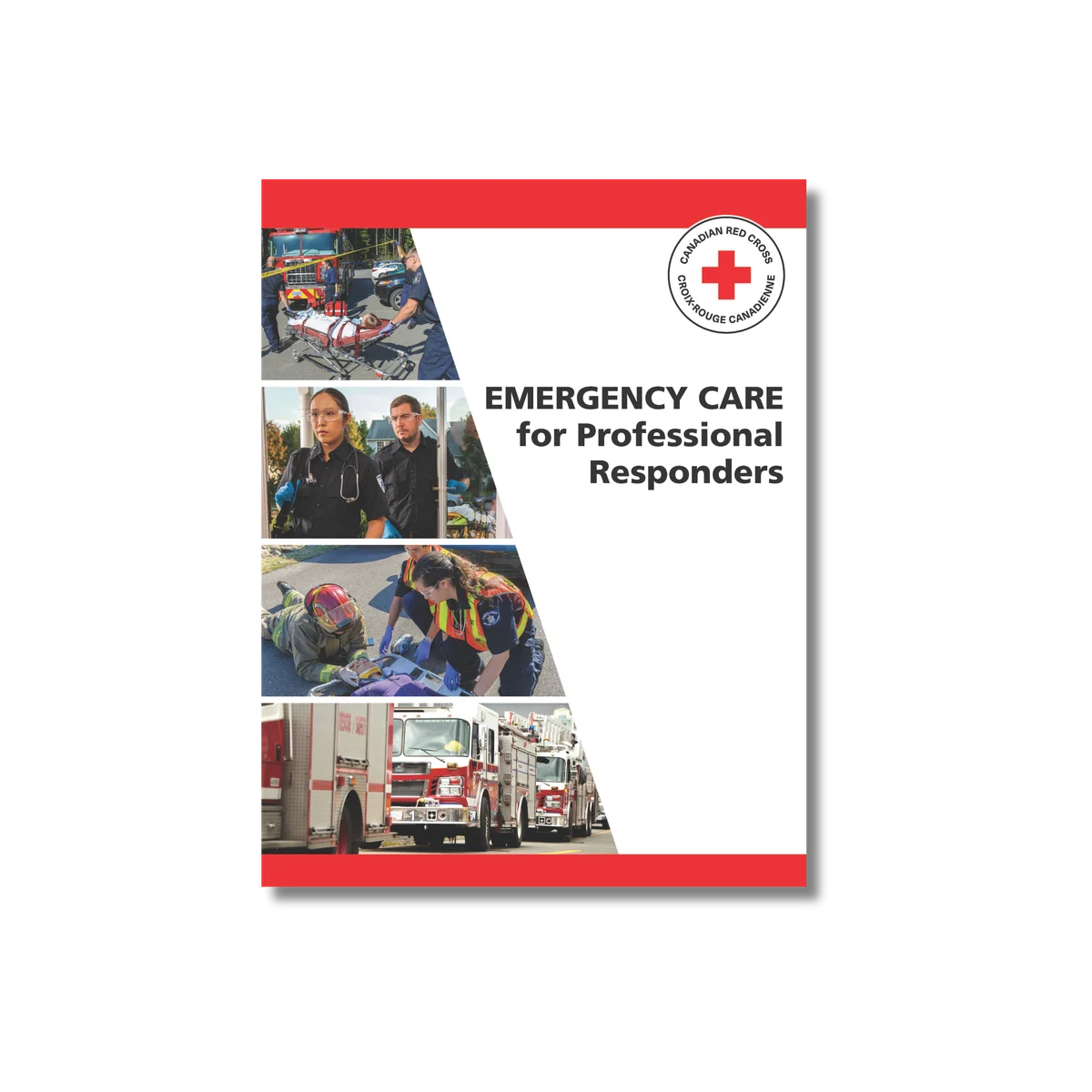
Canadian Red Cross Emergency Care for Professional Responders
$197.96 (10% off when you add it while registering)
$219.95Add it when you registerSee what this book covers
Bought on its own from the shop, it ships to you at full price. The discount exists only at registration.
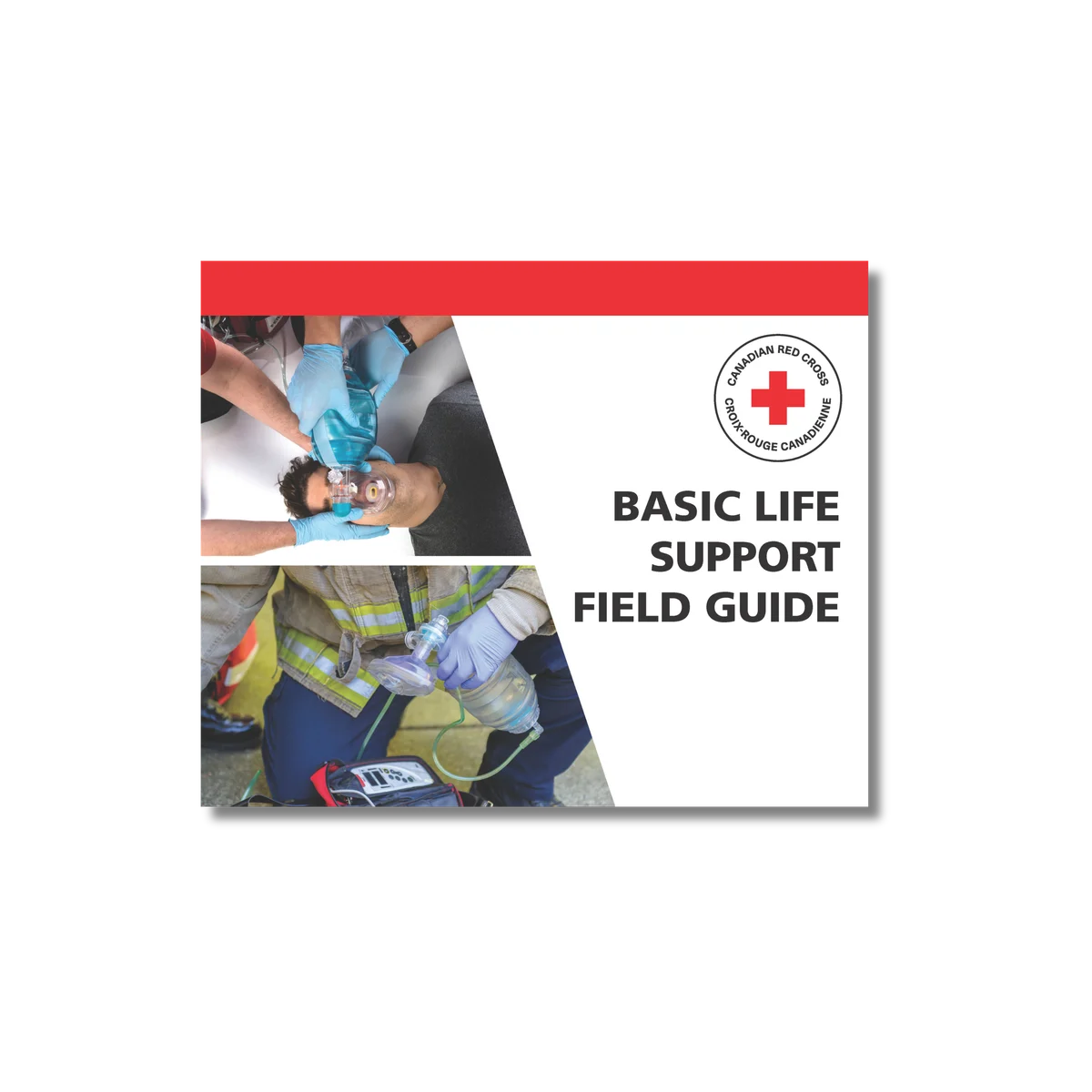
Canadian Red Cross Basic Life Support Field Guide
$35.96 (10% off when you add it while registering)
$39.95Add it when you registerSee what this book covers
Bought on its own from the shop, it ships to you at full price. The discount exists only at registration.
Ready to take this course?$800.00 + GST & applicable taxes
Common questions
- When should I recertify?
- Before the expiry date printed on your certificate, ideally with a few months to spare so you can pick a convenient date. Put a reminder in your calendar three months ahead of expiry; that margin is the whole trick.
- My EMR has already expired. Can I still recertify?
- No. The Canadian Red Cross only allows recertification for a certificate that is still valid on the day of the course. Once it has expired, the way back is the full EMR course. If you are not sure of your date, send us your certificate and we will check it.
- How long does the recertification take?
- Plan for roughly forty hours. The exact schedule is published with the course date, and everything is confirmed with you at registration.
- What does it cost?
- The fee is shown on this page, with GST added at checkout. If an employer is paying you back, your receipt downloads as a PDF from your portal once the course is paid.
- Is the BLS component renewed too?
- BLS rides inside your EMR certification and is evaluated as part of the course. Note that BLS itself carries a shorter validity than the three-year EMR certificate, so read both dates on your paperwork.
- Do I need to buy the textbook again?
- Not if you still have your copy from the full course. If yours is gone, a replacement Emergency Care for Professional Responders text is available as an optional add-on when you register.
- Can you renew our whole crew at our site?
- Yes, and if your crew certified together their certificates likely expire together, which makes an onsite renewal the efficient option. We deliver onsite for an additional fee across Alberta and beyond. Send us the crew size and the expiry dates.
- Will my employer or province accept the renewed certificate?
- That call belongs to your employer or regulator, not to a training provider, and the caveat on this page about the Alberta College of Paramedics applies to the renewal exactly as it applies to the full course. Send us the wording you have been given and we will read it with you honestly.
- What counts as a baby, a child or an adult, and which ages does this course cover?
- This course carries BLS (Basic Life Support), which covers adults, children, infants and neonates. The Canadian Red Cross 2025 standards set the age groups this way. A baby is under 1 year old. A child is 1 year old up to the onset of puberty. An adult is anyone from the onset of puberty on. Puberty does not happen on a set birthday, so you judge it on the person in front of you. A 13 year old who has started puberty gets adult CPR, and one who has not is still a child. For an AED, use child pads on a child up to the onset of puberty or under 55 pounds (about 25 kg), and baby pads on a baby if the AED has them. If baby pads are not there, use child or adult pads. If child pads are not there, use adult pads. The Red Cross says adult pads are safe on a child or a baby, so do not wait for the right size. If you are training for a specific person, tell us their age and we will tell you which course fits.
- Is live translation available for this course?
- No. This course is taught and assessed in English, without live classroom translation. You need to understand instructions, communicate during practical scenarios and complete the assessments in English. Contact us before registering if you have questions.
Where to go next
Ready to register?
Pick your cohort above, or start here and choose your dates on the registration page.
Cancellation, transfer, and refund terms are shown before payment and confirmed at registration. Not sure which course fits? Email us and we’ll help.
Sources
- The Canadian Red Cross says a recertification course is only available to people who hold a valid certificate that has not yet expired. Canadian Red Cross, Help Centre (Recertify Your Training) (verified 2026-09-27).
- The Canadian Red Cross First Aid Program Standards 2025 define a baby as newborn to 1 year of age, a child as 1 year old to the onset of puberty, and an adult as the onset of puberty and older. Canadian Red Cross (verified 2026-09-26).
- The Canadian Red Cross Comprehensive Guide for First Aid & CPR (2025) says pediatric AED pads should be used on children up to the onset of puberty or weighing less than 55 pounds, and that if pediatric pads are not available it is safe to use adult pads on a child or baby. Canadian Red Cross (verified 2026-09-26).
← All courses · Last reviewed 2026-07-23