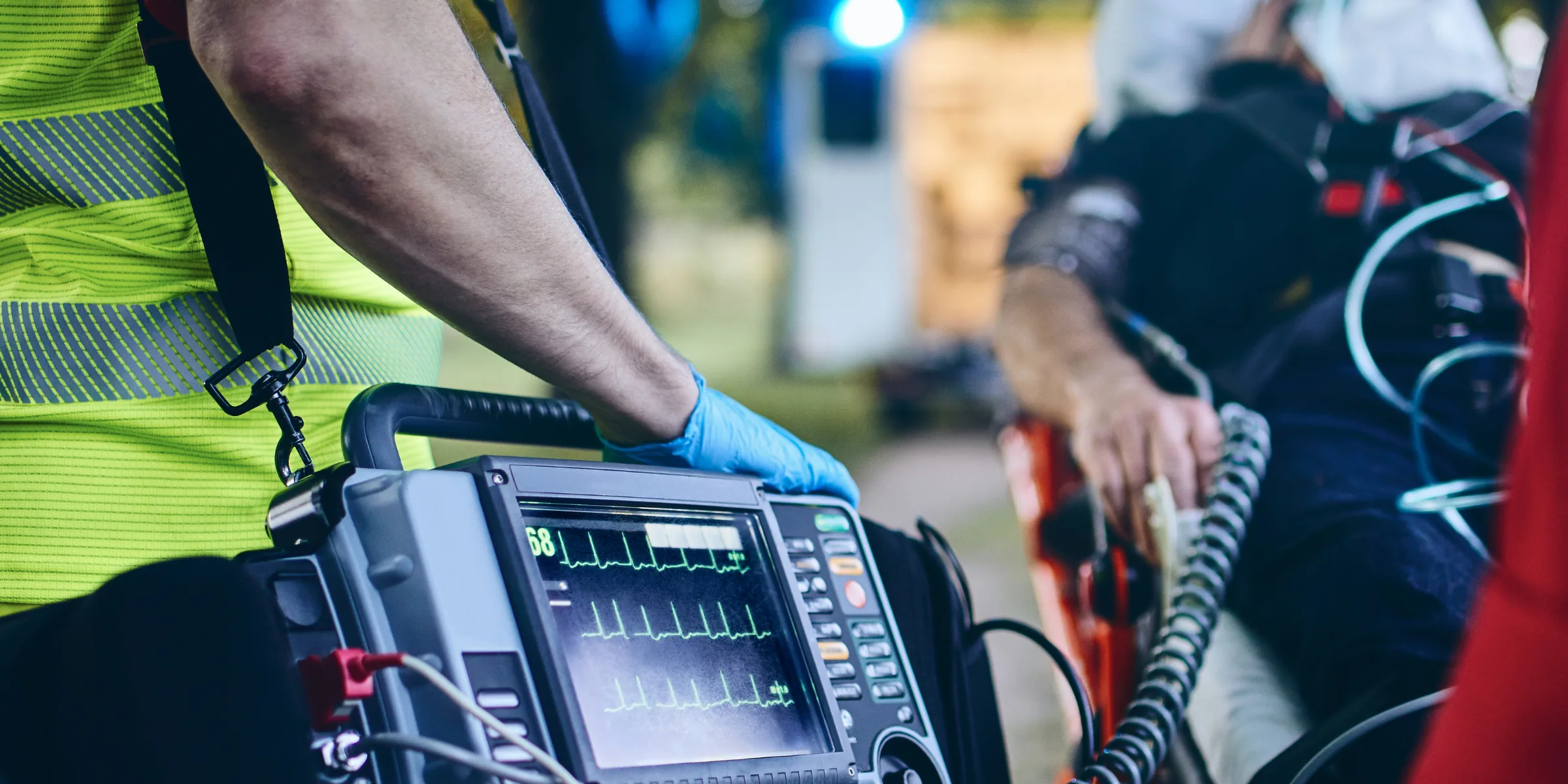
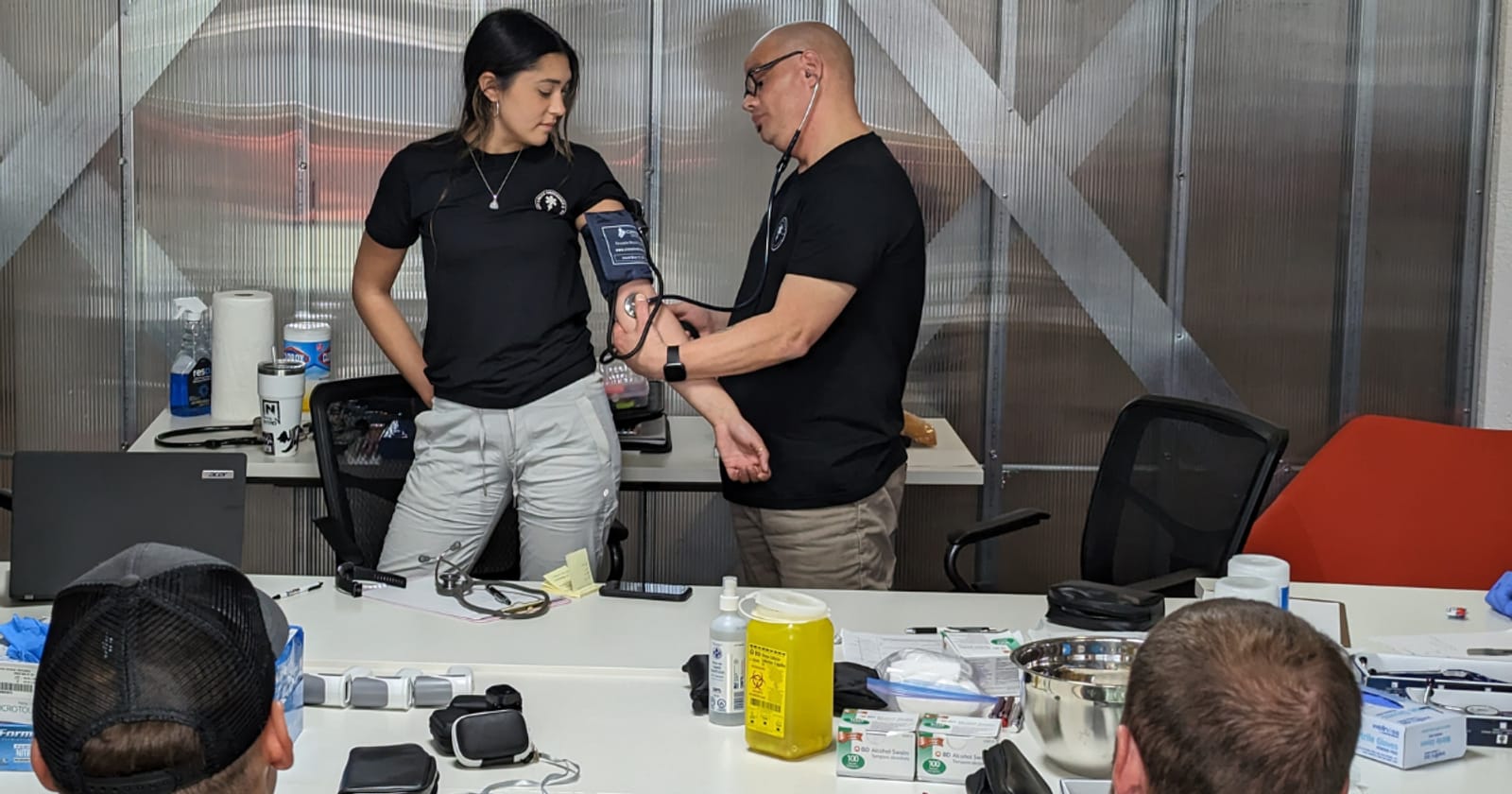

We run the Canadian Red Cross Emergency Medical Responder (EMR) course as a multi-week cohort in Calgary, taught by working paramedics, firefighters and emergency professionals.
Read more about this courseShow less
At 80 to 100 course hours, depending on the route you take into it, it is the longest and most demanding responder course in our catalogue, and it is built around repetition and hands-on scenarios rather than slides. We also run it for groups in the Leduc and greater Edmonton region, onsite at client worksites for an additional fee, and elsewhere in Canada or internationally on request. What the certificate does and does not do, in Alberta and beyond, is set out plainly in the banner and sections below, and if British Columbia is your destination, the BC section explains EMALB licensing and the two GAP practice-update courses BC asked of our own graduates, with their real costs.
Course details
- Certificate
- Canadian Red Cross Emergency Medical Responder
- Certificate valid for
- 3-year EMR certification (CPR/BLS component 1 year)
- Issued by
- Canadian Red Cross
- Duration
- 80-100 hours over a multi-week cohort (100 hours via the Advanced First Aid bridge pathway; class days 9:00 a.m. to 5:30 p.m.)
- Prerequisites
- Intermediate First Aid (formerly Standard First Aid) with CPR-C, current at the time the course starts. Some employers and PCP schools set additional admission requirements, confirm yours.
- CPR / BLS
- What is BLS?BLS is Basic Life Support CPR, also known as Healthcare Provider CPR. It covers adults, children, babies and neonates.It is a professional level CPR course, used by firefighters, nurses, paramedics, doctors and other healthcare workers.More about the ages this covers
- Recertification
- EMR Recertification before your certificate expires
- Locations
- Leduc, AB, 4810 50th Ave, Calgary, AB, 1550 5 St SW #300
- Price
- $1,700.00 + GST & applicable taxes (charged at checkout for your province)
Ways to take this course
Choose one
- Traditional: three days or more, every day in person. Nothing to do online.
- How it runs
- 10 days in class.
- Class times
- 9:00 a.m. to 5:30 p.m.
- Whole course
- 80-100 hours over a multi-week cohort
or
Hybrid: days in person plus live online sessions with an instructor. Not self-paced video. You attend both.- How it runs
- In class, with live online evenings.
- Class times
- Class days 9:00 a.m. to 5:30 p.m. Online evenings 7:00 p.m. to 9:00 p.m.
- Whole course
- 80-100 hours over a multi-week cohort
The same course, the same certificate and the same standards.
Running now
- Calgary
EMR, Wed, Sep 16 to Sun, Oct 25 Registration for this one closed on September 15, 2026.
The dates below are the ones still open to join.
Upcoming dates, choose your cohort
Edmonton regionNov 16 – Nov 27, 2026 · Leduc, AB, 4810 50th Ave (Oscar)
Waitlist onlyWeek 1Nov 16 – Nov 22
- Session 1: Mon, Nov 16 · 9:00 a.m. to 5:30 p.m.in class
- Session 2: Tue, Nov 17 · 9:00 a.m. to 5:30 p.m.in class
- Session 3: Wed, Nov 18 · 9:00 a.m. to 5:30 p.m.in class
- Session 4: Thu, Nov 19 · 9:00 a.m. to 5:30 p.m.in class
- Session 5: Fri, Nov 20 · 9:00 a.m. to 5:30 p.m.in class
Week 2Nov 23 – Nov 29
- Session 6: Mon, Nov 23 · 9:00 a.m. to 5:30 p.m.in class
- Session 7: Tue, Nov 24 · 9:00 a.m. to 5:30 p.m.in class
- Session 8: Wed, Nov 25 · 9:00 a.m. to 5:30 p.m.in class
- Session 9: Thu, Nov 26 · 9:00 a.m. to 5:30 p.m.in class
- Session 10: Fri, Nov 27 · 9:00 a.m. to 5:30 p.m.in class
Registration is closed for these dates.
November 2026
SMTWTFS123456789101112131415161718192021222324252627282930Traditional: 10 class days, all in person
Traditional format(in person, no online sessions)
- 10 full days in class
Edmonton regionTraditional: three days or more, every day in person. Nothing to do online.Waitlist only. Join the waitlist and we’ll email you the moment a seat is available.
CalgaryFeb 1 – Feb 12, 2027 · Calgary, AB, 1550 5 St SW #300 (Hotel)
Week 1Feb 1 – Feb 7
- Session 1: Mon, Feb 1, 2027 · 9:00 a.m. to 5:30 p.m.in class
- Session 2: Tue, Feb 2, 2027 · 9:00 a.m. to 5:30 p.m.in class
- Session 3: Wed, Feb 3, 2027 · 9:00 a.m. to 5:30 p.m.in class
- Session 4: Thu, Feb 4, 2027 · 9:00 a.m. to 5:30 p.m.in class
- Session 5: Fri, Feb 5, 2027 · 9:00 a.m. to 5:30 p.m.in class
Week 2Feb 8 – Feb 14
- Session 6: Mon, Feb 8, 2027 · 9:00 a.m. to 5:30 p.m.in class
- Session 7: Tue, Feb 9, 2027 · 9:00 a.m. to 5:30 p.m.in class
- Session 8: Wed, Feb 10, 2027 · 9:00 a.m. to 5:30 p.m.in class
- Session 9: Thu, Feb 11, 2027 · 9:00 a.m. to 5:30 p.m.in class
- Session 10: Fri, Feb 12, 2027 · 9:00 a.m. to 5:30 p.m.in class
Registration closes January 31, 2027.
February 2027
SMTWTFS12345678910111213141516171819202122232425262728Traditional: 10 class days, all in person
Traditional format(in person, no online sessions)
- 10 full days in class
CalgaryTraditional: three days or more, every day in person. Nothing to do online.Edmonton regionMar 10 – Apr 18, 2027 · Leduc, AB, 4810 50th Ave (Alpha)
Week 1Mar 8 – Mar 14
- Session 1: Wed, Mar 10, 2027 · 7:00 p.m. to 9:00 p.m.online, from home
- Session 2: Sat, Mar 13, 2027 · 9:00 a.m. to 5:30 p.m.in class
- Session 3: Sun, Mar 14, 2027 · 9:00 a.m. to 5:30 p.m.in class
Week 2Mar 15 – Mar 21
- Session 4: Wed, Mar 17, 2027 · 7:00 p.m. to 9:00 p.m.online, from home
- Session 5: Sat, Mar 20, 2027 · 9:00 a.m. to 5:30 p.m.in class
- Session 6: Sun, Mar 21, 2027 · 9:00 a.m. to 5:30 p.m.in class
Week 3Mar 22 – Mar 28
- Session 7: Wed, Mar 24, 2027 · 7:00 p.m. to 9:00 p.m.online, from home
No in-person days this week. Intentional weekend off.
Week 4Mar 29 – Apr 4
- Session 8: Wed, Mar 31, 2027 · 7:00 p.m. to 9:00 p.m.online, from home
- Session 9: Sat, Apr 3, 2027 · 9:00 a.m. to 5:30 p.m.in class
- Session 10: Sun, Apr 4, 2027 · 9:00 a.m. to 5:30 p.m.in class
Week 5Apr 5 – Apr 11
- Session 11: Wed, Apr 7, 2027 · 7:00 p.m. to 9:00 p.m.online, from home
No in-person days this week. Intentional weekend off.
Week 6Apr 12 – Apr 18
- Session 12: Wed, Apr 14, 2027 · 7:00 p.m. to 9:00 p.m.online, from home
- Session 13: Sat, Apr 17, 2027 · 9:00 a.m. to 5:30 p.m.in class
- Session 14: Sun, Apr 18, 2027 · 9:00 a.m. to 5:30 p.m.in class
Registration closes March 9, 2027.
March 2027
SMTWTFS12345678910111213141516171819202122232425262728293031April 2027
SMTWTFS1234567891011121314151617181920212223242526272829308 days in class6 evenings from home (12 hours in total)Hybrid course(in person and virtual)
- 8 full days in class
- 6 evenings live online, from home, 7:00 p.m. to 9:00 p.m. MDT, 12 hours in total, with your instructor on a computer.
Edmonton regionHybrid: days in person plus live online sessions with an instructor. Not self-paced video. You attend both.Edmonton regionMay 17 – May 28, 2027 · Leduc, AB, 4810 50th Ave (Charlie)
Week 1May 17 – May 23
- Session 1: Mon, May 17, 2027 · 9:00 a.m. to 5:30 p.m.in class
- Session 2: Tue, May 18, 2027 · 9:00 a.m. to 5:30 p.m.in class
- Session 3: Wed, May 19, 2027 · 9:00 a.m. to 5:30 p.m.in class
- Session 4: Thu, May 20, 2027 · 9:00 a.m. to 5:30 p.m.in class
- Session 5: Fri, May 21, 2027 · 9:00 a.m. to 5:30 p.m.in class
Week 2May 24 – May 30
- Session 6: Mon, May 24, 2027 · 9:00 a.m. to 5:30 p.m.in class
- Session 7: Tue, May 25, 2027 · 9:00 a.m. to 5:30 p.m.in class
- Session 8: Wed, May 26, 2027 · 9:00 a.m. to 5:30 p.m.in class
- Session 9: Thu, May 27, 2027 · 9:00 a.m. to 5:30 p.m.in class
- Session 10: Fri, May 28, 2027 · 9:00 a.m. to 5:30 p.m.in class
Registration closes May 16, 2027.
May 2027
SMTWTFS12345678910111213141516171819202122232425262728293031Traditional: 10 class days, all in person
Traditional format(in person, no online sessions)
- 10 full days in class
Edmonton regionTraditional: three days or more, every day in person. Nothing to do online.CalgaryJun 9 – Jul 18, 2027 · Calgary, AB, 1550 5 St SW #300 (Victor)
Week 1Jun 7 – Jun 13
- Session 1: Wed, Jun 9, 2027 · 7:00 p.m. to 9:00 p.m.online, from home
- Session 2: Sat, Jun 12, 2027 · 9:00 a.m. to 5:30 p.m.in class
- Session 3: Sun, Jun 13, 2027 · 9:00 a.m. to 5:30 p.m.in class
Week 2Jun 14 – Jun 20
- Session 4: Wed, Jun 16, 2027 · 7:00 p.m. to 9:00 p.m.online, from home
- Session 5: Sat, Jun 19, 2027 · 9:00 a.m. to 5:30 p.m.in class
- Session 6: Sun, Jun 20, 2027 · 9:00 a.m. to 5:30 p.m.in class
Week 3Jun 21 – Jun 27
- Session 7: Wed, Jun 23, 2027 · 7:00 p.m. to 9:00 p.m.online, from home
No in-person days this week. Intentional weekend off.
Week 4Jun 28 – Jul 4
- Session 8: Wed, Jun 30, 2027 · 7:00 p.m. to 9:00 p.m.online, from home
- Session 9: Sat, Jul 3, 2027 · 9:00 a.m. to 5:30 p.m.in class
- Session 10: Sun, Jul 4, 2027 · 9:00 a.m. to 5:30 p.m.in class
Week 5Jul 5 – Jul 11
- Session 11: Wed, Jul 7, 2027 · 7:00 p.m. to 9:00 p.m.online, from home
No in-person days this week. Intentional weekend off.
Week 6Jul 12 – Jul 18
- Session 12: Wed, Jul 14, 2027 · 7:00 p.m. to 9:00 p.m.online, from home
- Session 13: Sat, Jul 17, 2027 · 9:00 a.m. to 5:30 p.m.in class
- Session 14: Sun, Jul 18, 2027 · 9:00 a.m. to 5:30 p.m.in class
Registration closes June 8, 2027.
June 2027
SMTWTFS123456789101112131415161718192021222324252627282930July 2027
SMTWTFS123456789101112131415161718192021222324252627282930318 days in class6 evenings from home (12 hours in total)Hybrid course(in person and virtual)
- 8 full days in class
- 6 evenings live online, from home, 7:00 p.m. to 9:00 p.m. MDT, 12 hours in total, with your instructor on a computer.
CalgaryHybrid: days in person plus live online sessions with an instructor. Not self-paced video. You attend both.CalgaryAug 9 – Aug 20, 2027 · Calgary, AB, 1550 5 St SW #300 (Xray)
Week 1Aug 9 – Aug 15
- Session 1: Mon, Aug 9, 2027 · 9:00 a.m. to 5:30 p.m.in class
- Session 2: Tue, Aug 10, 2027 · 9:00 a.m. to 5:30 p.m.in class
- Session 3: Wed, Aug 11, 2027 · 9:00 a.m. to 5:30 p.m.in class
- Session 4: Thu, Aug 12, 2027 · 9:00 a.m. to 5:30 p.m.in class
- Session 5: Fri, Aug 13, 2027 · 9:00 a.m. to 5:30 p.m.in class
Week 2Aug 16 – Aug 22
- Session 6: Mon, Aug 16, 2027 · 9:00 a.m. to 5:30 p.m.in class
- Session 7: Tue, Aug 17, 2027 · 9:00 a.m. to 5:30 p.m.in class
- Session 8: Wed, Aug 18, 2027 · 9:00 a.m. to 5:30 p.m.in class
- Session 9: Thu, Aug 19, 2027 · 9:00 a.m. to 5:30 p.m.in class
- Session 10: Fri, Aug 20, 2027 · 9:00 a.m. to 5:30 p.m.in class
Registration closes August 8, 2027.
August 2027
SMTWTFS12345678910111213141516171819202122232425262728293031Traditional: 10 class days, all in person
Traditional format(in person, no online sessions)
- 10 full days in class
CalgaryTraditional: three days or more, every day in person. Nothing to do online.Edmonton regionSep 8 – Oct 17, 2027 · Leduc, AB, 4810 50th Ave (Oscar)
Week 1Sep 6 – Sep 12
- Session 1: Wed, Sep 8, 2027 · 7:00 p.m. to 9:00 p.m.online, from home
- Session 2: Sat, Sep 11, 2027 · 9:00 a.m. to 5:30 p.m.in class
- Session 3: Sun, Sep 12, 2027 · 9:00 a.m. to 5:30 p.m.in class
Week 2Sep 13 – Sep 19
- Session 4: Wed, Sep 15, 2027 · 7:00 p.m. to 9:00 p.m.online, from home
- Session 5: Sat, Sep 18, 2027 · 9:00 a.m. to 5:30 p.m.in class
- Session 6: Sun, Sep 19, 2027 · 9:00 a.m. to 5:30 p.m.in class
Week 3Sep 20 – Sep 26
- Session 7: Wed, Sep 22, 2027 · 7:00 p.m. to 9:00 p.m.online, from home
No in-person days this week. Intentional weekend off.
Week 4Sep 27 – Oct 3
- Session 8: Wed, Sep 29, 2027 · 7:00 p.m. to 9:00 p.m.online, from home
- Session 9: Sat, Oct 2, 2027 · 9:00 a.m. to 5:30 p.m.in class
- Session 10: Sun, Oct 3, 2027 · 9:00 a.m. to 5:30 p.m.in class
Week 5Oct 4 – Oct 10
- Session 11: Wed, Oct 6, 2027 · 7:00 p.m. to 9:00 p.m.online, from home
No in-person days this week. Intentional weekend off.
Week 6Oct 11 – Oct 17
- Session 12: Wed, Oct 13, 2027 · 7:00 p.m. to 9:00 p.m.online, from home
- Session 13: Sat, Oct 16, 2027 · 9:00 a.m. to 5:30 p.m.in class
- Session 14: Sun, Oct 17, 2027 · 9:00 a.m. to 5:30 p.m.in class
Registration closes September 7, 2027.
September 2027
SMTWTFS123456789101112131415161718192021222324252627282930October 2027
SMTWTFS123456789101112131415161718192021222324252627282930318 days in class6 evenings from home (12 hours in total)Hybrid course(in person and virtual)
- 8 full days in class
- 6 evenings live online, from home, 7:00 p.m. to 9:00 p.m. MDT, 12 hours in total, with your instructor on a computer.
Edmonton regionHybrid: days in person plus live online sessions with an instructor. Not self-paced video. You attend both.Edmonton regionNov 15 – Nov 26, 2027 · Leduc, AB, 4810 50th Ave (Papa)
Week 1Nov 15 – Nov 21
- Session 1: Mon, Nov 15, 2027 · 9:00 a.m. to 5:30 p.m.in class
- Session 2: Tue, Nov 16, 2027 · 9:00 a.m. to 5:30 p.m.in class
- Session 3: Wed, Nov 17, 2027 · 9:00 a.m. to 5:30 p.m.in class
- Session 4: Thu, Nov 18, 2027 · 9:00 a.m. to 5:30 p.m.in class
- Session 5: Fri, Nov 19, 2027 · 9:00 a.m. to 5:30 p.m.in class
Week 2Nov 22 – Nov 28
- Session 6: Mon, Nov 22, 2027 · 9:00 a.m. to 5:30 p.m.in class
- Session 7: Tue, Nov 23, 2027 · 9:00 a.m. to 5:30 p.m.in class
- Session 8: Wed, Nov 24, 2027 · 9:00 a.m. to 5:30 p.m.in class
- Session 9: Thu, Nov 25, 2027 · 9:00 a.m. to 5:30 p.m.in class
- Session 10: Fri, Nov 26, 2027 · 9:00 a.m. to 5:30 p.m.in class
Registration closes November 14, 2027.
November 2027
SMTWTFS123456789101112131415161718192021222324252627282930Traditional: 10 class days, all in person
Traditional format(in person, no online sessions)
- 10 full days in class
Edmonton regionTraditional: three days or more, every day in person. Nothing to do online.
What you’ll be able to do
- Run a structured scene size-up and primary assessment on a patient you have never met, and repeat it under pressure
- Open and maintain an airway using positioning, suction and basic adjuncts, and recognize breathing that is inadequate rather than simply fast
- Deliver high-quality CPR with an AED both as a single responder and inside a working team
- Control life-threatening bleeding and identify shock early enough to act on it
- Sort the patterns behind chest pain, stroke, seizure, anaphylaxis, respiratory distress and altered level of consciousness, and choose the right immediate response
- Package and move a patient with a suspected spinal or musculoskeletal injury as part of a crew
- Take and trend vital signs, and document a call clearly enough for someone else to use
- Hand a patient over to arriving EMS in an ordered, complete report
- Take charge of a scene when you are the most trained person present, including directing bystanders
What comes with your seat
Registering opens the Delta student portal: your course drawn as a step-by-step path, chapter flashcards that unlock as you finish each one, a personal weak-spots deck built from the cards you miss, and a readiness view so you walk into class knowing where you stand.
595
flashcards across 26 chapters
46
field guides & references
Includes the full decks for The Delta Model, Advanced First Aid, Advanced First Aid to EMR Bridge, Emergency Medical Responder — the material builds on itself, so you get every level under the one you registered for.
Study material is part of your enrolment and opens in your portal when you register.
Ready to take this course?$1,700.00 + GST & applicable taxes
What the EMR course actually is
The Emergency Medical Responder is the most advanced Red Cross responder course we deliver, a clear step beyond Advanced First Aid. The programme runs 80 to 100 course hours: 80 if you come to it directly, and 100 if you arrive by the Advanced First Aid bridge pathway, which is the longer route because it carries the Advanced First Aid hours with it. Either way it runs as a multi-week Calgary cohort, not as a weekend you can cram; class days run roughly 9:00 to 5:30 with breaks built in, and the exact schedule and hours for an intake are published with that cohort's listing. The Red Cross EMR certificate is valid for three years; the CPR/BLS component inside it carries a one-year currency, which is why most students plan a BLS renewal partway through the certificate's life.
There is a prerequisite, and it is set by the Canadian Red Cross rather than by us: you must hold a current Intermediate First Aid certificate (formerly called Standard First Aid) with CPR-C before the EMR course starts. If you do not have it yet, take Intermediate First Aid first, we run it regularly, and it is the foundation the EMR assessment framework is built on. Basic Life Support is included in the EMR course itself, so you are not booking and paying for CPR separately on top.
The practical difference between EMR and a shorter first aid course is time on skills. A short course teaches you to recognize an emergency and start help. EMR expects you to run a full patient assessment, make decisions with incomplete information, work inside a two- or three-person crew, and keep doing it when a scenario goes sideways. That only comes from hours, and that is what the classroom time is for.
What a Red Cross EMR certificate does, and does not, do in Alberta
Read this part before you spend a dollar anywhere, with us or with a competitor. A Canadian Red Cross Emergency Medical Responder certificate is not an Alberta College of Paramedics-approved EMR program. Completing it does not register you with the College, does not grant a practice permit, and does not entitle you to work or hold yourself out as a registered EMR in Alberta. If licensed practice as an EMR in Alberta is your goal, you need a program the College itself lists as approved, check the College's own published information directly, and do not take any training provider's word for it, including ours.
What the Red Cross EMR may do is meet selected admission requirements at some Primary Care Paramedic schools. "Selected" and "some" are doing real work in that sentence. Admission rules differ between institutions and can change between intakes, so before you enrol, contact the exact school and the exact intake you are applying to, ask whether a Canadian Red Cross EMR certificate is accepted for that requirement, and get the answer in writing.
The same caution applies to employers and fire services. Many Alberta employers in industrial, remote-site and event settings accept responder-level training for on-site medical roles, confirm your specific requirement with your employer or prime contractor before you register. Do not assume this course satisfies a particular fire service's medical entry route either. Edmonton Fire, for one, has published an EMR pathway that turns on a College-approved program and registration eligibility, which this certificate does not provide, and recruiting standards change between competitions. Check the service's own current published requirements and ask its recruiting office directly; how the medical credential sits inside Edmonton Fire's wider hiring process is tracked in detail on Semparo, which follows that recruitment cycle so applicants don't have to reconstruct it posting by posting.
For its 2027 intake, Edmonton Fire has also confirmed Intermediate First Aid as the minimum medical standard for applicants. If a fire application is what brought you here, Advanced First Aid is usually the closer fit than this course, and the Advanced First Aid page sets out what ten days of training gives a fire applicant beyond the two-day minimum.
We put this near the top of the page because the alternative is a student finishing the course and discovering the certificate does not do the one thing they bought it for. The training is genuinely good and the skills are real. The credential simply has a defined scope, and you deserve to know that scope going in.
Taking this certificate to BC: EMA licensing and GAP training
British Columbia licenses Emergency Medical Assistants provincially through the Emergency Medical Assistants Licensing Branch (EMALB) of the BC Ministry of Health, a separate system from Alberta and from the Red Cross certificate itself. We know exactly what that process currently looks like because our own graduates have gone through it, and this section reflects what EMALB told two of them in writing in June and July 2026.
Start with the certificate itself, because this is the step people skip and it is the one that stops everything. An Alberta certificate sent to EMALB is refused, and the refusal reads like a dead end: they will tell you BC does not recognize certificates issued outside the province. That is true, and it is not the end of the road. Your certificate has to be a British Columbia one before you apply for anything. We reissue it for you through our Out-of-Province First Aid Certificate service, $100 at the professional levels, and your existing expiry date carries across unchanged. It is not more training and you do not repeat anything. Do this first, then apply.
When our graduates applied for a BC EMA licence with their British Columbia certificate, EMALB asked for two additional scope-upgrade certificates, what BC calls GAP training, before the licence could be issued: BC EMR Practice Update Core and BC EMR Practice Update Med Admin. Both come from an EMALB-approved BC provider, and the certificates look like an EMR certificate carrying those two titles. This is not remedial and does not reflect a gap in your training with us: BC updated its EMR scope and curriculum guidelines, and every applicant bridges their existing certificate to the current BC standard the same way. The certificate you earn here is what makes that short pathway available at all, without an EMR certificate, the route into BC licensing is the full BC EMR program, which runs around 120 hours.
Now the honest part about money, because one of our graduates priced the whole pathway in July 2026 and you should see her numbers before you plan around BC. The GAP training itself quoted at roughly $500, an 8-hour online component plus two 8-hour in-person days. On top of that sit EMALB's own licensing steps: about $75 for the jurisprudence and written exams, roughly $500 for the practical exam, and the licence fee itself on success. For her, the combined cost and travel changed the decision, and she chose to keep working in Alberta under her Advanced First Aid instead. We would rather you do that arithmetic before you register than after.
Providers our students were pointed to for GAP training, current as of July 2026, contact them directly for availability and pricing, and note we have no affiliation with any of them: St. John Ambulance BC/Yukon (sja.ca), Medi-Pro First Aid in Kelowna and Vancouver (mediprofirstaid.com), Alert First Aid (alertfirstaid.com), Delta First Safety (deltafirstsafety.ca), Turner Group in Kelowna (turnergroup.ca), and Coast Wilderness Medical Training. Licensing rules and fees change, so before you commit to anything, confirm the current requirements with EMALB directly through the BC government's EMA licensing pages.
Who the EMR course suits
The clearest fit is someone who has already taken Standard or Advanced First Aid and found it ended right where it got interesting. If you are comfortable with the basics and you want to work through cardiac, respiratory, neurological and trauma presentations properly, EMR is the next honest step up rather than a repeat of material you have already covered.
It also suits people who are the medical answer on their own site. Oilfield and industrial medics on remote Alberta worksites, safety coordinators around Leduc and the greater Edmonton region, security supervisors and event staff in Calgary, anyone who will be alone with a patient for more than a couple of minutes before EMS arrives. Response times outside the city are not urban response times, and the training should reflect that.
Finally, it suits people testing a career direction before committing to a multi-year program. Pre-hospital work is not for everyone, and a multi-week course alongside working paramedics is a realistic way to find out whether you like the work, the pace and the responsibility, provided you have read the section above and understand what the certificate is and is not.
What you will be able to do by the end
The spine of the course is patient assessment. You will learn a repeatable sequence, scene, primary assessment, history, focused examination, ongoing reassessment, and then run it enough times that it holds up when the patient is agitated, the family is shouting, or the mechanism is unclear. Under pressure the sequence is the first thing to slip, so we drill it rather than describe it.
On the skills side, expect substantial time on airway management: positioning, suction, basic adjuncts, and recognizing when breathing is inadequate rather than merely fast. You will practise high-quality CPR with an AED both alone and in a team, control of life-threatening bleeding, recognition and management of shock, and the immobilization and movement of patients with suspected spinal or musculoskeletal injuries as a crew rather than as a solo lift.
You will also practise the unglamorous parts that separate a responder from a bystander: taking and trending vital signs, documenting a call, and handing a patient over to arriving EMS in an order they can actually use. Instructors here work on ambulances and fire apparatus, so the handover standard you are held to is the one used on the receiving end.
One boundary worth stating plainly: what you are trained to do in a classroom and what you are permitted to do at work are two different things. Your actual scope on the job is set by your employer, your site medical direction, and any applicable regulation, not by a course certificate. Confirm your scope with your employer before you rely on it.
How the course runs and how you are assessed
The Calgary EMR runs as a multi-week cohort so the material has time to settle between sessions; the dates, hours and schedule for each intake are published with that cohort's listing. Group and corporate delivery is available at your own worksite in Calgary, the Leduc and greater Edmonton region, elsewhere in Alberta and across Canada, with onsite delivery carrying an additional fee to cover travel and setup.
Assessment is both written and practical, and it is continuous rather than a single final exam. Instructors watch you run scenarios throughout the course, which means weak spots get identified early enough to fix. This matters, because completing the course is not the same as being certified: certification requires meeting the attendance requirement set for the course and passing the evaluations. If you miss significant class time, no amount of goodwill can substitute for the hours.
Tuition for the Calgary EMR is $1,700 plus GST at the time of writing. Treat that as a reference figure, confirm the current price, what is included, and the refund and transfer terms on the cohort listing or with us directly before you register.
How to prepare, and what to bring
If you have time before the course, the single most useful preparation is a solid CPR and Standard or Advanced First Aid foundation. Nothing is required by us, but students who arrive already fluent in compressions, AED use and the basic primary assessment spend their energy on the new material instead of catching up on the old. If you are coming from Advanced First Aid, review your assessment sequence rather than trying to pre-read responder material.
Practically: wear clothes you can kneel, crawl and lift in, and expect to spend real time on the floor. Bring a pen and something to write in, documentation practice starts early. Plan your out-of-class time honestly, because a course this length carries reading and review between sessions, and the scheduled classroom hours are not the whole workload.
If you have a medical condition, injury or accessibility need that affects lifting, kneeling or scenario work, tell us before the course starts rather than on day one. There is usually a way to accommodate it, and we would rather plan for it in advance than improvise around it in front of a class.
If you are still deciding between EMR and a shorter course, or you are not certain the certificate will do what your employer or school needs, get in touch and describe the actual requirement you are trying to meet. We will tell you honestly if a shorter course is the better purchase.
Your own oxygen kit in scenarios
Oxygen is taught with equipment that is yours: a nasal cannula and a non-rebreather mask, opened from the packaging in front of you. You work with them through the course, and you wear them when you play the patient in scenarios, so nobody trains with a mask that has been on someone else's face.
They go home with you afterwards. Keep them with your kit; you have already fitted them once.
Who this course is for
- Standard and Advanced First Aid holders who want to go further than their current course took them
- oilfield and industrial medics staffing remote Alberta worksites
- fire, police and EMS applicants building a medical foundation before they apply
- security supervisors and event medical staff in Calgary who are first on scene by default
- prospective PCP students confirming that pre-hospital work suits them before committing to a full program
- ski patrol, search-and-rescue and backcountry volunteers
- safety coordinators around Leduc and the greater Edmonton region who need a trained responder on shift
- career changers who want real patient-assessment skill rather than a wallet card
English-language requirements
This course is taught and assessed in English. Professional responder training involves extensive medical terminology, clinical abbreviations, patient assessment, rapid communication, and complex practical scenarios.
Live classroom translation is not offered for this program.
Students must be able to understand instructions, communicate effectively during practical scenarios, and complete the required assessments in English.
Contact us before registering if you have questions about the language requirements.
Related reading
- Stroke Is a Clock: Why Last Known Well MattersLast known well is the first question the hospital asks. What happens to brain tissue during the delay, and why the answer decides the treatment.
- What a Usable Incident Record ContainsThe report you write after an incident protects the patient and you. Here is what belongs in it, and what to leave out.
- Three Habits to Build Before Your First EMS CourseFrom someone who marks the practicals: three things worth practising now that will make your first responder course much easier.
Where we teach this course
Public sessions run in Calgary, with dates in Leduc through the year.
We also deliver this course at your worksite for groups, useful for crews who can’t release staff to travel. Onsite delivery carries an additional fee on top of per-person pricing. Request an onsite quote.
We travel for private and group training across Canada, and internationally by arrangement. If you’re outside Alberta, tell us where you are and we’ll price it.
Your course materials
Digital access opens the moment you register. Physical manuals live in our classroom library for you to use during class. Want one of your own to keep? Buy it here at a discount.
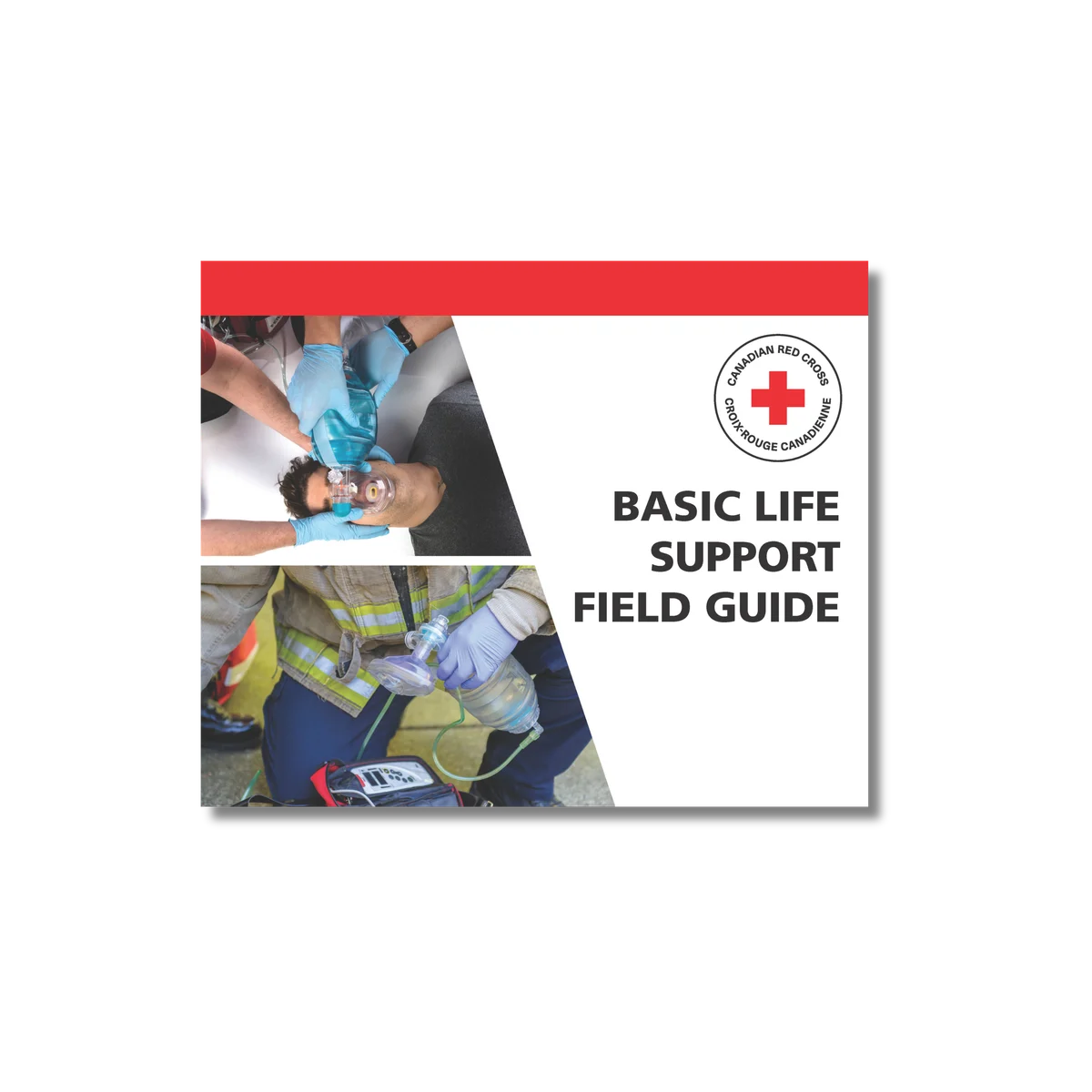
Canadian Red Cross Basic Life Support Field Guide
$35.96 (10% off when you add it while registering)
$39.95Add it when you registerSee what this book covers
Bought on its own from the shop, it ships to you at full price. The discount exists only at registration.
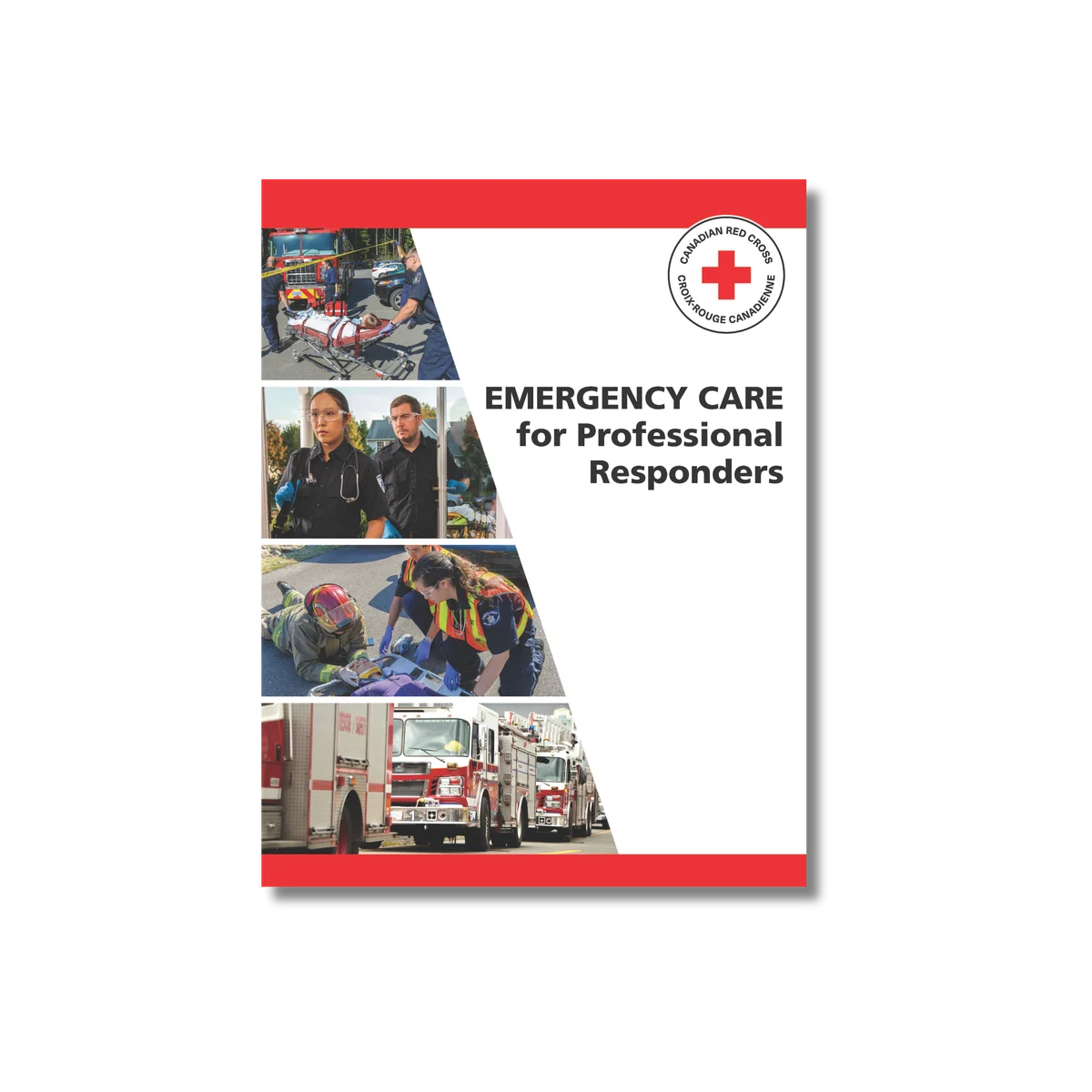
Canadian Red Cross Emergency Care for Professional Responders
$197.96 (10% off when you add it while registering)
$219.95Add it when you registerSee what this book covers
Bought on its own from the shop, it ships to you at full price. The discount exists only at registration.
Ready to take this course?$1,700.00 + GST & applicable taxes
Common questions
- Do I need first aid experience before taking the EMR?
- Yes. The Canadian Red Cross Program Standards require a current Intermediate First Aid certificate (formerly Standard First Aid) with CPR-C before you start the EMR course. This is a Red Cross requirement, not a Delta preference, so we cannot waive it. If you do not hold it, book Intermediate First Aid first, it is a short course and it is the foundation the EMR builds on. Students arriving from Advanced First Aid are already covered and usually find the first week smoother still.
- Does a Red Cross EMR certificate let me work as a registered EMR in Alberta?
- No. The Canadian Red Cross Emergency Medical Responder is not an Alberta College of Paramedics-approved EMR program. It does not register you with the College, does not grant a practice permit, and does not authorize you to practise or present yourself as a registered EMR in Alberta. If registration is your goal, confirm the approved programs directly with the College before enrolling anywhere.
- Will the EMR get me into a Primary Care Paramedic program?
- It may meet selected admission requirements at some PCP schools, but this varies by institution and can change between intakes. Contact the exact school and intake you are applying to, ask specifically whether a Canadian Red Cross EMR certificate is accepted for the requirement in question, and get the answer in writing before you register with us.
- How long is the certificate valid, and what happens when it expires?
- The Red Cross EMR certificate is valid for three years. The CPR/BLS component inside it carries a one-year currency, so most students renew BLS separately partway through. Recertification is only for a certificate that is still valid on the day of the course. Once it has expired, the way back is the full course, so book your recertification before the expiry date and send us your certificate if you are not sure of it.
- Will my employer or a fire service accept this course?
- Many Alberta employers in industrial, remote-site and event work accept responder-level training for site medical roles, but acceptance is set by the employer, not by us, confirm your specific requirement with your employer or prime contractor first. Do not assume it satisfies a fire service's medical entry route: Edmonton Fire, for one, has published an EMR pathway that requires a College-approved program and registration eligibility. Check the recruiting service's current published requirements and ask them directly.
- Can I use this EMR certificate in British Columbia?
- Yes, but in a set order, and the first step is the one people miss. BC will not accept an Alberta certificate, so before you apply for anything you need yours reissued as a British Columbia certificate, which we do for $100 at the professional levels with your expiry date unchanged. Then BC licenses EMAs separately through the Emergency Medical Assistants Licensing Branch (EMALB). As of July 2026, EMALB told our graduates in writing that EMR applicants need two short scope-upgrade certificates before a licence is issued, BC EMR Practice Update Core and BC EMR Practice Update Med Admin, from an EMALB-approved BC provider (GAP training). Without an EMR certificate at all, the route is the full ~120-hour BC EMR program instead. Budget realistically: students report roughly $500 for GAP training, about $75 for the jurisprudence and written exams, around $500 for the practical exam, plus the licence fee, and confirm current requirements and costs with EMALB directly, because they change.
- Can you deliver the EMR at our worksite or outside Calgary?
- Yes. Beyond our Calgary cohorts we deliver to groups in the Leduc and greater Edmonton region, elsewhere in Alberta and across Canada, and internationally on request. Onsite delivery at your own facility carries an additional fee for travel and setup, contact us with your location, group size and preferred window and we will quote it.
- What counts as a baby, a child or an adult, and which ages does this course cover?
- This course carries BLS (Basic Life Support), which covers adults, children, infants and neonates. The Canadian Red Cross 2025 standards set the age groups this way. A baby is under 1 year old. A child is 1 year old up to the onset of puberty. An adult is anyone from the onset of puberty on. Puberty does not happen on a set birthday, so you judge it on the person in front of you. A 13 year old who has started puberty gets adult CPR, and one who has not is still a child. For an AED, use child pads on a child up to the onset of puberty or under 55 pounds (about 25 kg), and baby pads on a baby if the AED has them. If baby pads are not there, use child or adult pads. If child pads are not there, use adult pads. The Red Cross says adult pads are safe on a child or a baby, so do not wait for the right size. If you are training for a specific person, tell us their age and we will tell you which course fits.
- Is live translation available for this course?
- No. This course is taught and assessed in English, without live classroom translation. You need to understand instructions, communicate during practical scenarios and complete the assessments in English. Contact us before registering if you have questions.
- Can I register on the same day as the course?
- Online registration closes at 11:59 PM the night before an in-person course. If you need training today, call or text 825-883-3582 before class starts. We may be able to fit you in, depending on space and the instructor's approval. It is not guaranteed.
- Online registration is closed. Does that mean the course is full?
- No. Closed online only means the online booking window has ended. A seat may still be open, or open up if someone cancels. Call or text 825-883-3582 to check.
- What if I arrive late?
- Certification needs full attendance and every required skill. Arriving late can mean we cannot certify you that day. If you are running late, call or text as early as you can so we can tell you what is possible.
Where to go next
Ready to register?
Pick your cohort above, or start here and choose your dates on the registration page.
Cancellation, transfer, and refund terms are shown before payment and confirmed at registration. Not sure which course fits? Email us and we’ll help.
Sources
- On successful completion you receive a Canadian Red Cross Emergency Medical Responder certificate. Canadian Red Cross (verified 2026-07-23).
- Edmonton Fire Rescue Services has confirmed that Intermediate First Aid (Alberta OHS-approved or provincial equivalent), valid at the time of application, will be the minimum accepted medical standard for applicants to its 2027 intake. The City describes its recruitment process as highly competitive, ranks candidates by their performance at each stage, and scores a résumé review that counts for 10% of each candidate's overall score. It does not publish which qualifications earn points, and it says further changes to the 2027 process are expected. City of Edmonton, Edmonton Fire Rescue Services (verified 2026-09-18).
- The Canadian Red Cross First Aid Program Standards 2025 define a baby as newborn to 1 year of age, a child as 1 year old to the onset of puberty, and an adult as the onset of puberty and older. Canadian Red Cross (verified 2026-09-26).
- The Canadian Red Cross Comprehensive Guide for First Aid & CPR (2025) says pediatric AED pads should be used on children up to the onset of puberty or weighing less than 55 pounds, and that if pediatric pads are not available it is safe to use adult pads on a child or baby. Canadian Red Cross (verified 2026-09-26).
← All courses · Last reviewed 2026-07-23