

The Advanced First Aid to EMR Bridge is a multi-day, in-person program in Calgary for people who already hold a current Canadian Red Cross Advanced First Aid certificate and want to carry it up to Emergency Medical Responder without sitting the full multi-week EMR cohort again.
Read more about this courseShow less
It is taught by instructors who work as paramedics, firefighters and emergency professionals, and it ends in a Canadian Red Cross EMR certificate. Before you read any further, one thing has to be said plainly, because this page attracts people planning a paramedic career: a Canadian Red Cross EMR certificate is not a program approved by the Alberta College of Paramedics. It does not make you registrable as an EMR in Alberta and it does not give you a practice permit. The second section sets out exactly what it is and is not, and we would rather you read that section than enquire on the strength of the course name.
Course details
- Certificate
- Canadian Red Cross Emergency Medical Responder (via bridge)
- Certificate valid for
- 3-year EMR certification (CPR/BLS component 1 year)
- Issued by
- Canadian Red Cross
- Duration
- 16 hours over 2 days
- Prerequisites
- A current Canadian Red Cross Advanced First Aid certificate
- CPR / BLS
- What is BLS?BLS is Basic Life Support CPR, also known as Healthcare Provider CPR. It covers adults, children, babies and neonates.It is a professional level CPR course, used by firefighters, nurses, paramedics, doctors and other healthcare workers.More about the ages this covers
- Recertification
- EMR Recertification before your certificate expires
- Locations
- Calgary, AB, 1550 5 St SW #300, Leduc, AB, 4810 50th Ave
- Price
- $400.00 + GST & applicable taxes (charged at checkout for your province)
Ways to take this course
Choose one
- In person: one or two days at our location. Nothing to do online beforehand.
- How it runs
- Two days in class. Nothing online.
- Class times
- 9:00 a.m. to 5:30 p.m.
- Whole course
- 16 hours in total
or
Traditional: three days or more, every day in person. Nothing to do online.- How it runs
- Three days in class.
- Class times
- 9:00 a.m. to 5:30 p.m.
- Whole course
- 16 hours in total
The same course, the same certificate and the same standards.
Upcoming dates, choose your cohort
CalgaryNov 7 – Nov 8, 2026 · Calgary, AB, 1550 5 St SW #300
- Start: Sat, Nov 7 · 9:00 a.m. to 5:30 p.m.in class
- Finish: Sun, Nov 8 · 9:00 a.m. to 5:30 p.m.in class
Registration closes November 6, 2026.
November 2026
SMTWTFS123456789101112131415161718192021222324252627282930In person: 2 class days, nothing online
In person(no online sessions)
- 2 full days in class
CalgaryIn person: one or two days at our location. Nothing to do online beforehand.Edmonton regionNov 7 – Nov 8, 2026 · Leduc, AB, 4810 50th Ave
- Start: Sat, Nov 7 · 9:00 a.m. to 5:30 p.m.in class
- Finish: Sun, Nov 8 · 9:00 a.m. to 5:30 p.m.in class
Registration closes November 6, 2026.
November 2026
SMTWTFS123456789101112131415161718192021222324252627282930In person: 2 class days, nothing online
In person(no online sessions)
- 2 full days in class
Edmonton regionIn person: one or two days at our location. Nothing to do online beforehand.Edmonton regionNov 23 – Nov 25, 2026 · Leduc, AB, 4810 50th Ave (Oscar)
Waitlist only- Session 1: Mon, Nov 23 · 9:00 a.m. to 5:30 p.m.in class
- Session 2: Tue, Nov 24 · 9:00 a.m. to 5:30 p.m.in class
- Session 3: Wed, Nov 25 · 9:00 a.m. to 5:30 p.m.in class
Registration is closed for these dates.
November 2026
SMTWTFS123456789101112131415161718192021222324252627282930Traditional: 3 class days, all in person
Traditional format(in person, no online sessions)
- 3 full days in class
Edmonton regionTraditional: three days or more, every day in person. Nothing to do online.Waitlist only. Join the waitlist and we’ll email you the moment a seat is available.
CalgaryFeb 6 – Feb 7, 2027 · Calgary, AB, 1550 5 St SW #300
- Start: Sat, Feb 6, 2027 · 9:00 a.m. to 5:30 p.m.in class
- Finish: Sun, Feb 7, 2027 · 9:00 a.m. to 5:30 p.m.in class
Registration closes February 5, 2027.
February 2027
SMTWTFS12345678910111213141516171819202122232425262728In person: 2 class days, nothing online
In person(no online sessions)
- 2 full days in class
CalgaryIn person: one or two days at our location. Nothing to do online beforehand.Edmonton regionFeb 6 – Feb 7, 2027 · Leduc, AB, 4810 50th Ave
Waitlist only- Start: Sat, Feb 6, 2027 · 9:00 a.m. to 5:30 p.m.in class
- Finish: Sun, Feb 7, 2027 · 9:00 a.m. to 5:30 p.m.in class
Registration is closed for these dates.
February 2027
SMTWTFS12345678910111213141516171819202122232425262728In person: 2 class days, nothing online
In person(no online sessions)
- 2 full days in class
Edmonton regionIn person: one or two days at our location. Nothing to do online beforehand.Waitlist only. Join the waitlist and we’ll email you the moment a seat is available.
CalgaryFeb 8 – Feb 10, 2027 · Calgary, AB, 1550 5 St SW #300 (Hotel)
Only 2 seats left- Session 1: Mon, Feb 8, 2027 · 9:00 a.m. to 5:30 p.m.in class
- Session 2: Tue, Feb 9, 2027 · 9:00 a.m. to 5:30 p.m.in class
- Session 3: Wed, Feb 10, 2027 · 9:00 a.m. to 5:30 p.m.in class
Registration closes February 7, 2027.
February 2027
SMTWTFS12345678910111213141516171819202122232425262728Traditional: 3 class days, all in person
Traditional format(in person, no online sessions)
- 3 full days in class
CalgaryTraditional: three days or more, every day in person. Nothing to do online.CalgaryMay 8 – May 9, 2027 · Calgary, AB, 1550 5 St SW #300
- Start: Sat, May 8, 2027 · 9:00 a.m. to 5:30 p.m.in class
- Finish: Sun, May 9, 2027 · 9:00 a.m. to 5:30 p.m.in class
Registration closes May 7, 2027.
May 2027
SMTWTFS12345678910111213141516171819202122232425262728293031In person: 2 class days, nothing online
In person(no online sessions)
- 2 full days in class
CalgaryIn person: one or two days at our location. Nothing to do online beforehand.Edmonton regionMay 8 – May 9, 2027 · Leduc, AB, 4810 50th Ave
Waitlist only- Start: Sat, May 8, 2027 · 9:00 a.m. to 5:30 p.m.in class
- Finish: Sun, May 9, 2027 · 9:00 a.m. to 5:30 p.m.in class
Registration is closed for these dates.
May 2027
SMTWTFS12345678910111213141516171819202122232425262728293031In person: 2 class days, nothing online
In person(no online sessions)
- 2 full days in class
Edmonton regionIn person: one or two days at our location. Nothing to do online beforehand.Waitlist only. Join the waitlist and we’ll email you the moment a seat is available.
Edmonton regionMay 24 – May 26, 2027 · Leduc, AB, 4810 50th Ave (Charlie)
Waitlist onlyVictoria Day long weekend courseall 3 sessions required
- Session 1: Mon, May 24, 2027 · 9:00 a.m. to 5:30 p.m.in class
- Session 2: Tue, May 25, 2027 · 9:00 a.m. to 5:30 p.m.in class
- Session 3: Wed, May 26, 2027 · 9:00 a.m. to 5:30 p.m.in class
Registration is closed for these dates.
May 2027
SMTWTFS12345678910111213141516171819202122232425262728293031Traditional: 3 class days, all in person
Traditional format(in person, no online sessions)
- 3 full days in class
Edmonton regionTraditional: three days or more, every day in person. Nothing to do online.Waitlist only. Join the waitlist and we’ll email you the moment a seat is available.
CalgaryAug 14 – Aug 15, 2027 · Calgary, AB, 1550 5 St SW #300
- Start: Sat, Aug 14, 2027 · 9:00 a.m. to 5:30 p.m.in class
- Finish: Sun, Aug 15, 2027 · 9:00 a.m. to 5:30 p.m.in class
Registration closes August 13, 2027.
August 2027
SMTWTFS12345678910111213141516171819202122232425262728293031In person: 2 class days, nothing online
In person(no online sessions)
- 2 full days in class
CalgaryIn person: one or two days at our location. Nothing to do online beforehand.Edmonton regionAug 14 – Aug 15, 2027 · Leduc, AB, 4810 50th Ave
Waitlist only- Start: Sat, Aug 14, 2027 · 9:00 a.m. to 5:30 p.m.in class
- Finish: Sun, Aug 15, 2027 · 9:00 a.m. to 5:30 p.m.in class
Registration is closed for these dates.
August 2027
SMTWTFS12345678910111213141516171819202122232425262728293031In person: 2 class days, nothing online
In person(no online sessions)
- 2 full days in class
Edmonton regionIn person: one or two days at our location. Nothing to do online beforehand.Waitlist only. Join the waitlist and we’ll email you the moment a seat is available.
CalgaryAug 16 – Aug 18, 2027 · Calgary, AB, 1550 5 St SW #300 (Xray)
Only 2 seats left- Session 1: Mon, Aug 16, 2027 · 9:00 a.m. to 5:30 p.m.in class
- Session 2: Tue, Aug 17, 2027 · 9:00 a.m. to 5:30 p.m.in class
- Session 3: Wed, Aug 18, 2027 · 9:00 a.m. to 5:30 p.m.in class
Registration closes August 15, 2027.
August 2027
SMTWTFS12345678910111213141516171819202122232425262728293031Traditional: 3 class days, all in person
Traditional format(in person, no online sessions)
- 3 full days in class
CalgaryTraditional: three days or more, every day in person. Nothing to do online.CalgaryNov 6 – Nov 7, 2027 · Calgary, AB, 1550 5 St SW #300
- Start: Sat, Nov 6, 2027 · 9:00 a.m. to 5:30 p.m.in class
- Finish: Sun, Nov 7, 2027 · 9:00 a.m. to 5:30 p.m.in class
Registration closes November 5, 2027.
November 2027
SMTWTFS123456789101112131415161718192021222324252627282930In person: 2 class days, nothing online
In person(no online sessions)
- 2 full days in class
CalgaryIn person: one or two days at our location. Nothing to do online beforehand.Edmonton regionNov 6 – Nov 7, 2027 · Leduc, AB, 4810 50th Ave
Waitlist only- Start: Sat, Nov 6, 2027 · 9:00 a.m. to 5:30 p.m.in class
- Finish: Sun, Nov 7, 2027 · 9:00 a.m. to 5:30 p.m.in class
Registration is closed for these dates.
November 2027
SMTWTFS123456789101112131415161718192021222324252627282930In person: 2 class days, nothing online
In person(no online sessions)
- 2 full days in class
Edmonton regionIn person: one or two days at our location. Nothing to do online beforehand.Waitlist only. Join the waitlist and we’ll email you the moment a seat is available.
Edmonton regionNov 22 – Nov 24, 2027 · Leduc, AB, 4810 50th Ave (Papa)
Waitlist only- Session 1: Mon, Nov 22, 2027 · 9:00 a.m. to 5:30 p.m.in class
- Session 2: Tue, Nov 23, 2027 · 9:00 a.m. to 5:30 p.m.in class
- Session 3: Wed, Nov 24, 2027 · 9:00 a.m. to 5:30 p.m.in class
Registration is closed for these dates.
November 2027
SMTWTFS123456789101112131415161718192021222324252627282930Traditional: 3 class days, all in person
Traditional format(in person, no online sessions)
- 3 full days in class
Edmonton regionTraditional: three days or more, every day in person. Nothing to do online.Waitlist only. Join the waitlist and we’ll email you the moment a seat is available.
What you’ll be able to do
- Run a structured patient assessment at responder level on a patient you have never met, then repeat it as they change
- Form and defend a working impression from incomplete information, and revise it when the picture shifts
- Manage an airway with positioning, suction and basic adjuncts, and recognize breathing that is inadequate rather than merely fast
- Deliver high-quality CPR with an AED both alone and inside a working crew
- Control life-threatening bleeding and pick up shock early enough that it is still reversible
- Sort the patterns behind chest pain, stroke, seizure, anaphylaxis, respiratory distress and altered level of consciousness, and act on the right one first
- Package and move a patient with a suspected spinal or musculoskeletal injury as part of a team
- Take and trend vital signs, document a call usefully, and hand over to arriving EMS in an order they can work with
What comes with your seat
Registering opens the Delta student portal: your course drawn as a step-by-step path, chapter flashcards that unlock as you finish each one, a personal weak-spots deck built from the cards you miss, and a readiness view so you walk into class knowing where you stand.
581
flashcards across 25 chapters
48
field guides & references
Includes the full decks for The Delta Model, Advanced First Aid, Advanced First Aid to EMR Bridge — the material builds on itself, so you get every level under the one you registered for.
Study material is part of your enrolment and opens in your portal when you register.
Ready to take this course?$400.00 + GST & applicable taxes
What the bridge is, and who is eligible to take it
A bridge is not a discount version of a course. It is a program built on the assumption that you already carry a body of responder training, so the time is spent on the distance between where Advanced First Aid stops and where Emergency Medical Responder starts, rather than on ground you have already covered. That is why the entry requirement is firm: you need a current Canadian Red Cross Advanced First Aid certificate to enrol. If yours has lapsed, you take the full Advanced First Aid course first, because recertification is only for a certificate that is still valid. If it is still valid but close to its expiry date, Advanced First Aid Recertification before that date keeps the bridge open. If you are not certain what state it is in, send us the certificate before you commit to anything and we will check it.
It runs in person in Calgary as a multi-day program. We are not going to publish a day count or an hour figure on a page like this, because the schedule belongs to the specific run and the Canadian Red Cross can revise its hour requirements. Dates for this bridge are not yet posted. Tell us you are interested and we will send you the exact days, start times and hours as soon as a run is scheduled, before you arrange time off work.
You finish with a Canadian Red Cross Emergency Medical Responder certificate, earned through the bridge route. Basic Life Support is part of the program, so you are not booking CPR separately. The two run on different clocks: the Canadian Red Cross sets the validity periods, currently three years for the EMR certificate and one year for the CPR/BLS component, and the exact expiry dates are printed on the certificates you receive. Write the shorter one down the week you finish. It is the one people miss.
Because this is a Red Cross program, the Red Cross owns the curriculum and we teach to it. We will not reprint their lesson list here. If a safety manager, a school or a hiring file needs the current official outline, ask us and we will point you at the official Red Cross course description rather than at our summary of it.
What a Red Cross EMR certificate does and does not do in Alberta
Read this before you spend a dollar, with us or with anyone else. A Canadian Red Cross Emergency Medical Responder certificate, whether you earn it through this bridge or through the full course, is not an Alberta College of Paramedics-approved EMR program. Finishing it does not register you with the College, does not grant you a practice permit, and does not entitle you to work as, or describe yourself as, a registered EMR in Alberta. If licensed practice as an EMR in this province is the goal, the program you need is one the College itself lists as approved. Check that list at the College directly and do not take a training provider's word for it, ours included.
What a Red Cross EMR certificate may do is meet selected admission requirements at some Primary Care Paramedic schools. The words selected and some are carrying real weight in that sentence. Admission rules differ between institutions and change between intakes. Before you register for this bridge, contact the exact school and the exact intake you intend to apply to, ask whether a Canadian Red Cross EMR certificate earned through a bridge is accepted for the requirement you are trying to satisfy, and get the answer in writing from them. A screenshot of an old forum post is not an answer.
The same caution applies to employers and fire services. Acceptance for employer and fire-service roles is set by the employer or the prime contractor, never by the certificate and never by us. We will not tell you this course meets a particular site's requirement. Send us the exact wording you were given by the employer, the prime contractor or the recruiting office and we will read it with you honestly, including when the answer is that this is not the right course. Fire-service recruiting standards change between competitions, and some published pathways turn on a College-approved program and registration eligibility, which this certificate does not provide, so read the current posting from the service you are applying to and ask its recruiting office directly.
None of that makes the training worthless, and we are not talking anyone out of learning to run a proper patient assessment. The skills are real and the instructors are people who use them at work. The credential simply has a defined scope, and the worst outcome we can imagine is somebody finishing this bridge and discovering it does not do the one thing they bought it for. If that risk is anywhere near your situation, phone us before you enrol rather than after.
Bridge, full EMR course, or neither
The bridge is the efficient route when you genuinely hold current Advanced First Aid and you genuinely need Emergency Medical Responder on paper. Repeating the full multi-week EMR cohort in that situation costs you weeks you do not need to spend. If you are in that position, this is the course, and we will say so.
If you have never held Advanced First Aid, the bridge is closed to you and that is not a technicality we can work around. The full EMR program starts from the ground up and takes no prior certificate, so that is the honest starting point instead. If you held AFA and let it lapse, you take the full Advanced First Aid course first, because Advanced First Aid Recertification only accepts a certificate that is still valid, and then the bridge is within reach again. If you are not sure of your date, send us the certificate before you decide. If you hold First Responder rather than Advanced First Aid, there is a separate bridge that moves you onto the AFA pathway first, and only then does this one become available.
There is also a group we would rather turn away at the door. If your employer asked for Advanced First Aid, you already hold it, and nobody has asked you for EMR, the bridge buys you a second certificate you may never be asked to show, plus a second renewal cycle to track. If you are chasing EMR because a forum told you it is how people get into paramedicine, go back and read the section above, then phone the school. We would rather lose the registration than take money for a credential that does not do what you were told it does.
We do not publish a maximum age for any course we run. If you hold current Advanced First Aid and you can meet the physical demands of the work, age is not the gate. The demands themselves are real, though. Expect long stretches on your knees, on the floor, lifting and moving people, and tell us in advance about an injury, a mobility limitation or anything else that changes how you will take part.
What changes between AFA level and EMR level
The single biggest change is not a new skill, it is the standard your assessment is held to. Advanced First Aid teaches you to find the problem and act on it. At Emergency Medical Responder level you are expected to run a structured assessment on a patient you have never met, keep repeating it as they change, form an impression from incomplete information, and defend the decision you made when an instructor asks why. Most people arrive believing the hands-on skills will be the hard part. The discipline of reassessment is the hard part.
The physical skills you already carry from Advanced First Aid get harder in two ways. You do them on a patient whose condition is moving rather than on a scenario that holds still, and you do them inside a two- or three-person crew rather than alone on a mannequin, which is a genuinely different task. Sorting out who is doing what, without three people reaching for the same thing at once, is a skill in itself, and the bridge assumes it from the first day. What is actually covered is set by the Red Cross outline and we teach to it, which is why, as we said above, the document we will send you is theirs rather than our version of it.
The other shift is documentation and handover. Trending vital signs over time, keeping notes somebody else can use, and giving a paramedic crew the story in thirty seconds in the order they need it. Our instructors are the people on the receiving end of those handovers on real calls, so the standard you are held to is the working one, not a classroom approximation.
One thing the bridge does not change. The certificate you finish with is the same Canadian Red Cross Emergency Medical Responder certificate the full course produces, and nothing about the route you took alters what you are allowed to do at work. Scope is set by your employer, your site medical direction and whatever regulation applies to you. It was never set by the certificate, and it is not set by how many days you spent earning it. If an employer asks whether you did the full course or the bridge, the honest answer is the bridge, and the certificate name is identical either way.
How the bridge runs, and how you are certified
When we schedule a run it is in person in Calgary, and the dates, daily start times and exact hours are published with that run. For groups we deliver in the Leduc and greater Edmonton region, elsewhere in Alberta and across Canada, and internationally on request. Onsite delivery at your own facility or worksite carries an additional fee covering travel and setup, and it is the same program with the same equipment, the same attendance requirement and the same evaluations. The location changes, the standard does not.
Certification is not a participation award and a bridge is not a shortcut around evaluation. You have to attend the full program and pass both written and hands-on assessment, demonstrating each skill to standard in front of an instructor. On a compressed multi-day program a missed session hurts more than it would on a multi-week cohort, because there is far less room to recover the material. If you know you are going to miss time, tell us as early as possible rather than on the day.
Tuition, what is included, and the refund and transfer terms belong to the run you are booking rather than to this page, for the same reason we do not publish a day count here. Confirm all three with us directly before you commit. If your employer is paying, get the invoicing arrangement sorted before the first day rather than during it.
When you do register, use your legal name spelled exactly as an employer, a school or a hiring file will expect to see it. That spelling is what goes on the certificate, and fixing it afterwards takes far longer than typing it carefully once.
Renewals, and how to arrive ready
Plan the renewal cycle the week you finish. The Canadian Red Cross sets the validity periods and prints the dates on your certificates: currently three years for the Emergency Medical Responder certificate and one year for the CPR/BLS component inside it. We are bringing an EMR recertification back online, and it is only for an EMR certificate that is still valid on the day of the course. Dates for it are not posted yet, so book it before your expiry date. Once the certificate has expired, the way back is the full EMR course.
The best preparation for a compressed bridge is your own Advanced First Aid material. Review your patient assessment sequence until it is automatic, refresh your CPR and AED practice, and get comfortable again with the equipment you used in AFA. Time spent on that before day one is time you get back during the program, because the assessment framework is the thing everything else is hung on.
Come dressed to work. Clothing you can kneel, crawl and lift in, closed shoes, hair tied back. Bring water, food for long days, a pen and something to write in, since documentation practice starts early. Bring your current Advanced First Aid certificate as well, because we do check it.
If you are still weighing the bridge against the full EMR course, or you are not certain the certificate will do what a school or an employer needs, get in touch and describe the actual requirement you are trying to satisfy rather than the course name you were given. That conversation costs nothing and it is the fastest way to avoid buying the wrong training.
Your own oxygen kit in scenarios
Oxygen is taught with equipment that is yours: a nasal cannula and a non-rebreather mask, opened from the packaging in front of you. You work with them through the course, and you wear them when you play the patient in scenarios, so nobody trains with a mask that has been on someone else's face.
They go home with you afterwards. Keep them with your kit; you have already fitted them once.
Who this course is for
- Advanced First Aid holders who have been asked for Emergency Medical Responder by name and do not want to repeat the full cohort
- Oilfield, industrial and remote-site medics upgrading a responder certificate they already hold
- Safety coordinators and site first aid attendants moving into a more demanding medical role on shift
- Fire, police and public-safety applicants building a file, who have read the Alberta College of Paramedics caveat above
- Prospective Primary Care Paramedic applicants who have already confirmed in writing what their school and intake accept
- Security supervisors and event medical staff in Calgary who are first on scene by default
- Ski patrol, search-and-rescue and backcountry volunteers with current AFA behind them
- Leduc and greater Edmonton crews who would rather have the bridge delivered close to home than send everyone to Calgary
English-language requirements
This course is taught and assessed in English. Professional responder training involves extensive medical terminology, clinical abbreviations, patient assessment, rapid communication, and complex practical scenarios.
Live classroom translation is not offered for this program.
Students must be able to understand instructions, communicate effectively during practical scenarios, and complete the required assessments in English.
Contact us before registering if you have questions about the language requirements.
Related reading
- The EMR Entry Requirement Nobody Plans ForEMR asks for Intermediate First Aid with CPR-C, current on day one. Here is how to sequence the two courses without losing a month.
- Where EMR Fits on the Road Into EMSEMR is a real credential and a common first step, but it is not a paramedic licence in Alberta. Read the caveat before you spend the money.
Where we teach this course
Public sessions run in Calgary, with dates in Leduc through the year.
We also deliver this course at your worksite for groups, useful for crews who can’t release staff to travel. Onsite delivery carries an additional fee on top of per-person pricing. Request an onsite quote.
We travel for private and group training across Canada, and internationally by arrangement. If you’re outside Alberta, tell us where you are and we’ll price it.
Your course materials
Digital access opens the moment you register. Physical manuals live in our classroom library for you to use during class. Want one of your own to keep? Buy it here at a discount.
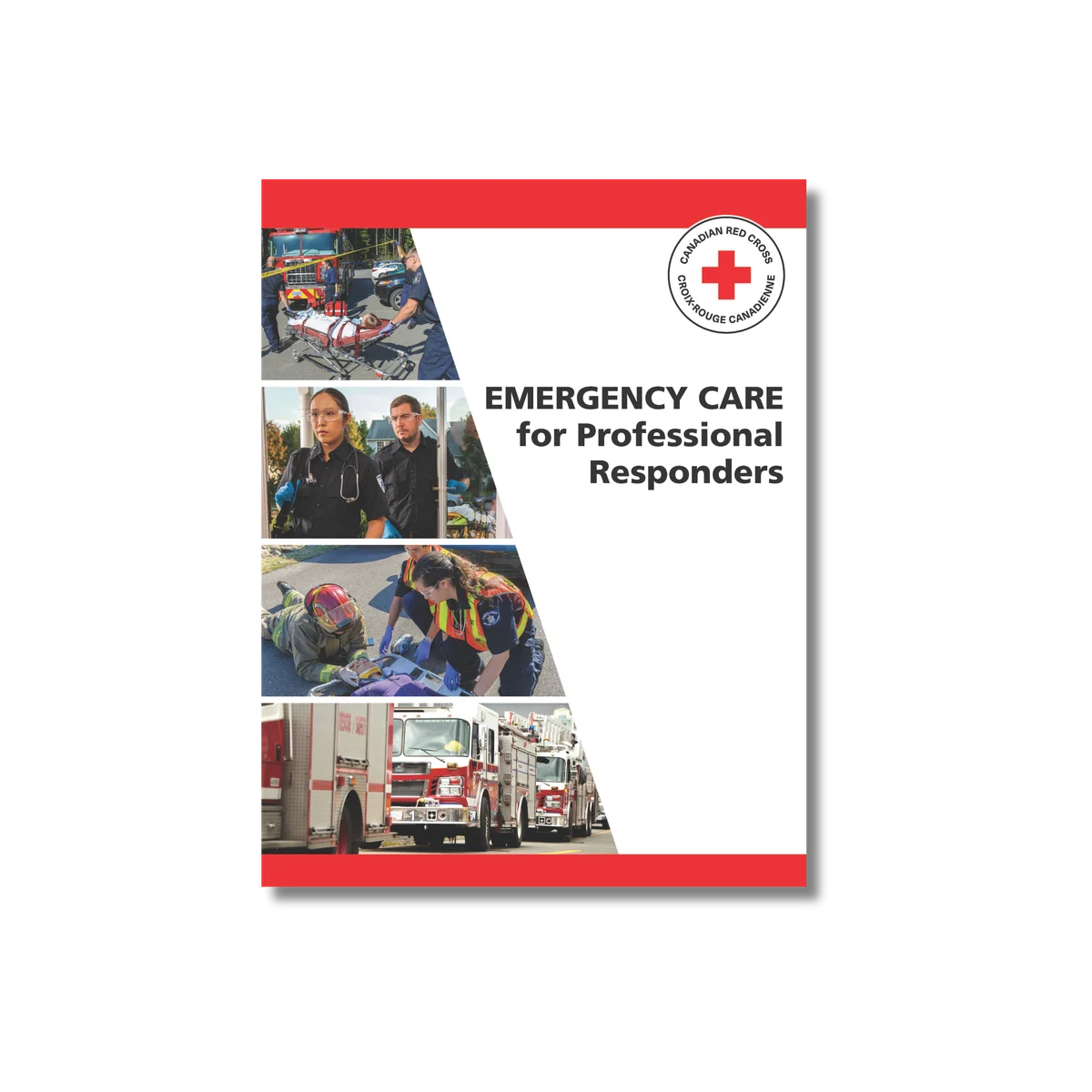
Canadian Red Cross Emergency Care for Professional Responders
$197.96 (10% off when you add it while registering)
$219.95Add it when you registerSee what this book covers
Bought on its own from the shop, it ships to you at full price. The discount exists only at registration.
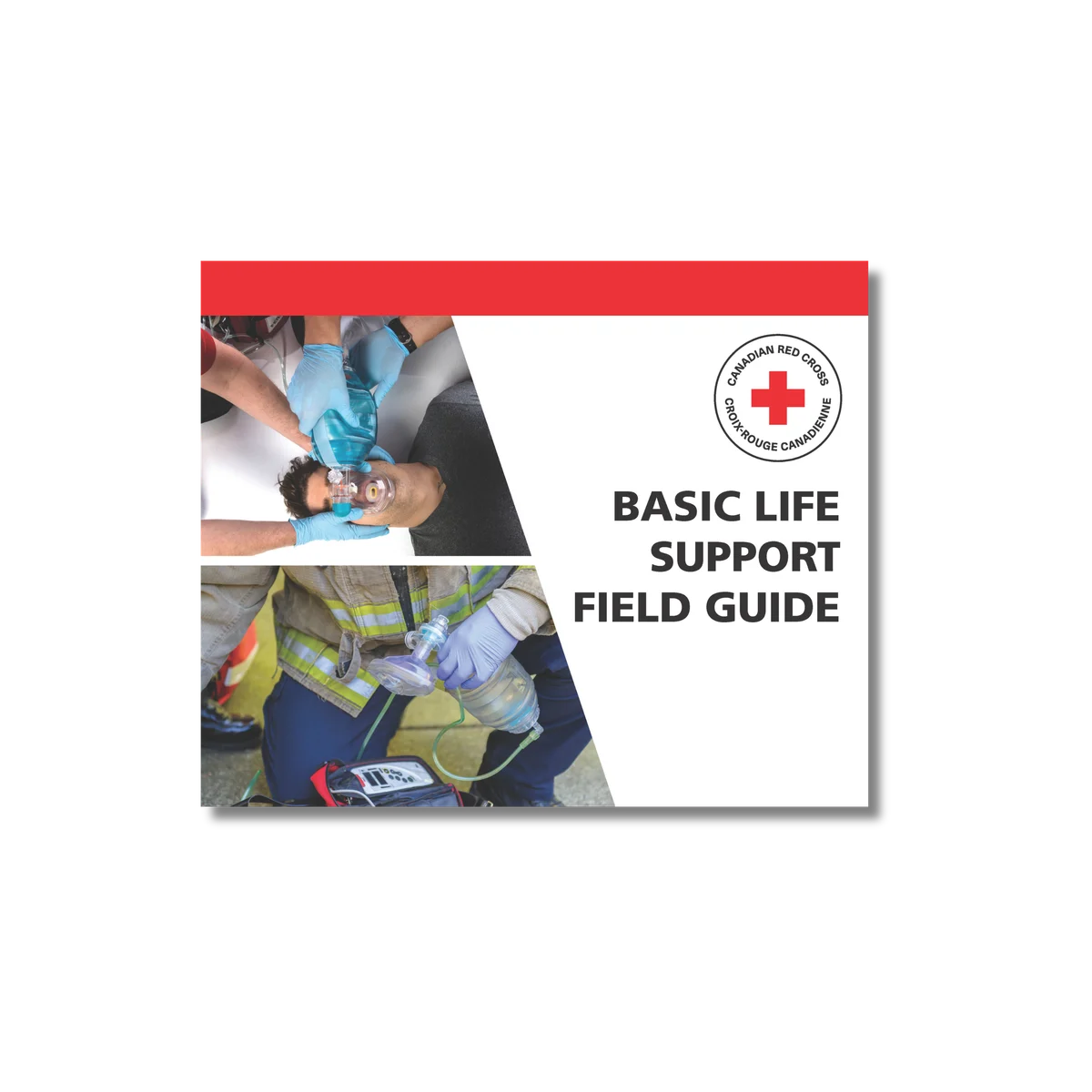
Canadian Red Cross Basic Life Support Field Guide
$35.96 (10% off when you add it while registering)
$39.95Add it when you registerSee what this book covers
Bought on its own from the shop, it ships to you at full price. The discount exists only at registration.
Ready to take this course?$400.00 + GST & applicable taxes
Common questions
- What do I need to hold before I can take the bridge?
- A current Canadian Red Cross Advanced First Aid certificate. That is the entry requirement for this program and it is not one we can waive. Send us a copy of your certificate before you commit so we can confirm you are eligible. If it has lapsed, you take the full Advanced First Aid course first, and then the bridge is open to you again.
- Does this make me a registered EMR in Alberta?
- No. A Canadian Red Cross Emergency Medical Responder certificate is not an Alberta College of Paramedics-approved program. It does not register you with the College, does not grant a practice permit, and does not entitle you to work as or call yourself a registered EMR in Alberta. If licensed practice is your goal, confirm the approved programs with the College directly before you enrol anywhere.
- Will it get me into a Primary Care Paramedic program?
- Ask the school about the bridge by name. Some admissions offices accept a Canadian Red Cross EMR certificate without asking how it was earned. Others ask, and some treat a bridge differently from the full course. Get the answer in writing from the exact school and the exact intake before you register with us, and if their reply is ambiguous, send it to us and we will read it with you.
- How many days is the bridge, and what does it cost?
- It runs as a multi-day in-person program in Calgary. The exact days, hours, start times and tuition are set per run rather than fixed on this page, because they move. Dates for this bridge are not posted yet, so ask us and we will confirm the current figures and the next scheduled run rather than have you read a day count or a price off a page.
- What certificate do I end up with, and how long is it good for?
- A Canadian Red Cross Emergency Medical Responder certificate, earned through the bridge route, with Basic Life Support included so you are not booking CPR separately. The Canadian Red Cross sets the validity periods, currently three years for the EMR certificate and one year for the CPR/BLS component, and the exact expiry dates are printed on the certificates you receive.
- My Advanced First Aid certificate has expired. Can I still bridge?
- Not yet. The bridge is built around a current Advanced First Aid certificate, and Advanced First Aid Recertification is only for a certificate that has not expired, so a lapsed AFA means taking the full Advanced First Aid course first. Once you hold a current AFA again, the bridge is open to you. If you are not sure of your date, send us your certificate and its expiry date and we will check it.
- Is the bridge easier than the full EMR course?
- It is shorter, not softer. The evaluation standard is the same, with written and hands-on components you have to pass in front of an instructor, and the compressed format means a missed session is harder to recover from than it would be on a multi-week cohort. Come in with your assessment sequence already fresh.
- Can you run the bridge at our worksite or outside Calgary?
- Yes, and the constraint on a bridge is different from a normal course. Every person in the group has to individually hold a current Advanced First Aid certificate, so one lapsed certificate in a crew of eight is a person we cannot certify. Send us the certificates, not just the headcount. Beyond Calgary we deliver to groups in the Leduc and greater Edmonton region, elsewhere in Alberta and across Canada, and internationally on request, with an additional fee covering travel and setup. If part of your crew holds AFA and part does not, tell us and we will price the two routes side by side rather than pretending one course covers everyone.
- What counts as a baby, a child or an adult, and which ages does this course cover?
- This course carries BLS (Basic Life Support), which covers adults, children, infants and neonates. The Canadian Red Cross 2025 standards set the age groups this way. A baby is under 1 year old. A child is 1 year old up to the onset of puberty. An adult is anyone from the onset of puberty on. Puberty does not happen on a set birthday, so you judge it on the person in front of you. A 13 year old who has started puberty gets adult CPR, and one who has not is still a child. For an AED, use child pads on a child up to the onset of puberty or under 55 pounds (about 25 kg), and baby pads on a baby if the AED has them. If baby pads are not there, use child or adult pads. If child pads are not there, use adult pads. The Red Cross says adult pads are safe on a child or a baby, so do not wait for the right size. If you are training for a specific person, tell us their age and we will tell you which course fits.
- Is live translation available for this course?
- No. This course is taught and assessed in English, without live classroom translation. You need to understand instructions, communicate during practical scenarios and complete the assessments in English. Contact us before registering if you have questions.
- Can I register on the same day as the course?
- Online registration closes at 11:59 PM the night before an in-person course. If you need training today, call or text 825-883-3582 before class starts. We may be able to fit you in, depending on space and the instructor's approval. It is not guaranteed.
- Online registration is closed. Does that mean the course is full?
- No. Closed online only means the online booking window has ended. A seat may still be open, or open up if someone cancels. Call or text 825-883-3582 to check.
- What if I arrive late?
- Certification needs full attendance and every required skill. Arriving late can mean we cannot certify you that day. If you are running late, call or text as early as you can so we can tell you what is possible.
Where to go next
Ready to register?
Pick your cohort above, or start here and choose your dates on the registration page.
Cancellation, transfer, and refund terms are shown before payment and confirmed at registration. Not sure which course fits? Email us and we’ll help.
Sources
- On successful completion you receive a Canadian Red Cross Emergency Medical Responder certificate. Canadian Red Cross (verified 2026-07-23).
- The Canadian Red Cross First Aid Program Standards 2025 define a baby as newborn to 1 year of age, a child as 1 year old to the onset of puberty, and an adult as the onset of puberty and older. Canadian Red Cross (verified 2026-09-26).
- The Canadian Red Cross Comprehensive Guide for First Aid & CPR (2025) says pediatric AED pads should be used on children up to the onset of puberty or weighing less than 55 pounds, and that if pediatric pads are not available it is safe to use adult pads on a child or baby. Canadian Red Cross (verified 2026-09-26).
← All courses · Last reviewed 2026-07-23