
Basic Life Support is the provider-level CPR course for people who are expected to manage a cardiac arrest at work, not just recognize one. We run BLS in Calgary as a single in-person session of roughly four hours, with no prerequisite.
Read more about this courseShow less
We also deliver in Leduc and the greater Edmonton region, travel elsewhere in Canada, and can bring the course to your clinic, office or worksite onsite for an additional fee.
Course details
- Certificate
- Canadian Red Cross Basic Life Support
- Certificate valid for
- 1 year
- Issued by
- Canadian Red Cross
- Duration
- Approx. 4.25 hours
- Prerequisites
- None
- CPR / BLS
- BLS providerWhat is BLS?BLS is Basic Life Support CPR, also known as Healthcare Provider CPR. It covers adults, children, babies and neonates.It is a professional level CPR course, used by firefighters, nurses, paramedics, doctors and other healthcare workers.More about CPR levels
- Recertification
- BLS Recertification before your certificate expires
- Locations
- Leduc, AB, 4810 50th Ave, Calgary, AB, 1550 5 St SW #300
- Price
- $130.00 + GST & applicable taxes (charged at checkout for your province)
How this course runs
- In person: one or two days at our location. Nothing to do online beforehand.
- How it runs
- One day in class. Nothing online.
- Class times
- 9:00 a.m. to 2:00 p.m.
- Whole course
- 4.25 hours
Upcoming dates, choose your cohort
Edmonton regionNov 15, 2026 · Leduc, AB, 4810 50th Ave
- Sun, Nov 15 · 9:00 a.m. to 2:00 p.m.in class
Registration closes November 14, 2026.
November 2026
SMTWTFS123456789101112131415161718192021222324252627282930In person: 1 class day, nothing online
In person(no online sessions)
- 1 full day in class
Edmonton regionIn person: one or two days at our location. Nothing to do online beforehand.CalgaryJan 31, 2027 · Calgary, AB, 1550 5 St SW #300
- Sun, Jan 31, 2027 · 9:00 a.m. to 2:00 p.m.in class
Registration closes January 30, 2027.
January 2027
SMTWTFS12345678910111213141516171819202122232425262728293031In person: 1 class day, nothing online
In person(no online sessions)
- 1 full day in class
CalgaryIn person: one or two days at our location. Nothing to do online beforehand.Edmonton regionFeb 14, 2027 · Leduc, AB, 4810 50th Ave
- Sun, Feb 14, 2027 · 9:00 a.m. to 2:00 p.m.in class
Registration closes February 13, 2027.
February 2027
SMTWTFS12345678910111213141516171819202122232425262728In person: 1 class day, nothing online
In person(no online sessions)
- 1 full day in class
Edmonton regionIn person: one or two days at our location. Nothing to do online beforehand.Unsure if Basic Life Support is what you need?
Figure out what you need in under 30 seconds, with these simple questions.
- Answer a few questions
- See the course that fits and why
- Pick a date and register
- Become certified
I’m taking the training myselfFor my job, a job I want, school, or my own life.I’m arranging training for my staff or workplaceSee what your workplace needs, and the course for it.Basic and Intermediate First Aid both include CPR. A CPR course on its own does not include first aid.
CalgaryMar 7, 2027 · Calgary, AB, 1550 5 St SW #300
- Sun, Mar 7, 2027 · 9:00 a.m. to 2:00 p.m.in class
Registration closes March 6, 2027.
March 2027
SMTWTFS12345678910111213141516171819202122232425262728293031In person: 1 class day, nothing online
In person(no online sessions)
- 1 full day in class
CalgaryIn person: one or two days at our location. Nothing to do online beforehand.Edmonton regionMay 2, 2027 · Leduc, AB, 4810 50th Ave
- Sun, May 2, 2027 · 9:00 a.m. to 2:00 p.m.in class
Registration closes May 1, 2027.
May 2027
SMTWTFS12345678910111213141516171819202122232425262728293031In person: 1 class day, nothing online
In person(no online sessions)
- 1 full day in class
Edmonton regionIn person: one or two days at our location. Nothing to do online beforehand.CalgaryJun 6, 2027 · Calgary, AB, 1550 5 St SW #300
- Sun, Jun 6, 2027 · 9:00 a.m. to 2:00 p.m.in class
Registration closes June 5, 2027.
June 2027
SMTWTFS123456789101112131415161718192021222324252627282930In person: 1 class day, nothing online
In person(no online sessions)
- 1 full day in class
CalgaryIn person: one or two days at our location. Nothing to do online beforehand.Edmonton regionAug 8, 2027 · Leduc, AB, 4810 50th Ave
- Sun, Aug 8, 2027 · 9:00 a.m. to 2:00 p.m.in class
Registration closes August 7, 2027.
August 2027
SMTWTFS12345678910111213141516171819202122232425262728293031In person: 1 class day, nothing online
In person(no online sessions)
- 1 full day in class
Edmonton regionIn person: one or two days at our location. Nothing to do online beforehand.CalgaryAug 29, 2027 · Calgary, AB, 1550 5 St SW #300
- Sun, Aug 29, 2027 · 9:00 a.m. to 2:00 p.m.in class
Registration closes August 28, 2027.
August 2027
SMTWTFS12345678910111213141516171819202122232425262728293031In person: 1 class day, nothing online
In person(no online sessions)
- 1 full day in class
CalgaryIn person: one or two days at our location. Nothing to do online beforehand.
What you’ll be able to do
- Recognize cardiac arrest within seconds, including agonal breathing that is easily mistaken for a sign of life
- Deliver compressions at effective depth and rate with full recoil on adult, child and infant patients
- Rotate compressors and run a two-rescuer sequence without opening long pauses in chest compressions
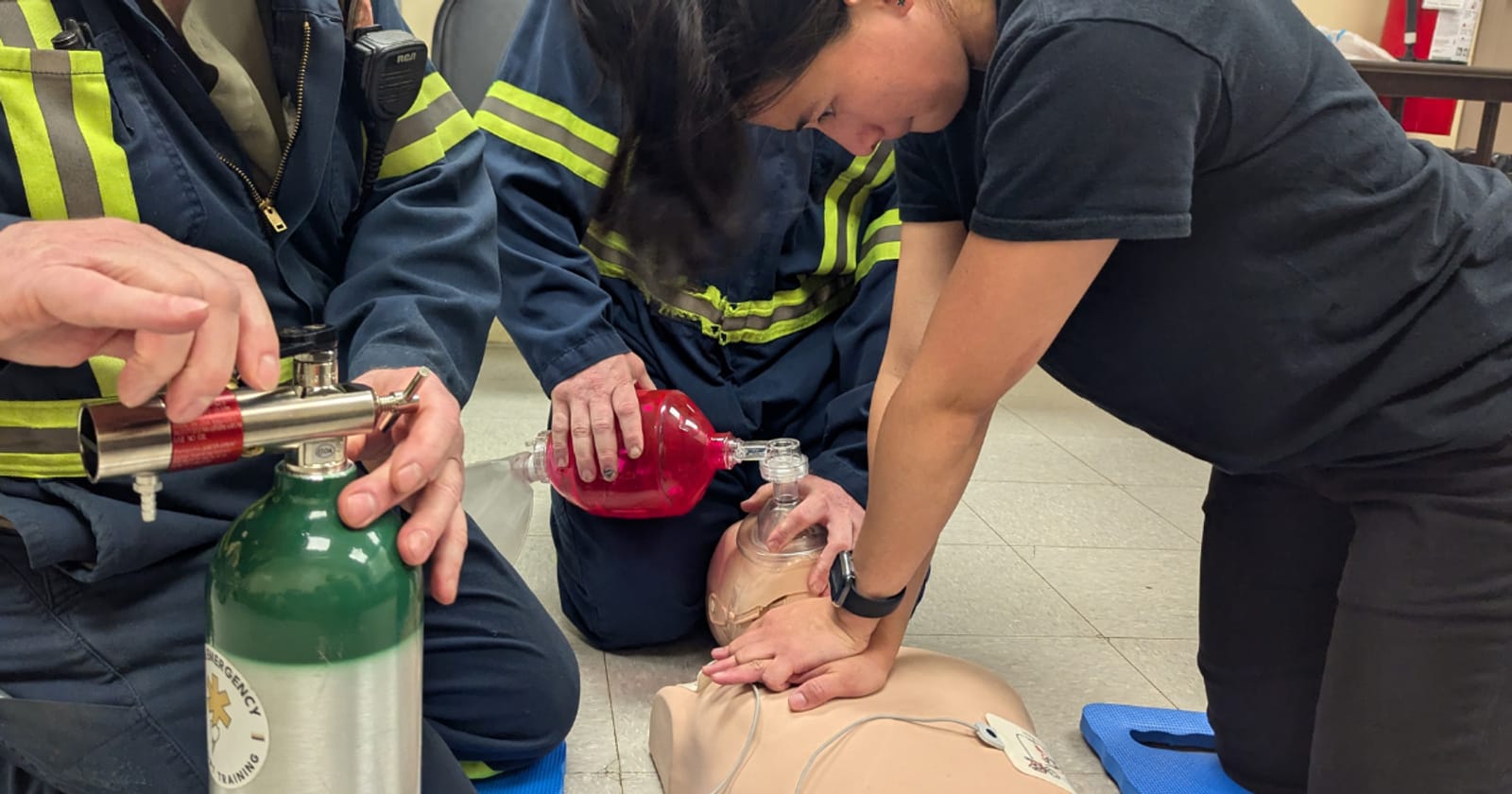
- Ventilate with a pocket mask and a bag-valve mask, working alone and with a partner
- Apply and operate an AED safely, including pad placement on smaller patients
- Relieve an airway obstruction in both a responsive and an unresponsive patient
- Take or assign a clear role in a resuscitation team and communicate without talking over people
- Hand over to arriving EMS in a short, usable summary of what has been done
Ready to take this course?$130.00 + GST & applicable taxes
What Basic Life Support (BLS) actually is
BLS is the Canadian Red Cross provider-level CPR course. It is written for people whose job puts them at the front of a resuscitation, nurses, dental teams, clinic staff, care aides, professional responders, rather than for bystanders who happen to be nearby. As a Canadian Red Cross Training Partner, Delta delivers it in Calgary as one in-person session of approximately four hours. There is no prerequisite.
The difference between BLS and the CPR taught inside a general first aid course is mostly expectation and equipment. In BLS you work at the pace of a real arrest: two rescuers instead of one, a bag-valve mask as well as a pocket mask, deliberate compressor changes, pulse checks, and a hard focus on keeping hands on the chest through everything else that is happening. You practise on adult, child and infant manikins, because the sequence and the mechanics change with patient size.
It is a skills course, not a lecture. The classroom portion is short and the rest of the session is spent on the floor with manikins and AED trainers, repeating the sequence until it holds up under pressure. That is the point of the session. The value is not the card in your wallet, it is being able to do this competently the first time it is real.
Who BLS suits in Calgary, and who needs something else
Most people in a Delta BLS class are there because an employer, a clinic, a program or a job offer asked for provider-level CPR. Nurses and licensed practical nurses, dental teams, medical office and walk-in clinic staff, health care aides, and students about to start a nursing, paramedic, dental hygiene or respiratory therapy program make up much of the room. Industrial and site medics, security staff and people working toward an emergency-services career come through as well.
If you run a dental clinic or a small medical practice, you can have the whole team trained in a single half-day session at your own location instead of sending people out one at a time. That is what our onsite option exists for, and it is usually the staff time rather than the course fee that decides the question.
Many Alberta employers and health care facilities ask for provider-level CPR, and BLS is the course commonly taken by people in that position. We cannot tell you whether it satisfies your particular requirement, wording varies a great deal between employers, schools and regulators, so confirm your specific requirement with your employer, school or licensing body before you book. If the wording is ambiguous, send it to us and we will tell you honestly whether BLS looks like what you need.
One thing to be clear about: BLS is not a first aid certificate. It does not cover bleeding control, fractures, burns, medical emergencies or the broader first aid syllabus. If your workplace asks for first aid, you will likely need a first aid course as well, either separately, or in a combined format that includes the BLS component. Check the exact wording with your employer before you decide.
The skills you will actually leave with
Compressions are the core of the session. You will work on depth, rate and full chest recoil, and on the part most people underestimate, how quickly compression quality degrades once you are tired, and how to rotate compressors without opening up a long pause. Time off the chest is what costs patients, and the session is built around protecting it.
On airway and ventilation, you will use a pocket mask and a bag-valve mask, both alone and with a partner. Two-person BVM technique is a genuinely difficult skill and it is where a lot of class time goes: getting a real seal, judging chest rise, and resisting the strong instinct to ventilate too hard and too often.
You will apply and operate an AED, including pad placement on smaller patients, clearing the patient safely, and slotting the machine into the sequence without stalling compressions. Alongside that, you will practise team dynamics, calling roles out loud, closing the loop on instructions, and giving arriving EMS a handover they can actually use in ten seconds.
The session also covers recognition and airway obstruction. Recognizing cardiac arrest fast means being able to identify agonal breathing, which is commonly mistaken for a sign of life and regularly delays CPR. Choking is practised on responsive and unresponsive patients across adult, child and infant.
How the session runs and how you are assessed
A BLS class runs a little over four hours in person. The instructor demonstrates, breaks the skill down, then puts you on the manikin and keeps you there. Toward the end of the session the individual skills come together in scenarios, which is where the coordination work gets tested rather than the mechanics.
Assessment is continuous. You are evaluated through the session on the skills as you perform them, and again in the scenarios. Certification requires attending the full session and being evaluated successfully, attendance on its own does not produce a certificate. That said, nobody is failed by surprise. If something needs work, the instructor will tell you while there is still time in the session to fix it.
Delta instructors are working paramedics, firefighters and emergency professionals, and the company is owned by Jarrett Chisholm, an Advanced Care Paramedic. The practical benefit is the unofficial half of the course: what an arrest actually looks like in a dental chair or a narrow clinic hallway, what EMS will ask you the moment they walk in, and which parts of the textbook sequence tend to fall apart in a real room.
Your certificate is issued digitally through the Canadian Red Cross once your successful evaluation is recorded. Save a copy somewhere you can find it, employers check currency, and the request usually comes at an inconvenient moment.
Shorter than a first aid certificate, plan around the expiry
Provider-level CPR is held to a shorter currency window than a standard first aid certificate, which surprises anyone used to a card that runs for three years. The exact validity period is set by the Canadian Red Cross and printed on your certificate, so check the date on your own card rather than assuming. It is not a Delta policy; the shorter window exists because resuscitation skills decay quickly without practice.
If you hold a first aid certificate that includes a BLS component, check both dates on your card. The first aid portion may run longer while the BLS portion expires sooner, and it is entirely possible to be current on one and lapsed on the other without realizing it.
The practical advice is unglamorous: put the expiry date in your calendar the day you get your certificate, with a reminder six to eight weeks out. A lapsed card can keep you off a shift, hold up a job start date, or turn up as a gap in your employer's records, all avoidable with a booking made in advance.
Recertification is a shorter refresher session, and it is only for people whose BLS certificate is still valid on the day of the session. Once it has expired, the way back is the full course. If you are close to your expiry date, book the recertification before it, and send us your certificate first if you are not sure of the date.
Where we run it, onsite delivery, and how to prepare
Scheduled Calgary sessions are how most people take BLS with us. We also run courses in Leduc and the greater Edmonton region, travel elsewhere in Canada, and deliver internationally on request. Onsite delivery at your own clinic, office or worksite is available for an additional fee, which for a whole team can work out cheaper than the travel and downtime of sending everyone out one at a time.
Wear clothing you can kneel and work on the floor in, and closed-toe footwear. Bring water, the exact spelling of the legal name you want on your certificate, and any employer paperwork that needs a signature or a completion record. Arrive early enough to be on the floor at start time rather than still parking.
Tell us in advance about anything that affects floor work, recent surgery, back or knee problems, pregnancy, or any mobility limitation. Accommodations are usually straightforward when we know beforehand and awkward when we find out as the session is starting.
There is no homework and nothing to read first. If you want to arrive with your head in the right place, do one thing: work out where the AED is in your own building, and who is going to run for it. We can teach you the clinical part in a few hours; the part that costs time on real sites is nobody knowing who fetches the equipment.
Adding oxygen or airway? The kit is yours too
If you add the Oxygen Therapy certification to your BLS day, the nasal cannula and non-rebreather mask you train with come out of new packaging, are worn by you when you play the patient in scenarios, and go home with you. The Airway Management add-on trains on our airway adjunct sets and manikin heads in the same session.
Who this course is for
- Registered nurses and LPNs at Calgary hospitals, clinics and continuing-care sites
- Dentists, hygienists and dental assistants renewing provider CPR as a whole office
- Medical office assistants and front-desk staff at walk-in and family practices
- Students starting nursing, paramedic, dental hygiene or respiratory therapy programs
- Health care aides working in Calgary and Leduc care homes and home-care routes
- Physiotherapists, chiropractors and massage therapists asked for provider-level CPR by a clinic or employer
- Industrial and site medics, security staff and professional responders keeping tickets current
- Anyone holding a conditional job offer that asks for BLS before the start date
English isn’t your first language?
Our instructors teach in English, with live-translated classroom text available in supported languages. You can follow explanations on screen while participating in the same hands-on training as the rest of the class.
Because translated explanations require additional reading and processing time, your instructor may occasionally pause before moving to the next topic. This can make the instructional pace slightly slower.
Optional preparation materials may also be available before class to help you become familiar with common English first aid terminology.
Languages are confirmed course by course, so none is guaranteed until we confirm it with you.
Contact us before registering to confirm that your preferred language is available for your course.
Related reading
- CPR Depth, Rate and Recoil: Why the Numbers MatterAt least 5 cm deep, 100 to 120 a minute, and a full release every time. What each number does inside the chest, and why tired rescuers drift off all three.
- Gasping Is Not Breathing: How to Recognise Cardiac ArrestA person whose heart has stopped often keeps gasping for a while, and it fools people into waiting. How to tell normal breathing from the kind that means CPR.
- Why Pausing Chest Compressions Costs More Than You ThinkThe clinical answer is push hard, push fast, and stop for as little as possible. Here is the reasoning, and why the pause is the expensive part.
Where we teach this course
Public sessions run in Calgary, with dates in Leduc through the year.
We also deliver this course at your worksite for groups, useful for crews who can’t release staff to travel. Onsite delivery carries an additional fee on top of per-person pricing. Request an onsite quote.
We travel for private and group training across Canada, and internationally by arrangement. If you’re outside Alberta, tell us where you are and we’ll price it.
Your course materials
Digital access opens the moment you register. Physical manuals live in our classroom library for you to use during class. Want one of your own to keep? Buy it here at a discount.
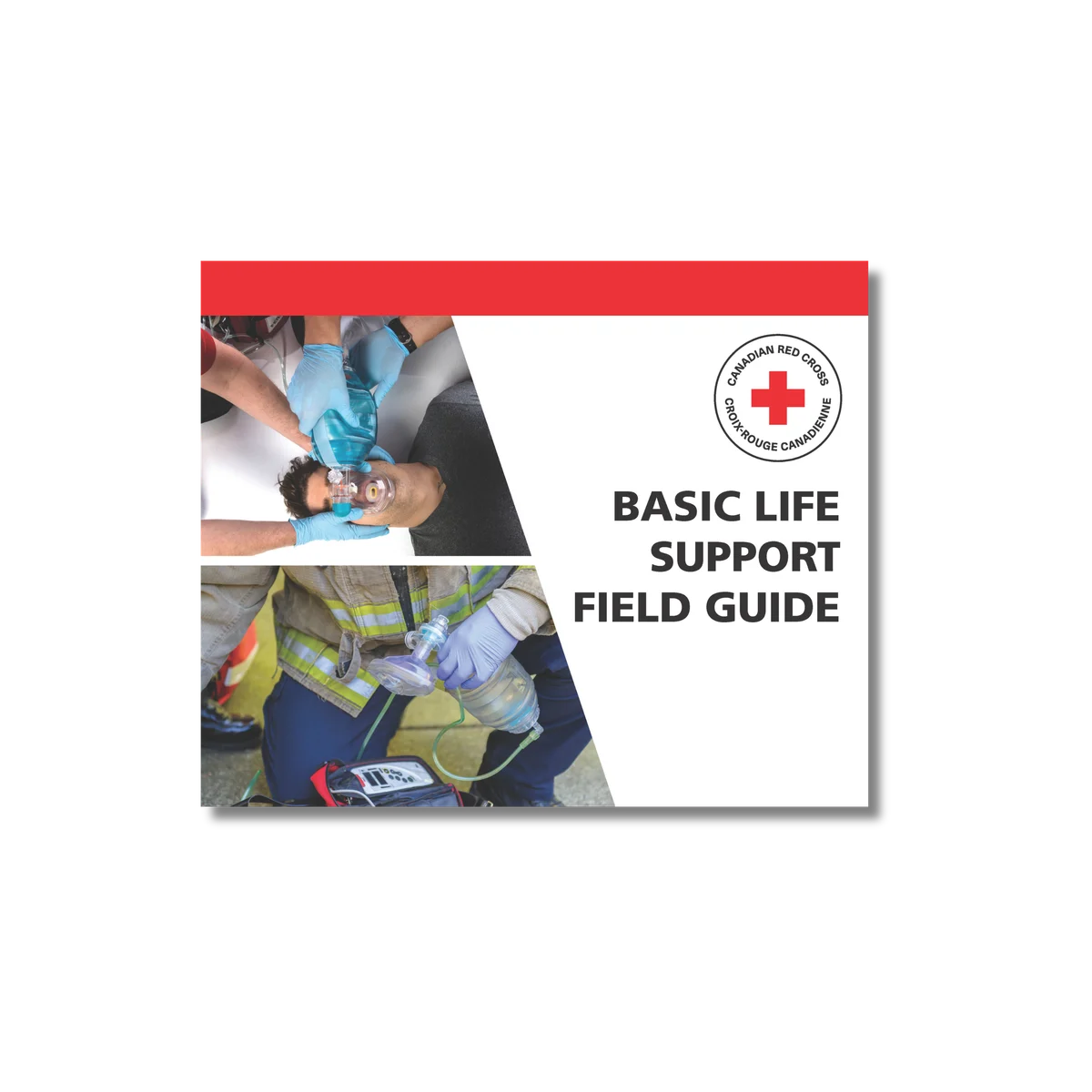
Canadian Red Cross Basic Life Support Field Guide
$35.96 (10% off when you add it while registering)
$39.95Add it when you registerSee what this book covers
Bought on its own from the shop, it ships to you at full price. The discount exists only at registration.
Ready to take this course?$130.00 + GST & applicable taxes
Common questions
- How long is a BLS certificate valid?
- The validity period is set by the Canadian Red Cross and printed on your certificate, check the date on your own card. It is shorter than a typical first aid certificate, which catches people out. If you hold a first aid certificate with a BLS component, check both dates: the first aid portion may still be current while the BLS portion has already expired.
- My BLS has already expired. Can I still take the recertification?
- No. The refresher is only for a certificate that is still valid on the day of the session. Once it has expired, the way back is the full BLS course. If you are not sure of your date, send us your certificate before booking and we will check it, which saves you booking the wrong thing.
- Is BLS the same as CPR-C or CPR for health care providers?
- Two different answers. BLS is the current provider-level CPR course, and it is generally what people mean when their paperwork still uses older labels such as CPR-HCP or CPR for health care providers. CPR-C is a different, general-level CPR course rather than the provider-level one, so the two are not interchangeable, if your requirement names CPR-C specifically, contact us before booking BLS. Because that wording varies between employers and programs, confirm your specific requirement rather than assuming, and send us the exact wording if it is unclear.
- Does BLS count as workplace first aid?
- No. BLS is a CPR and resuscitation course. It does not cover bleeding control, fractures, burns or the wider first aid syllabus, so it is not what an employer means when they ask for a first aid certificate. If you need both, take a first aid course that includes the BLS component, or the two courses separately. Confirm what your employer requires before you book.
- Can you deliver BLS at our clinic or office?
- Yes. We deliver onsite across Calgary, Leduc and the greater Edmonton region, elsewhere in Canada, and internationally on request, for an additional fee that depends on location and group size. We need enough floor space for manikin work and a room where the session will not be interrupted. Contact us with your location, headcount and preferred dates.
- What does BLS cost and what is included?
- Check the current price and GST on the booking page rather than a figure quoted elsewhere, since fees change. The course fee covers instruction, use of all equipment, evaluation and the Canadian Red Cross certificate issued once you are successfully evaluated. Onsite delivery at your own site is quoted separately.
- What is the difference between CPR-A, CPR-B, CPR-C and BLS?
- The letter tells you which age groups you are trained on. CPR-A covers adults: the lowest level there is, which is why it pairs with the short entry-level workplace course. CPR-B covers children and infants: offered inside the child care first aid courses rather than on its own. CPR-C covers adults, children and infants: the level most people are asked for, and the next one up from A. BLS (Basic Life Support) covers adults, children, infants and neonates: Basic Life Support CPR, also known as Healthcare Provider CPR, a professional level CPR course used by firefighters, nurses, paramedics, doctors and other healthcare workers. Broader is not automatically better for you, though. If a form names a specific letter, the letter printed on your certificate is what the person checking it will be looking for, so match the wording you were handed rather than assuming a higher level will be accepted in its place. This course carries BLS (Basic Life Support), covering adults, children, infants and neonates.
- What counts as a baby, a child or an adult, and which ages does this course cover?
- This course carries BLS (Basic Life Support), which covers adults, children, infants and neonates. The Canadian Red Cross 2025 standards set the age groups this way. A baby is under 1 year old. A child is 1 year old up to the onset of puberty. An adult is anyone from the onset of puberty on. Puberty does not happen on a set birthday, so you judge it on the person in front of you. A 13 year old who has started puberty gets adult CPR, and one who has not is still a child. For an AED, use child pads on a child up to the onset of puberty or under 55 pounds (about 25 kg), and baby pads on a baby if the AED has them. If baby pads are not there, use child or adult pads. If child pads are not there, use adult pads. The Red Cross says adult pads are safe on a child or a baby, so do not wait for the right size. If you are training for a specific person, tell us their age and we will tell you which course fits.
- Can I take this course if English isn't my first language?
- Yes. Our instructors teach in English, and live-translated classroom text is available for this course in supported languages. Contact us before registering to confirm that your language is available for your course.
- Can I register on the same day as the course?
- Online registration closes at 11:59 PM the night before an in-person course. If you need training today, call or text 825-883-3582 before class starts. We may be able to fit you in, depending on space and the instructor's approval. It is not guaranteed.
- Online registration is closed. Does that mean the course is full?
- No. Closed online only means the online booking window has ended. A seat may still be open, or open up if someone cancels. Call or text 825-883-3582 to check.
- What if I arrive late?
- Certification needs full attendance and every required skill. Arriving late can mean we cannot certify you that day. If you are running late, call or text as early as you can so we can tell you what is possible.
Where to go next
Ready to register?
Pick your cohort above, or start here and choose your dates on the registration page.
Cancellation, transfer, and refund terms are shown before payment and confirmed at registration. Not sure which course fits? Email us and we’ll help.
Sources
- On successful completion you receive a Canadian Red Cross Basic Life Support certificate. Canadian Red Cross (verified 2026-07-23).
- The Canadian Red Cross First Aid Program Standards 2025 define a baby as newborn to 1 year of age, a child as 1 year old to the onset of puberty, and an adult as the onset of puberty and older. Canadian Red Cross (verified 2026-09-26).
- The Canadian Red Cross Comprehensive Guide for First Aid & CPR (2025) says pediatric AED pads should be used on children up to the onset of puberty or weighing less than 55 pounds, and that if pediatric pads are not available it is safe to use adult pads on a child or baby. Canadian Red Cross (verified 2026-09-26).
← All courses · Last reviewed 2026-07-23