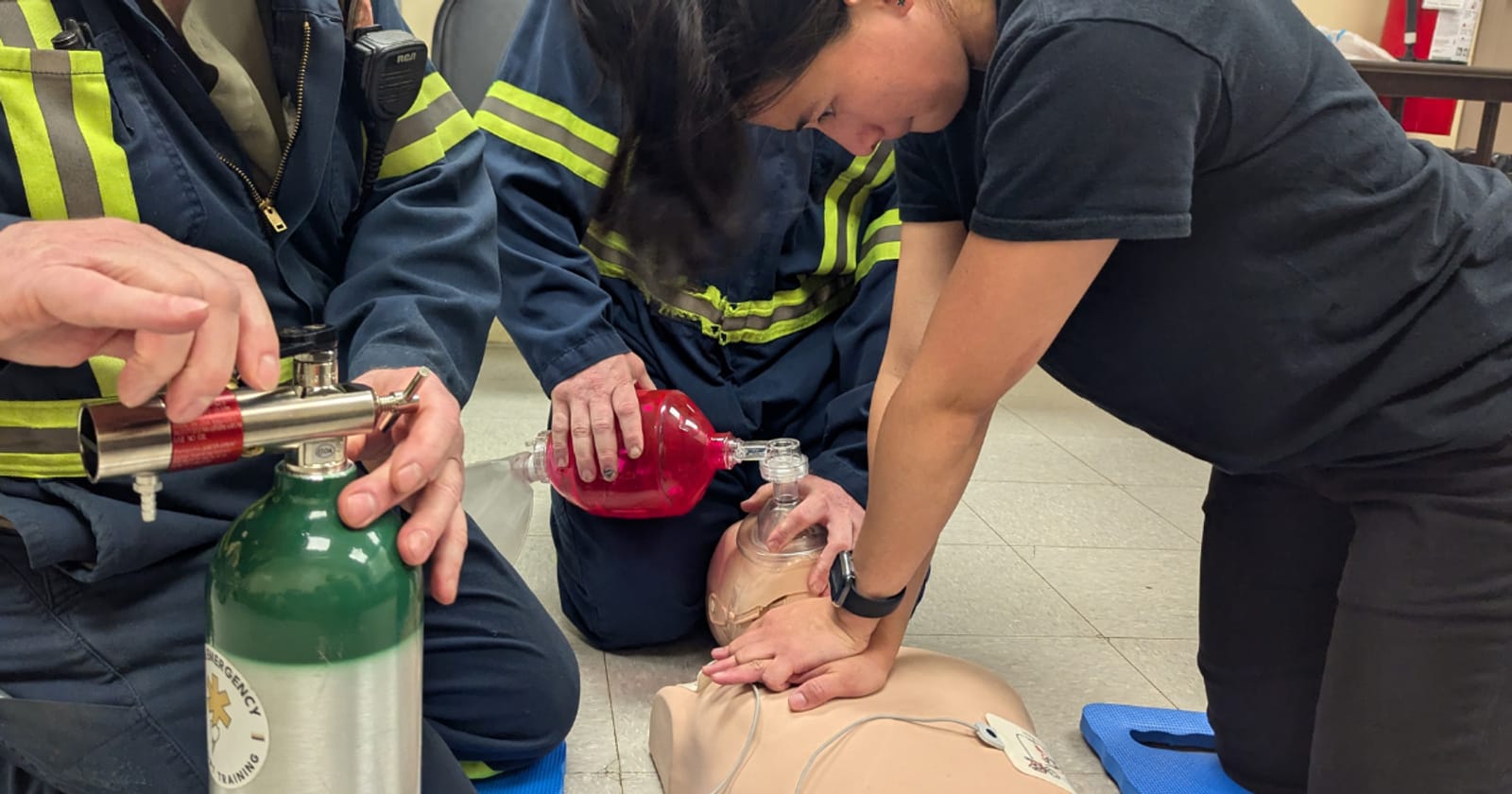

BLS Recertification is the short renewal session for people who already hold a Canadian Red Cross Basic Life Support certificate and need it current again.
Read more about this courseShow less
It is scheduled at about two and a half hours, though the Canadian Red Cross sets the hour requirement and can change it, so check the exact hours published with the session you are booking. It is taught in person in Calgary by working paramedics, firefighters and emergency professionals. We also run it in Leduc for the greater Edmonton region, and we deliver it onsite at your own clinic, office or worksite for an additional fee. One thing to sort out before you book: how long a Basic Life Support certificate stays valid is set by the Canadian Red Cross and printed on the certificate rather than being a rule of ours, so the date on your own card is the one that counts, and this refresher is only for people whose certificate is still valid on the day of the session. If yours has already lapsed, the way back is the full BLS course, so book the refresher before your expiry date and send us your certificate first if you are not sure of it.
Course details
- Certificate
- Canadian Red Cross Basic Life Support (recertification)
- Certificate valid for
- 1 year
- Issued by
- Canadian Red Cross
- Duration
- Approx. 2.5 hours
- Prerequisites
- A current Canadian Red Cross BLS certificate. It must not have expired.
- CPR / BLS
- BLS providerWhat is BLS?BLS is Basic Life Support CPR, also known as Healthcare Provider CPR. It covers adults, children, babies and neonates.It is a professional level CPR course, used by firefighters, nurses, paramedics, doctors and other healthcare workers.More about CPR levels
- Locations
- Calgary, AB, 1550 5 St SW #300, Leduc, AB, 4810 50th Ave
- Price
- $80.00 + GST & applicable taxes (charged at checkout for your province)
How this course runs
- In person: one or two days at our location. Nothing to do online beforehand.
- How it runs
- One day in class. Nothing online.
- Class times
- 6:30 p.m. to 9:30 p.m.
- Whole course
- 2.5 hours
Upcoming dates, choose your cohort
CalgaryNov 22, 2026 · Calgary, AB, 1550 5 St SW #300
- Sun, Nov 22 · 6:30 p.m. to 9:30 p.m.in class
Registration closes November 21, 2026.
November 2026
SMTWTFS123456789101112131415161718192021222324252627282930In person: 1 class day, nothing online
In person(no online sessions)
- 1 full day in class
CalgaryIn person: one or two days at our location. Nothing to do online beforehand.Edmonton regionNov 30, 2026 · Leduc, AB, 4810 50th Ave
- Mon, Nov 30 · 6:30 p.m. to 9:30 p.m.in class
Registration closes November 29, 2026.
November 2026
SMTWTFS123456789101112131415161718192021222324252627282930In person: 1 class day, nothing online
In person(no online sessions)
- 1 full day in class
Edmonton regionIn person: one or two days at our location. Nothing to do online beforehand.Edmonton regionDec 6, 2026 · Leduc, AB, 4810 50th Ave
- Sun, Dec 6 · 6:30 p.m. to 9:30 p.m.in class
Registration closes December 5, 2026.
December 2026
SMTWTFS12345678910111213141516171819202122232425262728293031In person: 1 class day, nothing online
In person(no online sessions)
- 1 full day in class
Edmonton regionIn person: one or two days at our location. Nothing to do online beforehand.Unsure if BLS Recertification is what you need?
Figure out what you need in under 30 seconds, with these simple questions.
- Answer a few questions
- See the course that fits and why
- Pick a date and register
- Become certified
I’m taking the training myselfFor my job, a job I want, school, or my own life.I’m arranging training for my staff or workplaceSee what your workplace needs, and the course for it.Basic and Intermediate First Aid both include CPR. A CPR course on its own does not include first aid.
Edmonton regionJan 4, 2027 · Leduc, AB, 4810 50th Ave
Waitlist only- Mon, Jan 4, 2027 · 6:30 p.m. to 9:30 p.m.in class
Registration is closed for these dates.
January 2027
SMTWTFS12345678910111213141516171819202122232425262728293031In person: 1 class day, nothing online
In person(no online sessions)
- 1 full day in class
Edmonton regionIn person: one or two days at our location. Nothing to do online beforehand.Waitlist only. Join the waitlist and we’ll email you the moment a seat is available.
CalgaryJan 25, 2027 · Calgary, AB, 1550 5 St SW #300
- Mon, Jan 25, 2027 · 6:30 p.m. to 9:30 p.m.in class
Registration closes January 24, 2027.
January 2027
SMTWTFS12345678910111213141516171819202122232425262728293031In person: 1 class day, nothing online
In person(no online sessions)
- 1 full day in class
CalgaryIn person: one or two days at our location. Nothing to do online beforehand.CalgaryFeb 16, 2027 · Calgary, AB, 1550 5 St SW #300
- Tue, Feb 16, 2027 · 6:30 p.m. to 9:30 p.m.in class
Registration closes February 15, 2027.
February 2027
SMTWTFS12345678910111213141516171819202122232425262728In person: 1 class day, nothing online
In person(no online sessions)
- 1 full day in class
CalgaryIn person: one or two days at our location. Nothing to do online beforehand.Edmonton regionFeb 21, 2027 · Leduc, AB, 4810 50th Ave
Waitlist only- Sun, Feb 21, 2027 · 6:30 p.m. to 9:30 p.m.in class
Registration is closed for these dates.
February 2027
SMTWTFS12345678910111213141516171819202122232425262728In person: 1 class day, nothing online
In person(no online sessions)
- 1 full day in class
Edmonton regionIn person: one or two days at our location. Nothing to do online beforehand.Waitlist only. Join the waitlist and we’ll email you the moment a seat is available.
Edmonton regionMar 8, 2027 · Leduc, AB, 4810 50th Ave
Waitlist only- Mon, Mar 8, 2027 · 6:30 p.m. to 9:30 p.m.in class
Registration is closed for these dates.
March 2027
SMTWTFS12345678910111213141516171819202122232425262728293031In person: 1 class day, nothing online
In person(no online sessions)
- 1 full day in class
Edmonton regionIn person: one or two days at our location. Nothing to do online beforehand.Waitlist only. Join the waitlist and we’ll email you the moment a seat is available.
CalgaryMar 28, 2027 · Calgary, AB, 1550 5 St SW #300
- Sun, Mar 28, 2027 · 6:30 p.m. to 9:30 p.m.in class
Registration closes March 27, 2027.
March 2027
SMTWTFS12345678910111213141516171819202122232425262728293031In person: 1 class day, nothing online
In person(no online sessions)
- 1 full day in class
CalgaryIn person: one or two days at our location. Nothing to do online beforehand.Edmonton regionApr 11, 2027 · Leduc, AB, 4810 50th Ave
Waitlist only- Sun, Apr 11, 2027 · 6:30 p.m. to 9:30 p.m.in class
Registration is closed for these dates.
April 2027
SMTWTFS123456789101112131415161718192021222324252627282930In person: 1 class day, nothing online
In person(no online sessions)
- 1 full day in class
Edmonton regionIn person: one or two days at our location. Nothing to do online beforehand.Waitlist only. Join the waitlist and we’ll email you the moment a seat is available.
CalgaryApr 26, 2027 · Calgary, AB, 1550 5 St SW #300
- Mon, Apr 26, 2027 · 6:30 p.m. to 9:30 p.m.in class
Registration closes April 25, 2027.
April 2027
SMTWTFS123456789101112131415161718192021222324252627282930In person: 1 class day, nothing online
In person(no online sessions)
- 1 full day in class
CalgaryIn person: one or two days at our location. Nothing to do online beforehand.CalgaryMay 16, 2027 · Calgary, AB, 1550 5 St SW #300
- Sun, May 16, 2027 · 6:30 p.m. to 9:30 p.m.in class
Registration closes May 15, 2027.
May 2027
SMTWTFS12345678910111213141516171819202122232425262728293031In person: 1 class day, nothing online
In person(no online sessions)
- 1 full day in class
CalgaryIn person: one or two days at our location. Nothing to do online beforehand.Edmonton regionMay 31, 2027 · Leduc, AB, 4810 50th Ave
Waitlist only- Mon, May 31, 2027 · 6:30 p.m. to 9:30 p.m.in class
Registration is closed for these dates.
May 2027
SMTWTFS12345678910111213141516171819202122232425262728293031In person: 1 class day, nothing online
In person(no online sessions)
- 1 full day in class
Edmonton regionIn person: one or two days at our location. Nothing to do online beforehand.Waitlist only. Join the waitlist and we’ll email you the moment a seat is available.
CalgaryJun 14, 2027 · Calgary, AB, 1550 5 St SW #300
- Mon, Jun 14, 2027 · 6:30 p.m. to 9:30 p.m.in class
Registration closes June 13, 2027.
June 2027
SMTWTFS123456789101112131415161718192021222324252627282930In person: 1 class day, nothing online
In person(no online sessions)
- 1 full day in class
CalgaryIn person: one or two days at our location. Nothing to do online beforehand.Edmonton regionJun 27, 2027 · Leduc, AB, 4810 50th Ave
Waitlist only- Sun, Jun 27, 2027 · 6:30 p.m. to 9:30 p.m.in class
Registration is closed for these dates.
June 2027
SMTWTFS123456789101112131415161718192021222324252627282930In person: 1 class day, nothing online
In person(no online sessions)
- 1 full day in class
Edmonton regionIn person: one or two days at our location. Nothing to do online beforehand.Waitlist only. Join the waitlist and we’ll email you the moment a seat is available.
CalgaryJul 11, 2027 · Calgary, AB, 1550 5 St SW #300
- Sun, Jul 11, 2027 · 6:30 p.m. to 9:30 p.m.in class
Registration closes July 10, 2027.
July 2027
SMTWTFS12345678910111213141516171819202122232425262728293031In person: 1 class day, nothing online
In person(no online sessions)
- 1 full day in class
CalgaryIn person: one or two days at our location. Nothing to do online beforehand.Edmonton regionJul 26, 2027 · Leduc, AB, 4810 50th Ave
Waitlist only- Mon, Jul 26, 2027 · 6:30 p.m. to 9:30 p.m.in class
Registration is closed for these dates.
July 2027
SMTWTFS12345678910111213141516171819202122232425262728293031In person: 1 class day, nothing online
In person(no online sessions)
- 1 full day in class
Edmonton regionIn person: one or two days at our location. Nothing to do online beforehand.Waitlist only. Join the waitlist and we’ll email you the moment a seat is available.
Edmonton regionAug 22, 2027 · Leduc, AB, 4810 50th Ave
Waitlist only- Sun, Aug 22, 2027 · 6:30 p.m. to 9:30 p.m.in class
Registration is closed for these dates.
August 2027
SMTWTFS12345678910111213141516171819202122232425262728293031In person: 1 class day, nothing online
In person(no online sessions)
- 1 full day in class
Edmonton regionIn person: one or two days at our location. Nothing to do online beforehand.Waitlist only. Join the waitlist and we’ll email you the moment a seat is available.
CalgaryAug 30, 2027 · Calgary, AB, 1550 5 St SW #300
- Mon, Aug 30, 2027 · 6:30 p.m. to 9:30 p.m.in class
Registration closes August 29, 2027.
August 2027
SMTWTFS12345678910111213141516171819202122232425262728293031In person: 1 class day, nothing online
In person(no online sessions)
- 1 full day in class
CalgaryIn person: one or two days at our location. Nothing to do online beforehand.Edmonton regionSep 7, 2027 · Leduc, AB, 4810 50th Ave
Waitlist only- Tue, Sep 7, 2027 · 6:30 p.m. to 9:30 p.m.in class
Registration is closed for these dates.
September 2027
SMTWTFS123456789101112131415161718192021222324252627282930In person: 1 class day, nothing online
In person(no online sessions)
- 1 full day in class
Edmonton regionIn person: one or two days at our location. Nothing to do online beforehand.Waitlist only. Join the waitlist and we’ll email you the moment a seat is available.
CalgarySep 26, 2027 · Calgary, AB, 1550 5 St SW #300
- Sun, Sep 26, 2027 · 6:30 p.m. to 9:30 p.m.in class
Registration closes September 25, 2027.
September 2027
SMTWTFS123456789101112131415161718192021222324252627282930In person: 1 class day, nothing online
In person(no online sessions)
- 1 full day in class
CalgaryIn person: one or two days at our location. Nothing to do online beforehand.
What you’ll be able to do
- Bring compression depth, rate and recoil back to standard after a year away from a manikin
- Change compressors mid-resuscitation without letting a long pause open up
- Re-establish a mask seal that genuinely moves air, with a pocket mask and with a bag-valve mask
- Ventilate at a volume and rate that inflates lungs rather than a stomach
- Run an AED on adult, child and infant patients, including pad placement on a small chest
- Identify agonal breathing quickly enough that it does not delay the start of compressions
- Clear an airway obstruction in a patient who is responsive and in one who has gone unresponsive
- Take a role in a resuscitation team, say it out loud, and hand over to EMS in one short report
Ready to take this course?$80.00 + GST & applicable taxes
What the BLS refresher is, and what it is not
This is the renewal of the Canadian Red Cross Basic Life Support provider certificate. Same provider level, same standard, less runway. It is scheduled at about two and a half hours rather than the four and a quarter hours the full provider course runs, because the room is not learning the sequence for the first time. That is close to half the day back, and it is only possible because the teaching has been stripped out and only the correcting left in. The Canadian Red Cross sets the hour requirement and it can change, so check the exact hours listed with the session you are booking rather than planning your day around a number you read in an article.
There is one entry condition and it matters: you need a Canadian Red Cross BLS certificate that is still valid on the day of the session. That is not a formality. The session assumes you can already find your way through a resuscitation, and the time goes on sharpening that rather than building it from nothing.
Because this is a Red Cross course, the Red Cross owns the curriculum and we teach to it, so we are not going to reprint their lesson list here. If a manager, a clinic administrator or a placement coordinator needs the official course description for a file, ask us and we will point you at the Red Cross's own published description rather than at our paraphrase of it. What we will tell you is how the time is used: almost all of it is hands-on, on the floor, with the instructor correcting what has drifted since your last course.
What the refresher removes is the introduction, not the standard. Nothing about the certificate you walk out with is a lesser version of the full course, and nobody is graded on a softer curve for having taken the short route. You are still evaluated, and a recertification card is not issued for attendance alone.
The expiry date is the whole reason this page exists
How long a Basic Life Support certificate stays valid is set by the Canadian Red Cross and printed on the certificate you receive; it is not a Delta rule and we cannot extend it. Provider-level CPR is held to a shorter currency window than a general first aid certificate, and that is where the miscounting starts. People who also hold a first aid certificate get used to a longer cycle and quietly assume the CPR runs on the same clock. It does not, so read the date on your own card rather than working from the one you remember.
Almost nobody discovers a lapsed BLS card on a calm Tuesday. It surfaces the week it is needed: a new hire package, a clinic audit, a placement start date, a locum shift, a contract renewal, a manager updating a spreadsheet of who is current. The requirement arrives with a deadline attached, which is exactly when your options are narrowest.
So the unglamorous advice. Put the expiry date in your calendar the day the certificate lands, with a reminder six to eight weeks out, and book the renewal for a date before your expiry, because after it the refresher is no longer open to you. If your BLS came bundled inside a first aid certificate, look at your card again, there are two dates on it, they run on different clocks, and it is entirely possible to be current on the first aid portion and lapsed on the BLS portion without knowing it.
If your certificate has already expired, the refresher is closed to you and the full BLS course is the way back. That is the Canadian Red Cross rule: recertification is only for a certificate that is still valid on the day of the session. If you are not sure of your date, send us your certificate before you book anything and we will check it, so you can plan around the real requirement instead of a hopeful one.
What two and a half hours on the floor actually looks like
Short and dense, with very little sitting. The instructor demonstrates, you get on the manikin, and you stay there. The Red Cross sets what is covered and in what order, so the running order is theirs rather than ours, and we are not going to publish a version of it here. What we can tell you is where the time goes, and it goes on your hands.
Expect most of the correction to land on the things that quietly degrade in a year away from practice. Compression quality once your shoulders are tired is the usual one, and people are consistently surprised by how fast it falls off when nobody is watching the clock. A mask seal is the other. It rusts faster than anything else you learned, and a year without practice shows up the moment air is supposed to move.
The rest of the correction tends to be about the seconds between things rather than the skills themselves. A changeover that costs two seconds and one that costs fifteen look identical written down and nothing alike on a patient. A handover to arriving EMS is either ten seconds they can use or a story they have to sit through. None of that is difficult to understand and all of it is easy to lose, which is the argument for renewing in a room rather than reading about it.
Assessment runs through the whole session rather than waiting for the end, and certification requires attending the full session and being evaluated successfully. Attending is not the same as being certified. That said, nobody is failed by surprise. If a skill is not where it needs to be, the instructor will tell you while there is still time in the session to fix it, rather than at the end when nothing can be done about it.
Who should book the refresher, and who should book something else
The refresher fits you if you hold a Canadian Red Cross BLS certificate that will still be valid on the day of the session, and you want it renewed in one short session rather than sitting through the full provider course again. It suits clinical staff, dental teams, care aides, students on placement rotations, site medics and professional responders who keep a stack of tickets current and treat renewal as maintenance.
Book the full course instead if you have never held BLS, or if your certificate has expired. And if the card in your wallet was issued by an organization other than the Canadian Red Cross, do not assume it transfers into our refresher. Check with us before you pay for a seat, because sometimes it carries across and sometimes it does not, and knowing which takes one short exchange.
Book a different course entirely if what your employer actually wants is workplace first aid. BLS is a CPR and resuscitation course. It does not cover bleeding control, fractures, burns, or the wider first aid syllabus, and renewing it will not satisfy a request for a first aid certificate. If the wording you were given says CPR-C, or the role is coaching, childcare or general public facing, that is a different course again. Bring us the wording before you book, because naming the course it actually points at, and what that one costs, takes about a minute.
There is one more group worth naming honestly. If your certificate is still valid but you have not touched a manikin since the day you earned it, and the thought of a real arrest makes you uneasy, the full course is a perfectly reasonable choice even though you technically qualify for the short one. Tell us that when you contact us. The full course is under two hours longer than the refresher, which is a small price for arriving at the end of it actually sure of yourself. We would rather book you into the longer session than take payment for two and a half hours that leave you no more confident than you started.
Employer requirements, records and getting the paperwork right
We will not tell you that a recertification satisfies your particular employer, facility, school or contract requirement, and you should be wary of any provider who does. Wording varies enormously, and some organizations name the issuing body, some name a level, and some specify that a full course rather than a renewal is required after a certain gap. Ask for four things in writing: the exact course name they accept, the issuing organization, whether a recertification is acceptable in your situation, and the date by which the certificate must be valid.
Then hand that wording to us before you pay for anything. We read it against what we actually run, and the honest answer is sometimes that none of our sessions fits it, or that a shorter and different course is the one you were really being asked for. That is a better outcome for both of us than a card that does not answer the requirement it was bought for.
On the administrative side, register with your legal name spelled exactly the way a payroll or credentialing file expects to see it. That spelling is what gets printed, and correcting it afterwards takes far longer than typing it carefully once. Your certificate is issued digitally through the Canadian Red Cross once your successful evaluation is recorded, so save a copy somewhere you can retrieve it in a hurry, because the request always arrives at an inconvenient moment.
If you register through our system we can also send you a reminder before the next expiry comes around. A renewal date is easy to lose track of, and the whole point of a reminder is that it reaches you while booking is still a scheduling question rather than an emergency.
Calgary, Leduc, onsite delivery and how to arrive ready
Calgary is our primary market and where public renewal sessions are scheduled first. We also run in Leduc for the greater Edmonton region, travel elsewhere in Canada, and deliver internationally on request. Because the session is short, it slots into a working day in ways a full course cannot: a morning block before a clinic starts seeing patients, a single afternoon that does not swallow the whole day, or two back-to-back groups so a whole department is renewed in one day without closing.
For teams, onsite delivery at your own clinic, office or worksite is available for an additional fee covering travel and setup. For a group it is often the staff time rather than the course fee that decides it, since sending eight people out one at a time costs considerably more in coverage than having an instructor come to you. We need enough floor space for manikin work and a room where the session will not be interrupted. The current fee, and any group or onsite quote, is confirmed with your booking rather than quoted here, because published numbers go stale.
Bring your current BLS certificate, or its details, so we can confirm your eligibility before the session rather than at the door. Wear clothing you can kneel and work on the floor in, closed shoes, and bring water. Arrive early enough to be standing on the floor at the start time. A two-and-a-half-hour session has no slack in it, and fifteen minutes late is a much larger share of this course than it would be of a two-day one.
Tell us in advance about anything that affects floor work: a back or knee problem, recent surgery, pregnancy, or any mobility limitation. Accommodations are usually straightforward when we know beforehand and awkward when we find out at the start of a short session. There is no reading to do first. If you want to prepare properly, do one thing: decide before you arrive which part of your last course you were least confident about, and tell the instructor at the beginning. Two and a half hours spent on your actual weak spot is worth considerably more than two and a half hours spread evenly.
Adding oxygen or airway? The kit is yours too
If you add the Oxygen Therapy certification to your BLS day, the nasal cannula and non-rebreather mask you train with come out of new packaging, are worn by you when you play the patient in scenarios, and go home with you. The Airway Management add-on trains on our airway adjunct sets and manikin heads in the same session.
Who this course is for
- Nurses and LPNs whose provider CPR comes due again on a short cycle
- Dental teams renewing a whole office in a single short session
- Medical office assistants, clinic staff and health care aides keeping a card current
- Physiotherapists, chiropractors and massage therapists asked to keep provider-level CPR current
- Nursing, paramedic and dental hygiene students whose placement start date needs a valid certificate
- Industrial medics, security supervisors and professional responders renewing on schedule
- Care-home and home-care staff around Leduc and the greater Edmonton region
- Anyone who has just looked at their certificate and found the expiry date closer than expected
English isn’t your first language?
Our instructors teach in English, with live-translated classroom text available in supported languages. You can follow explanations on screen while participating in the same hands-on training as the rest of the class.
Because translated explanations require additional reading and processing time, your instructor may occasionally pause before moving to the next topic. This can make the instructional pace slightly slower.
Optional preparation materials may also be available before class to help you become familiar with common English first aid terminology.
Languages are confirmed course by course, so none is guaranteed until we confirm it with you.
Contact us before registering to confirm that your preferred language is available for your course.
Related reading
Where we teach this course
Public sessions run in Calgary, with dates in Leduc through the year.
We also deliver this course at your worksite for groups, useful for crews who can’t release staff to travel. Onsite delivery carries an additional fee on top of per-person pricing. Request an onsite quote.
We travel for private and group training across Canada, and internationally by arrangement. If you’re outside Alberta, tell us where you are and we’ll price it.
Your course materials
Digital access opens the moment you register. Physical manuals live in our classroom library for you to use during class. Want one of your own to keep? Buy it here at a discount.
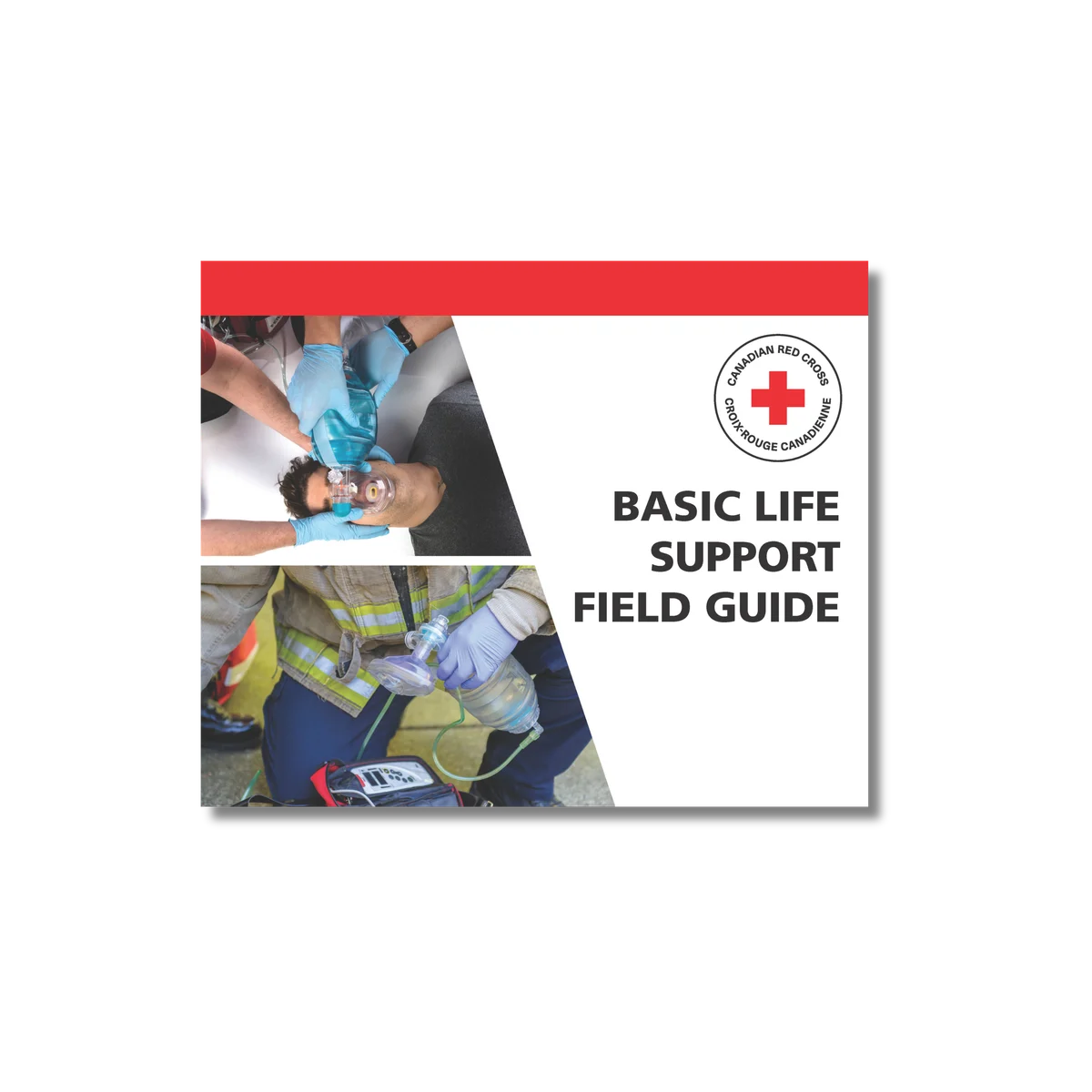
Canadian Red Cross Basic Life Support Field Guide
$35.96 (10% off when you add it while registering)
$39.95Add it when you registerSee what this book covers
Bought on its own from the shop, it ships to you at full price. The discount exists only at registration.
Ready to take this course?$80.00 + GST & applicable taxes
Common questions
- My BLS expires next month. When should I book the renewal?
- As early as you can, and before the expiry date, because the refresher is only open while the certificate is still valid. Booking ahead also avoids the situation where a shift, a placement or a start date is waiting on a card. Send us your expiry date and we will let you know as soon as a Calgary or Leduc session opens ahead of it.
- My certificate has already expired. Can I still take the recertification?
- No. The Canadian Red Cross only allows recertification for a certificate that is still valid on the day of the session. Once it has expired, the way back is the full BLS course. If you are not sure of your date, send us your certificate before you book and we will check it.
- Why does my BLS expire sooner than my first aid certificate?
- The validity period is set by the Canadian Red Cross and printed on the certificate you receive, and provider-level CPR carries a shorter currency window than general first aid. If your BLS came bundled inside a first aid certificate, check both dates on the card. The first aid portion can still be current while the BLS portion has already lapsed.
- Does my existing certificate have to be from the Canadian Red Cross?
- The refresher is built around a current Canadian Red Cross Basic Life Support certificate that has not expired. If your card was issued by a different organization, do not assume it carries across. Send us the details before you pay for a seat. Sometimes the answer is yes, sometimes the full course is the only clean route, and it is a two-minute conversation either way.
- How long is the session, and what does it cost?
- It is scheduled at about two and a half hours, against four and a quarter hours for the full provider course, and the exact hours are published with each session because the Canadian Red Cross sets the requirement and it can change. Check the current fee at registration rather than relying on a figure quoted elsewhere. What the fee includes is confirmed on the registration page for the session you are booking, so ask us first if you need that in writing for an expense claim or a purchase order.
- Will my employer accept a recertification instead of the full course?
- That is your employer's decision, not ours, and we will not guess at it. Some organizations specify a full course rather than a renewal after a certain gap, so ask your employer or credentialing office for the exact course name, the issuing organization and whether a renewal is acceptable in your case, preferably in writing. Forward that wording to us and we will match it against what we actually run, including the case where nothing in our catalogue fits it.
- Am I certified just by attending the session?
- No. Certification requires attending the full session and being evaluated successfully on the skills, and evaluation runs throughout rather than as a single test at the end. Nobody is failed by surprise, though. If something needs work, the instructor will raise it while there is still time in the session to fix it.
- Can you run the renewal at our clinic or office?
- Yes. We deliver onsite in Calgary, in Leduc and the greater Edmonton region, elsewhere in Canada, and internationally on request, for an additional fee covering travel and setup. We need floor space for manikin work and an uninterrupted room. Send us your headcount, location and preferred window, and note that a session of this length often lets a whole team renew inside a single afternoon.
- What is the difference between CPR-A, CPR-B, CPR-C and BLS?
- The letter tells you which age groups you are trained on. CPR-A covers adults: the lowest level there is, which is why it pairs with the short entry-level workplace course. CPR-B covers children and infants: offered inside the child care first aid courses rather than on its own. CPR-C covers adults, children and infants: the level most people are asked for, and the next one up from A. BLS (Basic Life Support) covers adults, children, infants and neonates: Basic Life Support CPR, also known as Healthcare Provider CPR, a professional level CPR course used by firefighters, nurses, paramedics, doctors and other healthcare workers. Broader is not automatically better for you, though. If a form names a specific letter, the letter printed on your certificate is what the person checking it will be looking for, so match the wording you were handed rather than assuming a higher level will be accepted in its place. This course carries BLS (Basic Life Support), covering adults, children, infants and neonates.
- What counts as a baby, a child or an adult, and which ages does this course cover?
- This course carries BLS (Basic Life Support), which covers adults, children, infants and neonates. The Canadian Red Cross 2025 standards set the age groups this way. A baby is under 1 year old. A child is 1 year old up to the onset of puberty. An adult is anyone from the onset of puberty on. Puberty does not happen on a set birthday, so you judge it on the person in front of you. A 13 year old who has started puberty gets adult CPR, and one who has not is still a child. For an AED, use child pads on a child up to the onset of puberty or under 55 pounds (about 25 kg), and baby pads on a baby if the AED has them. If baby pads are not there, use child or adult pads. If child pads are not there, use adult pads. The Red Cross says adult pads are safe on a child or a baby, so do not wait for the right size. If you are training for a specific person, tell us their age and we will tell you which course fits.
- Can I take this course if English isn't my first language?
- Yes. Our instructors teach in English, and live-translated classroom text is available for this course in supported languages. Contact us before registering to confirm that your language is available for your course.
- Can I register on the same day as the course?
- Online registration closes at 11:59 PM the night before an in-person course. If you need training today, call or text 825-883-3582 before class starts. We may be able to fit you in, depending on space and the instructor's approval. It is not guaranteed.
- Online registration is closed. Does that mean the course is full?
- No. Closed online only means the online booking window has ended. A seat may still be open, or open up if someone cancels. Call or text 825-883-3582 to check.
- What if I arrive late?
- Certification needs full attendance and every required skill. Arriving late can mean we cannot certify you that day. If you are running late, call or text as early as you can so we can tell you what is possible.
Where to go next
Ready to register?
Pick your cohort above, or start here and choose your dates on the registration page.
Cancellation, transfer, and refund terms are shown before payment and confirmed at registration. Not sure which course fits? Email us and we’ll help.
Sources
- On successful completion you receive a Canadian Red Cross Basic Life Support certificate. Canadian Red Cross (verified 2026-07-23).
- The Canadian Red Cross says a recertification course is only available to people who hold a valid certificate that has not yet expired. Canadian Red Cross, Help Centre (Recertify Your Training) (verified 2026-09-27).
- The Canadian Red Cross First Aid Program Standards 2025 define a baby as newborn to 1 year of age, a child as 1 year old to the onset of puberty, and an adult as the onset of puberty and older. Canadian Red Cross (verified 2026-09-26).
- The Canadian Red Cross Comprehensive Guide for First Aid & CPR (2025) says pediatric AED pads should be used on children up to the onset of puberty or weighing less than 55 pounds, and that if pediatric pads are not available it is safe to use adult pads on a child or baby. Canadian Red Cross (verified 2026-09-26).
← All courses · Last reviewed 2026-07-23