Language support
First Aid Training With Language Support
English isn't your first language? Delta Emergency Support Training offers live-translated classroom explanations for eligible introductory first aid courses.
Our instructors teach in English while students follow translated explanations on classroom screens.
You still complete the same hands-on training and certification requirements. Translation simply provides another way to understand the instruction.
Who this is for
Language support is for anyone who can take part in a hands-on class but finds it easier to follow the explanations in another language. That includes people new to Canada, workers who need a first aid certificate for their job, parents and caregivers, and students.
You will hear the class in English and read along on screen. You still practise every skill with your hands, with the rest of the class.
Courses with language support
Live-translated classroom text is available for these introductory courses. Each course page shows its current dates and price.
- Basic First Aid
- Basic First Aid Recertification
- CPR-A & AED
- CPR-C & AED
- Intermediate First Aid
- Intermediate First Aid Recertification
- Airway Management
- Basic Life Support
- BLS Recertification
- Oxygen Therapy
- Babysitter Training
- Emergency Child Care First Aid
- Standard Child Care First Aid
- Stay Safe!
Basic First Aid and Intermediate First Aid are the current Canadian Red Cross names for the courses formerly called Emergency First Aid and Standard First Aid.
Support is set up for each class, so contact us before registering to confirm your language for your course date.
Courses taught in English only
Professional responder programs are taught and assessed in English, without live classroom translation. That includes:
- Advanced First Aid
- Advanced First Aid Recertification
- Advanced First Aid to EMR Bridge
- Emergency Medical Responder
- EMR Recertification
- EMR to Advanced First Aid Bridge
- First Responder
- First Responder Recertification
- First Responder to Advanced First Aid Bridge
- First Responder to EMR Bridge
- Marine Advanced First Aid
- Professional Responder Skills Refresher
- Wilderness First Responder
This is a requirement of the programs themselves, and it is the same for every student. They use a lot of medical terms and clinical abbreviations, fast communication, and complex practical scenarios, and the assessments are in English. See the professional responder pathway for how those courses fit together.
A note we put on every page that mentions EMR: the Alberta College of Paramedics does not list Delta as an approved EMR program, and a Canadian Red Cross EMR certificate is not College registration.
How it works in the classroom
- Your instructor teaches in English, the same way as any other class.
- An AI translation app turns the spoken English into written text in your language.
- The translated text appears on the classroom screens as the instructor talks.
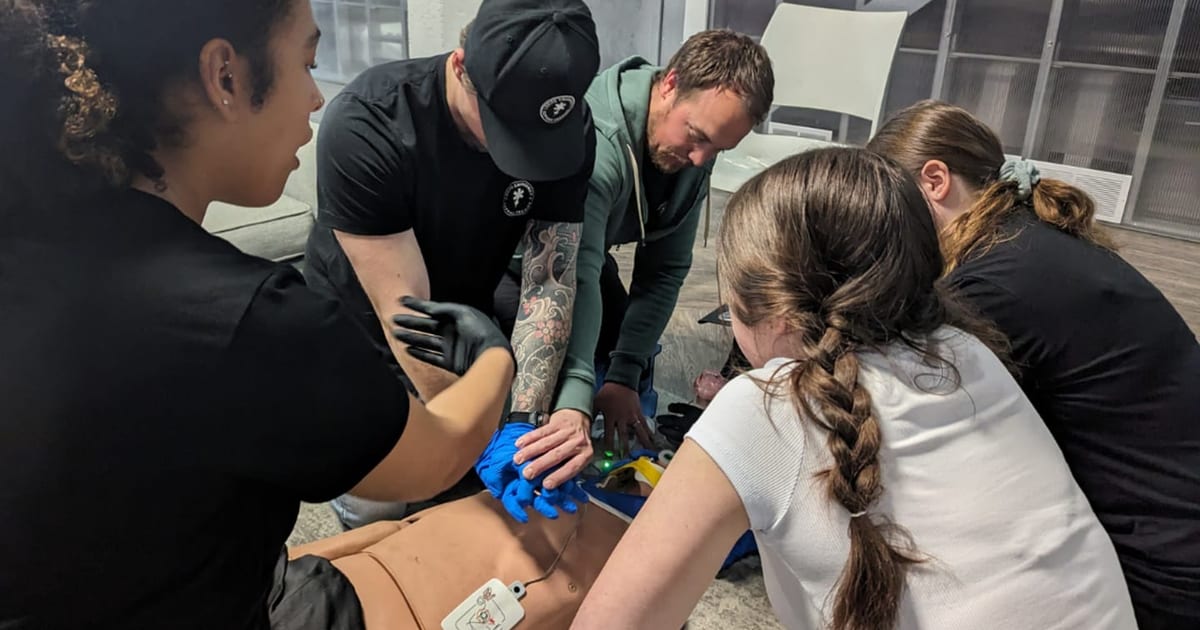
- You practise every skill hands-on, and your instructor watches and helps you.
Machine translation can make mistakes, especially with medical words. That is why your instructor does not rely on the screen alone. They check that you understand through hands-on practice and skill checks, and you can always ask them to show you again.
The English the instructor said: “Welcome to Delta Emergency Support Training. Today we will learn CPR and how to use an AED, including where to place your hands for chest compressions.”
Українська (Ukrainian)
Ласкаво просимо до Delta Emergency Support Training. Сьогодні ми вивчатимемо серцево-легеневу реанімацію (СЛР) і користування автоматичним зовнішнім дефібрилятором (АЗД), зокрема де розміщувати руки під час компресій грудної клітки.
ਪੰਜਾਬੀ (Punjabi)
Delta Emergency Support Training ਵਿੱਚ ਤੁਹਾਡਾ ਸੁਆਗਤ ਹੈ। ਅੱਜ ਅਸੀਂ CPR ਅਤੇ AED ਦੀ ਵਰਤੋਂ ਕਰਨਾ ਸਿੱਖਾਂਗੇ, ਜਿਸ ਵਿੱਚ ਛਾਤੀ ਦਬਾਉਣ ਵੇਲੇ ਹੱਥ ਕਿੱਥੇ ਰੱਖਣੇ ਹਨ, ਇਹ ਵੀ ਸ਼ਾਮਲ ਹੈ।
日本語 (Japanese)
Delta Emergency Support Trainingへようこそ。今日は心肺蘇生法(CPR)とAED(自動体外式除細動器)の使い方を学びます。胸骨圧迫のときに手を置く位置も練習します。
How many languages at once
Our classroom has two independent screens. Each screen can show up to three language columns, so a class can show up to six languages at the same time.
Sometimes one screen stays on the normal teaching slides, and the other shows translation. Then fewer languages fit, up to three. The languages for each class depend on the course and how the classroom is set up that day.
Languages we can display
Languages we can display include:
- Afrikaans
- Albanian (Shqip)
- Arabic (العربية)
- Armenian (Հայերեն)
- Azerbaijani (Azərbaycan dili)
- Bengali (বাংলা)
- Bosnian (Bosanski)
- Bulgarian (Български)
- Catalan (Català)
- Croatian (Hrvatski)
- Czech (Čeština)
- Danish (Dansk)
- Dari (دری)
- Dutch (Nederlands)
- Estonian (Eesti)
- Filipino (Tagalog) (Filipino)
- Finnish (Suomi)
- French (Français)
- Georgian (ქართული)
- German (Deutsch)
- Greek (Ελληνικά)
- Gujarati (ગુજરાતી)
- Haitian Creole (Kreyòl ayisyen)
- Hebrew (עברית)
- Hindi (हिन्दी)
- Hungarian (Magyar)
- Indonesian (Bahasa Indonesia)
- Italian (Italiano)
- Japanese (日本語)
- Kannada (ಕನ್ನಡ)
- Korean (한국어)
- Latvian (Latviešu)
- Lithuanian (Lietuvių)
- Macedonian (Македонски)
- Malay (Bahasa Melayu)
- Malayalam (മലയാളം)
- Mandarin (Simplified Chinese) (普通话(简体中文))
- Mandarin (Traditional Chinese) (國語(繁體中文))
- Marathi (मराठी)
- Nepali (नेपाली)
- Norwegian (Bokmål) (Norsk bokmål)
- Persian (Farsi) (فارسی)
- Polish (Polski)
- Portuguese (Português)
- Punjabi (Gurmukhi) (ਪੰਜਾਬੀ)
- Romanian (Română)
- Russian (Русский)
- Serbian (Српски)
- Slovak (Slovenčina)
- Slovenian (Slovenščina)
- Spanish (Español)
- Swahili (Kiswahili)
- Swedish (Svenska)
- Tamil (தமிழ்)
- Telugu (తెలుగు)
- Thai (ไทย)
- Turkish (Türkçe)
- Ukrainian (Українська)
- Urdu (اردو)
- Vietnamese (Tiếng Việt)
Ask us about any other language. Each language is confirmed for each course, so please check with us before you register.
The pace of the class
Reading a translation takes a little longer than listening. Your instructor may pause for a moment before moving to the next topic, so everyone in the room can follow. This can make the pace slightly slower. The course content and the hands-on practice stay the same.
A class for a few people who share a language
If you have two, three or four workers who speak the same language, for example Spanish, we can run a private course just for them. To be clear about what that is: the instructor teaches in English, and your workers read the translation on the screen as the class goes. Nobody speaks their language in the room. Because reading takes longer than listening, plan on the course running about an hour longer each day than the English version. Every skill is still practised hands on, and the instructor checks understanding the same way as in any class.
These classes are arranged on request, not on a regular schedule. Request a private course and tell us the language and how many people, and we will confirm the dates.
Preparing before class
Optional preparation materials may be available in our online learning platform before class. Where available, they introduce common English first aid terms, with explanations in supported languages. They are optional.
The same training standard
Language support does not change what a course asks of you. You practise the same skills and complete the same certification requirements as everyone else in the class.
Exams and skill checks
Exams are not automatically translated. Live classroom translation does not mean a translated exam is available. Assessment depends on the course and the training program, so ask us before registering.
Text on screen, not personal audio
Translation is shown as text on the classroom screens. Personal translated audio through earpieces or headphones is not offered.
For employers
One team. Different languages. One training standard.
Have employees who speak different languages? Delta can provide live-translated classroom explanations for eligible introductory first aid courses.
Our instructors teach in English while employees follow supported translations on screen.
Tell us which languages your team needs when requesting a private course. We will confirm the available configuration and any scheduling considerations before booking. A small group that shares one language can have a private course of its own; expect it to run about an hour longer each day, because the translation is read rather than heard.
Common questions
Can I take a first aid course if English is not my first language?
Yes, depending on the course requirements and your ability to participate. Delta offers live-translated classroom text for eligible introductory first aid courses. Contact us before registering to confirm support for your preferred language.
Does Delta teach first aid courses in Punjabi, Mandarin, or other languages?
Our instructors teach in English. For eligible courses, live-translated explanations may be displayed in supported languages. This is language support rather than a fully translated course.
Which first aid courses offer language support?
Translation support may be available for approved introductory courses of two instructional days or less, including Basic First Aid, Intermediate First Aid, CPR, BLS, and selected short courses. Availability must be confirmed.
Can I take Advanced First Aid or EMR with live translation?
No. Advanced First Aid, Emergency Medical Responder, and other professional responder programs are taught and assessed in English without live classroom translation.
Will translated instruction make my class longer?
It may. Instructors may occasionally pause to allow students to read and understand translated explanations. Dedicated multilingual courses may have a more deliberate instructional pace.
How many languages can be translated during one class?
Our classroom has two independent screens, each capable of displaying up to three language columns. The actual languages available depend on the course and classroom configuration.
Can I complete my certification exam in another language?
Assessment requirements depend on the course and applicable training program. Live classroom translation does not automatically mean translated examinations are available. Contact us before registering.
Can I prepare in my own language before class?
Where available, our optional preparation materials introduce common English first aid terminology with explanations in supported languages.
I have a few workers who only speak Spanish. Can you train them?
Yes, as a private course for your group. The instructor teaches in English and your workers read the translation on the classroom screen as the class goes; nobody speaks Spanish in the room. Reading takes longer than listening, so the course runs about an hour longer each day. Every skill is still practised hands on.
Can my employer request multilingual first aid training?
Yes. Employers can request language support for eligible introductory first aid courses. Tell us which languages your team needs when requesting a private course.
Can I take CPR in Calgary if English is not my first language?
Yes. Our CPR courses are taught in Calgary, and they are eligible for live-translated classroom text in supported languages. The instructor teaches in English. Contact us before registering to confirm your language for your course date.
Can newcomers take first aid training in Leduc or the Edmonton area?
Yes. We teach public courses in Calgary and Leduc, and Leduc is about 25 minutes from south Edmonton. We also teach private groups onsite across Alberta. Eligible introductory courses can show live-translated classroom text in supported languages, confirmed before you register.
Check your language before you register
Tell us the course and your language, and we will confirm what we can show on screen for your class.