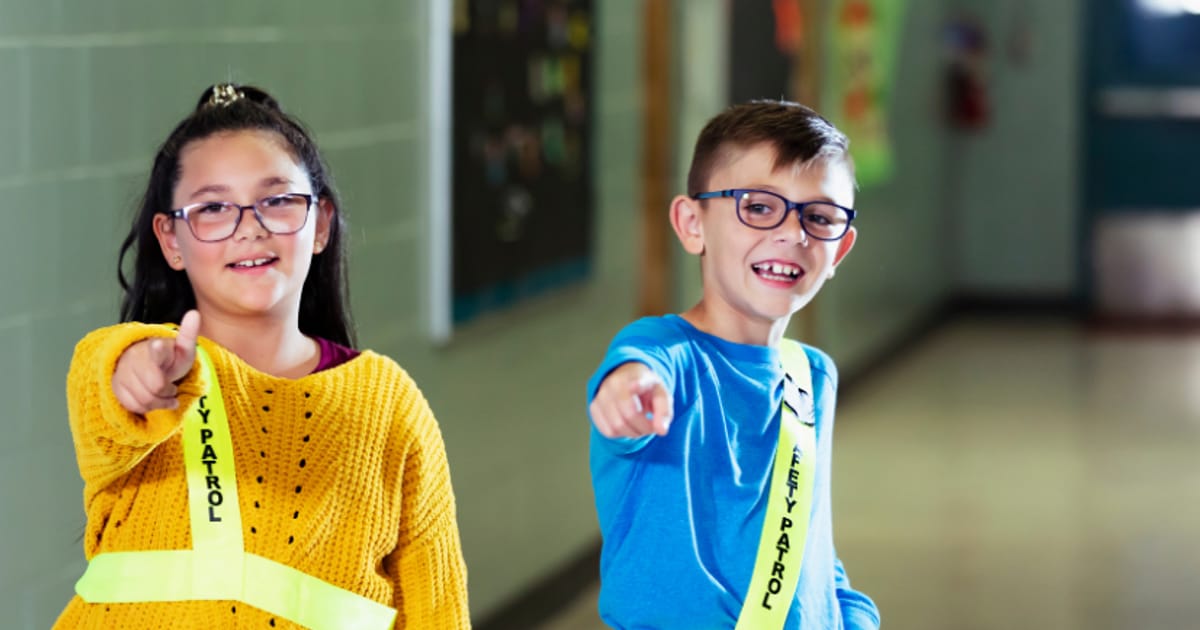

Stay Safe! is the Canadian Red Cross course for children who are starting to spend time on their own: after school, on a Saturday afternoon, or in the half hour between one parent leaving and the other getting home.
Read more about this courseShow less
The Red Cross sets the entry point at nine years old, or Grade 3 completed, and we teach it in Calgary and in Leduc for the greater Edmonton region, with instructors who work as paramedics, firefighters and emergency professionals. We can also bring it to a school, a community hall or a workplace for a group, for an additional fee, and we travel elsewhere in Canada on request. This page is written for the parent doing the deciding, because that is who the real decision belongs to. We do not have a public date on the calendar right now, so the button on this page registers your interest rather than books a seat.
Course details
- Certificate
- Canadian Red Cross Stay Safe! certificate
- Certificate valid for
- Does not expire. Stay Safe! issues a completion certificate rather than a timed certification.
- Issued by
- Canadian Red Cross
- Duration
- 5 to 6 hours
- Format
- Virtual: live online with an instructor, anywhere in Canada. In person: Calgary, Leduc, or we travel to you.
- Prerequisites
- No previous training. Learners must be 9 years of age or older, or have completed Grade 3 (Canadian Red Cross Program Standards).
- Recertification
- No renewal needed. This certificate does not expire.
- Price
- $80.00 + GST & applicable taxes (charged at checkout for your province)
When this runs
We teach this course and run it regularly. There is no public date open right now, and we won’t show one until it’s real.
What you’ll be able to do
- Walk you through their own coming-home routine out loud, in their own words
- Say what they would do if the smoke alarm sounded, before it ever sounds
- Name the backup adult they would reach, and what they would do if that adult did not pick up
- Recite your address and phone number at the kitchen table, not only under pressure
- Point out the things in your own home they would treat as worth calling about
- Hold a decision they have already made when the person at the door is friendly about it
- Tell you about the thing that went wrong instead of hiding it until you notice
- Work from the same plan you are working from, so an afternoon alone is not improvised at both ends
What Stay Safe! is, and what it is not
Stay Safe! is a Canadian Red Cross youth course about being capable when there is no adult in the room. Children who complete it receive the Canadian Red Cross Stay Safe! certificate. The Red Cross owns the curriculum and we teach to it, so we do not reproduce their lesson materials or their course outline here. What you will find on this page instead is our own plain-language account of what the course is for and what you should expect to see at home afterwards. If you want the official outline before you commit your child to it, ask us and we will point you at the Red Cross's own course description.
What we can describe honestly is the shape of it. It is a course about judgement more than technique: recognizing what has gone wrong, deciding whether it can wait, knowing who to reach and how, and having already practised the answer before the moment arrives. Children are not short of instructions from adults. What they are usually short of is rehearsal, and rehearsal is what a room with an instructor and other kids in it provides.
It is not a workplace first aid certificate, and it does not carry a CPR certification level. If what you actually need is CPR-C, an Intermediate First Aid card (formerly Standard First Aid) for a job, or child care first aid for a licensed setting, this is the wrong booking and we will say so. Send us the exact wording you were given and we will tell you which course it points at.
We deliver it in person and, where the run allows, virtually. The length and the fee are published with each run and confirmed at registration; we have not posted either here, because we would rather leave a gap than print a number we have not confirmed. Ask us for the current schedule and fee and you will get the real one.
Alberta does not set a home-alone age, and this certificate is not permission
Parents ask us for the number constantly, and there is no number. Alberta does not fix an age in law at which a child may be left at home alone. Anyone who tells you the province has a magic birthday is guessing, and a training provider is the last place you should take that answer from.
What matters instead is whether a child has been left in a situation that puts them at risk, and that is a judgement about this child, this home, this length of time, and this time of day. A capable eleven-year-old at four in the afternoon with a neighbour two doors down is a different situation from the same child alone until nine at night. The circumstances carry as much weight as the age does.
So be clear on what a Stay Safe! certificate does. It records that a child completed a Red Cross youth course. It is not permission, it is not a legal document, and it does not shift any responsibility off you and onto us or onto the Red Cross. Completing it does not make it lawful or advisable to leave a child alone who is not ready to be. The decision stays exactly where it was before you booked: with the parent.
We will not tell you your child is ready, because we will have met your child once and you have known them their whole life. What the course can do is give the child rehearsed defaults instead of improvisation, and give you something concrete to talk about afterwards other than a vague sense of whether it feels okay yet.
How to tell whether your child is actually ready
Readiness is behaviour, not a birthday, and most of the signals have nothing to do with emergencies. Does your child tell you when something goes wrong, or hide it because they are worried about being in trouble? A child who hides the broken glass is not ready, whatever their age, because the whole system depends on them phoning you when things go sideways. That one habit predicts more than anything else on this list.
Then the practical things. Can they lock a door behind them and remember they did. Can they reach you by phone and keep trying calmly when you do not pick up the first time. Can they say their full address out loud without hunting for it. Can they decide not to open the door, and hold that decision when someone on the other side sounds friendly and reasonable. None of that is instinctive. All of it is learnable.
Watch what they do when something unexpected happens while you are still there. The smoke alarm chirps its low battery. The power flickers. Someone knocks. Freezing is a completely normal first reaction, in children and in adults, and it is exactly what rehearsal exists to shorten. The question is not whether they freeze but whether they come out of it with something to do.
If your honest answer is not yet, then it is not yet, and nothing is lost by waiting. The course will still be there next season, and a child pushed into independence before they want it usually ends up more anxious, not less. Some families take the course precisely because the child is nervous and wants to feel prepared. That is a good reason. Wanting to skip past the readiness question is not.
What changes at home after the course
The course is time in a room with an instructor. The value shows up in the weeks afterwards, at your house, and only if you do something with it. Ask your child to walk you through what they would do, out loud, in their own words, rather than asking whether they learned a lot. You will hear the gaps immediately, and the gaps are useful information about your particular home rather than about the course.
Then practise in small doses. Step out for a short errand while they stay, and come back. Do it again a bit longer. Building tolerance in increments is far kinder than a first attempt that happens because a shift changed and there was no other option. It also gives the child a run of successful experiences to draw on, which is the actual source of confidence.
Write the plan down and put it somewhere permanent. Who the backup adult is and how to reach them. Which neighbour is home during the day. What counts as an emergency worth calling for and what can wait for a text. Which doors stay locked. A short list on the fridge beats a long conversation nobody remembers, and it gives an anxious child something to hold when they cannot think.
Revisit it as they get older, because the plan for a nine-year-old on a Tuesday afternoon should not still be the plan at thirteen. Independence is not a switch you flip once. It is a series of small extensions, each one checked afterwards, and this course is a useful early step in that sequence rather than the end of it.
Ages, supervision, and where we run it
The Canadian Red Cross sets the entry point, and its Program Standards state that learners must be "9 years of age or older (or must have completed Grade 3)". Those are two routes in, and either one is enough, so a child who has finished Grade 3 but has not yet turned nine is not automatically out. Our registration form applies the age on its own as a simple minimum, so if that is your situation, contact us and we will handle it directly rather than let a form turn you away. Whichever route applies, it is an entry point rather than a target. The Red Cross publishes no maximum age for this course, so we do not enforce one, and an older child who would genuinely benefit will not be turned away at the door. The course is designed with youth aged roughly nine to thirteen in mind.
If your child is right at the young edge of that, talk to us before you register. The entry point is a floor, not a recommendation, and a child who is doing this because they want to be prepared will get far more out of the course than one who has been signed up because a schedule fell apart. We would rather have that conversation in advance than watch a child struggle through a course they were not ready for.
Because participants are minors, a parent or guardian registers and consents on the child's behalf, and we collect as little information about the child as we can operate on. Red Cross Program Standards also require that youth classes are supervised throughout by an appropriate youth leader and that learners are not left unattended, which is a staffing obligation on us rather than a rule for you to arrange. If your child needs you present for any reason, tell us at registration and we will sort it out.
We run it in Calgary as our primary location and in Leduc for families across the greater Edmonton region. We also deliver it onsite for groups, a school, a scout troop, a community association, a workplace running something for employees' families, for an additional fee covering travel and setup, and we travel elsewhere in Canada on request. The course is the same wherever it runs. Only the room changes.
Stay Safe! or Babysitter Training, and how to get on the list
The two youth courses answer different questions. Stay Safe! is about your own child looking after themselves in their own home. Babysitter Training is about a young person taking responsibility for someone else's children, which brings in child care skills and the practical business of being hired. The Red Cross sets the babysitting entry point higher, at eleven or Grade 5 completed, for that reason.
For a lot of families the natural sequence is Stay Safe! first, then Babysitter Training a year or two later once the child is old enough and interested in earning money at it. But if your child is already eleven or older and what they actually want is to start sitting for the neighbours, put their name on the Babysitter Training list instead of this one. That course is waiting on a date as well, so it is the same kind of list, just the right one. We would rather point you at the course that fits than take a registration for the one that does not.
On timing, we will be straight with you: there is no Stay Safe! date on the public calendar at the moment. Register your interest and we will tell you as soon as one opens, along with the schedule and the fee for that specific run. Nothing is charged when you put your name down, and no seat is held, it is a list, not a booking, and we would rather say that plainly than let you assume otherwise.
If you have a group already, that changes things. A school class, a scout group, or several families who know each other can be enough for us to build a run around, and groups are usually how a date gets scheduled in the first place. Send us the number of children, their ages, your location and roughly when you want it. And if you are not sure this is the right course at all, describe the situation you are actually trying to solve and we will tell you honestly, including telling you that none of our courses is the answer.
Who this course is for
- Calgary parents whose child is starting to be home alone after school
- Families juggling shift work, staggered finishes and a gap in the afternoon
- Children aged about nine to thirteen who are anxious about being on their own
- Confident kids whose parents want the caution to catch up with the confidence
- Leduc and greater Edmonton families who would rather not drive to Calgary for a youth course
- Grandparents and caregivers handling after-school pickup who want one shared plan
- Schools, scout groups and community associations booking a session for a whole class
- Families building toward Babysitter Training once their child is old enough
English isn’t your first language?
Our instructors teach in English, with live-translated classroom text available in supported languages. You can follow explanations on screen while participating in the same hands-on training as the rest of the class.
Because translated explanations require additional reading and processing time, your instructor may occasionally pause before moving to the next topic. This can make the instructional pace slightly slower.
Optional preparation materials may also be available before class to help you become familiar with common English first aid terminology.
Languages are confirmed course by course, so none is guaranteed until we confirm it with you.
Contact us before registering to confirm that your preferred language is available for your course.
Related reading
- September Is When Families Find Out They Need a CertificateSeptember brings a rush of childcare and babysitting certificate requests. Here is what this week covers, and the age rules that catch people out.
- The Five Minute Talk to Have Before You Leave a SitterA new babysitter needs five minutes of specific information before you walk out. Here is the list, in the order that matters most.
Where we teach this course
We teach this course in Calgary and Leduc. No public dates are posted at the moment.
We also deliver this course at your worksite for groups, useful for crews who can’t release staff to travel. Onsite delivery carries an additional fee on top of per-person pricing. Request an onsite quote.
We travel for private and group training across Canada, and internationally by arrangement. If you’re outside Alberta, tell us where you are and we’ll price it.
Common questions
- How old does my child have to be for Stay Safe!?
- The Canadian Red Cross sets the entry point at "9 years of age or older (or must have completed Grade 3)", so either route qualifies. There is no published maximum, so an older child is welcome, though the course is designed with roughly nine to thirteen year olds in mind. If your child is right at that edge, including a child who has finished Grade 3 but is not yet nine, contact us first and we will help you judge whether now is the right time.
- What age can a child legally be left home alone in Alberta?
- Alberta does not set a fixed age in law, and we will not invent one for you. What matters is whether a child has been left in a situation that puts them at risk, which depends on the child, the length of time and the circumstances rather than on a birthday. This course does not change your legal position and the certificate is not permission to leave a child alone.
- How long is the course, and what does it cost?
- We have not published either figure here because they are not confirmed, and we would rather leave a gap than print a number we would have to correct. Both the schedule and the fee are published with each run and confirmed at registration. Ask us for the current schedule and fee and we will give you the real ones.
- When is the next Calgary or Leduc date?
- There is nothing on the public calendar at the moment. Register your interest and we will contact you as soon as a date opens, with the schedule and fee for that run. Putting your name down costs nothing, charges nothing and does not hold a seat, it is an interest list rather than a booking.
- Does my child get a CPR or first aid certificate from this?
- No. Stay Safe! carries no CPR certification level, and it is not a workplace first aid card. Children who complete it receive the Canadian Red Cross Stay Safe! certificate, and its validity is set by the Red Cross and confirmed at registration. If you need CPR-C or a workplace first aid certificate, that is a different course and we will point you to it.
- Should we take Stay Safe! or Babysitter Training?
- Stay Safe! is about your child looking after themselves at home, and the Red Cross entry point is nine years old or Grade 3 completed. Babysitter Training is about caring for other people's children, starts at eleven or Grade 5 completed, and covers child care skills and the practical side of being hired. If your child is eleven or older and wants to start sitting, ask us about Babysitter Training instead, which is also waiting on a date.
- Do I need to stay with my child during the class?
- You do not have to. Because participants are minors, a parent or guardian registers and gives consent, and Red Cross Program Standards require youth classes to be supervised throughout by an appropriate youth leader, with learners never left unattended. If your child would do better with you in the room, say so at registration and we will accommodate it where we can.
- Can you run Stay Safe! for our school or community group?
- Yes, and a group is often how a date gets scheduled at all. We deliver onsite at schools, community halls and workplaces for an additional fee covering travel and setup, in Calgary, in Leduc and the greater Edmonton region, and elsewhere in Canada on request. Send us the number of children, their ages, your location and your preferred window.
- Can I take this course if English isn't my first language?
- Yes. Our instructors teach in English, and live-translated classroom text is available for this course in supported languages. Contact us before registering to confirm that your language is available for your course.
Where to go next
Cancellation, transfer, and refund terms are shown before payment and confirmed at registration. Not sure which course fits? Email us and we’ll help.
Sources
- On successful completion you receive a Canadian Red Cross Stay Safe! certificate. Canadian Red Cross (verified 2026-07-23).
← All courses · Last reviewed 2026-07-25