The Delta Dispatch
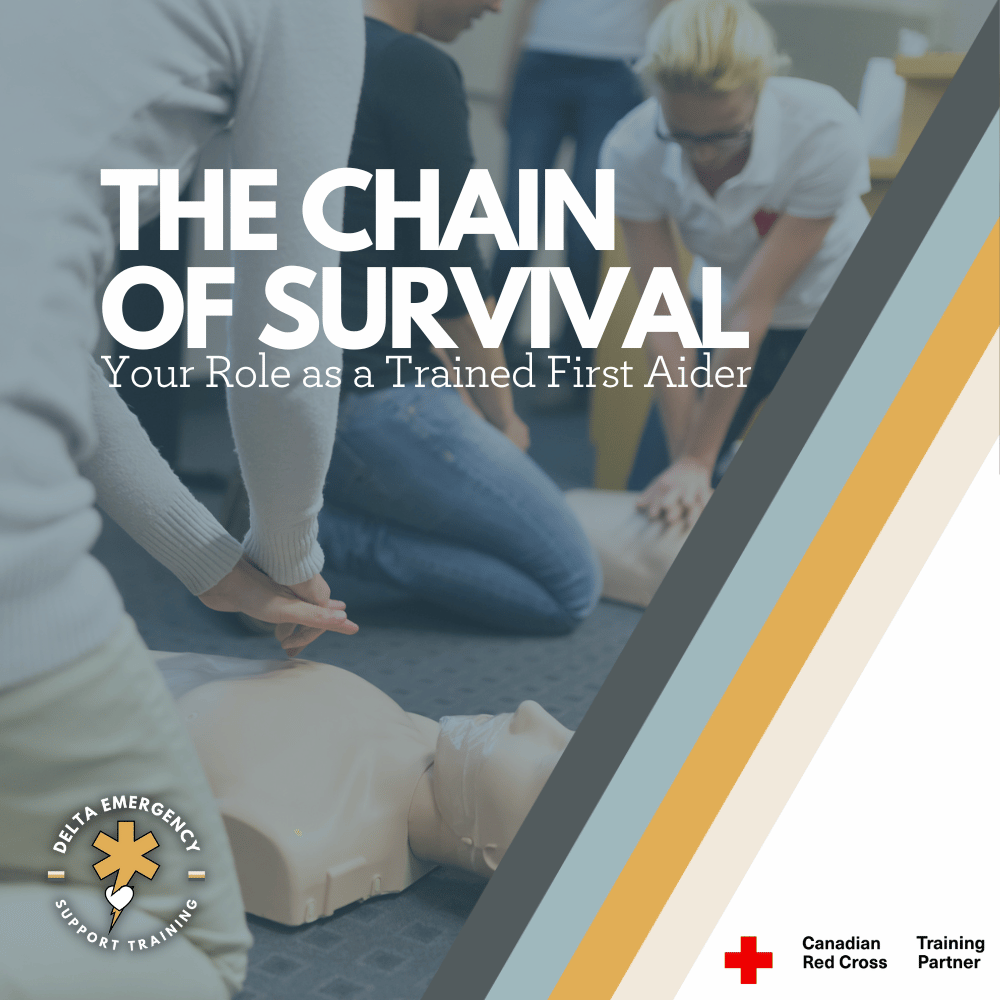
The Chain of Survival: Your Role as a Trained First Aider
First aid isn’t just about bandages—it’s about recognizing emergencies, acting quickly, and providing care until professional help arrives. Explore the key responsibilities of a first aider and understand why these skills are essential for every workplace and community.
When someone collapses, chokes, or stops breathing, every second counts. Whether you're a parent, a coach, a security guard, or someone who’s recently completed your Standard First Aid certification, you are a vital link in what’s known as the Chain of Survival—a model that outlines the critical steps needed to give someone the best chance of survival in a life-threatening emergency.
This blog explores what the Chain of Survival is, how first aiders fit into it, and why quick, confident action truly saves lives.
🔗 What Is the Chain of Survival?
The Chain of Survival is a concept developed by the American Heart Association and supported by the Canadian Red Cross. It identifies five key links in responding to sudden cardiac arrest or other life-threatening emergencies:
Early recognition and activation of EMS (calling 911)
Early CPR with an emphasis on high-quality chest compressions
Rapid defibrillation (AED use)
Advanced resuscitation by paramedics or emergency healthcare professionals
Post-cardiac arrest care at the hospital
🧠 Why the First Three Links Depend on You
Before paramedics arrive, the first three links are in your hands. This is where Standard First Aid and CPR trainingcomes in.
✅ 1. Early Recognition & Calling 911
You are the first person on scene—whether at home, at work, or in a public space. Recognizing when something is wrong (unresponsiveness, abnormal breathing, signs of a stroke or heart attack) and calling 911 starts the entire chain. Don’t wait. Early recognition can prevent the situation from getting worse.
✅ 2. Early CPR
If the person is not breathing or has no pulse, you need to start CPR immediately. High-quality chest compressions maintain blood flow to the brain and organs, buying time until help arrives. Studies show that bystander CPR can double or triple a person's chances of survival.
✅ 3. Early Defibrillation
An AED (automated external defibrillator) can shock the heart back into a normal rhythm. These are often available in schools, gyms, offices, and malls. Your Standard First Aid training gives you the confidence to use one correctly—and without hesitation.
🚑 Where EMS and Hospitals Take Over
Once paramedics arrive, they begin advanced care: administering medications, airway management, and transport to the hospital. But without your initial response—those first few minutes—their efforts may come too late. Survival rates drop 7–10% for every minute defibrillation is delayed. That’s why your actions matter so much.
👣 Your Role as a Trained First Aider
By taking a Red Cross Standard First Aid course, you’ve become more than just a witness to emergencies—you’ve become someone who can act. You’ve learned to:
Assess the scene and ensure safety
Check for responsiveness and breathing
Call for help and provide clear information to dispatch
Start CPR and use an AED
Support someone through shock, bleeding, or trauma
Recognize and manage common medical emergencies
You’re not a bystander. You are the beginning of the Chain of Survival.
🛠️ Want to Be Even More Prepared?
Whether you’ve taken first aid before or are due for a recertification, refreshing your skills ensures you stay sharp and confident. At Delta Emergency Support Training in Calgary, Alberta, our first aid programs are taught by experienced paramedics and firefighters who know what it’s like to respond in real life.
Becoming a Paramedic in Canada: How EMR Training Fits Into the Bigger Picture
Thinking about becoming a paramedic in Canada? It starts with understanding the paramedicine pathway. This blog explains where EMR training fits into the journey and why it’s a key first step toward a rewarding career in emergency services.
Across Canada, the demand for trained paramedics continues to rise. Communities rely on first responders not only for life-threatening emergencies but also for urgent care, transport, and support in times of crisis. If you’ve ever thought about a career in emergency services, you may be wondering: where do I start?
The answer for many is Emergency Medical Responder (EMR) training. This entry-level program provides the essential skills you need to help patients and also acts as a stepping stone into the professional paramedicine pathway. To understand why EMR is such a valuable first step, it helps to look at how the paramedicine system is structured in Canada.
1. The Paramedicine Ladder in Canada
In Canada, paramedicine is organized into different levels of training and certification. Each step builds on the one before it, adding more advanced knowledge, clinical skills, and responsibilities.
Emergency Medical Responder (EMR)
Entry-level certification recognized across many provinces.
Focuses on patient assessment, CPR and AED use, airway management, bleeding control, and trauma care.
EMRs may work in industrial safety, event medical services, rural response, and are often a requirement for admission into Primary Care Paramedic programs.
Training is usually short and focused, making it an accessible first step.
Primary Care Paramedic (PCP)
The first professional paramedic level in Canada.
PCPs are qualified to work on ambulances and provide advanced pre-hospital care.
Skills include medication administration, advanced airway management, and cardiac monitoring.
Typically requires 1–2 years of college-level education, depending on the province.
Advanced Care Paramedic (ACP)
Builds on the PCP scope of practice with advanced skills.
Includes procedures such as intubation, IV therapy, advanced cardiac interventions, and expanded medication options.
Training usually takes an additional 1–2 years beyond PCP.
Critical Care Paramedic (CCP)
The highest level of paramedic training in Canada.
Specializes in transporting and treating critically ill or injured patients, often by air ambulance or in hospital transfer situations.
CCPs provide intensive care support outside the hospital environment.
This tiered approach means that every paramedic, no matter how advanced, started with the same fundamentals—and that usually begins with EMR.
2. Why EMR Training Matters
Even though EMR is the entry-level program, it’s far more than a “basic” course. Here’s why it matters:
Foundational Skills: You’ll learn how to assess patients systematically, manage airways, perform CPR, use AEDs, and provide lifesaving first aid for medical and trauma emergencies.
Confidence in Emergencies: EMR training prepares you to step into real-world situations calmly and effectively, whether you’re responding at work, volunteering, or helping in your community.
A Career Sampler: Many people use EMR training as a way to “test drive” paramedicine before committing to the longer PCP or ACP programs. It’s a great way to discover if this career path is right for you.
Admission Requirement: In several provinces, completion of an EMR program is a mandatory prerequisite for applying to PCP programs.
In short, EMR is both a valuable certification on its own and a launching pad for more advanced paramedic training.
3. Career Opportunities After EMR
Some students complete EMR training because they want to work right away, while others use it as preparation for PCP school. Either way, opportunities exist.
Industrial and Remote Work: Oil and gas sites, mining operations, and construction companies often employ EMRs to provide on-site medical support.
Event Medical Services: Concerts, festivals, and sporting events need trained responders to manage emergencies on the ground.
Volunteer Roles: Many communities welcome EMRs as part of first responder programs, especially in rural or remote areas.
Pathway to PCP: EMR graduates have the foundation to move directly into Primary Care Paramedic education, making it a strategic step toward a long-term career.
4. The Canadian Context
Paramedicine is provincially regulated in Canada, which means that the scope of practice and educational requirements vary depending on where you live. For example:
In British Columbia and Alberta, EMR certification is a recognized entry point for working in certain EMS systems.
In Ontario, EMR may not be a licensed level, but training still provides an advantage for those entering PCP programs.
Across the country, EMR certification is widely respected as a sign of commitment to the field and readiness to pursue paramedic studies.
Regardless of the province, EMR training signals that you’ve mastered essential lifesaving skills and are prepared for the next step.
5. A Pathway, Not a Shortcut
One of the most important things to understand about paramedicine in Canada is that there are no shortcuts. Every level of training is rigorous and builds on the last. But EMR offers a pathway—an accessible starting point that opens doors, whether you want to work immediately or advance further.
By taking EMR, you’re not just learning a skillset. You’re joining a community of first responders who play a vital role in Canada’s healthcare system.
Conclusion
Becoming a paramedic in Canada is a journey. It starts with building a solid foundation—and for most students, that foundation is Emergency Medical Responder training. EMR equips you with lifesaving skills, gives you real-world confidence, and provides the stepping stone needed for higher levels of paramedicine like PCP, ACP, and CCP.
If you’re considering a career in emergency services, EMR training is the best way to begin. It’s the first step on a ladder of learning that leads to one of the most rewarding careers in healthcare.
👉 Ready to start your journey? Enroll in our EMR program today and take the first step toward becoming a paramedic in Canada.
Alberta Fire Applicants & EMRs: Master the Medical Portion with Paramedics and Firefighters
Succeeding in the medical portion of a firefighter or EMR application in Alberta comes down to mastering the fundamentals under pressure. At Delta Emergency Support Training, active paramedics and firefighters teach you vital patient assessment skills, accurate vitals, effective communication, and safe medication administration.
Why Fire Applicants Fail the Medical Portion (And How to Prepare)
Firefighting is one of Alberta’s most demanding careers, and the medical portion of the application ensures candidates can handle life-or-death situations both trauma and medical, under pressure. Many applicants struggle, not because they lack dedication, but because they underestimate the scenario-based, high-pressure nature of this part of the evaluation. Here’s what to know and how to prepare.
1. Not Understanding the Scenario-Based Format
Applicants may know first aid procedures but are unprepared for realistic simulations. Evaluators look for:
Correct prioritization of patient care
Efficient use of available equipment
Accurate assessment of vitals (pulse, blood pressure, respiration, oxygen saturation)
Maintaining composure under pressure
Preparation Tip:
Practice scenarios under timed conditions. Include taking accurate vitals for each patient, documenting them, and adjusting care accordingly. Repetition builds both speed and confidence.
2. Poor Time Management During Simulations
Time pressure is a common challenge during firefighter medical evaluations. Some applicants try to rush through tasks, either spending too long on minor details or speeding through essential steps. This can result in incomplete assessments, inaccurate vitals, missed medication checks, or poor patient communication.
Key Tip:
Don’t rush—take your time to work methodically.
Focus on the fundamentals of your patient assessment: scene safety → primary survey → airway, breathing, circulation → vitals → medications → secondary survey → ongoing care.
If you get stuck or feel pressured, return to the basics and systematically work through each step. Accuracy and thoroughness are more important than speed.
Use practice scenarios to balance efficiency with careful, precise assessment.
Preparation Tip:
Use a mental checklist: Scene safety → Primary survey → Secondary survey → Ongoing care → Hand-off report.
Practice completing your assessment efficiently while still accurately measuring vitals and administering medications.
Practice whenever you can! Run calls in your head.
3. Lack of Critical Thinking
Memorized procedures aren’t enough—patients don’t always behave as expected. Evaluators want to see adaptability: can you adjust your care based on vital signs, patient feedback, or medication needs?
Preparation Tip:
Train with scenarios including complications like fluctuating vitals, patient distress, or adverse medication reactions.
Ask yourself after each practice: “How would I adjust their oxygen saturations fall, or a medication has unexpected effects?”
4. Inadequate Patient Communication
Medical competence isn’t just technical—communicating clearly with patients is critical. Poor communication can make patients anxious or uncooperative, affecting assessment accuracy.
Preparation Tip:
Practice explaining what you’re doing and why while performing assessments and administering medications.
Use calm, clear language: “I’m going to give you your medication now; it may make you feel drowsy. Let me know if you feel unwell.”
Listen and respond to patient concerns—they may give vital clues about their condition.
5. Not Knowing Medications, Indications, and Contraindications
Many applicants fail by being unsure about common medications, their proper use, or when not to administer them. Evaluators want to see that you can safely give medications if required, understand dosage, and recognize contraindications.
Preparation Tip:
Study common pre-hospital medications: aspirin, epinephrine auto-injectors, nitroglycerin, oxygen, and glucose.
Know the indications (when to use), contraindications (when not to use), dosage, and potential side effects.
Practice scenario-based administration with simulated patients.
6. Inadequate Knowledge of Fire-Specific Medical Risks
Alberta applicants face unique hazards: industrial chemicals, wildfires, smoke inhalation, cold-weather trauma. Failing to anticipate these can affect performance.
Preparation Tip:
Focus on airway management, burns, smoke inhalation, rapid trauma assessment, vitals monitoring, and safe medication use.
Understand environmental impacts: extreme temperatures, long ambulance response times, and remote locations.
7. Overlooking Soft Skills and Professionalism
Evaluators notice panic, poor teamwork, and rushed or inaccurate communication. Both soft skills and technical skills are tested simultaneously.
Preparation Tip:
Role-play with peers, focusing on calm, professional communication.
Practice reporting vitals and medications verbally and accurately to simulate handoff to paramedics.
Debrief after every scenario: identify strengths and areas for improvement.
8. Tips for Final Preparation
Simulate Realistic Conditions: Wear PPE, gloves, and work under distractions to mimic real assessments.
Practice Accurate Vitals and Medication Use: Include pulse, respiration, oxygen saturation, blood pressure, and scenario-based administration of medications.
Time Your Scenarios: Track your completion time without sacrificing accuracy.
Review Fundamentals: CPR, airway management, bleeding control, shock recognition, spinal immobilization, and medications.
Debrief Every Practice: Discuss patient communication, vital trends, medication decisions, and overall decision-making.
Conclusion
The medical portion of the firefighter application isn’t meant to trip you up—it ensures you’re ready to handle emergencies. By practicing realistic scenarios, taking accurate vitals, communicating effectively with patients, knowing your medications, managing your time, and thinking critically, Alberta applicants can approach the evaluation confidently and maximize their chances of success.
At Delta Emergency Support Training, you’ll be taught by active paramedics and firefighters, gaining real-world insights and practical skills that go beyond the textbook. This hands-on instruction ensures you’re fully prepared for both the medical portion of your firefighter application and real-life emergencies.
How EMRs Can Succeed in Remote and Isolated Worksites
Working as an Emergency Medical Responder (EMR) on a remote worksite means being ready for anything—from minor injuries to life-threatening emergencies—often with limited resources and no backup nearby. Whether you’re on an oilfield, logging site, or rural road, you may be the only trained responder for hours. Success depends on preparation, strong communication, and the ability to improvise. By mastering these skills, EMRs ensure that patients receive the best possible care until advanced help arrives.
Responding to emergencies in urban areas is often predictable. Backup is usually nearby, communication is reliable, and resources are accessible. In remote locations such as rural roads, oilfields, logging sites, or construction areas, EMRs face unique challenges. You may be the only trained responder for hours, and the environment can complicate every step of patient care. Mastering the skills needed to handle these situations can mean the difference between life and death.
1. Communication Challenges in Remote Environments
One of the first hurdles EMRs encounter in remote areas is staying in contact with dispatch or additional medical resources. Cell service may be spotty or nonexistent, radios may have limited range, and satellite phones are not always available or functioning.
Tips for EMRs:
Always verify which communication tools are available on-site before your shift begins.
Have a backup communication plan, such as designated runners, signaling methods, or vehicle transport to reach help.
Provide clear and concise patient information to dispatch, including the exact location, patient condition, and any hazards.
Maintain communication logs to ensure vital information is relayed accurately.
Effective communication is the foundation for safe and efficient patient care, particularly when you are isolated.
2. Prolonged Patient Care
In remote settings, patients often require care for extended periods while waiting for evacuation. This differs significantly from urban EMS responses, where transport is typically quick. EMRs must be prepared to provide prolonged monitoring and treatment.
Key Considerations:
Continuously monitor ABCs (airway, breathing, circulation) and reassess frequently.
Take regular vital signs and record changes for handoff to higher-level care.
Keep the patient warm, comfortable, and hydrated when possible.
Maintain situational awareness, including environmental hazards, weather, and your own endurance.
Prolonged care requires a balance of technical skill and mental stamina. Staying calm and organized ensures that patients remain stable until help arrives.
3. Improvised Splints and Tourniquets
Remote worksites often have limited medical equipment. EMRs must be able to improvise with available materials.
Splints:
Use boards, poles, tools, or even rolled-up jackets to immobilize fractures.
Ensure the splint is secure but does not restrict circulation unnecessarily.
Tourniquets:
If a commercial tourniquet is unavailable, sturdy belts, strips of cloth, or webbing can be used in emergencies.
Apply properly and monitor distal circulation. Only use when direct pressure is not sufficient to control severe bleeding.
Improvisation is a core skill for EMRs in remote environments and can stabilize injuries until evacuation.
4. Coordinating Helicopter or Ground Extraction
In some cases, evacuation may involve air transport or long-distance ground travel. EMRs must coordinate safely and efficiently.
Preparation and Communication:
Ensure landing zones for helicopters are clear, level, and visible.
Identify hazards, including wires, uneven terrain, or debris.
Keep bystanders at a safe distance and assist with patient loading if necessary.
If extraction is delayed, maintain extended patient care: shelter, temperature regulation, and continuous monitoring.
Evacuation requires both technical knowledge and leadership to keep patients and crew safe.
5. Environmental Awareness and Safety
Remote sites often contain additional hazards that can complicate patient care:
Heavy machinery and industrial equipment.
Wildlife encounters.
Extreme weather conditions.
Limited lighting or difficult terrain.
EMRs must maintain situational awareness, not only for the patient but for their own safety and that of any team members or bystanders.
6. Mental Preparedness
Extended care in challenging environments can be mentally demanding. EMRs should practice:
Staying calm under pressure.
Making quick decisions with limited information.
Prioritizing patient care while managing multiple hazards.
Being mentally prepared ensures that patient care remains consistent and professional, even in high-stress or prolonged scenarios.
Conclusion
Remote and isolated worksites present unique challenges for EMRs. Success depends on advanced planning, communication, improvisation, and endurance. By mastering these skills, EMRs can provide high-quality care in environments where resources are limited and help may be far away.
Preparedness, adaptability, and confidence are what allow EMRs to save lives, no matter how isolated the scene.
Weathering the Storm: Responding to Emergencies in Harsh Conditions
Bad weather doesn’t stop emergencies, and it shouldn’t stop responders from being ready. From icy roads to scorching heat, first responders face unique challenges that affect both their safety and their patients’ well-being. This guide explores how weather impacts patient care, what responders can do to prepare, and key strategies to ensure safety when working in rain, snow, heat, or storms.
When emergencies happen, they rarely wait for good weather. For first responders, answering a call in the middle of a snowstorm, torrential rain, blistering heat, or icy wind is all part of the job. But harsh weather does more than just make your job uncomfortable — it can directly affect your safety, your ability to provide care, and the condition of your patient. Responding effectively requires preparation, adaptability, and a clear understanding of how environmental conditions influence both rescuer and patient.
The Impact of Weather on Emergency Response
Heat and Humidity
Responders face the risk of dehydration, heat exhaustion, and heat stroke while working outdoors in full PPE.
Patients may present with worsened medical conditions such as heat stroke, dehydration, cardiac stress, or exacerbations of chronic illness.
Equipment like defibrillator pads may struggle to stick in high humidity or sweaty environments.
Cold and Snow
Hypothermia and frostbite can develop quickly in patients exposed to freezing temperatures.
Cold weather can mask shock symptoms, as pale, cool skin may be overlooked.
Snow and ice increase response times, limit vehicle access, and create hazardous conditions for both responders and patients.
Rain and Flooding
Roads may be blocked or unsafe, delaying response times.
Hypothermia can occur even in above-freezing temperatures if patients are wet for prolonged periods.
Rain complicates wound care, bandaging, and spinal immobilization by making surfaces slippery and gear harder to handle.
Wind and Storms
Strong winds can scatter debris, down power lines, and create unsafe working environments.
Patient extrication in windy conditions can become dangerous, requiring constant vigilance for falling hazards.
Patient Care Considerations
Thermal Management: Keep patients warm in cold weather with blankets, heat packs, and by minimizing exposure. In hot weather, prioritize shade, cooling, and hydration.
Airway Protection: Wind, dust, or heavy rain may obstruct airways or complicate breathing. Position patients to minimize exposure and suction as needed.
Mobility & Evacuation: Moving patients on icy ground, through mud, or during high heat requires extra teamwork and slower, more controlled movements.
Prolonged Care: Severe weather can delay transport. Be prepared to provide extended on-scene care, monitoring vitals, and reassessing frequently until transport is possible.
Safety Tips for First Responders
Dress and Gear for the Environment
Layered clothing, moisture-wicking fabrics, and insulated gear for cold weather.
Hydration packs, cooling towels, and shade structures in extreme heat.
Waterproof bags for medical equipment during rain or snow.
Scene Safety First
Assess for weather-related hazards like icy ground, floodwaters, or falling debris.
Ensure vehicles are parked safely and not at risk of becoming immobilized.
Team Communication
Radios may cut out in storms — establish clear communication protocols.
Always check in with command when operating in remote or high-risk environments.
Self-Care is Patient Care
Monitor your own hydration, nutrition, and fatigue levels.
Remember, a responder who becomes a patient adds strain to the whole scene.
How Weather Affects Patients Differently
Children and elderly are more vulnerable to heat stress and hypothermia.
Cardiac patients may experience more strain in cold environments where vasoconstriction elevates blood pressure.
Diabetics may be more prone to hypoglycemia during prolonged exposure in extreme conditions.
Trauma patients can deteriorate rapidly if environmental exposure worsens shock.
Final Thoughts
Unfavorable weather will always be a factor in emergency response. First responders who understand how to adapt their approach — from personal preparation to patient care — are better equipped to handle the added challenges of rain, snow, heat, or storms. At the end of the day, staying safe and anticipating the impact of the environment is just as important as the medical care you provide.
Be Ready for the Unexpected: First Aid Skills Every Hunter Should Know
Hunting is a beloved Canadian tradition, but heading into the bush without first aid training puts you and your group at risk. Learn the importance of being prepared with skills like bleeding control, wound care, and shock management. Whether you hunt with family, friends, or solo—make sure you're ready to protect what matters most.
Why You Should Learn First Aid Before Hunting Season
Be Prepared for the Unexpected in Canada’s Wilderness
Father and son hunting
As the crisp fall air rolls in and leaves begin to turn, thousands of Canadians prepare for one of the most anticipated times of the year—hunting season. For many, it’s more than a pastime. It’s a family tradition, a weekend with friends, or time spent in the backcountry with loved ones—passing down skills, telling stories around the fire, and enjoying the stillness of nature. Hunting is deeply woven into Canadian culture, a proud part of our heritage from coast to coast.
But no matter how experienced or well-prepared you are, the wilderness comes with real risks. And when something goes wrong, you're often far from help, without cell service, and hours from emergency responders.
That’s why first aid training isn’t just helpful—it’s essential.
Whether you’re a weekend hunter or a guide, learning Red Cross-certified First Aid, Advanced First Aid (AFA), Wilderness First Aid, or Emergency Medical Responder (EMR) skills can make all the difference in an emergency. It means being ready—not just for yourself, but for the people who matter most.
At Delta Emergency Support Training, we believe that part of keeping these traditions alive means learning how to protect them.
Hunting Safety in Canada: Know the Risks
Hunting is generally safe when done responsibly, but accidents still occur. According to the Canadian Firearms Program and provincial wildlife agencies:
Most firearm-related hunting injuries involve accidental discharges or poor handling technique.
Tree stand falls are one of the most common hunting injuries, often resulting in fractures or spinal trauma.
Hunters often travel to remote areas with no cell service, delaying access to emergency care.
In some provinces, hypothermia is the leading non-injury emergency reported during hunting season.
Each year, hundreds of injuries are reported across the country—many of which are preventable with basic training and better preparation.
🏹 Common Hunting Injuries and Medical Situations
Understanding potential emergencies helps you prepare properly. Here are the most common situations faced in the field:
Gunshot wounds or impalement from firearm mishandling or accidents.
Knife cuts and lacerations during field dressing or gear use.
Falls from tree stands or rocky/uneven ground, resulting in broken bones or head injuries.
Cold exposure: frostbite, hypothermia, or trench foot.
Heat stress in early season hunts.
Allergic reactions to insect stings, animal bites, or plants.
Getting lost or separated from your group, increasing the risk of panic, exposure, or dehydration.
🧠 First Aid Skills Every Hunter Should Know
Here’s what every hunter—beginner or seasoned—should know:
Bleeding control: How to apply direct pressure, pack a wound, or use a tourniquet.
Managing broken bones: Stabilizing with splints and slings.
Shock treatment: Recognizing and managing pale, cold, clammy symptoms.
CPR and AED use: Cardiac arrest can happen in any setting.
Anaphylaxis care: Recognizing severe allergic reactions and administering an EpiPen.
Basic wound care: Cleaning and dressing wounds to prevent infection.
Spinal motion restriction: Important if someone falls from a height or hits their head.
These lifesaving skills are taught in Red Cross First Aid and Wilderness First Aid programs and are enhanced further in EMR-level training.
🎒 Essential First Aid Items to Pack for the Field
Your hunting first aid kit should be compact, durable, and versatile. Pack:
Tourniquet (e.g., CAT or SOFTT models)
Gauze pads, trauma dressings, adhesive tape
SAM splint and triangular bandage
Antiseptic wipes, tweezers, antibiotic ointment
Antihistamines and pain relievers
CPR mask, gloves, emergency blanket
Water purification tablets or filter
Whistle, signal mirror, and flashlight
Personal locator beacon (PLB) or satellite communicator
Pack gear—but more importantly, know how to use it.
🏔️ Why Location Matters: The Reality of Remote Response
In urban areas, EMS might reach you in under 10 minutes. In the wilderness, it could be hours—or days. Even when you can call 911, delays are common due to:
No cell service
Impassable terrain
Poor visibility or weather conditions
Long distances from the nearest ambulance or search-and-rescue base
That’s why wilderness preparedness and basic medical self-reliance are key. The Red Cross Wilderness First Aid program focuses specifically on prolonged care and making decisions when help is hours away.
🧭 Preventing Emergencies: Smart Safety Tips for Hunters
Avoiding an emergency is the best-case scenario. Here’s how to minimize risk:
Take a buddy—never hunt alone if you can avoid it.
File a trip plan: Leave your route and return time with someone you trust.
Carry emergency communication (PLB, satellite text device, or two-way radio).
Inspect your gear, especially firearms, knives, and tree stands.
Dress appropriately in layers, blaze orange, and waterproof gear.
Know the weather and avoid risky conditions (fog, snowstorms, extreme cold).
Stay hydrated and take regular breaks.
Stay sober while handling firearms—alcohol and hunting don’t mix.
📚 Which First Aid Training Is Right for You?
At Delta Emergency Support Training, we help hunters, outdoor workers, and future first responders get the skills they need. We offer:
Standard and Advanced First Aid (AFA) – Learn bleeding control, airway management, CPR, and trauma care.
Wilderness First Aid – Specialized for remote environments and delayed help.
Emergency Medical Responder (EMR) – For guides, professionals, or those planning a career in emergency services.
All courses follow Red Cross Emergency Care for Professional Responders guidelines.
Conclusion: Be the One Who’s Ready
Hunting isn’t just a hobby—it’s a cherished Canadian tradition, often passed down through generations. Whether you’re heading into the woods with your father, sister, best friend, or your own kids, you’re not just out for the harvest—you’re making memories. You're sharing laughter around the campfire, waking up at dawn with excitement, and carrying on a way of life that means something deeply personal.
But with that comes responsibility.
If something goes wrong—and it can—you want to be the one who knows what to do. Whether it’s treating a serious injury, spotting early signs of hypothermia, or managing an allergic reaction, your actions can save the life of someone you care about.
At Delta Emergency Support Training, we’re here to make sure you’re ready. Our Red Cross-certified Advanced First Aid, Emergency Medical Responder, and Wilderness First Aid programs prepare you not just for emergencies—but for protecting what matters most: your family, your friends, and the memories you’re out there to create.
Let’s keep hunting a safe, proud tradition—for this season, and every season to come.
Venomous Snake Bites in Canada: What You Need to Know & Do - First Aid Edition
Venomous snake bites are rare in Canada—but when they happen, knowing how to respond is crucial. From identifying rattlesnakes to administering Red Cross-approved first aid, this guide covers everything you need to stay safe outdoors.
Canada isn’t typically known for dangerous reptiles, but if you hike in BC, camp in Ontario, or explore the Prairies, you might just encounter one of our country’s three venomous snakes. While bites are rare, understanding how to identify venomous snakes, how to respond safely, and what first aid steps to take is essential.
At Delta Emergency Support Training, we prepare Canadians for real-life emergencies—including those that happen far from a hospital. Here’s your complete guide to snake bite prevention, identification, and treatment.
🇨🇦 Venomous Snakes in Canada
Canada is home to three native venomous snake species, all of which are rattlesnakes:
1. Eastern Massasauga Rattlesnake
Location: Ontario (Bruce Peninsula, Georgian Bay, Muskoka)
Canada’s only venomous snake in the East
Generally shy and avoids humans
2. Prairie Rattlesnake
Location: Southern Alberta and parts of Saskatchewan
Found in dry grasslands and badlands
More active in warmer months
3. Western Rattlesnake
Location: Southern British Columbia, especially the Okanagan Valley
Prefers rocky terrain and dry slopes
🐾 How to Tell if a Snake is Venomous
While identifying a snake in the wild can be difficult, here are common traits of venomous rattlesnakes in Canada:
Triangular-shaped head
Vertical (slit-like) pupils
Thick body with blotchy patterns
A rattle on the tail (but sometimes broken or not used)
Shaking or buzzing sound when threatened
Be cautious—some non-venomous snakes mimic rattlers by vibrating their tails in leaves.
🩹 First Aid for Snake Bites
All suspected snake bites should be treated as medical emergencies, even if the snake isn’t identified.
✅ What to Do Immediately
Move the person to safety (away from the snake).
Keep them calm—movement and panic can increase venom circulation.
Call 911 immediately.
Remove tight items like rings, bracelets, or watches from the affected limb.
Have them lie down with the bitten limb at or slightly below heart level.
Apply a clean, dry dressing to the bite.
Mark the edge of swelling with a pen and track it over time.
❌ What NOT to Do
Do not cut the wound or try to suck out the venom.
Do not apply a tourniquet.
Do not apply ice or immerse the bite in water.
Do not give the person alcohol or caffeine.
Do not attempt to capture or kill the snake.
🧬 What Does Snake Venom Do?
Rattlesnake venom is a hemotoxin, which means it can damage tissue, affect blood clotting, and cause intense swelling.
Symptoms may include:
Severe pain at the bite site
Rapid swelling or bruising
Dizziness or nausea
Weakness or fainting
Difficulty breathing (rare, but serious)
In rare cases, snake bites can lead to shock or even death if untreated.
🗺️ Prevention Tips by Region
Ontario (Massasauga)
Stay on designated trails
Avoid tall grass and rocky ledges
Wear boots and long pants
Listen for rattling sounds
Alberta & Saskatchewan (Prairie Rattlesnake)
Step carefully in dry, grassy areas
Keep pets on a leash
Watch where you sit or place your hands
British Columbia (Western Rattlesnake)
Avoid rocky hillsides and dry scrub
Don’t walk barefoot in wild areas
Use a flashlight when hiking at night
General Prevention:
Do not approach or handle any snake
Keep food sealed and your campsite clean
Hike with a buddy
Stay alert and educate children on snake safety
🧠 Final Takeaway
Although snake bites in Canada are rare, they do happen—and when they do, quick, calm, and correct first aid can make all the difference. Our native venomous snakes are not aggressive, and most bites occur when they are accidentally stepped on or provoked.
Knowing the signs of a venomous snake, understanding how to avoid dangerous situations, and being ready to act can help keep you—and others—safe.
At Delta Emergency Support Training, we teach first aid skills that prepare you for real emergencies, whether in your home, workplace, or the backcountry. Our courses include Standard First Aid, Advanced First Aid/EMR, and Basic Life Support.
🩺 Ready to be prepared for anything? Train with us and gain the confidence to respond.
Check, Call, Care: The First Aid Formula That Saves Lives
Emergencies happen fast. Learn how to act quickly and safely using the Red Cross Check, Call, Care model. From assessing scene safety to checking ABCs and calling 911, this guide breaks it down step-by-step.
A Red Cross-aligned guide to recognizing and responding to medical emergencies with clarity and confidence
In a real emergency, adrenaline kicks in. You may feel frozen or overwhelmed—but a simple, proven three-step approach helps cut through the chaos:
🟥 Check
🟧 Call
🟩 Care
This method, taught by the Canadian Red Cross, provides a clear framework that anyone—whether trained in basic or advanced first aid—can follow. At Delta Emergency Support Training, we use this model to help our learners build real-world readiness in life’s most urgent moments.
Let’s break down each step, including when and how to act, what to say to 911, and how to begin providing lifesaving care.
🔴 STEP 1: CHECK
Scene Safety Comes First—Always
Before you rush in to help, pause and assess the scene. Why? Because your safety matters, too.
Ask yourself:
Is the scene safe for me?
What hazards might be present? (e.g., live wires, traffic, aggressive individuals, hazardous materials)
What happened here? Can I tell how the person got injured?
Are there other people hurt? Do I need more help?
You can't help anyone if you become the second victim. Scene safety isn't optional—it’s essential.
Example: If someone has collapsed on the sidewalk near a construction site, your first thought might be “Help them!” But first, ask: Could there be falling debris? Is it safe to approach?
Check the Person
Once the scene is safe, approach the person from the side and check for responsiveness.
Start by speaking to them:
“Hi, can you hear me?”
“My name is ____. I’m trained in first aid. I’m here to help.”
No response? Try physical stimulation:
Tap them firmly on the shoulder and ask, “Are you okay?”
If they do not respond to voice or touch, they are unconscious.
At this point, it's time to move to step two: CALL 911.
🟧 STEP 2: CALL
Calling for Help: Alone or With Others
Your next move depends on your situation.
If you’re alone:
For an unresponsive person, call 911 immediately before starting care.
If you don’t have a phone and you can safely move the person, take them with you. If not, leave briefly to call for help.
If someone is with you:
Assign them directly: “You, in the blue shirt—call 911 now and come back to tell me what they say.”
This direct command avoids the bystander effect and ensures help is on the way.
What to Tell the Dispatcher
Stay calm and provide the following:
Your exact location (address, landmarks, GPS if possible)
What happened (e.g., “A person collapsed and is unresponsive.”)
The condition of the person (conscious? breathing?)
Any care you are providing (e.g., “I’m starting CPR.”)
Your phone number in case the call drops
Follow their instructions and do not hang up until told to.
🟩 STEP 3: CARE
Now it’s time to help.
Check ABCs – Airway, Breathing, Circulation
Kneel beside the person. Begin your primary assessment:
🔹 Airway
If the person is unresponsive, assume their airway could be blocked.
Perform a head-tilt, chin-lift:
Place one hand on the forehead, two fingers under the chin, and gently tilt the head back.
This opens the airway unless a spinal injury is suspected.
🔹 Breathing
Place your ear close to their mouth and nose, facing their feet.
Look for chest movement, listen for breath sounds, and feel for breath on your cheek.
Check for 5 to 10 seconds.
If they are not breathing normally, prepare to begin CPR.
🔹 Circulation
As you check breathing, scan the body for major bleeding.
Look under the body if safe to do so.
Severe, visible bleeding must be addressed immediately—use direct pressure with gloved hands or a clean dressing.
Provide Appropriate Care Based on the Assessment
Depending on what you discover:
If unresponsive and not breathing:
Start CPR (30 compressions, 2 breaths) immediately.If unresponsive but breathing normally:
Place the person in the recovery position to keep their airway clear and continue to monitor them.If responsive and bleeding heavily:
Apply direct pressure, use a dressing if available, and keep them calm and still.If a spinal injury is suspected:
Do not move the person unless they are in immediate danger. Support their head and neck in the position foundand wait for EMS.
🔁 Continue to Monitor and Support
Stay with the person until EMS arrives. Provide emotional support if they’re conscious. If their condition changes, recheck ABCs and adjust your care.
🧠 Final Thoughts
"Check, Call, Care" isn’t just a slogan—it’s a lifesaving sequence that gives ordinary people the power to respond to emergencies with clarity and confidence.
At Delta Emergency Support Training, we teach this model as the foundation of all our Red Cross-aligned courses—from Standard First Aid and CPR/AED Level C to Advanced First Aid / EMR.
📣 Take Action
🩺 Ready to learn more than just theory?
🧰 Want real skills from experienced paramedics and certified Red Cross instructors?
Enroll in a Standard First Aid course with Delta Emergency Support Training and be prepared to step up—safely, smartly, and confidently.
The Most Overlooked First Aid Skills—And Why They Matter in Real Emergencies
First aid isn’t just CPR and bandages. Learn why overlooked skills like scene assessment, gaining consent, and offering emotional support are often the most important actions in an emergency—and how they can save lives before you even touch a patient.
It's not just about CPR and bandages—it's about what you do before you even touch the patient.
When people think of first aid, they often imagine chest compressions, gauze pads, or applying a splint. And yes—those technical skills matter. But the truth is, some of the most important first aid actions happen before any physical care begins. Whether you're a parent, a coach, a bystander, or someone with formal training, these lesser-known skills can make all the difference in how well an emergency is handled.
At Delta Emergency Support Training, we teach more than just the hands-on techniques. We train you to think, assess, and respond with confidence, clarity, and care—because the decisions you make in the first 30 seconds often shape the entire outcome.
Let’s talk about the three most overlooked first aid skills—and why every responder, no matter their experience level, should master them.
1. 🧠 Scene Assessment: The First Skill That Saves Lives
Before you rush to help, you need to stop, look, and listen.
Scene assessment is the skill of surveying your environment quickly and safely. It's the very first step in the Check, Call, Care model taught by the Canadian Red Cross, and it can prevent you from becoming the next casualty.
Why it matters:
Hazards like live wires, traffic, fire, or aggressive animals can put you in danger.
Understanding what happened helps determine what kind of help the person may need (e.g., fall, electrocution, overdose).
Identifying how many people are involved helps you plan your next steps.
What to look for:
Is it safe for me to enter?
What caused the injury or illness?
How many people are hurt?
Are there bystanders who can help?
Real-world example:
A lineman falls from a bucket after being electrocuted. Before you touch him, you need to consider: Is the power line still live? Is there a risk of arc flash or fire? Should you wait for the utility crew? Your instinct to help is noble—but your ability to pause and assess might be what truly saves lives.
2. 🗣️ Consent: The Ethical and Legal Foundation of First Aid
You might be surprised to learn that you can't legally just walk up and start treating someone—even if they're bleeding or unconscious. Consent is critical. It protects the rights of the injured person and the legal liability of the responder.
Types of consent:
Expressed consent: The person says yes or nods when you ask, “Can I help you?”
Implied consent: If the person is unconscious, confused, or unable to respond—and a reasonable person would accept help—you are legally allowed to proceed.
Why it matters:
It respects the autonomy and dignity of the patient.
It builds trust between you and the injured person.
It protects you under Canadian Good Samaritan laws.
Teaching tip: Always introduce yourself with your level of training:
“Hi, my name is Alex. I’m trained in first aid. Can I help you?”
In a crisis, this calm, respectful approach can lower panic and allow better cooperation.
3. 🤝 Emotional Support: The Human Side of First Response
First aid isn’t just physical. Emergencies can be terrifying, disorienting, and traumatic—for both the injured person and those around them. Your ability to provide calm, emotional reassurance is just as important as your ability to stop bleeding.
What emotional support looks like:
Making eye contact and speaking in a calm, steady voice.
Acknowledging the person’s fear: “I know this is scary, but you’re not alone. I’m here to help.”
Guiding them through what’s happening: “I’m checking your breathing. Help is on the way.”
Why it matters:
It reduces panic and shock, which improves outcomes.
It builds trust between the patient and responder.
It helps you stay calm and focused.
Bonus: This is especially important with children, elderly individuals, or people with cognitive or language barriers. A calm presence can make all the difference.
💡 So Why Are These Skills Overlooked?
Because they aren’t flashy. They’re not on TV dramas. They don’t involve gadgets or gear. But these are the moments that create safety, consent, and connection. These are the skills that turn someone with training into someone truly effective.
👩⚕️ Want to Learn These Skills—and So Much More?
At Delta Emergency Support Training, we believe first aid training should be real, relatable, and relevant. Whether you're taking Standard First Aid, Advanced First Aid / EMR, or Basic Life Support, you’ll gain both the clinical and human skills needed to respond with confidence.
We train with current Red Cross standards, and our instructors include experienced Advanced Care Paramedics who share what actually happens in the field.
🧭 Final Takeaway
It’s not just what you do—it’s how you do it.
Scene safety, consent, and emotional support might not be the first skills you think of—but they’re often the first ones that count.
📅 Ready to learn? Register for a course today and start your journey as a confident, capable responder.
When the Air Turns Hazardous: Protecting Families During Canada’s 2025 Wildfire Smoke Crisis
Canada’s 2025 wildfire season has brought hazardous air—and with it, serious health risks. This guide equips families and caregivers with practical advice: from setting up a clean room and using N95 masks to monitoring air quality and recognizing smoke-induced illness.
Wildfire season in Canada has been worsened by heat, dry conditions, and climate change—with over 1,985 active firesburning nearly 3.9 million hectares as of June 16, 2025. The result? Widespread "very unhealthy" to "hazardous" air across provinces and even beyond—affecting children, people with respiratory conditions, seniors, and other vulnerable groups.
Understanding Canada’s Air Quality Health Index (AQHI)
In Canada, we don’t use the U.S.-style AQI. Instead, we use the Air Quality Health Index (AQHI) to tell us how the air we breathe affects our health on a scale from 1 to 10+, with higher numbers indicating greater health risks.
How the AQHI Works
AQHI ValueHealth RiskAt-Risk PopulationGeneral Population1–3LowIdeal conditions for outdoor activities.Ideal conditions for outdoor activities.4–6ModerateConsider reducing or rescheduling strenuous activities outdoors.No need to modify usual activities unless symptoms occur.7–10HighReduce or avoid strenuous activities outdoors.Consider reducing strenuous outdoor activity.10+Very HighAvoid all physical outdoor activity. Stay indoors.Reduce or reschedule strenuous outdoor activity.
At-Risk Populations include:
Children and infants
Seniors
People with asthma, heart conditions, or other chronic illnesses
Pregnant individuals
🌫️ What Does This Mean for Families?
1–3 (Low): Great time for park visits, walks, or outdoor play.
4–6 (Moderate): Children and people with asthma should limit high-energy outdoor activities.
7–10 (High): Everyone—especially vulnerable groups—should stay indoors and use air filtration.
10+ (Very High): Outdoor exposure can cause serious health effects. Stay inside, seal your home, and consider relocating temporarily if the smoke persists.
📲 Where to Check AQHI
Stay informed using trusted Canadian sources:
🔗 Environment Canada – AQHI Main Page
🔗 AQHI by Province (select your region)
Mobile Apps: WeatherCAN, AQHI Canada, or your local weather app
🌫️ Why Wildfire Smoke is Dangerous
Fine Particulate Matter (PM2.5):
These tiny particles penetrate deep into the lungs and bloodstream.
In 2025, several areas recorded PM2.5 levels over 150 µg/m³—more than 6x the WHO's safe 24-hour limit.
US studies confirm that smoke PM2.5 from wildfires can be up to 10x more harmful than typical pollution.
Health Effects:
Exposure can cause:Immediate symptoms: coughing, wheezing, eye irritation, chest tightness.
Aggravation of asthma, COPD, bronchitis, and heart disease.
Long-term risks: strokes, heart attacks, developmental issues in children, pregnancy complications.
Canada’s Sharp Increase:
In Prairie provinces, air quality reached “Unhealthy to Very Unhealthy” levels in early.
Cities like Toronto, Ottawa, and Montreal had some of the worst AQIs globally during June 5–6.
👶 Who’s Most at Risk?
Infants and young children with developing lungs.
Seniors, particularly those with cardiovascular/respiratory conditions.
Individuals with asthma, COPD, heart disease, or compromised immunity.
Pregnant women - smoke exposure has been linked to preterm births.
Those in low-income or remote communities with limited access to clean air resources.
🛡️ How to Protect Your Family
1. Stay Inside & Seal Your Home
Keep doors and windows closed; run HVAC on recirculation.
Create a DIY clean room by sealing off one area and running a HEPA filter air purifier.
2. Limit Outdoor Exposure
Avoid strenuous outdoor activity.
For necessary outdoor time, wear a properly fitted N95 mask—cloth masks don't protect against PM2.5
3. Monitor Air Quality
Use apps or websites like FireSmoke.ca, AirNow, or AQI.in.
Follow local advisories—on very poor days, avoid outdoor time completely
4. Stay Hydrated & Medically Prepared
Children and older adults should drink water regularly.
Keep inhalers, medications, and emergency contacts handy.
5. Safe Indoor Air Strategies
Continue using air purifiers, keep HVAC maintenance current, and avoid indoor activities that pollute air (like smoking or burning candles).
6. Know the Signs of Smoke-Related Illness
Be alert for:
Persistent coughing, wheezing, shortness of breath
Chest pain, dizziness, fatigue
Severe symptoms like bluish lips, confusion, or altered consciousness – seek medical help immediately.
7. When to Seek Help
Call emergency services if someone experiences:
Trouble breathing or chest pain
Severe allergic reactions (e.g. from ash or irritants)
Symptoms of stroke or heart attack
✅ Bonus Tips for Parents & Caregivers
Plan indoor activities: crafts, reading, games on high-risk days.
Reduce exposure to dust and pollen indoors—vacuum with HEPA filters.
If possible, relocate temporarily to cleaner-air areas.
Educate older children about the importance of masks and staying indoors.
Final Takeaway
The 2025 wildfire season has shown us air quality can deteriorate rapidly—even hundreds of kilometers away from the flames. For vulnerable families, proactive planning saves lives.
By staying informed and implementing air protection measures, you can shield your loved ones from the hidden threat of wildfire smoke.
Essential First Aid Supplies for Backcountry & Wilderness Adventures
Heading into the backcountry this summer? Don’t go unprepared. This Red Cross-informed guide breaks down the essential first aid items every outdoor enthusiast should pack — from splints and bandages to water purification. Whether you're hiking alone, with friends, or just want to be ready to help, this blog equips you with smart packing tips and survival insight, backed by expert instruction from paramedics and firefighters.
Be Prepared for the Unexpected — A Guide for Outdoor Enthusiasts and Future First Responders
backpacker hiking through forest
The Value of Preparedness in the Outdoors
As we move into the warmer months, more people head into the backcountry for hiking, paddling, camping, and exploration. While the outdoors can be incredibly rewarding, it also brings real risks — injuries, illness, environmental exposure, or getting stranded far from help.
When you’re hours or days from emergency services, your first aid kit — and your ability to use it — becomes your lifeline. Whether you’re solo, with a group, or come across someone in distress, having the right supplies and wilderness first aid knowledge is critical.
At Delta Emergency Support Training, we encourage all outdoor adventurers to be equipped with a kit based on Red Cross Wilderness First Aid standards, and to pursue formal training if you plan to spend time off-grid.
🧭 What to Pack: Wilderness First Aid Essentials
Here’s a practical, space-efficient list of items to pack. It covers a wide range of common outdoor emergencies without weighing down your pack. Every item is selected for its usefulness, multi-purpose capability, and portability.
🩹 Wound & Injury Management
Adhesive bandages (various sizes): For cuts, blisters, and scrapes.
Sterile gauze pads & medical tape: To dress and protect larger wounds.
Antiseptic spray or wipes: To clean wounds and reduce infection risk.
Antibacterial ointment (e.g., Polysporin): Helps with healing and infection prevention.
Butterfly bandages or wound closure strips: For minor lacerations.
SAM splint: Lightweight, moldable aluminum splint for fractures or sprains.
Triangular bandage: Versatile for slings, head wraps, pressure dressings, or tying splints.
Elastic (tensor) bandage: For wrapping sprains or compressing joints.
Nitrile gloves (2 pairs): Essential for infection control when treating others.
🧰 Tools & Utilities
Tweezers: For removing ticks, splinters, or debris.
Trauma shears or compact scissors: For cutting bandages or clothing.
Safety pins: For securing triangular bandages or improvised gear.
CPR mask or face shield: If you're trained to give rescue breaths.
Emergency blanket (Mylar): For warmth, treating shock, or creating shelter.
Whistle: For signaling help in low-visibility areas.
Headlamp or flashlight (with extra batteries): For nighttime first aid or navigation.
💊 Medications & Health
Ibuprofen or acetaminophen: For pain, inflammation, or fever.
Antihistamines (e.g., diphenhydramine/Benadryl): For allergic reactions to bites, plants, or foods.
Anti-diarrheal tablets: For managing dehydration-related illness.
Oral rehydration salts or electrolyte tabs: Prevents dehydration during exertion or illness.
Personal medications: In clearly labeled containers (e.g., epinephrine auto-injector, asthma inhaler).
🌿 Environmental Care
Sunscreen (small tube): Prevents burns and overheating.
Lip balm with SPF: Protects lips from wind and sun.
Bug repellent wipes or spray: Helps prevent bites and insect-borne illness.
Aloe vera gel or hydrocortisone cream: Treats sunburns or itchy skin.
💧 Survival & Hydration
Water purification tablets or mini filter straw: For treating questionable water sources.
Ziploc bags or dry bag: To keep supplies dry and organized.
Duct tape (small roll or wrapped around water bottle): Useful for gear repair or even medical splinting.
🧠 Field Use Tips: Improvising with What You Have
In the wilderness, you may not have every tool — but you likely have items that can double as medical gear in a pinch. Here’s how:
Everyday ItemEmergency UseBandana or BuffSling, tourniquet, or head wrapDuct tapeSplinting, securing bandages, sealing woundsCredit cardScraping insect stingersT-shirt or towelPressure dressing, padding, or bandageZip-tie or cordSecuring splints or gearTampons/sanitary padAbsorbing blood from wounds or nosebleeds
🧭 Why All of This Matters
When you're out of cell range or deep in remote areas, help isn't minutes away — it could be hours or days. You could be:
Alone and injured
Caring for a friend or family member in distress
Stumbling across a stranger in need of help
Without service, your training and your kit are your best tools.
📚 Train with the Red Cross & Delta Emergency Support Training
Want to be ready for emergencies in the outdoors — or even take the first step toward a career as a paramedic or firefighter? We offer:
Red Cross Wilderness & Remote First Aid
Advanced First Aid (AFA)
Emergency Medical Responder (EMR)
Led by active paramedics and firefighters, our programs go beyond the basics and prepare you for real-world emergencies.
🚑 Be the Help Until Help Arrives
You don’t need to carry a hospital in your backpack. But with a smartly packed kit and the right training, you can respond confidently in critical moments — until rescue arrives or help is found.
Heat Exhaustion, Heat Stroke, and Dehydration: A Guide for Professional Responders
With summer temperatures rising, professional responders including EMRs and AFAs must be prepared to handle heat-related emergencies. This detailed guide follows Red Cross standards to help EMS providers prevent, recognize, and effectively manage heat exhaustion, heat stroke, dehydration, and sunburn, ensuring patient safety during hot weather.
It’s May, and as the weather warms up and summer approaches, the risk of heat-related emergencies naturally increases. Longer, hotter days mean more time outdoors, higher physical activity levels, and greater exposure to the sun and heat. For professional responders—including Emergency Medical Responders (EMRs) and Advanced First Aiders (AFAs) working within EMS—being prepared to prevent and manage heat-related illnesses is essential.
Understanding how heat impacts the body and knowing how to recognize and treat conditions like heat exhaustion, heat stroke, dehydration, and sunburn can make a critical difference in patient outcomes during these warmer months. This guide follows Red Cross Emergency Care for Professional Responders standards to help you deliver confident, effective care when it matters most.
Understanding Heat-Related Emergencies
The body maintains a core temperature near 37°C (98.6°F). When exposed to high heat and humidity, or during exertion, the body’s cooling system can fail, causing heat-related illnesses:
Heat Cramps
Muscle spasms from electrolyte loss during heavy sweating.
Heat Exhaustion
Result of fluid and salt depletion; symptoms include weakness, heavy sweating, dizziness, nausea, pale skin, rapid pulse.
Heat Stroke (Medical Emergency)
Body temperature above 40°C (104°F), with failure to regulate heat. Symptoms include confusion, seizures, hot dry or moist skin, and unconsciousness. Immediate EMS intervention is critical.
Dehydration
Inadequate fluid replacement causing thirst, dry mouth, fatigue, and dizziness.
Sunburn
UV radiation damage to skin ranging from redness to blistering.
Risk Factors for Heat Emergencies
Hot and humid environments
Intense physical activity
Inadequate acclimatization
Heavy or restrictive clothing
Certain medications and health conditions
Extremes of age (young children, elderly)
Alcohol use
Prevention Strategies (Red Cross Recommendations)
Hydration
Encourage frequent water intake; avoid diuretics like caffeine and alcohol.
Appropriate Clothing and Shade
Wear light, breathable fabrics and protective hats.
Seek shade during peak sun hours (10 a.m. to 4 p.m.).
Activity Adjustments
Schedule exertion for cooler times; take regular rest breaks.
Sunscreen
Use broad-spectrum SPF 30+ and reapply every two hours.
Monitor Vulnerable Individuals
Check on children, elderly, and those with medical conditions regularly.
EMS First Aid: Managing Heat Emergencies
Heat Cramps
Move the patient to a cool environment.
Provide fluids with electrolytes if tolerated.
Gently stretch cramped muscles.
Heat Exhaustion
Move patient to shade or cool area.
Loosen clothing and apply cool compresses.
Administer oral fluids cautiously.
Monitor airway, breathing, and circulation (ABCs).
Prepare for transport if no improvement.
Heat Stroke (Emergency Care)
Call advanced medical services immediately.
Move patient to cool environment, remove excess clothing.
Apply rapid cooling: wet cloths, fans, cool water immersion if safe.
Monitor vital signs closely; be ready to provide advanced life support.
Do not give fluids if patient is unconscious or vomiting.
Dehydration
Provide oral rehydration solutions if alert.
Transport if severe symptoms or unable to tolerate fluids.
Sunburn
Remove from sun exposure.
Apply cool compresses and moisturizing lotions.
Monitor for severe reactions requiring medical care.
When to Escalate Care
Altered mental status or seizures
Unresponsiveness or unconsciousness
Persistent vomiting or inability to take fluids
Signs of shock
Extensive sunburn or blistering
Conclusion
As EMS providers—including EMRs and AFAs—adhering to Red Cross Emergency Care for Professional Responders standards is essential for effective summer care. Preventing heat emergencies through education and early intervention can save lives.
Stay vigilant for signs of heat-related illness, prioritize rapid cooling and hydration, and always escalate care when indicated. Your knowledge and readiness make all the difference.
Want to enhance your EMS skills with Red Cross–approved training? Our instructors are experienced paramedics and firefighters who provide hands-on, practical Advanced First Aid and EMR courses designed to prepare you for real-world emergencies.
The Red Cross: Everything Aspiring First Responders Need to Know Introduction
Thinking about becoming a first responder? The Red Cross provides essential training, from Standard First Aid (SFA) with CPR/AED Level C to Advanced First Aid (AFA), Basic Life Support (BLS), and Emergency Medical Responder (EMR). At Delta Emergency Support Training, we offer all these courses, including bridge programs and recertifications, helping you stay certified and ready to respond. 🚑
If you’re looking to become a first responder or expand your emergency care knowledge, the Red Cross is one of the most recognized and respected organizations for first aid and lifesaving training. Whether you’re starting with Standard First Aid (SFA) with CPR and AED Level C or progressing to Advanced First Aid (AFA) and Basic Life Support (BLS), understanding the training pathway is essential for anyone serious about emergency response.
At Delta Emergency Support Training, we offer all of these courses, including Emergency Medical Responder (EMR), bridge courses, and recertifications to help you stay up to date and advance your skills.
Standard First Aid (SFA) – The Essential Foundation
Before you can progress to advanced emergency medical training, you’ll need a strong foundational knowledge of first aid. Standard First Aid (SFA) with CPR/AED Level C is a prerequisite for more advanced training, making it the first step for aspiring first responders.
What Does Standard First Aid (SFA) Include?
This course covers the essential lifesaving skills needed to respond to common emergencies, including:
CPR and AED (Level C): Learn how to perform Cardiopulmonary Resuscitation (CPR) on adults, children, and infants and how to use an Automated External Defibrillator (AED).
Choking Response: Techniques for assisting choking victims of all ages.
Bleeding Control: Proper wound care, including bandaging, applying direct pressure, and using tourniquets.
Shock Management: Recognizing and responding to different types of shock.
Burns and Environmental Emergencies: First aid for burns, heat exhaustion, hypothermia, and frostbite.
Head, Neck, and Spinal Injuries: How to stabilize an injured person and prevent further harm.
Medical Emergencies: Recognizing and responding to diabetic emergencies, seizures, strokes, and allergic reactions.
Why Is Standard First Aid Important?
It is a prerequisite for Advanced First Aid and EMR (AFA).
It meets workplace safety requirements for many jobs, including healthcare, security, and childcare.
It provides practical, hands-on training to build confidence in emergency situations.
At Delta Emergency Support Training, we offer recertification courses to help you maintain your certification and stay prepared.
Advanced First Aid (AFA) vs. Emergency Medical Responder (EMR)
Once you have completed Standard First Aid, you may want to continue with Advanced First Aid (AFA) or Emergency Medical Responder (EMR). Understanding the differences between these two courses is important for choosing the right path.
Advanced First Aid (AFA)
Designed for those interested in becoming a first responder as well as workplace first responders, security personnel, and safety officers.
Includes oxygen therapy, airway management, and advanced bleeding control.
Covers spinal immobilization, fractures, and extended care skills.
Focuses on scene management and multi-casualty incidents.
Emergency Medical Responder (EMR)
A more advanced course designed for those looking to work in EMS, firefighting, or law enforcement.
Includes all AFA content plus advanced medical care, such as patient assessments, pharmacology, and vital signs monitoring.
Prepares students to assist paramedics in emergency medical situations.
Required for those pursuing a career in emergency services.
At Delta Emergency Support Training, we offer both AFA and EMR, as well as bridge courses to help transition between certifications.
Basic Life Support (BLS) – For Medical Professionals and First Responders
For those pursuing a career in healthcare, paramedicine, or emergency response, Basic Life Support (BLS) is an essential certification. BLS is more intensive than standard CPR training and focuses on high-performance resuscitation techniques used by medical professionals and first responders.
What Does Basic Life Support (BLS) Cover?
High-performance CPR with a focus on teamwork.
Bag-valve mask (BVM) ventilation for respiratory support.
Two-rescuer resuscitation techniques.
Management of choking in unresponsive individuals.
Use of oxygen equipment and suctioning.
AED use in complex medical settings.
Who Needs BLS Certification?
Paramedics and emergency medical responders.
Nurses, doctors, dental hygenists and other healthcare providers.
Firefighters and law enforcement officers.
First responders working in high-risk settings.
At Delta Emergency Support Training, we offer BLS courses and recertifications to ensure first responders stay up to date with the latest life-saving techniques.
Choosing the Right Course for Your Goals
If you’re unsure which course is right for you, consider the following pathway:
Start with Standard First Aid (SFA) + CPR/AED Level C → For general emergency preparedness and workplace safety.
Move to Advanced First Aid (AFA) → If you need a higher level of training for emergency response roles.
Complete Basic Life Support (BLS) → If you are pursuing a healthcare or first responder career.
Pursue Emergency Medical Responder (EMR) → If you are looking to work in EMS
Each step builds upon the previous one, ensuring that first responders develop both knowledge and practical skills to handle a wide range of emergencies.
Conclusion
The Red Cross provides essential training for aspiring first responders, workplace safety officers, and healthcare professionals. Whether you’re beginning with Standard First Aid or advancing to AFA, BLS, or EMR, every step prepares you for real-world emergencies where your skills can make a life-saving difference.
At Delta Emergency Support Training, we offer all of these courses, including bridge programs and recertifications, ensuring that you stay trained and ready. Whether you need SFA, AFA, BLS, or EMR, we have the right course for you!
🚑 Be prepared. Get trained. Save lives.
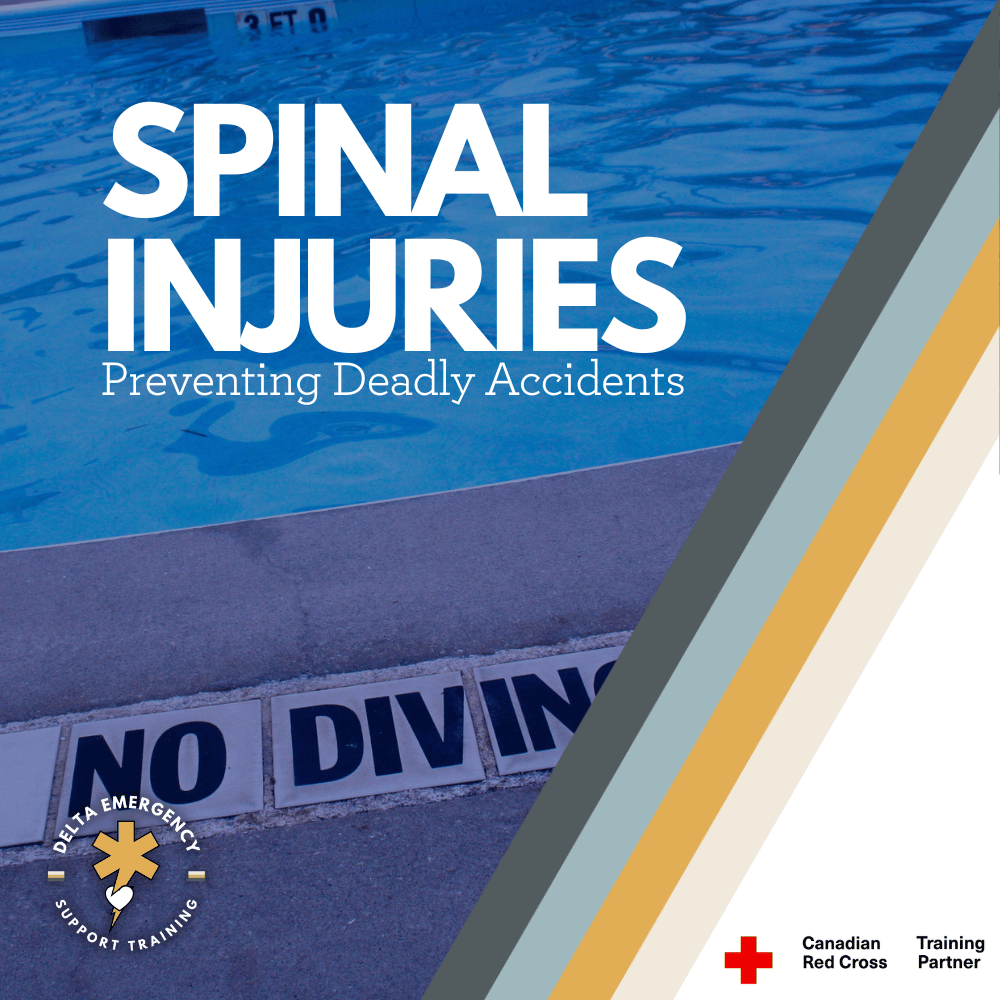
How to Prevent Spinal Injuries: Essential Steps for Safety
Spinal injuries can have devastating consequences, from paralysis to lifelong medical complications. Fortunately, many of these injuries are preventable. In this blog, we explore the top causes of spinal injuries, shocking statistics, and expert-approved safety measures to help you stay protected. Whether it’s safe driving, fall prevention, or sports safety, taking proactive steps can make all the difference. Plus, learn how Delta Emergency Support Training, a Red Cross Training Partner, provides essential first aid training to equip you with life-saving skills.
Preventing Spinal Injuries: Facts, Stats, and Essential Safety Measures
Spinal injuries are among the most severe and life-altering injuries a person can experience. Damage to the spinal cord can result in permanent paralysis, loss of sensation, and significant lifestyle changes. Understanding how these injuries occur and taking steps to prevent them is crucial for personal safety and public health.
In this blog, we will explore the causes, statistics, and preventive measures related to spinal injuries, helping you stay informed and protected.
Understanding Spinal Injuries
The spine is a complex structure made up of vertebrae, nerves, muscles, and ligaments that provide support and mobility to the body. When the spinal cord sustains damage, it can disrupt communication between the brain and the rest of the body, potentially leading to temporary or permanent disability.
Common Causes of Spinal Injuries
Spinal injuries can result from various traumatic and non-traumatic events, including:
Motor Vehicle Accidents – The leading cause of spinal cord injuries worldwide, accounting for nearly 38% of cases.
Falls – Responsible for about 32% of spinal injuries, particularly among older adults.
Sports and Recreation Accidents – Diving into shallow water, high-impact sports, and extreme activities contribute to 14% of spinal injuries.
Violence and Assaults – Gunshot wounds, stabbings, and physical attacks lead to approximately 13% of spinal cord injuries.
Medical Conditions and Diseases – Arthritis, osteoporosis, cancer, and infections can also cause spinal damage over time.
Spinal Injury Statistics
An estimated 17,900 new spinal cord injuries occur in the United States every year (National Spinal Cord Injury Statistical Center).
Males account for about 78% of spinal cord injury cases, often due to high-risk behaviors and sports activities.
The average age of a spinal injury patient has increased from 29 in the 1970s to 43 today, due to longer life expectancy and aging populations.
Lifetime costs for a spinal cord injury can range from $1.2 million to over $5 million, depending on the severity and level of paralysis.
Wearing a seatbelt and using proper vehicle restraints reduce the risk of spinal injuries in crashes by 60%.
How to Prevent Spinal Injuries
While some accidents are unavoidable, many spinal injuries can be prevented by taking proper precautions. Here are some essential strategies:
1. Safe Driving Practices
Always wear a seatbelt when driving or riding in a vehicle.
Never drive under the influence of alcohol or drugs.
Avoid distracted driving, such as texting or using a phone.
Ensure children are in proper car seats or booster seats.
2. Fall Prevention
Use handrails on stairs and install grab bars in bathrooms.
Remove tripping hazards like loose rugs and clutter.
Wear appropriate footwear with good grip.
Older adults should have regular vision check-ups and use mobility aids as needed.
3. Sports and Recreation Safety
Always wear protective gear such as helmets and padding in contact sports.
Avoid diving into shallow or unknown waters.
Use proper techniques and training for high-impact sports like football, gymnastics, and wrestling.
Follow safety rules when engaging in outdoor activities like rock climbing and skiing.
4. Workplace Safety
Use ergonomic lifting techniques to avoid back injuries.
Wear appropriate safety harnesses when working at heights.
Ensure workplaces follow OSHA safety regulations.
5. Preventing Violence-Related Injuries
Be aware of your surroundings and personal security.
Avoid high-risk areas and de-escalate confrontations when possible.
Support anti-violence initiatives and gun safety laws.
What to Do If You Suspect a Spinal Injury
If you suspect someone has a spinal injury, follow these emergency steps:
Do Not Move the Person unless they are in immediate danger.
Call 911 immediately.
Keep the Person Still by placing your hands on either side of their head to prevent movement.
Monitor Breathing and provide CPR if necessary.
Provide Comfort and Reassurance until professional help arrives.
Delta Emergency Support Training – A Red Cross Training Partner
At Delta Emergency Support Training, we provide Standard First Aid training as a Red Cross Training Partner. Our courses teach essential lifesaving skills, including how to recognize and respond to spinal injuries safely.
By taking a first aid course, you can gain hands-on experience and certified knowledge to protect yourself and others in emergencies.
Conclusion
Spinal injuries can have life-changing consequences, but many of them are preventable with proper precautions and awareness. By following safe driving habits, fall prevention strategies, and sports safety guidelines, you can significantly reduce your risk.
To be fully prepared, consider taking a first aid and injury prevention course with Delta Emergency Support Training. Being informed and trained can help you protect lives and prevent serious injuries.
What It Means to Be a First Responder: A Lifelong Commitment to Service, Compassion, and Community
Being a first responder is a calling to serve your community during times of crisis. It's about earning the trust of the people you help, offering support during their worst days, and making life-saving decisions under pressure. In this blog, we explore the profound responsibility and emotional commitment that comes with being a first responder, and how these professionals are the heart of their communities.
What It Means to Be a First Responder: A Commitment to Service, Compassion, and Community
Being a first responder is much more than a job—it’s a calling. It’s about showing up for people when they need it the most, often on their worst day, and providing the care, support, and attention they need during a crisis. Whether you’re an EMR, paramedic, firefighter, or law enforcement officer, first responders are the first line of defense in emergencies, and their impact on the community is immeasurable.
In this blog, we’ll explore what it truly means to be a first responder, the deep responsibility that comes with the role, and how first responders are integral to the communities they serve.
Being Part of the Community
First responders are the heart and soul of the communities they serve. They are often the first people to arrive during times of need—whether it’s a medical emergency, a natural disaster, or a traumatic accident. But it’s not just about responding to emergencies; being a first responder means being present, accountable, and connected to the people you serve.
As a first responder, you’re not just a worker or a service provider; you are a trusted member of the community. People rely on you when they’re facing their toughest moments. That trust is something you work hard to earn and carry with you throughout your career. Your role is about providing both expert care and human compassion when it matters most.
The Trust of the Community
As a first responder, you hold the trust of the people you serve. This trust is built over time, often during moments of crisis, when your skills, calm demeanor, and ability to act swiftly can make the difference between life and death.
When someone calls 911, they are not just asking for help—they are placing their trust in your hands. They trust that you will handle the situation with expertise, compassion, and efficiency, no matter how chaotic or intense it may be. You have their trust in your ability to make the right decisions, stay calm under pressure, and act swiftly and decisively.
This trust extends beyond the patient to their families and loved ones. When you arrive at a scene, whether it’s a car accident, heart attack, or house fire, families rely on you to provide care, comfort, and clear communication. For many, you are the first face of help and hope in an otherwise overwhelming situation.
Helping People on Their Worst Days
One of the most profound aspects of being a first responder is being present for people during their worst days. Whether it’s the aftermath of an accident, a sudden medical emergency, or a devastating natural disaster, first responders are there to provide critical care, emotional support, and reassurance.
In these high-stress moments, first responders do more than just diagnose and treat injuries. They offer emotional care, providing comfort to patients and their families who may be in shock, fear, or despair. Sometimes, a few comforting words or simply holding someone's hand can make all the difference when everything feels uncertain.
Your role goes beyond just providing medical care—it’s about offering people a sense of safety and stability when they are at their most vulnerable. You are there to reassure them, guide them through the trauma, and do everything possible to ease their pain and suffering.
Being a Medical Professional with a Unique Role
First responders are highly trained medical professionals, but what sets them apart is the environment in which they work. Unlike hospital settings, where resources are readily available, first responders work in high-pressure, fast-paced environments, often with limited equipment and time.
First responders must be prepared to make life-or-death decisions in the field, with limited support. Whether it’s providing CPR, stabilizing a critical patient, or managing complex trauma, the skills and knowledge you apply in these moments can save lives. Every decision you make counts, and the ability to stay calm, focused, and clear-headed is vital.
But it’s not just about technical skills—it’s about empathy, too. Being able to connect with patients, their families, and your team members in moments of intense stress requires compassion, active listening, and emotional intelligence. This balance of medical expertise and human connection is what makes a first responder truly exceptional.
Facing Challenges: The Emotional Side of the Job
While the privilege of helping others is a core aspect of being a first responder, there is an emotional toll that comes with it. First responders often witness situations that are traumatic—severe injuries, death, suffering, and emotional pain. Over time, these experiences can build up and affect mental health.
That’s why it’s critical for first responders to prioritize their own mental health. Support systems within teams, including colleagues, supervisors, and mental health professionals, are essential. Many agencies now provide resources and counseling for first responders to help them process the challenges of their role and prevent burnout.
Self-care and mental well-being are just as important as physical health when it comes to sustaining a long and healthy career in emergency services.
A Lifelong Commitment to Service
Being a first responder is a commitment that goes beyond the uniform or the hours worked. It’s a commitment to serve your community, to always be ready when someone needs you, and to carry the responsibility of life-saving decisionsevery day.
It’s a commitment to resilience, empathy, and duty, knowing that your role is essential in preserving life and well-being. Being a first responder is not just about responding to emergencies—it’s about making a difference, one person at a time.
At Delta Emergency, we understand the responsibility of being a first responder, and we’re here to equip you with the training and knowledge you need to rise to the challenge. Our team of experienced paramedics provides hands-on, real-life training so you can be prepared for anything. We don’t just teach skills; we prepare you for the moments when it counts the most.
Pulse Rates and How to Assess Them: Essential Skills for EMR and AFA Students
Understanding how to assess a patient's pulse is a fundamental skill for anyone pursuing EMR or AFA certification. In this blog, we cover everything you need to know about checking pulse rates, including normal ranges for adults, children, and infants, how to locate key pulse points, and how to accurately assess pulse rhythm and quality. Learn about tachycardia, bradycardia, and the significance of a weak or absent pulse, especially in trauma situations.
Understanding Pulse and Heart Rate: Key Concepts for EMRs and AFA Students
In emergency medical response (EMR) or advanced first aid (AFA), one of the essential skills you will learn is how to assess a patient's pulse or heart rate. A person's pulse provides valuable information about their circulatory status, and understanding how to measure it accurately is crucial for diagnosing and managing a variety of medical conditions.
This blog will guide you through the basics of pulse and heart rate, including normal rates for children, adults, and infants. We’ll also dive into how to accurately check a pulse, how to interpret its rhythm and quality, and the significance of an absent or weak pulse, especially in cases of trauma.
What is Pulse?
The pulse is the rhythmic expansion and contraction of an artery as blood is pumped through it by the heart. This beat is felt in various areas of the body known as pulse points. The pulse gives critical information about heart rate, rhythm, and strength.
Normal Pulse Rates by Age
It’s important to know the typical pulse rates for different age groups. The rate can vary based on the individual’s age, activity level, and overall health. Here’s a breakdown of normal resting pulse rates:
Infants (0-1 year): 100-160 beats per minute (bpm)
Children (1-10 years): 70-120 bpm
Adults (11+ years): 60-100 bpm
Well-conditioned Athletes: 40-60 bpm (can be normal for some athletes due to a lower resting heart rate)
As you become more familiar with pulse assessment during your EMR or AFA training, you’ll quickly learn how to identify what’s normal for your patient population.
Main Pulse Points and How to Check a Pulse Accurately
As an EMR or AFA student, knowing where to check for a pulse is a fundamental skill. You’ll need to be able to check for a pulse at several key points on the body. Here are the primary pulse points, along with instructions on how to check them accurately:
Radial Pulse (Wrist)
Location: On the thumb side of the wrist.
How to Check: Place your index and middle fingers on the patient’s wrist, just below the base of the thumb. Apply gentle pressure until you feel the pulse.
Position: The patient should be seated or lying down in a relaxed position. It is important not to use your thumb, as it has its own pulse that could interfere with the assessment.
Carotid Pulse (Neck)
Location: In the groove of the neck, just to the side of the windpipe.
How to Check: Place your index and middle fingers on the side of the patient’s neck, between the trachea and the muscle. Do not press too hard, as it can cause discomfort or interfere with blood flow.
Position: The patient can be seated or lying down. If the patient is unresponsive, the carotid pulse is typically the first point to check in an emergency.
Brachial Pulse (Upper Arm)
Location: On the inner side of the upper arm, near the elbow.
How to Check: Place your index and middle fingers on the inside of the patient’s arm, midway between the shoulder and elbow. Apply gentle pressure to feel the pulse.
Position: This pulse is often used to assess infants, as it’s the most reliable pulse point in children under one year old.
Femoral Pulse (Groin)
Location: In the crease of the groin, just below the inguinal ligament.
How to Check: Place your fingers on the upper thigh, near the groin. Apply firm but gentle pressure to detect the pulse.
Position: The patient should be lying down, preferably in a supine position. This pulse is often used in cases of severe trauma or shock.
Posterior Tibial Pulse (Ankle)
Location: Behind the medial malleolus (the bony prominence on the inner side of the ankle).
How to Check: Place your fingers behind the ankle bone and press gently to feel the pulse.
Position: The patient should be lying or sitting with the foot relaxed.
Dorsalis Pedis Pulse (Foot)
Location: On the top of the foot, between the first and second metatarsals.
How to Check: Place your fingers on the top of the foot, slightly to the medial side, and gently press to feel the pulse.
Position: The patient should be in a seated or supine position, with the foot relaxed.
How to Assess Pulse Rhythm and Quality
When assessing a pulse, it’s essential to evaluate not only the rate but also the rhythm and quality:
Rhythm: The rhythm of the pulse refers to the regularity of the heartbeat. It can be classified as:
Regular: The pulse follows a consistent, steady pattern.
Irregular: The pulse has an erratic or uneven rhythm, which could indicate an arrhythmia or other heart conditions.
Quality: The quality of the pulse refers to its strength. A pulse can be:
Strong and Bounding: A pulse that is easy to feel and forceful, which could indicate conditions such as fever, anxiety, or hyperthyroidism.
Weak or Thready: A pulse that is faint and difficult to feel, often indicating shock, blood loss, or dehydration.
Absent: If no pulse is felt at a pulse point, it may suggest severe trauma, a blocked artery, or cardiac arrest.
Tachycardia and Bradycardia
When evaluating pulse, you may encounter conditions such as tachycardia (a rapid heart rate) or bradycardia (a slow heart rate):
Tachycardia: A heart rate that exceeds 100 bpm in adults. Tachycardia can be caused by fever, stress, anemia, or cardiovascular problems.
Bradycardia: A heart rate below 60 bpm in adults. Bradycardia can indicate heart conduction issues, but it is also common in well-conditioned athletes.
Weak or Absent Pulse in Trauma
In trauma cases, an absent or weak pulse can be a critical sign. Trauma, especially internal bleeding or blocked arteries, can lead to a diminished pulse. If there is significant internal hemorrhaging, the pulse may become weaker in the lower extremities or other areas far from the heart. In cases of severe blood loss, the body shunts blood away from the extremities to maintain circulation to vital organs, resulting in weak or absent pulses in the arms or legs.
A blocked artery due to a clot, injury, or constriction can also result in an absent pulse distal to the blockage. Immediate intervention is needed in these cases to restore blood flow and stabilize the patient.
Conclusion
As an EMR or AFA student, learning to assess a patient’s pulse accurately is essential to providing effective care in emergency situations. Understanding the normal pulse rates, knowing how to check a pulse at key locations, and being able to interpret pulse rhythm and quality will greatly improve your ability to assess a patient’s condition. Additionally, recognizing the significance of weak, absent, or irregular pulses can help you identify life-threatening conditions like trauma, internal bleeding, or blocked arteries.
At Delta Emergency, we teach our students how to properly assess and respond to real-life emergencies. With expert instructors who are experienced paramedics, our courses ensure that you're prepared to make quick and informed decisions during critical situations.
Quick Response, Confident Action: Canadian Red Cross Basic Life Support Field Guide
The "Canadian Red Cross: Basic Life Support Field Guide" is an essential tool for anyone trained in Basic Life Support (BLS). Designed for quick reference, this compact guide provides actionable steps for CPR, choking management, and AED use, ensuring you’re ready to respond in high-pressure situations. With clear illustrations and practical examples, this guide is a must-have for healthcare professionals and anyone certified in BLS.
A Lifesaver in Your Pocket: Essential for Every Responder
In the critical moments of a medical emergency, every second counts. The "Canadian Red Cross: Basic Life Support Field Guide" is an essential resource for anyone certified in Basic Life Support (BLS), from healthcare professionals to lay responders. This compact, easy-to-use guide is designed to be a quick reference in high-pressure situations, ensuring that the fundamental skills of life support are always within reach.
Tailored for Quick Reference and Rapid Recall
This field guide distills complex CPR techniques and emergency responses into concise, actionable steps. It's structured to help you quickly refresh your memory on essential procedures, including:
High-quality chest compressions
Ventilation skills
Management of choking for adults, children, and infants
Use of automated external defibrillators (AEDs)
Each section of the guide is accompanied by clear, instructive illustrations that enhance understanding and recall, making it easier to apply the techniques in real-life scenarios.
A Must-Have for a Wide Range of Responders
Whether you're a nurse on the front lines, a paramedic in the field, or a designated first aid provider at your workplace, this guide is made for you. Its comprehensive coverage makes it invaluable not only for professional use but also for anyone trained in BLS who might need to act swiftly to save a life.
Enhancing Skills with Reliable Information
The Basic Life Support Field Guide is more than just a manual; it's a training companion that reinforces your skills through:
Scenario-based practice examples
Step-by-step guides for both expected and unexpected situations
Quick tips for maintaining composure and efficiency in emergency situations
Why Physical Copies Matter
In emergency situations, technology can fail. A physical guide ensures that the information you need is available without concern for battery life, signal, or functionality. Its durable design means it can withstand the rigors of any environment, from a hospital ward to an outdoor adventure.
Conclusion
Ready to enhance your readiness and confidence in critical situations? The Canadian Red Cross Basic Life Support Field Guide is available now at Delta Emergency Support Training. Equip yourself with the knowledge and skills that make a difference when it matters most. Visit Delta Emergency Support Training to get your copy today and stay prepared for any emergency with the best CPR techniques, emergency response tips, and life-saving skills at your fingertips.
Free Lifesaving Knowledge at Your Fingertips: Introducing Our Comprehensive Guide for First Aid & CPR
Delta Emergency Support Training is excited to offer the "Comprehensive Guide for First Aid & CPR" as a free digital resource, empowering Canadians with the skills to handle emergencies confidently. This guide covers everything from CPR techniques to injury management and legal considerations, making it a vital tool for anyone looking to be better prepared in critical situations. Download your free copy today and help create a safer, more prepared community.
Ensuring Safety and Preparedness Across Canada
In our commitment to fostering a safer and more prepared community, Delta Emergency Support Training is proud to introduce a groundbreaking resource: the "Comprehensive Guide for First Aid & CPR." This extensive, digital book is offered entirely free of charge, aimed at equipping Canadians from all walks of life with the essential skills needed to respond effectively to emergencies.
What's Inside the Guide?
Our digital guide is a thorough compilation covering all aspects of first aid and CPR. Here are just a few sections that could make a critical difference in an emergency situation:
Emergency Preparedness: Learn how to equip your home and office to handle emergencies, from basic first aid kits to understanding the signs of medical distress.
CPR Techniques: Our guide provides step-by-step instructions for performing CPR on adults, children, and infants, ensuring you can act confidently when seconds count.
Managing Medical Emergencies: Whether it's dealing with severe allergic reactions, cardiac arrests, or other medical emergencies, our guide has you covered with expert advice.
Injury Prevention and Management: From treating burns to handling fractures, learn the most effective techniques to manage and mitigate injuries.
Legal Considerations: Understand the Good Samaritan laws that protect you when providing emergency aid and the responsibilities you hold as a caregiver or first responder.
Why a Free Digital Book?
Accessibility is key in emergency preparedness. By making this guide available digitally at no cost, we ensure that every individual, family, and organization in Canada has the opportunity to learn lifesaving techniques. This initiative is part of our mission to enhance community safety and empower individuals through education.
How to Access the Guide
Getting your copy of the "Comprehensive Guide for First Aid & CPR" is easy and instant. Simply visit our website at Delta Emergency Support Training, navigate to our resources section, and download your free copy today. Keep it on your mobile devices, computers, or print it out for quick reference.
Conclusion
We believe that knowledge is power, especially when it comes to saving lives. That's why we are thrilled to offer this valuable resource for free. Whether you're a parent, teacher, professional responder, or a concerned citizen, this guide is for you. Download your free copy today, and take a significant step toward becoming a more prepared, capable, and confident member of your community. Let's work together to keep Canada safe, one informed individual at a time!
Elevating Emergency Response: The Canadian Red Cross Emergency Care for Professional Responders Textbook
The "Canadian Red Cross: Emergency Care for Professional Responders" textbook is a must-have resource for those working in high-pressure environments like emergency medical services, firefighting, and law enforcement. Packed with in-depth medical content and real-world scenarios, this guide equips professionals with the advanced skills needed to handle critical emergencies effectively. Whether you're performing airway management or assessing trauma, this textbook ensures you're ready to respond with confidence in any situation.
Advanced First Aid Knowledge for Those Who Face the Most Demanding Situations
In the fast-paced world of emergency medical services, having the right knowledge can make the difference between life and death. The "Canadian Red Cross: Emergency Care for Professional Responders" textbook is specifically designed for individuals who operate in high-stakes environments where advanced first aid and emergency care are required. This textbook is an indispensable resource for firefighters, police officers, lifeguards, and advanced first aid personnel.
Depth of Medical Content
This textbook dives deep into the complex and critical conditions that professional responders encounter. With chapters written by experts in emergency care, the content covers a broad spectrum of medical emergencies, from trauma to acute medical conditions, providing detailed procedures for each. This comprehensive approach ensures that responders have the depth of knowledge necessary to make informed decisions quickly.
Real-World Scenarios and Techniques
One of the standout features of this guide is its emphasis on practical, real-world application. It includes:
Detailed scenario-based training examples that simulate actual emergency situations.
Step-by-step guides for advanced techniques such as airway management, support for spinal injuries, and emergency childbirth.
Best practices for scene management and patient assessment to ensure effective and efficient care.
These elements are designed to prepare responders not just to perform their duties, but to excel in their roles with confidence and competence.
Tailored for Professional Use
Each section of the textbook is tailored to the needs of professional responders, with considerations for the challenges they face in the field. The material is not only comprehensive but also accessible, with clear diagrams, quick-reference tables, and bullet points that make crucial information easy to locate and recall under pressure.
Why Choose This Textbook?
Expertise: Authored by leading medical professionals with extensive experience in emergency response.
Relevance: Updated regularly to include the latest techniques and best practices in emergency medical care.
Durability: Manufactured to withstand the rigors of field use, ensuring reliability when it’s needed most.
Conclusion
For those in demanding and critical roles, the Canadian Red Cross Emergency Care for Professional Responders textbook is more than just a learning tool—it's a crucial ally in the field. By integrating this textbook into your training program, you ensure that your team is equipped with the knowledge and skills to handle complex emergencies effectively.
Elevate your professional response capabilities today by obtaining your copy from Delta Emergency Support Training at Delta Emergency Support Training. Equip your team with the knowledge that saves lives, enhances safety, and ensures that when the call comes, you are ready to respond with the best care possible.
The Importance of Patient Communication for First Responders: A Guide to Effective, Compassionate Care
In the critical moments following an emergency, the way first responders communicate with patients can make all the difference. Good communication not only helps calm patients and build trust but also ensures more effective care. In this article, we’ll explore why patient communication matters, what to say to reassure and educate patients, and what to avoid in order to prevent escalating anxiety or confusion. By using clear, empathetic communication, first responders can enhance patient outcomes and foster a deeper sense of security.
First responder comforting patient.
As first responders, your job extends beyond providing medical care. You are often the first point of contact in a crisis, and your communication skills can significantly impact the patient’s experience. Whether the person you’re helping is conscious or in distress, calm and effective communication can not only reassure them but also improve their overall outcome. In this blog, we will explore the significance of patient communication, what you should say, and what you should avoid saying when interacting with patients.
Why Communication Matters
When a person is injured, ill, or in an emergency situation, they are often frightened, confused, and uncertain. As a first responder, you are not just a medical professional—you are a source of comfort and security. Strong communication skills can help calm anxious patients, build trust, and ensure that you can gather the critical information needed to provide effective care.
Here are a few key reasons why good communication is essential:
Reassures the Patient: Effective communication can reduce anxiety and fear. A patient who feels heard and understood is more likely to trust you and follow your instructions.
Informs and Educates: Patients may not understand the severity of their situation. Explaining procedures and what is happening helps them feel more in control and informed.
Builds Trust: When patients sense your professionalism and empathy through your words, they are more likely to feel safe and cooperate, allowing you to deliver care efficiently.
Improves Health Outcomes: A patient who is actively involved in their care is more likely to comply with necessary procedures and instructions, leading to better outcomes.
What to Say: Key Elements of Effective Communication
In high-stress situations, it’s easy to forget the fundamentals of clear communication. Here are some essential tips to ensure you communicate well with patients:
Introduce Yourself and Explain Your Role: It’s important to let the patient know who you are and what you’re doing. For instance, you could say:
“Hi, I’m [Your Name], and I’m an EMT. I’m here to help you today.”
This immediately sets the stage for trust, as it lets the patient know that they are in professional hands.
Stay Calm and Confident: Patients take emotional cues from you. If you appear calm and in control, they are more likely to mirror those emotions. If you’re uncertain or panicked, it may escalate their fear. Use a calm, steady voice and be confident in your actions.
Use Simple, Clear Language: Avoid medical jargon that may confuse your patient. Instead, explain procedures and information in simple, easy-to-understand terms.
“I’m going to check your heart rate now. This will help us understand how your body is reacting.”
Keeping things clear prevents confusion and fosters trust.
Give Clear Instructions: Patients may not know what to do in an emergency. Be clear in your instructions, but also use positive language that emphasizes what they can do.
“Can you please take slow, deep breaths with me?”
Avoid telling them what not to do, as this may be confusing or create a sense of urgency. Positive phrasing helps guide their actions.
Empathy and Reassurance: Let the patient know that you understand how difficult their situation is. Even a simple statement can go a long way in creating rapport.
“I know this is scary, but you’re not alone. We’re here to take care of you.”
Provide Information About What’s Happening: It’s important to keep the patient informed about what you’re doing and why. In emergencies, patients may feel out of control, so explaining things step-by-step helps them stay grounded.
“I’m going to put an IV in to give you fluids. It might feel a little uncomfortable, but it’s important for your recovery.”
Listen Actively: Communication is a two-way street. Make sure to listen attentively to the patient’s concerns, and acknowledge their feelings. If they have questions, answer them as clearly and calmly as possible. This shows that you care about their well-being and helps maintain a strong connection.
What NOT to Say: Common Pitfalls to Avoid
While there is much to say in terms of effective communication, there are also many things that should be avoided. First responders need to be mindful of how their words can affect a patient’s emotional state. Here are a few things to keep in mind:
Avoid False Reassurance: Telling a patient that everything is going to be “fine” when you aren’t sure is not helpful. While you want to reassure, it’s important to remain honest about what you know and what’s uncertain.
Instead of saying, “You’ll be fine,” try, “We’re doing everything we can to help you right now.”
Don’t Make Assumptions: Avoid making statements that assume the patient’s condition or needs without knowing the facts. For example, saying “This will hurt, but it’s necessary” can cause unnecessary anxiety.
Instead, phrase it more carefully: “You may feel some discomfort as we do this, but it will help us get you the treatment you need.”
Don’t Rush or Overwhelm: In fast-paced emergencies, it’s easy to get caught up in the urgency, but avoid overwhelming the patient with too much information too quickly. Try to break things down into manageable steps.
Instead of saying, “We need to get you to the hospital, start an IV, monitor your vitals, and administer fluids—all at once,” you could say, “We’re going to start by getting an IV in so we can give you fluids. Then we’ll check your vitals and get you ready for transport.”
Don’t Dismiss Concerns: Never trivialize the patient’s feelings or complaints. What may seem minor to you could feel significant to the patient.
If a patient expresses worry, avoid saying things like, “It’s not that bad.” Instead, listen, acknowledge their feelings, and reassure them.
Avoid Overloading with Technical Details: While patients deserve information, keep in mind that too much medical detail can be overwhelming. Focus on what’s necessary for their immediate understanding.
Building Trust: The Role of Empathy in Patient Communication
Empathy is at the core of good patient communication. Demonstrating that you care about the patient’s well-being can make all the difference, especially in high-stress situations. Showing empathy doesn’t mean solving all their problems—it means showing that you understand their fears and frustrations.
Empathetic phrases to use:
“I know you’re in pain, and I’m here to help you through this.”
“It’s okay to feel scared; we’re going to take good care of you.”
“I can imagine this is really tough right now. We’re doing everything we can to help.”
Empathy fosters a connection that can make patients feel more comfortable, even in dire situations.
Final Thoughts
In the demanding role of a first responder, you play a pivotal part in both the physical and emotional care of patients. Effective communication can build trust, ease anxiety, and improve the overall care experience. By using clear, compassionate, and thoughtful communication techniques, you can ensure that your patients feel heard, cared for, and more at ease during some of the most vulnerable moments of their lives.
Mastering patient communication not only helps provide better care but strengthens the bonds between first responders and the communities they serve. When it comes to saving lives, it’s not just the physical interventions that matter—it’s the way we communicate with those who need us most.

