The Delta Dispatch

Awareness, Bystander, First Aid Kumari Malhotra Awareness, Bystander, First Aid Kumari Malhotra

Overcoming the Bystander Effect: How to Encourage Action in Emergencies

Even when help is needed most, many people hesitate to act. The bystander effect explains why witnesses freeze during emergencies, but simple strategies, like assigning tasks, giving clear instructions, and staying calm can empower anyone to make a difference.
Emergencies can happen anywhere—on the street, at home, or even at work. Yet, despite being physically present, many people fail to act when someone needs help. This phenomenon, known as the bystander effect, can mean the difference between life and death. Understanding why it happens and how to empower witnesses is critical for building safer communities.

At Delta Emergency Support Training, we focus on equipping both first responders and everyday people with the knowledge and confidence to act when it matters most.

What Is the Bystander Effect?

The bystander effect occurs when individuals are less likely to help someone in need because others are present. The presence of other witnesses can create diffusion of responsibility, where everyone assumes someone else will step in.

Common psychological reasons include:

  • Diffusion of responsibility: “Someone else will call 911.”

  • Fear of doing harm: Worry about making the situation worse.

  • Social influence: Looking at others to see how they react.

  • Evaluation apprehension: Fear of judgment if they act incorrectly.

Canadian Statistics on the Bystander Effect

  • According to a 2022 survey by the Canadian Red Cross, over 40% of Canadians have witnessed a medical emergency but did not intervene.

  • Studies show that in public settings, only 1 in 3 people will offer assistance during emergencies if others are present.

  • Time is critical: In cardiac arrests, survival decreases by 7–10% per minute without intervention, making bystander action essential.

Why People Freeze

People don’t always refuse to help out of selfishness—they freeze due to a combination of fear, uncertainty, and social cues. Examples include:

  • Witnessing someone collapse in a crowd and assuming another bystander has already called for help.

  • Seeing a car accident and being unsure whether it’s safe to approach.

  • Feeling overwhelmed by the severity of the situation.

Understanding these psychological barriers is the first step in overcoming them.

How to Encourage Action

  1. Assign Responsibility

    • If you see an emergency, point to someone specifically and instruct them to call 911 or get help.

    • Example: “You in the red jacket, call 911 and get a first aid kit!”

  2. Provide Clear Instructions

    • Direct instructions reduce hesitation and increase confidence.

    • Telling someone exactly what to do—“Check for breathing,” “Begin CPR”—reduces uncertainty.

  3. Model Calm Leadership

    • Calm, confident action encourages others to help rather than freeze.

    • Speak clearly and remain composed to inspire others to step in.

  4. Educate Communities

    • Promote first aid and CPR training for the public.

    • Awareness campaigns and workshops increase willingness to act.

  5. Normalize Small Actions

    • Even simple actions—calling 911, providing basic first aid, or comforting the patient—can save lives.

    • Emphasize that any response is better than none.

The Role of First Aiders

First aiders are often the bridge between bystanders and professional care. By stepping in, first aiders not only provide life-saving support but also encourage others to assist safely, creating a ripple effect in emergencies.

Training in scene assessment, ABCs (airway, breathing, circulation), and communication ensures first aiders are confident, safe, and able to direct others effectively.

Final Thoughts

The bystander effect is a real psychological phenomenon—but it can be overcome. Understanding why people freeze, educating communities, and empowering witnesses to act are key steps in building safer environments. Every action counts. Every second matters.

At Delta Emergency Support Training, we teach Canadians how to respond with confidence, whether it’s performing first aid, calling for help, or guiding bystanders. Together, we can turn hesitation into lifesaving action.

Read More
Canada, First Aid, Trained First Aider Kumari Malhotra Canada, First Aid, Trained First Aider Kumari Malhotra

The Chain of Survival: Your Role as a Trained First Aider

First aid isn’t just about bandages—it’s about recognizing emergencies, acting quickly, and providing care until professional help arrives. Explore the key responsibilities of a first aider and understand why these skills are essential for every workplace and community.

When someone collapses, chokes, or stops breathing, every second counts. Whether you're a parent, a coach, a security guard, or someone who’s recently completed your Standard First Aid certification, you are a vital link in what’s known as the Chain of Survival—a model that outlines the critical steps needed to give someone the best chance of survival in a life-threatening emergency.

This blog explores what the Chain of Survival is, how first aiders fit into it, and why quick, confident action truly saves lives.

🔗 What Is the Chain of Survival?

The Chain of Survival is a concept developed by the American Heart Association and supported by the Canadian Red Cross. It identifies five key links in responding to sudden cardiac arrest or other life-threatening emergencies:

  1. Early recognition and activation of EMS (calling 911)

  2. Early CPR with an emphasis on high-quality chest compressions

  3. Rapid defibrillation (AED use)

  4. Advanced resuscitation by paramedics or emergency healthcare professionals

  5. Post-cardiac arrest care at the hospital

🧠 Why the First Three Links Depend on You

Before paramedics arrive, the first three links are in your hands. This is where Standard First Aid and CPR trainingcomes in.

✅ 1. Early Recognition & Calling 911

You are the first person on scene—whether at home, at work, or in a public space. Recognizing when something is wrong (unresponsiveness, abnormal breathing, signs of a stroke or heart attack) and calling 911 starts the entire chain. Don’t wait. Early recognition can prevent the situation from getting worse.

✅ 2. Early CPR

If the person is not breathing or has no pulse, you need to start CPR immediately. High-quality chest compressions maintain blood flow to the brain and organs, buying time until help arrives. Studies show that bystander CPR can double or triple a person's chances of survival.

✅ 3. Early Defibrillation

An AED (automated external defibrillator) can shock the heart back into a normal rhythm. These are often available in schools, gyms, offices, and malls. Your Standard First Aid training gives you the confidence to use one correctly—and without hesitation.

🚑 Where EMS and Hospitals Take Over

Once paramedics arrive, they begin advanced care: administering medications, airway management, and transport to the hospital. But without your initial response—those first few minutes—their efforts may come too late. Survival rates drop 7–10% for every minute defibrillation is delayed. That’s why your actions matter so much.

👣 Your Role as a Trained First Aider

By taking a Red Cross Standard First Aid course, you’ve become more than just a witness to emergencies—you’ve become someone who can act. You’ve learned to:

  • Assess the scene and ensure safety

  • Check for responsiveness and breathing

  • Call for help and provide clear information to dispatch

  • Start CPR and use an AED

  • Support someone through shock, bleeding, or trauma

  • Recognize and manage common medical emergencies

You’re not a bystander. You are the beginning of the Chain of Survival.

🛠️ Want to Be Even More Prepared?

Whether you’ve taken first aid before or are due for a recertification, refreshing your skills ensures you stay sharp and confident. At Delta Emergency Support Training in Calgary, Alberta, our first aid programs are taught by experienced paramedics and firefighters who know what it’s like to respond in real life.

Read More
Awareness, Bystander, Check Call Care, First Aid Kumari Malhotra Awareness, Bystander, Check Call Care, First Aid Kumari Malhotra

Festival First Aid: How Fun Can Turn Dangerous Fast

Festivals are all about music, friends, and unforgettable moments — but fun can turn dangerous fast if you’re not prepared. From heat exhaustion and crowd surges to substance use and stranger risks, knowing the basics of festival first aid and safety can make the difference between a great time and a trip to the medical tent. Stay safe, look out for your friends, and keep the good vibes going all weekend long.

Summer festivals, concerts, and community events are some of the best ways to make memories — music, food, friends, and fun. But in the excitement of large crowds, it’s easy to forget that these environments can also pose unique safety risks. Medical emergencies at festivals can be more complicated than in everyday life: response times may be slower, exits can be blocked, and environmental factors like heat or alcohol can make situations worse.

The good news? With a little preparation and basic first aid know-how, you can help ensure the only thing you remember about your festival experience is the music — not the medical emergency.

Common Emergencies at Festivals

Large events come with specific risks. Some of the most common include:

  • Dehydration & Heat Illness – Long hours in the sun, dancing, alcohol, and limited shade create the perfect storm for dehydration, heat exhaustion, and heatstroke.

  • Crowd-Related Injuries – Falls, trampling, or being crushed in tightly packed spaces are real dangers, especially near main stages.

  • Alcohol & Substance Issues – Overuse can lead to fainting, confusion, altered consciousness, or overdose.

  • Minor Injuries – Blisters, sprains, burns (from fireworks, cooking, or campfires), and small cuts are common in outdoor environments.

  • Hearing Problems – Standing near speakers without protection can cause permanent hearing loss.

Prevention Is the Best First Aid

The easiest emergency to treat is the one that never happens. A few simple precautions can make all the difference:

  • Hydrate regularly — alternate alcohol or energy drinks with water.

  • Dress smart — sunscreen, hats, breathable clothing, and proper shoes.

  • Have a plan — choose a meeting spot in case you and your group get separated.

  • Locate safety resources — know where the exits and first aid tents are before you need them.

  • Pace yourself — festivals often last hours (or days). Take breaks, eat, and rest when you can.

Quick First Aid Tips You Should Know

If something does happen, here are a few ways you can help until professionals arrive:

  • Heat Emergencies → Move the person to shade, loosen tight clothing, offer small sips of water, and cool them with damp cloths.

  • Fainting → Lay the person flat, elevate their legs, and give them space to recover.

  • Bleeding → Apply firm, direct pressure with a clean cloth or bandage until bleeding slows.

  • Sprains → Rest the injury, apply ice if available, and use compression if you can.

  • Possible Overdose → Place the person on their side in the recovery position, monitor breathing, and get medical help immediately.

Crowd Safety: Protecting Yourself and Others

Being aware of your surroundings in large groups is just as important as knowing first aid.

  • Avoid being in the middle of dense crowds, stick to the sides for quicker exits.

  • Keep your phone charged and bring a portable battery pack.

  • Wear earplugs designed for concerts to prevent hearing damage.

  • Stay calm and move diagonally if you need to exit a packed area.

  • Trust your instincts — if a situation feels unsafe, leave early.

When to Call for Help

Never hesitate to seek professional medical attention at a festival. Call for help or alert staff if:

  • Someone is unconscious, seizing, or not breathing.

  • Severe bleeding doesn’t stop with direct pressure after 10 minutes.

  • You suspect heatstroke, heart attack, or overdose.

  • A person is in danger due to the density or movement of a crowd.

Final Note: Be Prepared Before You Go

Festivals are about fun, freedom, and community but staying safe should always be part of the plan. The best way to feel confident in a crowd is to know you’re prepared to help, not just yourself but others too.

Taking a First Aid or CPR course before attending major events is one of the smartest investments you can make. You never know when you might be the difference between a minor scare and a life-saving moment.

Read More

Be Ready for the Unexpected: First Aid Skills Every Hunter Should Know

Hunting is a beloved Canadian tradition, but heading into the bush without first aid training puts you and your group at risk. Learn the importance of being prepared with skills like bleeding control, wound care, and shock management. Whether you hunt with family, friends, or solo—make sure you're ready to protect what matters most.

Why You Should Learn First Aid Before Hunting Season

Be Prepared for the Unexpected in Canada’s Wilderness

Father and son hunting

As the crisp fall air rolls in and leaves begin to turn, thousands of Canadians prepare for one of the most anticipated times of the year—hunting season. For many, it’s more than a pastime. It’s a family tradition, a weekend with friends, or time spent in the backcountry with loved ones—passing down skills, telling stories around the fire, and enjoying the stillness of nature. Hunting is deeply woven into Canadian culture, a proud part of our heritage from coast to coast.

But no matter how experienced or well-prepared you are, the wilderness comes with real risks. And when something goes wrong, you're often far from help, without cell service, and hours from emergency responders.

That’s why first aid training isn’t just helpful—it’s essential.

Whether you’re a weekend hunter or a guide, learning Red Cross-certified First Aid, Advanced First Aid (AFA), Wilderness First Aid, or Emergency Medical Responder (EMR) skills can make all the difference in an emergency. It means being ready—not just for yourself, but for the people who matter most.

At Delta Emergency Support Training, we believe that part of keeping these traditions alive means learning how to protect them.

Hunting Safety in Canada: Know the Risks

Hunting is generally safe when done responsibly, but accidents still occur. According to the Canadian Firearms Program and provincial wildlife agencies:

  • Most firearm-related hunting injuries involve accidental discharges or poor handling technique.

  • Tree stand falls are one of the most common hunting injuries, often resulting in fractures or spinal trauma.

  • Hunters often travel to remote areas with no cell service, delaying access to emergency care.

  • In some provinces, hypothermia is the leading non-injury emergency reported during hunting season.

Each year, hundreds of injuries are reported across the country—many of which are preventable with basic training and better preparation.

🏹 Common Hunting Injuries and Medical Situations

Understanding potential emergencies helps you prepare properly. Here are the most common situations faced in the field:

  • Gunshot wounds or impalement from firearm mishandling or accidents.

  • Knife cuts and lacerations during field dressing or gear use.

  • Falls from tree stands or rocky/uneven ground, resulting in broken bones or head injuries.

  • Cold exposure: frostbite, hypothermia, or trench foot.

  • Heat stress in early season hunts.

  • Allergic reactions to insect stings, animal bites, or plants.

  • Getting lost or separated from your group, increasing the risk of panic, exposure, or dehydration.

🧠 First Aid Skills Every Hunter Should Know

Here’s what every hunter—beginner or seasoned—should know:

  • Bleeding control: How to apply direct pressure, pack a wound, or use a tourniquet.

  • Managing broken bones: Stabilizing with splints and slings.

  • Shock treatment: Recognizing and managing pale, cold, clammy symptoms.

  • CPR and AED use: Cardiac arrest can happen in any setting.

  • Anaphylaxis care: Recognizing severe allergic reactions and administering an EpiPen.

  • Basic wound care: Cleaning and dressing wounds to prevent infection.

  • Spinal motion restriction: Important if someone falls from a height or hits their head.

These lifesaving skills are taught in Red Cross First Aid and Wilderness First Aid programs and are enhanced further in EMR-level training.

🎒 Essential First Aid Items to Pack for the Field

Your hunting first aid kit should be compact, durable, and versatile. Pack:

  • Tourniquet (e.g., CAT or SOFTT models)

  • Gauze pads, trauma dressings, adhesive tape

  • SAM splint and triangular bandage

  • Antiseptic wipes, tweezers, antibiotic ointment

  • Antihistamines and pain relievers

  • CPR mask, gloves, emergency blanket

  • Water purification tablets or filter

  • Whistle, signal mirror, and flashlight

  • Personal locator beacon (PLB) or satellite communicator

Pack gear—but more importantly, know how to use it.

🏔️ Why Location Matters: The Reality of Remote Response

In urban areas, EMS might reach you in under 10 minutes. In the wilderness, it could be hours—or days. Even when you can call 911, delays are common due to:

  • No cell service

  • Impassable terrain

  • Poor visibility or weather conditions

  • Long distances from the nearest ambulance or search-and-rescue base

That’s why wilderness preparedness and basic medical self-reliance are key. The Red Cross Wilderness First Aid program focuses specifically on prolonged care and making decisions when help is hours away.

🧭 Preventing Emergencies: Smart Safety Tips for Hunters

Avoiding an emergency is the best-case scenario. Here’s how to minimize risk:

  • Take a buddy—never hunt alone if you can avoid it.

  • File a trip plan: Leave your route and return time with someone you trust.

  • Carry emergency communication (PLB, satellite text device, or two-way radio).

  • Inspect your gear, especially firearms, knives, and tree stands.

  • Dress appropriately in layers, blaze orange, and waterproof gear.

  • Know the weather and avoid risky conditions (fog, snowstorms, extreme cold).

  • Stay hydrated and take regular breaks.

  • Stay sober while handling firearms—alcohol and hunting don’t mix.

📚 Which First Aid Training Is Right for You?

At Delta Emergency Support Training, we help hunters, outdoor workers, and future first responders get the skills they need. We offer:

  • Standard and Advanced First Aid (AFA) – Learn bleeding control, airway management, CPR, and trauma care.

  • Wilderness First Aid – Specialized for remote environments and delayed help.

  • Emergency Medical Responder (EMR) – For guides, professionals, or those planning a career in emergency services.

All courses follow Red Cross Emergency Care for Professional Responders guidelines.

Conclusion: Be the One Who’s Ready

Hunting isn’t just a hobby—it’s a cherished Canadian tradition, often passed down through generations. Whether you’re heading into the woods with your father, sister, best friend, or your own kids, you’re not just out for the harvest—you’re making memories. You're sharing laughter around the campfire, waking up at dawn with excitement, and carrying on a way of life that means something deeply personal.

But with that comes responsibility.

If something goes wrong—and it can—you want to be the one who knows what to do. Whether it’s treating a serious injury, spotting early signs of hypothermia, or managing an allergic reaction, your actions can save the life of someone you care about.

At Delta Emergency Support Training, we’re here to make sure you’re ready. Our Red Cross-certified Advanced First Aid, Emergency Medical Responder, and Wilderness First Aid programs prepare you not just for emergencies—but for protecting what matters most: your family, your friends, and the memories you’re out there to create.

Let’s keep hunting a safe, proud tradition—for this season, and every season to come.

Read More
Alberta, 911, Awareness, Backcountry, Canada, First Aid Kumari Malhotra Alberta, 911, Awareness, Backcountry, Canada, First Aid Kumari Malhotra

Venomous Snake Bites in Canada: What You Need to Know & Do - First Aid Edition

Venomous snake bites are rare in Canada—but when they happen, knowing how to respond is crucial. From identifying rattlesnakes to administering Red Cross-approved first aid, this guide covers everything you need to stay safe outdoors.

Canada isn’t typically known for dangerous reptiles, but if you hike in BC, camp in Ontario, or explore the Prairies, you might just encounter one of our country’s three venomous snakes. While bites are rare, understanding how to identify venomous snakes, how to respond safely, and what first aid steps to take is essential.

At Delta Emergency Support Training, we prepare Canadians for real-life emergencies—including those that happen far from a hospital. Here’s your complete guide to snake bite prevention, identification, and treatment.

🇨🇦 Venomous Snakes in Canada

Canada is home to three native venomous snake species, all of which are rattlesnakes:

1. Eastern Massasauga Rattlesnake

  • Location: Ontario (Bruce Peninsula, Georgian Bay, Muskoka)

  • Canada’s only venomous snake in the East

  • Generally shy and avoids humans

2. Prairie Rattlesnake

  • Location: Southern Alberta and parts of Saskatchewan

  • Found in dry grasslands and badlands

  • More active in warmer months

3. Western Rattlesnake

  • Location: Southern British Columbia, especially the Okanagan Valley

  • Prefers rocky terrain and dry slopes

🐾 How to Tell if a Snake is Venomous

While identifying a snake in the wild can be difficult, here are common traits of venomous rattlesnakes in Canada:

  • Triangular-shaped head

  • Vertical (slit-like) pupils

  • Thick body with blotchy patterns

  • A rattle on the tail (but sometimes broken or not used)

  • Shaking or buzzing sound when threatened

Be cautious—some non-venomous snakes mimic rattlers by vibrating their tails in leaves.

🩹 First Aid for Snake Bites

All suspected snake bites should be treated as medical emergencies, even if the snake isn’t identified.

✅ What to Do Immediately

  1. Move the person to safety (away from the snake).

  2. Keep them calm—movement and panic can increase venom circulation.

  3. Call 911 immediately.

  4. Remove tight items like rings, bracelets, or watches from the affected limb.

  5. Have them lie down with the bitten limb at or slightly below heart level.

  6. Apply a clean, dry dressing to the bite.

  7. Mark the edge of swelling with a pen and track it over time.

❌ What NOT to Do

  • Do not cut the wound or try to suck out the venom.

  • Do not apply a tourniquet.

  • Do not apply ice or immerse the bite in water.

  • Do not give the person alcohol or caffeine.

  • Do not attempt to capture or kill the snake.

🧬 What Does Snake Venom Do?

Rattlesnake venom is a hemotoxin, which means it can damage tissue, affect blood clotting, and cause intense swelling.

Symptoms may include:

  • Severe pain at the bite site

  • Rapid swelling or bruising

  • Dizziness or nausea

  • Weakness or fainting

  • Difficulty breathing (rare, but serious)

In rare cases, snake bites can lead to shock or even death if untreated.

🗺️ Prevention Tips by Region

Ontario (Massasauga)

  • Stay on designated trails

  • Avoid tall grass and rocky ledges

  • Wear boots and long pants

  • Listen for rattling sounds

Alberta & Saskatchewan (Prairie Rattlesnake)

  • Step carefully in dry, grassy areas

  • Keep pets on a leash

  • Watch where you sit or place your hands

British Columbia (Western Rattlesnake)

  • Avoid rocky hillsides and dry scrub

  • Don’t walk barefoot in wild areas

  • Use a flashlight when hiking at night

General Prevention:

  • Do not approach or handle any snake

  • Keep food sealed and your campsite clean

  • Hike with a buddy

  • Stay alert and educate children on snake safety

🧠 Final Takeaway

Although snake bites in Canada are rare, they do happen—and when they do, quick, calm, and correct first aid can make all the difference. Our native venomous snakes are not aggressive, and most bites occur when they are accidentally stepped on or provoked.

Knowing the signs of a venomous snake, understanding how to avoid dangerous situations, and being ready to act can help keep you—and others—safe.

At Delta Emergency Support Training, we teach first aid skills that prepare you for real emergencies, whether in your home, workplace, or the backcountry. Our courses include Standard First Aid, Advanced First Aid/EMR, and Basic Life Support.

🩺 Ready to be prepared for anything? Train with us and gain the confidence to respond.

Read More

Check, Call, Care: The First Aid Formula That Saves Lives

Emergencies happen fast. Learn how to act quickly and safely using the Red Cross Check, Call, Care model. From assessing scene safety to checking ABCs and calling 911, this guide breaks it down step-by-step.
A Red Cross-aligned guide to recognizing and responding to medical emergencies with clarity and confidence

In a real emergency, adrenaline kicks in. You may feel frozen or overwhelmed—but a simple, proven three-step approach helps cut through the chaos:

🟥 Check
🟧 Call
🟩 Care

This method, taught by the Canadian Red Cross, provides a clear framework that anyone—whether trained in basic or advanced first aid—can follow. At Delta Emergency Support Training, we use this model to help our learners build real-world readiness in life’s most urgent moments.

Let’s break down each step, including when and how to act, what to say to 911, and how to begin providing lifesaving care.

🔴 STEP 1: CHECK

Scene Safety Comes First—Always

Before you rush in to help, pause and assess the scene. Why? Because your safety matters, too.

Ask yourself:

  • Is the scene safe for me?

  • What hazards might be present? (e.g., live wires, traffic, aggressive individuals, hazardous materials)

  • What happened here? Can I tell how the person got injured?

  • Are there other people hurt? Do I need more help?

You can't help anyone if you become the second victim. Scene safety isn't optional—it’s essential.

Example: If someone has collapsed on the sidewalk near a construction site, your first thought might be “Help them!” But first, ask: Could there be falling debris? Is it safe to approach?

Check the Person

Once the scene is safe, approach the person from the side and check for responsiveness.

Start by speaking to them:

  • “Hi, can you hear me?”

  • “My name is ____. I’m trained in first aid. I’m here to help.”

No response? Try physical stimulation:

  • Tap them firmly on the shoulder and ask, “Are you okay?”

If they do not respond to voice or touch, they are unconscious.

At this point, it's time to move to step two: CALL 911.

🟧 STEP 2: CALL

Calling for Help: Alone or With Others

Your next move depends on your situation.

  • If you’re alone:

    • For an unresponsive person, call 911 immediately before starting care.

    • If you don’t have a phone and you can safely move the person, take them with you. If not, leave briefly to call for help.

  • If someone is with you:

    • Assign them directly: “You, in the blue shirt—call 911 now and come back to tell me what they say.”

This direct command avoids the bystander effect and ensures help is on the way.

What to Tell the Dispatcher

Stay calm and provide the following:

  1. Your exact location (address, landmarks, GPS if possible)

  2. What happened (e.g., “A person collapsed and is unresponsive.”)

  3. The condition of the person (conscious? breathing?)

  4. Any care you are providing (e.g., “I’m starting CPR.”)

  5. Your phone number in case the call drops

Follow their instructions and do not hang up until told to.

🟩 STEP 3: CARE

Now it’s time to help.

Check ABCs – Airway, Breathing, Circulation

Kneel beside the person. Begin your primary assessment:

🔹 Airway

  • If the person is unresponsive, assume their airway could be blocked.

  • Perform a head-tilt, chin-lift:

    • Place one hand on the forehead, two fingers under the chin, and gently tilt the head back.

    • This opens the airway unless a spinal injury is suspected.

🔹 Breathing

  • Place your ear close to their mouth and nose, facing their feet.

  • Look for chest movement, listen for breath sounds, and feel for breath on your cheek.

  • Check for 5 to 10 seconds.

If they are not breathing normally, prepare to begin CPR.

🔹 Circulation

  • As you check breathing, scan the body for major bleeding.

  • Look under the body if safe to do so.

  • Severe, visible bleeding must be addressed immediately—use direct pressure with gloved hands or a clean dressing.

Provide Appropriate Care Based on the Assessment

Depending on what you discover:

  • If unresponsive and not breathing:
    Start CPR (30 compressions, 2 breaths) immediately.

  • If unresponsive but breathing normally:
    Place the person in the recovery position to keep their airway clear and continue to monitor them.

  • If responsive and bleeding heavily:
    Apply direct pressure, use a dressing if available, and keep them calm and still.

  • If a spinal injury is suspected:
    Do not move the person unless they are in immediate danger. Support their head and neck in the position foundand wait for EMS.

🔁 Continue to Monitor and Support

Stay with the person until EMS arrives. Provide emotional support if they’re conscious. If their condition changes, recheck ABCs and adjust your care.

🧠 Final Thoughts

"Check, Call, Care" isn’t just a slogan—it’s a lifesaving sequence that gives ordinary people the power to respond to emergencies with clarity and confidence.

At Delta Emergency Support Training, we teach this model as the foundation of all our Red Cross-aligned courses—from Standard First Aid and CPR/AED Level C to Advanced First Aid / EMR.

📣 Take Action

🩺 Ready to learn more than just theory?
🧰 Want real skills from experienced paramedics and certified Red Cross instructors?

Enroll in a Standard First Aid course with Delta Emergency Support Training and be prepared to step up—safely, smartly, and confidently.

Read More

The Most Overlooked First Aid Skills—And Why They Matter in Real Emergencies

First aid isn’t just CPR and bandages. Learn why overlooked skills like scene assessment, gaining consent, and offering emotional support are often the most important actions in an emergency—and how they can save lives before you even touch a patient.

It's not just about CPR and bandages—it's about what you do before you even touch the patient.

When people think of first aid, they often imagine chest compressions, gauze pads, or applying a splint. And yes—those technical skills matter. But the truth is, some of the most important first aid actions happen before any physical care begins. Whether you're a parent, a coach, a bystander, or someone with formal training, these lesser-known skills can make all the difference in how well an emergency is handled.

At Delta Emergency Support Training, we teach more than just the hands-on techniques. We train you to think, assess, and respond with confidence, clarity, and care—because the decisions you make in the first 30 seconds often shape the entire outcome.

Let’s talk about the three most overlooked first aid skills—and why every responder, no matter their experience level, should master them.

1. 🧠 Scene Assessment: The First Skill That Saves Lives

Before you rush to help, you need to stop, look, and listen.

Scene assessment is the skill of surveying your environment quickly and safely. It's the very first step in the Check, Call, Care model taught by the Canadian Red Cross, and it can prevent you from becoming the next casualty.

Why it matters:

  • Hazards like live wires, traffic, fire, or aggressive animals can put you in danger.

  • Understanding what happened helps determine what kind of help the person may need (e.g., fall, electrocution, overdose).

  • Identifying how many people are involved helps you plan your next steps.

What to look for:

  • Is it safe for me to enter?

  • What caused the injury or illness?

  • How many people are hurt?

  • Are there bystanders who can help?

Real-world example:
A lineman falls from a bucket after being electrocuted. Before you touch him, you need to consider: Is the power line still live? Is there a risk of arc flash or fire? Should you wait for the utility crew? Your instinct to help is noble—but your ability to pause and assess might be what truly saves lives.

2. 🗣️ Consent: The Ethical and Legal Foundation of First Aid

You might be surprised to learn that you can't legally just walk up and start treating someone—even if they're bleeding or unconscious. Consent is critical. It protects the rights of the injured person and the legal liability of the responder.

Types of consent:

  • Expressed consent: The person says yes or nods when you ask, “Can I help you?”

  • Implied consent: If the person is unconscious, confused, or unable to respond—and a reasonable person would accept help—you are legally allowed to proceed.

Why it matters:

  • It respects the autonomy and dignity of the patient.

  • It builds trust between you and the injured person.

  • It protects you under Canadian Good Samaritan laws.

Teaching tip: Always introduce yourself with your level of training:
“Hi, my name is Alex. I’m trained in first aid. Can I help you?”

In a crisis, this calm, respectful approach can lower panic and allow better cooperation.

3. 🤝 Emotional Support: The Human Side of First Response

First aid isn’t just physical. Emergencies can be terrifying, disorienting, and traumatic—for both the injured person and those around them. Your ability to provide calm, emotional reassurance is just as important as your ability to stop bleeding.

What emotional support looks like:

  • Making eye contact and speaking in a calm, steady voice.

  • Acknowledging the person’s fear: “I know this is scary, but you’re not alone. I’m here to help.”

  • Guiding them through what’s happening: “I’m checking your breathing. Help is on the way.”

Why it matters:

  • It reduces panic and shock, which improves outcomes.

  • It builds trust between the patient and responder.

  • It helps you stay calm and focused.

Bonus: This is especially important with children, elderly individuals, or people with cognitive or language barriers. A calm presence can make all the difference.

💡 So Why Are These Skills Overlooked?

Because they aren’t flashy. They’re not on TV dramas. They don’t involve gadgets or gear. But these are the moments that create safety, consent, and connection. These are the skills that turn someone with training into someone truly effective.

👩‍⚕️ Want to Learn These Skills—and So Much More?

At Delta Emergency Support Training, we believe first aid training should be real, relatable, and relevant. Whether you're taking Standard First Aid, Advanced First Aid / EMR, or Basic Life Support, you’ll gain both the clinical and human skills needed to respond with confidence.

We train with current Red Cross standards, and our instructors include experienced Advanced Care Paramedics who share what actually happens in the field.

🧭 Final Takeaway

It’s not just what you do—it’s how you do it.
Scene safety, consent, and emotional support might not be the first skills you think of—but they’re often the first ones that count.

📅 Ready to learn? Register for a course today and start your journey as a confident, capable responder.

Read More

Heat Exhaustion, Heat Stroke, and Dehydration: A Guide for Professional Responders

With summer temperatures rising, professional responders including EMRs and AFAs must be prepared to handle heat-related emergencies. This detailed guide follows Red Cross standards to help EMS providers prevent, recognize, and effectively manage heat exhaustion, heat stroke, dehydration, and sunburn, ensuring patient safety during hot weather.

It’s May, and as the weather warms up and summer approaches, the risk of heat-related emergencies naturally increases. Longer, hotter days mean more time outdoors, higher physical activity levels, and greater exposure to the sun and heat. For professional responders—including Emergency Medical Responders (EMRs) and Advanced First Aiders (AFAs) working within EMS—being prepared to prevent and manage heat-related illnesses is essential.

Understanding how heat impacts the body and knowing how to recognize and treat conditions like heat exhaustion, heat stroke, dehydration, and sunburn can make a critical difference in patient outcomes during these warmer months. This guide follows Red Cross Emergency Care for Professional Responders standards to help you deliver confident, effective care when it matters most.

Understanding Heat-Related Emergencies

The body maintains a core temperature near 37°C (98.6°F). When exposed to high heat and humidity, or during exertion, the body’s cooling system can fail, causing heat-related illnesses:

Heat Cramps

  • Muscle spasms from electrolyte loss during heavy sweating.

Heat Exhaustion

  • Result of fluid and salt depletion; symptoms include weakness, heavy sweating, dizziness, nausea, pale skin, rapid pulse.

Heat Stroke (Medical Emergency)

  • Body temperature above 40°C (104°F), with failure to regulate heat. Symptoms include confusion, seizures, hot dry or moist skin, and unconsciousness. Immediate EMS intervention is critical.

Dehydration

  • Inadequate fluid replacement causing thirst, dry mouth, fatigue, and dizziness.

Sunburn

  • UV radiation damage to skin ranging from redness to blistering.

Risk Factors for Heat Emergencies

  • Hot and humid environments

  • Intense physical activity

  • Inadequate acclimatization

  • Heavy or restrictive clothing

  • Certain medications and health conditions

  • Extremes of age (young children, elderly)

  • Alcohol use

Prevention Strategies (Red Cross Recommendations)

Hydration

  • Encourage frequent water intake; avoid diuretics like caffeine and alcohol.

Appropriate Clothing and Shade

  • Wear light, breathable fabrics and protective hats.

  • Seek shade during peak sun hours (10 a.m. to 4 p.m.).

Activity Adjustments

  • Schedule exertion for cooler times; take regular rest breaks.

Sunscreen

  • Use broad-spectrum SPF 30+ and reapply every two hours.

Monitor Vulnerable Individuals

  • Check on children, elderly, and those with medical conditions regularly.

EMS First Aid: Managing Heat Emergencies

Heat Cramps

  • Move the patient to a cool environment.

  • Provide fluids with electrolytes if tolerated.

  • Gently stretch cramped muscles.

Heat Exhaustion

  • Move patient to shade or cool area.

  • Loosen clothing and apply cool compresses.

  • Administer oral fluids cautiously.

  • Monitor airway, breathing, and circulation (ABCs).

  • Prepare for transport if no improvement.

Heat Stroke (Emergency Care)

  • Call advanced medical services immediately.

  • Move patient to cool environment, remove excess clothing.

  • Apply rapid cooling: wet cloths, fans, cool water immersion if safe.

  • Monitor vital signs closely; be ready to provide advanced life support.

  • Do not give fluids if patient is unconscious or vomiting.

Dehydration

  • Provide oral rehydration solutions if alert.

  • Transport if severe symptoms or unable to tolerate fluids.

Sunburn

  • Remove from sun exposure.

  • Apply cool compresses and moisturizing lotions.

  • Monitor for severe reactions requiring medical care.

When to Escalate Care

  • Altered mental status or seizures

  • Unresponsiveness or unconsciousness

  • Persistent vomiting or inability to take fluids

  • Signs of shock

  • Extensive sunburn or blistering

Conclusion

As EMS providers—including EMRs and AFAs—adhering to Red Cross Emergency Care for Professional Responders standards is essential for effective summer care. Preventing heat emergencies through education and early intervention can save lives.

Stay vigilant for signs of heat-related illness, prioritize rapid cooling and hydration, and always escalate care when indicated. Your knowledge and readiness make all the difference.

Want to enhance your EMS skills with Red Cross–approved training? Our instructors are experienced paramedics and firefighters who provide hands-on, practical Advanced First Aid and EMR courses designed to prepare you for real-world emergencies.

Read More

Top 3 First Aid Skills Every Babysitter Should Know

Prepare for babysitting emergencies with our Red Cross Babysitter Course. Learn life-saving first aid skills such as choking first aid, using an EpiPen, and handling severe bleeds. Our course will teach you how to respond effectively and stay calm in critical situations.

Being a babysitter comes with a lot of responsibility, and while you might be prepared to entertain, play, and feed kids, there’s one crucial skill set that’s often overlooked: first aid training. Children are prone to accidents, and as a babysitter, knowing how to respond effectively can make all the difference in an emergency.

That’s why Red Cross First Aid Training is essential. The Canadian Red Cross offers courses designed to equip you with the skills to handle a wide range of emergencies — ensuring that you’re prepared and capable when a crisis strikes. In this blog, we’ll discuss the top 3 first aid skills that every babysitter should master to ensure the safety and well-being of the children in their care. These skills aren’t just important — they can be life-saving.

1. Choking First Aid: Saving a Child’s Life in Seconds

Choking is one of the most common emergencies a babysitter might encounter. Small children are naturally curious and tend to put things in their mouths, making choking a constant risk. Whether it's food, a small toy, or something else entirely, it’s essential that babysitters know the proper steps to take if a child starts choking.

What to Do:

  • For babies under 1 year old: Hold the baby face-down on your forearm, supporting the head and neck. Give 5 firm back blows between the baby’s shoulder blades. If the object isn’t dislodged, turn the baby over and give 5 chest thrusts with two fingers. Repeat back blows and chest thrusts until the object is expelled or the baby loses consciousness. If the baby loses consciousness, immediately call 911 and begin CPR (compressions and rescue breaths if trained to do so).

  • For children over 2 years old: Place the child over your knee with their head facing down. Support the front of their body with your arm, and give back blows. Repeat back blows then abdominal thrusts until the object is expelled or the child loses consciousness. If the child loses consciousness, immediately call 911 and begin CPR.

Why It’s Important:
A blocked airway can cause suffocation in just a few minutes, so knowing how to clear a child’s airway swiftly is critical. Red Cross First Aid courses will teach you these techniques to ensure that you’re ready to act in an emergency.

2. Administering an EpiPen: Treating Severe Allergic Reactions

Many children have allergies, and some reactions can be severe, even life-threatening. Allergies to food, insect stings, or medication can lead to anaphylaxis, a severe allergic reaction that requires immediate treatment. Babysitters should be familiar with how to use an EpiPen (epinephrine auto-injector) to quickly deliver life-saving medication.

What to Do:

  • Always have the EpiPen with you if you're caring for a child who has a history of severe allergic reactions.

  • Correct EpiPen technique: When ready to use, hold the EpiPen firmly with the orange tip facing the thigh. Blue to the sky, orange to the thigh (this is the phrase to help you remember). Do not place your finger on top of the EpiPen — if you inject yourself, both you and the child will need first aid.

  • Administer the injection: Inject the EpiPen into the lateral thigh (outer thigh) and hold it in place for 10 seconds. After the injection, gently rub the area for 30 seconds to help disperse the medication.

  • Call 911 immediately: After administering the EpiPen, always call 911, as anaphylactic reactions can worseneven after epinephrine is delivered. It’s important to let medical professionals take over.

  • Multiple doses may be required: EpiPens are single-use devices, and many people will need additional doses of epinephrine. If the child’s symptoms do not improve after 10-15 minutes, a second dose may be necessary, so ensure you have another pen on hand if prescribed.

Why It’s Important:
EpiPens can reverse anaphylaxis by constricting blood vessels and opening the airways, but this only offers temporary relief. Quick action is critical, and knowing how to administer the EpiPen correctly could save a child's life. Red Cross First Aid courses teach you the correct steps to safely and effectively use an EpiPen in an emergency.

3. Dealing with Life-Threatening Bleeding: Stop the Blood Flow

Severe bleeding, whether from a fall, a cut, or an accident, can be life-threatening if not managed properly. Knowing how to control bleeding is essential for babysitters, especially when caring for active or adventurous children. Self-protectionis also important, as you should avoid direct contact with blood when possible.

What to Do:

  • First, protect yourself: If possible, wear gloves or use a cloth to shield your hands from contact with blood. This helps protect you from potential bloodborne diseases.

  • Apply direct pressure: Use a clean cloth, towel, or even a shirt to apply direct pressure to the wound. If the bleeding continues and the cloth becomes soaked, add another layer on top without removing the first one. This helps the clotting process continue without disturbing it.

  • Do not remove layers: Once the cloth is applied, do not remove it. If you remove it, it may disrupt the clotting process and cause more bleeding. Simply add more layers of cloth or material if needed.

  • For life-threatening bleeds: If the bleeding doesn’t stop after several minutes of direct pressure, or if you notice signs of shock (pale skin, rapid pulse, dizziness), call 911 immediately and continue to apply pressure.

  • Avoid using a tourniquet unless directed by a professional: A tourniquet is a last resort and should only be used if you are instructed by medical professionals.

Why It’s Important:
Severe bleeding can quickly lead to shock and even death if not controlled. Knowing how to apply direct pressure and protect yourself from exposure to blood ensures that you are helping without putting yourself at risk. Red Cross First Aid courses teach the importance of quick action in controlling bleeding.

Conclusion: Confidence Through Preparation

As a babysitter, your primary responsibility is ensuring the safety and well-being of the children in your care. Accidents can happen in the blink of an eye, and knowing how to respond can make all the difference. By mastering the first three essential skills — choking first aid, administering an EpiPen, and controlling life-threatening bleeds — you’ll be prepared for some of the most common and serious emergencies that may arise.

At the Red Cross Babysitter Course, we equip soon-to-be babysitters with the knowledge and confidence to handle these situations effectively and calmly. Whether it’s a choking incident, a severe allergic reaction, or a bleeding emergency, our course covers essential first aid skills specifically designed for caring for babies and children. We not only teach you how to respond quickly but also guide you on how to stay calm during stressful situations, ensuring that both you and the children remain safe.

The Red Cross Babysitter First Aid course isn’t just about learning skills — it’s about being empowered to act confidently when it matters most. Take the time to invest in this vital training and become the best and most prepared babysitter you can be.

Read More

The Red Cross: Everything Aspiring First Responders Need to Know Introduction

Thinking about becoming a first responder? The Red Cross provides essential training, from Standard First Aid (SFA) with CPR/AED Level C to Advanced First Aid (AFA), Basic Life Support (BLS), and Emergency Medical Responder (EMR). At Delta Emergency Support Training, we offer all these courses, including bridge programs and recertifications, helping you stay certified and ready to respond. 🚑

If you’re looking to become a first responder or expand your emergency care knowledge, the Red Cross is one of the most recognized and respected organizations for first aid and lifesaving training. Whether you’re starting with Standard First Aid (SFA) with CPR and AED Level C or progressing to Advanced First Aid (AFA) and Basic Life Support (BLS), understanding the training pathway is essential for anyone serious about emergency response.

At Delta Emergency Support Training, we offer all of these courses, including Emergency Medical Responder (EMR), bridge courses, and recertifications to help you stay up to date and advance your skills.

Standard First Aid (SFA) – The Essential Foundation

Before you can progress to advanced emergency medical training, you’ll need a strong foundational knowledge of first aid. Standard First Aid (SFA) with CPR/AED Level C is a prerequisite for more advanced training, making it the first step for aspiring first responders.

What Does Standard First Aid (SFA) Include?

This course covers the essential lifesaving skills needed to respond to common emergencies, including:

  • CPR and AED (Level C): Learn how to perform Cardiopulmonary Resuscitation (CPR) on adults, children, and infants and how to use an Automated External Defibrillator (AED).

  • Choking Response: Techniques for assisting choking victims of all ages.

  • Bleeding Control: Proper wound care, including bandaging, applying direct pressure, and using tourniquets.

  • Shock Management: Recognizing and responding to different types of shock.

  • Burns and Environmental Emergencies: First aid for burns, heat exhaustion, hypothermia, and frostbite.

  • Head, Neck, and Spinal Injuries: How to stabilize an injured person and prevent further harm.

  • Medical Emergencies: Recognizing and responding to diabetic emergencies, seizures, strokes, and allergic reactions.

Why Is Standard First Aid Important?

  • It is a prerequisite for Advanced First Aid and EMR (AFA).

  • It meets workplace safety requirements for many jobs, including healthcare, security, and childcare.

  • It provides practical, hands-on training to build confidence in emergency situations.

At Delta Emergency Support Training, we offer recertification courses to help you maintain your certification and stay prepared.

Advanced First Aid (AFA) vs. Emergency Medical Responder (EMR)

Once you have completed Standard First Aid, you may want to continue with Advanced First Aid (AFA) or Emergency Medical Responder (EMR). Understanding the differences between these two courses is important for choosing the right path.

Advanced First Aid (AFA)

  • Designed for those interested in becoming a first responder as well as workplace first responders, security personnel, and safety officers.

  • Includes oxygen therapy, airway management, and advanced bleeding control.

  • Covers spinal immobilization, fractures, and extended care skills.

  • Focuses on scene management and multi-casualty incidents.

Emergency Medical Responder (EMR)

  • A more advanced course designed for those looking to work in EMS, firefighting, or law enforcement.

  • Includes all AFA content plus advanced medical care, such as patient assessments, pharmacology, and vital signs monitoring.

  • Prepares students to assist paramedics in emergency medical situations.

  • Required for those pursuing a career in emergency services.

At Delta Emergency Support Training, we offer both AFA and EMR, as well as bridge courses to help transition between certifications.

Basic Life Support (BLS) – For Medical Professionals and First Responders

For those pursuing a career in healthcare, paramedicine, or emergency response, Basic Life Support (BLS) is an essential certification. BLS is more intensive than standard CPR training and focuses on high-performance resuscitation techniques used by medical professionals and first responders.

What Does Basic Life Support (BLS) Cover?

  • High-performance CPR with a focus on teamwork.

  • Bag-valve mask (BVM) ventilation for respiratory support.

  • Two-rescuer resuscitation techniques.

  • Management of choking in unresponsive individuals.

  • Use of oxygen equipment and suctioning.

  • AED use in complex medical settings.

Who Needs BLS Certification?

  • Paramedics and emergency medical responders.

  • Nurses, doctors, dental hygenists and other healthcare providers.

  • Firefighters and law enforcement officers.

  • First responders working in high-risk settings.

At Delta Emergency Support Training, we offer BLS courses and recertifications to ensure first responders stay up to date with the latest life-saving techniques.

Choosing the Right Course for Your Goals

If you’re unsure which course is right for you, consider the following pathway:

  1. Start with Standard First Aid (SFA) + CPR/AED Level C → For general emergency preparedness and workplace safety.

  2. Move to Advanced First Aid (AFA) → If you need a higher level of training for emergency response roles.

  3. Complete Basic Life Support (BLS) → If you are pursuing a healthcare or first responder career.

  4. Pursue Emergency Medical Responder (EMR) → If you are looking to work in EMS

Each step builds upon the previous one, ensuring that first responders develop both knowledge and practical skills to handle a wide range of emergencies.

Conclusion

The Red Cross provides essential training for aspiring first responders, workplace safety officers, and healthcare professionals. Whether you’re beginning with Standard First Aid or advancing to AFA, BLS, or EMR, every step prepares you for real-world emergencies where your skills can make a life-saving difference.

At Delta Emergency Support Training, we offer all of these courses, including bridge programs and recertifications, ensuring that you stay trained and ready. Whether you need SFA, AFA, BLS, or EMR, we have the right course for you!

🚑 Be prepared. Get trained. Save lives.

Read More
911, Alberta, First Aid Kumari Malhotra 911, Alberta, First Aid Kumari Malhotra

First Aid 101: Mastering the Check, Call, Care

Emergencies happen when we least expect them. The Check, Call, Care method is a simple yet vital approach to handling medical crises. Learn how to assess the scene, contact emergency services, and provide immediate first aid. Delta Emergency Support Training, a Red Cross Training Partner, offers Standard First Aid training to help you be ready for any emergency.
Check, Call, Care: The Lifesaving Steps of First Aid

Emergencies can happen anytime, anywhere. Whether it’s a car accident, a sudden collapse, or a choking incident, knowing how to respond can mean the difference between life and death. This is where the Check, Call, Care method, endorsed by the Red Cross, comes into play. It provides a simple yet effective framework for bystanders to take action in an emergency.

In this blog, we will break down the three essential steps—Check, Call, and Care—so you can feel confident in responding to emergencies and potentially saving lives.

Step 1: Check the Scene and the Person

The first step in any emergency situation is checking the scene and the individual in distress.

Why Check the Scene?

Before rushing to help, you must ensure that it’s safe for you to do so. If the scene is dangerous, you could put yourself at risk and become a second victim. Here’s what to look for:

  • Hazards – Fire, water, live electrical wires, falling debris, or violent individuals.

  • Number of Victims – Are there multiple injured people who need assistance?

  • Bystanders – Can someone else help call 911 or assist you?

Checking the Person

Once you determine that it’s safe to approach, check the individual:

  • Tap and Shout – Tap the person’s shoulder and ask, "Are you okay?" If there’s no response, they may be unconscious.

  • Check for Breathing – Look, listen, and feel for breathing for no more than 10 seconds.

  • Identify Life-Threatening Conditions – Severe bleeding, trouble breathing, or unresponsiveness require immediate action.

If the person is unconscious or experiencing a medical emergency, move on to the next step: Call 911.

Step 2: Call for Emergency Help

When a person is in distress, time is critical. Calling 911 connects you to professional emergency responders who can provide further instructions and dispatch medical personnel.

When Should You Call 911?

  • The person is unconscious or unresponsive.

  • They are not breathing or gasping for air.

  • They have severe bleeding that won’t stop.

  • They have symptoms of a stroke (facial drooping, slurred speech, arm weakness).

  • They are experiencing chest pain or signs of a heart attack.

  • You suspect a head, neck, or spinal injury.

What to Say to the Dispatcher

  • Location – Give the exact address or describe the surroundings.

  • Nature of the Emergency – Explain what happened and the condition of the victim.

  • Number of Victims – Let them know if more than one person needs help.

  • Follow Instructions – The dispatcher may provide instructions, such as how to perform CPR.

After calling, return to the injured person and begin providing care until professional help arrives.

Step 3: Care for the Injured Person

After checking the scene and calling for help, it’s time to provide immediate care. Your actions can keep the person stable and improve their chances of survival.

Caring for an Unresponsive Person

  • If Breathing: Place them in the recovery position (on their side) to keep their airway open and prevent choking.

  • If Not Breathing: Begin CPR immediately – 30 chest compressions followed by 2 rescue breaths, repeating until help arrives.

Caring for Severe Bleeding

  • Apply direct pressure with a clean cloth or bandage.

  • If the bleeding doesn’t stop, add more dressing without removing the first one.

  • If necessary and trained, use a tourniquet on limb injuries.

Caring for a Suspected Head, Neck, or Spinal Injury

  • Do not move the person unless they are in immediate danger.

  • Place your hands on both sides of their head to keep them still.

  • Encourage them to remain calm and wait for emergency responders.

Delta Emergency Support Training – A Red Cross Training Partner

At Delta Emergency Support Training, we are proud to be a Red Cross Training Partner offering Standard First Aid training. Our courses teach essential lifesaving skills, including CPR, AED use, and first aid techniques, ensuring that you are fully prepared to respond in an emergency.

If you’re interested in learning these skills in a hands-on environment, contact us today to sign up for a course! Being trained means being ready to save a life.

Conclusion: Anyone Can Be a Lifesaver

The Check, Call, Care method is a simple but powerful way to respond to emergencies. By taking a few minutes to check the scene, call for help, and provide basic first aid, you can make a life-saving difference.

Want to learn more? Consider taking a certified first aid and CPR course through Delta Emergency Support Trainingor another accredited Red Cross partner. Being prepared means having the confidence and skills to step up in an emergency!

What’s your experience with first aid? Have you ever had to use these steps in real life? Share your thoughts in the comments below!

Read More
Gear, First Aid, Work Place First Aid Jarrett Chisholm Gear, First Aid, Work Place First Aid Jarrett Chisholm

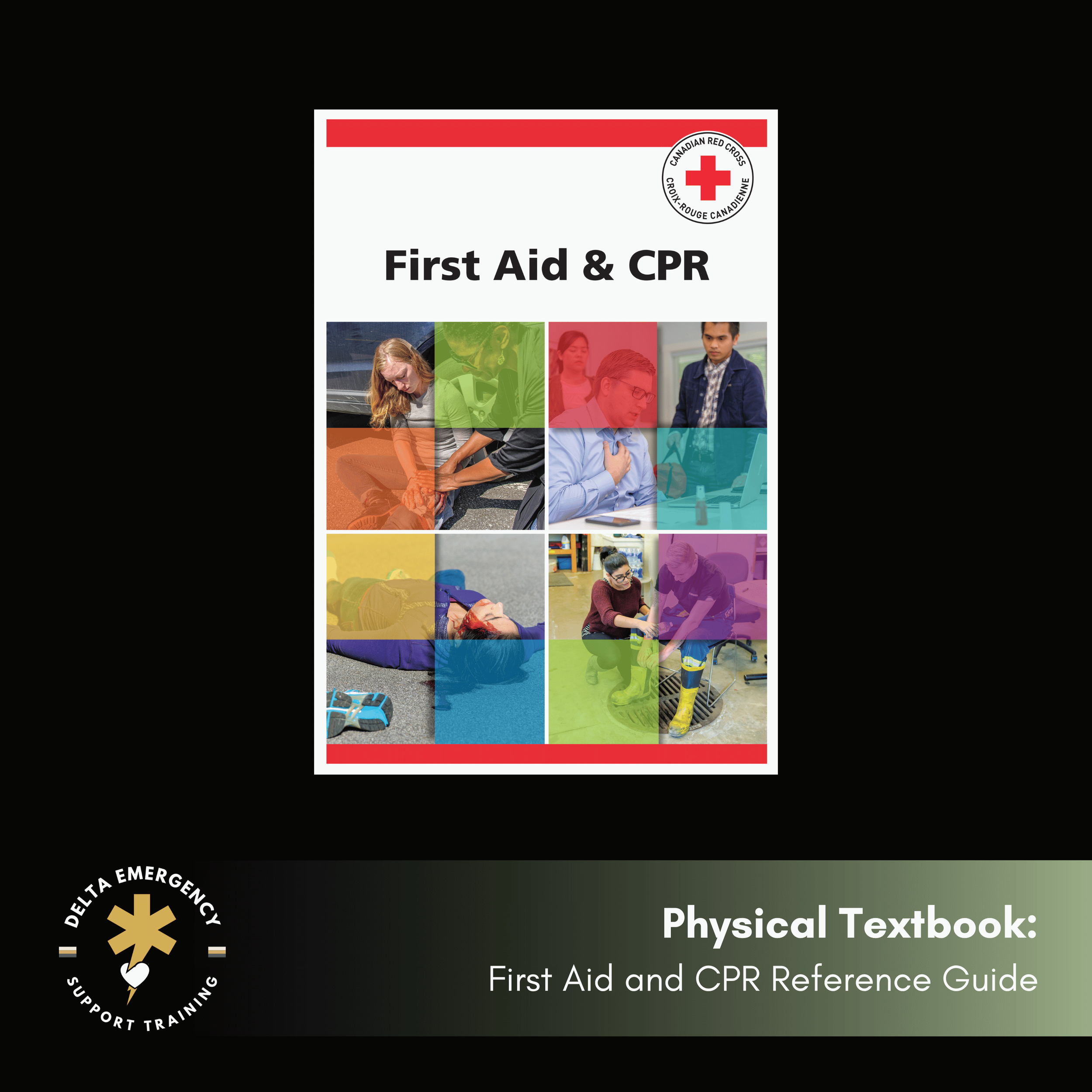
Essential Skills for Everyone: The Canadian Red Cross First Aid and CPR Textbook

Emergencies can happen anywhere—at home, at work, or in public spaces. Being prepared is key, and the Canadian Red Cross: First Aid and CPR textbook is the essential guide for anyone who wants to gain that preparedness.

The Ultimate Guide to Lifesaving Techniques

Emergencies can happen anywhere—at home, at work, or in public spaces. Being prepared is key, and the Canadian Red Cross: First Aid and CPR textbook is the essential guide for anyone who wants to gain that preparedness. Whether you're a family looking to enhance home safety, an educator responsible for students, or a business ensuring workplace readiness, this textbook is your comprehensive resource for learning how to handle common medical emergencies and perform lifesaving CPR.

The Canadian Red Cross First Aid and CPR Textbook

The Canadian Red Cross First Aid and CPR Textbook for all Core First Aid Certification Programs

Comprehensive Coverage of First Aid and CPR

This manual covers a wide range of topics crucial for effective emergency response, including:

  • Techniques for performing CPR on adults, children, and infants

  • Step-by-step guidance on dealing with choking, burns, fractures, bleeding, and more

  • Strategies for responding to emergencies involving poisoning, stroke, and heart attacks

  • Preventative measures to maintain safety in homes and workplaces

Each topic is presented with clear, concise instructions and supported by high-quality illustrations and diagrams that make learning both easy and effective.

Designed for Quick Access in Emergency Situations

One of the standout features of this textbook is its design for quick access:

  • Tabbed sections allow for fast navigation to the needed information during an emergency.

  • Durable, spill-proof pages ensure the book can be used in a variety of settings, including during actual emergency situations where quick reference is vital.

A Reliable Resource at Your Fingertips

The physical format of the First Aid and CPR textbook offers several advantages over digital alternatives, especially in emergency scenarios:

  • No dependency on electronic devices or internet access, which might be unavailable or unreliable during emergencies.

  • Easier to handle, especially for those who are less comfortable with technology, which can be an added stressor in a high-pressure situation.

Ideal for a Wide Audience

This textbook isn't just for medical professionals—it's designed for anyone who wants to have lifesaving knowledge. It's an excellent resource for:

  • Families wanting to ensure a safe home environment

  • Teachers and school staff responsible for the well-being of students

  • Corporate health and safety officers tasked with workplace safety training

  • Community centers and non-profit organizations providing health and safety education

Conclusion

Prepare yourself to respond confidently to medical emergencies with the Canadian Red Cross First Aid and CPR Textbook. Available now at Delta Emergency Support Training, this guide is an invaluable addition to any home, school, or workplace.

Secure your copy today from Delta Emergency Support Training and empower yourself with the skills to save lives and maintain safety, wherever you are.
First Aid and CPR Manual

Read More

Meningitis: What Every First Responder Needs to Know

Meningitis is a serious infection that can escalate rapidly. As a medical first responder, understanding the types and symptoms of meningitis is essential for effective care. At Delta Emergency, we provide advanced first aid training across Canada, particularly in Edmonton and Calgary, to equip fire fighters and emergency responders with life-saving knowledge.
At Delta Emergency, we train individuals in advanced first aid as an essential step in preparing them for fire fighting and other high-pressure, life-threatening situations. As part of our training, we emphasize the importance of being well-versed in a variety of medical conditions, including those that can escalate rapidly and require swift, decisive action. One such condition is meningitis, a serious infection that can affect the brain and spinal cord and may require urgent intervention.

In this post, we’ll delve into what meningitis is, the different types, and why understanding this condition is critical for medical first responders.

What is Meningitis?

Meningitis is the inflammation of the meninges, the protective membranes covering the brain and spinal cord. It is a potentially life-threatening condition because it can cause permanent damage to the nervous system if not treated quickly. The inflammation is usually caused by infection, but it can also be a result of other factors, such as certain medications or illnesses.

Symptoms of meningitis can develop suddenly, and in many cases, they resemble the flu. However, if left untreated, it can rapidly progress to more severe complications, including seizures, brain damage, and even death.

Types of Meningitis

Meningitis is classified into several different types based on the cause of the infection. The most common types are bacterial, viral, and fungal, but there are also other rarer causes that require different treatments.

1. Bacterial Meningitis

Bacterial meningitis is the most severe form and can be fatal if not treated immediately. It is caused by a bacterial infection that typically enters the bloodstream and spreads to the brain and spinal cord. The most common bacteria that cause meningitis are Neisseria meningitidis (meningococcal), Streptococcus pneumoniae (pneumococcal), and Haemophilus influenzae.

Symptoms:

  • Sudden high fever

  • Severe headache

  • Stiff neck

  • Nausea or vomiting

  • Sensitivity to light

  • Skin rashes (in some cases)

Bacterial meningitis requires immediate medical attention and is usually treated with intravenous antibiotics. Early intervention is key to preventing life-threatening complications.

2. Viral Meningitis

Viral meningitis is less severe than bacterial meningitis but can still be serious, particularly in infants and those with weakened immune systems. It is typically caused by viruses such as enteroviruses, herpes simplex virus, and the mumps virus.

Symptoms:

  • Mild fever

  • Headache

  • Stiff neck

  • Nausea

  • Sensitivity to light

  • Fatigue

Viral meningitis often resolves on its own without the need for specific treatment, although antiviral medications may be used in certain cases. Rest and supportive care are the mainstay of treatment.

3. Fungal Meningitis

Fungal meningitis is relatively rare and occurs when a fungal infection spreads to the meninges, usually in individuals with weakened immune systems, such as those with HIV/AIDS or who are undergoing chemotherapy. It is caused by fungi like Cryptococcus and Histoplasma.

Symptoms:

  • Headache

  • Fever

  • Nausea and vomiting

  • Sensitivity to light

  • Neck stiffness

  • Confusion

Fungal meningitis is treated with antifungal medications, but early detection is critical due to its potential to cause severe damage.

4. Parasitic Meningitis

Parasitic meningitis is a rare but serious type of infection caused by parasites. The most common example is Naegleria fowleri, a brain-eating amoeba found in warm freshwater environments. Though rare, this type of meningitis is almost always fatal.

Symptoms:

  • Severe headache

  • Nausea and vomiting

  • Stiff neck

  • Seizures

Why Is Meningitis Important for Medical First Responders to Recognize?

As a medical first responder, understanding meningitis is vital for several reasons:

  1. Rapid Assessment: When faced with a potential case of meningitis, especially bacterial meningitis, the symptoms can escalate quickly. The faster a first responder can assess and recognize the condition, the quicker they can initiate life-saving interventions and transport the patient to a medical facility.

  2. Preventing Spread: Certain types of meningitis, particularly bacterial meningitis, are contagious. First responders need to take immediate precautions to prevent the spread of the infection to others, especially in crowded environments like schools, hospitals, or emergency scenes.

  3. Accurate Communication with Medical Teams: As an advanced first aider, you’ll need to provide accurate and detailed information to the hospital staff or paramedics. Recognizing the key symptoms of meningitis will help ensure that the patient receives the correct treatment as soon as possible.

  4. Prevention Measures: In some cases, such as viral meningitis, vaccinations or antiviral medications may be available. Being able to educate the public on these prevention measures is also a critical aspect of first aid training.

  5. Making Informed Decisions in High-Pressure Situations: In emergency situations, especially during a fire or rescue operation, medical first responders often need to make quick decisions. Having a solid understanding of conditions like meningitis allows responders to make informed choices about treatment and triage priorities.

Meningitis and Fire Fighting: Why This Matters for You

For fire fighters and other emergency personnel, the ability to recognize and respond to meningitis is particularly important. Fire fighters often work in high-risk environments where exposure to infectious diseases is a possibility. Additionally, the physical and mental stress of responding to emergencies, including traumatic events, can weaken the immune system, making individuals more susceptible to infections.

Training in advanced first aid equips fire fighters with the tools they need to recognize signs of meningitis, protect themselves from exposure, and provide immediate care to victims. Knowing when to initiate emergency treatment, when to call for higher medical support, and how to prevent cross-contamination is essential in keeping both responders and the community safe.

Conclusion

Meningitis is a serious and potentially life-threatening infection that can affect anyone, but with the right knowledge and preparation, medical first responders can make a significant difference in the outcomes of those affected. At Delta Emergency, we ensure that our trainees are well-prepared to recognize the signs and symptoms of meningitis and take the appropriate action. Whether you are responding to an emergency as a fire fighter or any other medical first responder, being equipped with the knowledge of how to handle meningitis could save lives.

If you're looking to advance your first aid training or get involved in fire fighting, understanding the signs and treatments for conditions like meningitis should be a key part of your learning journey. Stay prepared, stay safe, and always be ready to respond with confidence.

Read More

How Babysitters Can Handle Emergencies: When to Call 911 and What to Do

Emergencies can happen unexpectedly, and as a babysitter, knowing how to respond quickly is essential. One of the most important skills is knowing when to call 911. Whether it’s a child choking, having a seizure, or becoming unconscious, your quick action could save a life. It’s crucial to always know the address of the home you’re babysitting at, as this information can help emergency responders reach you faster. Remember, better to call 911 and not need them than to not call and need them—911 call-takers are there to guide you through the process and ensure help arrives as quickly as possible. Stay calm, stay prepared, and always trust your instincts when it comes to emergencies.
Emergencies can happen at any time, and when you're babysitting, it’s important to know how to respond quickly. Whether you're watching kids at home, looking after younger siblings, or taking care of someone else’s children, you have to be prepared for anything. Knowing when and how to call 911 is especially important because your quick action could save a life.

In this blog, we'll talk about common emergencies, how to stay calm, and why knowing your address and how to call 911 is so critical.

Why It’s So Important to Know How to Call 911

As a babysitter, you might be the first person to handle an emergency. If something happens—a child gets hurt, gets sick, or something else goes wrong—you might need to call 911 for help.

One of the most important things to remember when calling 911 is knowing where you are. If you can’t tell the dispatcher your address, it can delay help. That means it’s crucial to always know the address of the home where you’re babysitting, including the apartment number if applicable. Make sure you have this info handy in case you need it quickly!

When to Call 911: What Counts as an Emergency?

Some situations can be handled with basic first aid, but others are more serious and require immediate help. Here are some examples of when you need to call 911 without hesitation:

1. The Child is Unconscious or Not Responding

If the child or anyone you’re caring for becomes unresponsive, it’s a big emergency. If they’re not waking up, won’t talk, or are just unresponsive, you need to get help right away.

What to Do:

  • Check if the child is breathing. If they are not breathing or are gasping, call 911 immediately. If you're trained in CPR, you may be able to help the child before emergency responders arrive.

  • If they are breathing but still unconscious, gently lay them on their side (recovery position) and call 911 right away.

2. Serious Bleeding

If the child has a large cut or wound that won’t stop bleeding, that’s a serious emergency. You need to stop the bleeding and get help right away.

What to Do:

  • Apply a clean cloth or bandage to the wound and press down to stop the bleeding.

  • If the wound is really deep, or you can’t stop the bleeding, call 911 and keep pressure on the wound until help arrives.

3. Choking

Choking is a life-threatening emergency, especially if the child can’t breathe or speak. If you are trained in back blows and abdominal thrusts, you should perform these techniques as you were taught. If the child becomes unconscious, you should immediately call 911.

What to Do:

  • If you are trained in abdominal thrusts and back blows (to help expel the object blocking their airway), perform these techniques as you’ve been taught.

  • If the child becomes unconscious, call 911 immediately. If you are trained to save a choking person, you have a good chance of saving them.

  • Keep performing your life-saving techniques until the child can breathe or emergency help arrives.

4. Severe Allergic Reaction (Anaphylaxis)

Severe allergic reactions (also known as anaphylaxis) can cause swelling in the throat and make breathing difficult. Common triggers include bee stings, food allergies (like peanuts), or certain medications.

What to Do:

  • If the child has an epinephrine auto-injector (EpiPen), use it right away.

  • Then, call 911 immediately to get professional help.

5. Seizures

If the child has a seizure, especially if they’ve never had one before, you should call 911. This is important because first-time seizures can be a sign of something serious, and even if the seizure doesn’t last long, it’s better to get medical help.

What to Do:

  • Move objects out of the way to prevent injury.

  • Gently cushion their head and lay them on their side if possible.

  • If the child has never had a seizure before, or if it lasts more than a minute, call 911 right away.

6. Trouble Breathing or Chest Pain

If the child is having trouble breathing, or complains of chest pain, these could be signs of a serious medical condition like a heart attack or a severe asthma attack.

What to Do:

  • Help them sit up and stay calm.

  • If they have an inhaler, help them use it.

  • If they are still having trouble breathing or in pain, call 911 immediately.

How to Call 911: What You Need to Tell Them

When you call 911, it’s important to speak clearly and calmly. Here’s what to do:

1. Know Your Address

You must know the address where you're babysitting, including the street name, apartment number (if applicable), and any nearby landmarks. Make sure you have this info written down or memorized before the emergency happens so you can give it to 911 right away.

2. Speak Clearly

When you’re panicked, it can be hard to talk clearly. Take a deep breath, stay calm, and explain what’s going on as best as you can. Tell the dispatcher the emergency, the condition of the child, and the address where help is needed.

3. Describe the Situation

Tell the dispatcher what happened and the child’s condition. For example:

  • “The child is unconscious and not breathing.”

  • “They’re choking on food and can’t breathe.”

4. Follow the Dispatcher’s Instructions

The dispatcher might give you advice on what to do while you wait for emergency help to arrive. Listen carefully and do your best to follow their instructions.

5. Stay on the Line

Don't hang up until the dispatcher tells you it's okay. They may need more information or updates as emergency responders get closer.

When in Doubt, Call 911

If you're ever unsure whether something is an emergency, it’s always better to call 911. Better to call and not need them than to not call and need them. 911 call-takers are there to help and guide you through the situation. They won’t judge you for calling and are trained to assist you no matter what the emergency is. Trust your instincts—if you feel the child’s health or safety is at risk, don’t hesitate to call for professional help.

Conclusion: Be Prepared, Stay Calm, and Get Help

Babysitting comes with a lot of responsibility. Emergencies can happen quickly, but being prepared can make all the difference. The key is staying calm, knowing when to call 911, and having the information you need to guide emergency responders.

At Delta Emergency Support Training, we offer Red Cross Babysitting courses that cover all the important topics you need to be ready for anything. Our course is taught by paramedics and includes one session on caring for babies and another session dedicated to babysitter first aid, where you’ll learn life-saving techniques like CPR, how to handle injuries, and what to do in different emergency situations. You’ll leave our course with the skills and confidence to handle any emergency that comes your way.

Read More

Skin Anatomy Overview for First Responders: Layers and Functions

Understanding the anatomy of the skin is essential for first responders. The skin serves as the body’s first line of defense, regulating temperature and protecting against infection. In this blog, we’ll break down the three layers of skin—epidermis, dermis, and hypodermis—and explore their functions, common injuries, and how this knowledge can help you provide better care in emergency situations.
As a first responder, you're trained to respond to a variety of emergencies, from burns and cuts to more complex trauma situations. Understanding the anatomy of the skin is crucial, as it plays a vital role in protecting the body from infection, regulating temperature, and healing injuries. In this blog, we’ll break down the layers of the skin, their functions, and how this knowledge helps you in your critical role as a first responder.

medical skin layer model

The Basics of Skin Anatomy

The skin is the body's largest organ, serving as the primary barrier between the internal systems and the outside world. It protects against physical damage, pathogens, and dehydration, while also playing a key role in temperature regulation. The skin is made up of three main layers, each with its own distinct function:

  1. Epidermis (Outer Layer)

  2. Dermis (Middle Layer)

  3. Hypodermis (Subcutaneous Layer)

1. The Epidermis: The Body’s First Line of Defense

The epidermis is the outermost layer of skin, providing a waterproof barrier that shields the body from harmful substances, bacteria, and UV radiation. As a first responder, you will often encounter patients with injuries to the epidermis, such as cuts, abrasions, burns, or rashes.

Functions of the Epidermis:

  • Protection: The epidermis acts as the first line of defense against pathogens, chemicals, and physical damage.

  • Barrier to Water Loss: It helps prevent excessive loss of moisture, maintaining hydration in the body.

  • Skin Pigmentation: Melanin, produced in the epidermis, helps protect deeper layers from UV damage.

  • Sensation: The epidermis contains nerve endings that allow the skin to respond to environmental stimuli, like heat or pressure.

Important Considerations for First Responders:

  • Burns: Since the epidermis contains no blood vessels, burns typically affect this layer first, causing redness, swelling, and pain. In severe cases, it may also affect the dermis, leading to more serious injuries.

  • Infections: When the epidermis is compromised (such as in open wounds), there’s a higher risk of infection. Proper cleaning and dressing of wounds are essential to avoid bacterial infiltration.

2. The Dermis: The Skin’s Strength and Support

The dermis lies beneath the epidermis and is responsible for most of the skin's strength, elasticity, and sensation. This layer contains blood vessels, nerves, hair follicles, sweat glands, and connective tissue.

Functions of the Dermis:

  • Structural Support: The dermis contains collagen and elastin, proteins that provide strength and elasticity to the skin, allowing it to stretch and return to its original shape.

  • Temperature Regulation: Blood vessels in the dermis help regulate body temperature by constricting to conserve heat or dilating to release heat.

  • Sensation: The dermis is rich in nerve endings that detect pain, pressure, temperature, and touch.

  • Wound Healing: The dermis plays a critical role in healing skin wounds, as it contains the blood vessels and connective tissue that support tissue repair.

Important Considerations for First Responders:

  • Deep Cuts and Lacerations: When treating deep cuts or lacerations, you may encounter injury to the dermis, which could result in more severe bleeding due to the presence of blood vessels.

  • Blisters and Burns: Severe friction or thermal injuries can cause fluid buildup between the epidermis and dermis, leading to blisters. Burns can also extend into the dermis, causing damage to blood vessels and deeper tissues.

3. The Hypodermis: The Body’s Cushion and Insulator

The hypodermis, or subcutaneous layer, lies below the dermis and is primarily made of fat and connective tissue. This layer plays a significant role in protecting internal organs, insulating the body, and storing energy.

Functions of the Hypodermis:

  • Insulation: The fatty tissue helps regulate body temperature by providing insulation against heat loss.

  • Cushioning: It acts as a shock absorber, protecting bones and organs from injury by absorbing impact.

  • Energy Storage: The hypodermis stores fat, which serves as an energy reserve for the body.

  • Anchoring the Skin: It helps anchor the skin to underlying muscles and bones, giving the skin its flexibility and strength.

Important Considerations for First Responders:

  • Severe Trauma: In cases of deep trauma, such as blunt force injuries, the hypodermis may be damaged. This could lead to bruising or deeper tissue damage, as blood vessels in the hypodermis may rupture.

  • Frostbite: The hypodermis is the most affected area during frostbite, as it is the deepest layer. Severe cold temperatures can cause the fat cells to freeze, potentially leading to tissue death and the need for immediate medical intervention.

Skin Injuries and First Aid: Key Points for First Responders

As a first responder, understanding the anatomy of the skin helps you assess injuries more effectively and provide better care. Here are some common skin injuries and how they relate to the skin’s structure:

  1. Abrasions: These involve damage to the epidermis, often caused by friction. While they are generally not severe, they can lead to infection if not properly cleaned and dressed.

  2. Lacerations: Deep cuts can damage both the epidermis and dermis, leading to bleeding and pain. Proper wound care includes stopping the bleeding, cleaning the wound, and applying appropriate dressings.

  3. Burns: Burns can range from superficial (affecting only the epidermis) to severe (penetrating the dermis and hypodermis). First-degree burns may cause redness and pain, while second-degree burns result in blisters and more intense pain. Third-degree burns involve damage to all layers of the skin and require immediate medical attention.

  4. Frostbite: Exposure to extreme cold can lead to frostbite, which damages the skin, particularly the hypodermis. Treatment includes gradual rewarming and protecting the affected areas from further damage.

  5. Infections: Skin wounds, especially when the epidermis is broken, are susceptible to infection. As a first responder, it’s critical to clean wounds thoroughly, apply sterile dressings, and monitor for signs of infection.

Conclusion: Why Skin Anatomy Matters for First Responders

The skin may seem like a simple barrier, but its structure and functions are far more complex and essential to maintaining overall health. As first responders, understanding the layers of the skin, their functions, and how injuries affect them helps you provide better care to patients. Whether you're dealing with a simple abrasion or a severe burn, this knowledge can guide your decisions on how to treat injuries quickly and effectively, reducing the risk of complications and promoting faster recovery.

By applying this understanding of skin anatomy to your daily work, you can ensure that your patients receive the best care possible in emergency situations.

Read More

Essential First Aid Certifications for Different Job Roles in Alberta

In Alberta, the Canadian Red Cross offers a range of certifications tailored to different job types and industries. Here's an overview of the certification requirements for various professions:

Emergency Medical Responder (EMR)

Description:

The EMR course is the most advanced level of first aid training before becoming a Primary Care Paramedic. It covers a wide range of medical emergencies and more advanced patient care techniques. Participants learn to provide pre-hospital care, perform medical procedures, and manage critical patient conditions.

Duration: 80-96 hours.

Skills Learned:

- Advanced patient assessment and care

- Administering medications

- Managing cardiac and resp
"Emergency responders providing first aid to a patient, with the text 'What Course Do I Need? A Simple Guide to Red Cross Certifications.' Delta Emergency Support Training logo and Canadian Red Cross Training Partner logo included

Certification Requirements in Alberta

When it comes to ensuring safety and preparedness in the workplace, having the appropriate first aid certification is crucial. In Alberta, the Canadian Red Cross offers a range of certifications tailored to different job types and industries. Here's an overview of the certification requirements for various professions:

825-88-DELTA (825-883-3582)

Intermediate First Aid

Description:

Intermediate First Aid, also known as Standard First Aid, is a comprehensive course covering a wide range of first aid and CPR skills. It's ideal for those who require more in-depth knowledge than basic first aid. Participants learn to recognize and respond to cardiovascular emergencies, choking, airway and breathing emergencies, and severe bleeding.

Duration: 16 hours

Skills Learned:

- CPR and AED usage

- Managing shock and severe bleeding

- Recognizing and treating bone, joint, and muscle injuries

- Handling environmental emergencies such as hypothermia and heat stroke

- Providing care for burns and poisoning

Industries and Jobs:

- Construction

- Manufacturing

- Office Environments

- Retail

Child Care First Aid

Description:

Child Care First Aid is designed for individuals who work with children, including daycare workers, teachers, and early childhood educators. This course focuses on childhood illnesses, injuries, and prevention techniques. Participants learn to manage respiratory and cardiac emergencies in children and infants, as well as other common childhood emergencies.

Duration: 16 hours

Skills Learned:

- Infant and child CPR

- Managing choking emergencies

- Treating common injuries such as falls and cuts

- Recognizing and managing allergic reactions and asthma

- Providing care for common illnesses and infections

Industries and Jobs:

- Daycares

- Schools

- Early Childhood Education Centers

First Responder

Description:

The First Responder course is designed for professionals who are often the first to arrive at the scene of an emergency. This course provides advanced first aid and CPR skills, including the management of trauma and medical emergencies. Participants learn to perform patient assessments, manage airways, and handle life-threatening situations.

Duration: 40 hours

Skills Learned:

- Advanced CPR and AED usage

- Managing trauma and fractures

- Conducting detailed patient assessments

- Handling medical emergencies such as heart attacks and strokes

- Managing spinal injuries and head trauma

Industries and Jobs:

- Massage Therapist

- Physiotherapist

- Athletic Therapist

- Fire Services

- Law Enforcement

- Security Personnel

Advanced First Aid

Description:

Advanced First Aid offers a higher level of training, focusing on complex emergency situations. This course is suitable for those who need to manage critical care until advanced medical help arrives. Participants learn advanced trauma management, emergency childbirth, and advanced airway management techniques.

Duration: 80 hours

Skills Learned:

- Airway management

- Handling multiple casualty incidents

- Performing emergency childbirth

- Managing serious medical conditions such as seizures and diabetic emergencies

- Providing extended care in remote settings

Industries and Jobs:

- Calgary Fire Department

- Edmonton Fire Department

- Remote Work Locations

- Industrial Sites

- Large Corporations

Emergency Medical Responder (EMR)

Description:

The EMR course is the most advanced level of first aid training before becoming a Primary Care Paramedic. It covers a wide range of medical emergencies and more advanced patient care techniques. Participants learn to provide pre-hospital care, perform medical procedures, and manage critical patient conditions.

Duration: 80-96 hours

Skills Learned:

- Advanced patient assessment and care

- Administering medications

- Managing cardiac and respiratory emergencies

- Performing advanced trauma care

- Providing care during transport

Industries and Jobs:

- Ambulance Services

- Fire Departments

- Industrial Safety Teams

Basic Life Support (BLS) CPR

Description:

BLS CPR is a specialized course focusing on cardiopulmonary resuscitation and other lifesaving techniques. It's essential for healthcare professionals and others who may need to perform CPR in a medical setting. Participants learn to perform high-quality CPR, use an AED, and manage airway obstructions.

Duration: 4 hours

Skills Learned:

- Team dynamics and communication in resuscitation

- High-quality team CPR for adults, children, and infants

- Use of an automated external defibrillator (AED)

- Managing airway obstructions

- Administering Oxygen Therapy

- Providing effective ventilations using a Bag-Valve-Mask

Industries and Jobs:

- Hospitals

- Dental Clinics

- Physiotherapy Clinics

- Sports Facilities


At Delta Emergency Support Training, we provide Canadian Red Cross certifications in all these courses, ensuring that you are well-prepared and certified for the workplace. We are dedicated to guiding you to the right course that meets your specific needs, and we do not mislead or exaggerate the requirements. Whether you are a childcare worker, a professional responder, or work in an industrial setting, we have the right course for you. For those pursuing a career pathway to becoming a firefighter or paramedic in Alberta, we will guide you accordingly. As industry experts, your safety and preparedness are our top priorities.

For more information and to register for a course:
Call or Text us: 825-88-DELTA (825-883-3582)
Visit our website: Delta Emergency Support Training!

Read More

Understanding Poison: Recognizing Signs and Taking Action

Attention first aiders! Dive into our comprehensive blog to understand poisoning emergencies and gain the knowledge you need for immediate response. From injection and inhalation to ingestion and skin absorption, equip yourself with essential first aid tips tailored for first aiders. Learn to recognize signs and symptoms, understand common causes, and embark on the journey to a safer, well-prepared home. Your loved ones depend on you – be ready.

When it comes to first aid, knowledge is power. Poisoning is a serious emergency that can occur through various means, including injection, ingestion, inhalation, and absorption. In this blog post, we'll explore the different ways poisons can enter the body and the signs and symptoms associated with each method. Being aware of these indicators is crucial for prompt and effective first aid response.

Cleaning supplies with skull and crossbones logo on bottles.

Injection

Poisoning through injection can happen when a toxic substance is introduced directly into the bloodstream. This could occur through bites, stings, or accidental needle sticks. Common signs and symptoms include localized pain, swelling, redness, and sometimes systemic effects such as dizziness, nausea, and altered level of consciousness (LOC). If you suspect injection poisoning, seek medical attention immediately.

Inhaled Poison

Inhalation of poisonous substances poses a serious threat to the respiratory system. Symptoms may include difficulty breathing, wheezing, coughing, cyanosis (bluish skin), dizziness, nausea, and chest pain. If someone is exhibiting these signs after exposure to a potentially toxic substance, move them to fresh air immediately. Call for emergency medical assistance and perform CPR if necessary.

Absorption

Certain poisons can be absorbed through the skin, leading to symptoms such as itching, irritation, blistering, rashes, and flaky skin. If you suspect someone has come into contact with a poisonous substance, quickly remove contaminated clothing and rinse the affected area with copious amounts of water. Seek medical help promptly.

Ingested Poison

Ingesting poisonous substances is a common way people are exposed to toxins. Signs and symptoms of ingested poisoning include nausea, vomiting, burns around or inside the mouth, unusual breath odor, and abdominal pain. If someone has ingested a toxic substance, call your local poison control center immediately and follow their guidance. In severe cases, seek emergency medical attention.

Common Causes of Poisoning: Identifying and Mitigating the Risks

Carbon Monoxide: The Invisible Threat

Not all poisons are ingested; some are inhaled. Carbon monoxide, an odorless and colorless gas, is a silent killer. Ensure there's a carbon monoxide alarm in every sleeping area of your home to detect this deadly gas and take immediate action.

Button Batteries: Small Devices, Big Danger

Found in musical greeting cards, remote controls, and small electronic devices, button batteries pose a significant threat, especially to young children. Ingestion can lead to serious burns in the esophagus within hours. Parents should be vigilant, and if ingestion is suspected, seek medical attention immediately.

Iron Pills: A Hidden Hazard for Children

Adult-strength iron pills are highly dangerous for children. Ingestion can lead to severe symptoms such as vomiting blood or bloody diarrhea in less than an hour. Keep these pills out of reach of children, and if ingestion occurs, seek emergency medical help.

Chemical Burns from Cleaning Products

Certain cleaning products, including drain openers, toilet bowl cleaners, rust removers, and oven cleaners, can cause chemical burns comparable to those from fire. Inhalation of bleach, toilet bowl cleaner, and other substances can also pose significant poison hazards. Take precautions and store these products safely.

Nail Glue Remover and Nail Primer: Surprising Dangers

Products used for artificial nails, such as nail glue remover and nail primer, can be poisonous. Ingestion may lead to cyanide poisoning or burns to the skin and mouth. Keep these products out of reach of children and use them with caution.

Hydrocarbons: A Broad Category with Hidden Risks

Hydrocarbons, including gasoline, kerosene, and paint thinner, can be easily ingested, posing a risk of choking and lung damage. Inhaling these substances can lead to breathing difficulties and lung inflammation. Proper storage and caution are crucial to prevent accidental ingestion.

Pesticides: Caution in Pest Control

Pesticides used to eliminate bugs and pests must be handled carefully to avoid harm to humans. These chemicals can be absorbed through the skin or inhaled, affecting the nervous system and respiratory function. Follow safety guidelines when using pesticides.

Windshield Washer Solution and Antifreeze: Small Amounts, Big Consequences

Even small amounts of windshield washer solution and antifreeze can be poisonous to humans and pets. Ingestion can lead to blindness (windshield washer solution) or kidney failure (antifreeze). Store these liquids securely and seek immediate medical attention if ingested.

Wild Mushrooms: A Potentially Deadly Harvest

Certain mushrooms can be deadly if ingested. Only experts in mushroom identification can distinguish between poisonous and safe varieties. Exercise extreme caution and avoid consuming wild mushrooms unless verified by a knowledgeable source.

Caustic Cleaners: Devastating Burns

Drain cleaners and toilet bowl cleaners, often strong alkalines or acids, can cause severe burns to the mouth, throat, and stomach if swallowed. Immediate dilution is crucial to limit damage in case of ingestion.

Topical Anesthetics: Unseen Risks

Certain topical anesthetics, found in teething gels, hemorrhoid preparations, anti-itch creams, and sunburn relief agents, can cause seizures or methemoglobinemia, a condition that hinders oxygen transport in the blood. Use these medications cautiously and be aware of potential side effects.

First Aid Tips for Poisoning:

  1. Call for Help: In any poisoning situation, call your local poison control center as well as EMS right away.

  2. Move to Safety: If the poisoning occurred through inhalation, move the affected person to fresh air. If it's ingestion or absorption, ensure the person is in a safe environment.

  3. Provide Comfort: Keep the person calm and reassure them while waiting for professional help.

  4. Do Not Induce Vomiting: Unless directed by a medical professional, avoid inducing vomiting, as it can worsen certain types of poisoning.

  5. Remove Contaminated Clothing: In cases of skin exposure, remove contaminated clothing and rinse the affected area with water.

Conclusion:

Being aware of the common causes of poisoning is the first step in preventing these emergencies. Vigilance, proper storage, and swift action in case of exposure are essential for minimizing the risks associated with various poisonous substances. Always seek professional medical help if poisoning is suspected, and remember, prevention is key.

Read More

Eye Injury Response: A Guide for First Aiders

In the world of advanced first aid, the ability to respond swiftly and effectively to eye injuries is paramount. Our comprehensive guide delves into the nuances of addressing diverse eye injuries, providing advanced responders with the knowledge and confidence needed to navigate these critical situations. From understanding the causes to mastering the essential steps, this guide is your go-to resource for safeguarding vision in emergency scenarios.

Man’s dark brown eye with a broken blood vessle staining the white of his eye.

In this edition of our first aid blog, we sharpen our focus on a critical aspect of emergency medical response – effectively addressing eye injuries. The eyes, being a vital sensory organ, demand swift and informed action from those trained in advanced first aid. Your knowledge and intervention can make a substantial difference in preserving vision and mitigating further harm. Join us as we navigate through the common types of eye injuries, their origins, and the indispensable steps to be taken in the event of a medical emergency.

Foreign Objects in the Eye

Causes

Foreign objects such as small debris, dust, sand, wood chips, or metal particles can easily enter the eyes during various activities. Working in construction, gardening, or simply being outdoors on a windy day increases the risk of encountering these particles.

Response: If a foreign object enters the eye

  • Do not rub the eye: Rubbing can potentially cause corneal abrasions or embed the foreign object further.

  • Blink repeatedly: Natural blinking can help stimulate tears, aiding in the removal of small particles.

  • Flush the eye with water: Use a sterile saline solution or clean, lukewarm water to rinse the eye gently. Tilting your head to the side can help prevent contamination of the unaffected eye.

Additional Tips

  • If the foreign object persists or the pain continues, do not attempt to remove it yourself. Seek professional medical help promptly.

  • Wearing protective eyewear during activities with a high risk of eye injury can significantly reduce the chances of foreign objects entering the eyes.

Chemical Burns

Causes:

Chemical burns to the eyes can occur from exposure to household cleaning products, industrial chemicals, or contact with substances like bleach or acids.

Response: If a chemical comes into contact with the eyes

  • Flush the eye immediately: Begin rinsing the affected eye with copious amounts of water for at least 15 minutes. Use a gentle stream to avoid splashing.

  • Hold the eyelids open: This ensures thorough flushing, helping to remove the chemical from all parts of the eye.

  • Seek immediate medical attention: Even if symptoms appear to improve during the rinsing process, professional evaluation is crucial to prevent potential long-term damage.

Additional Tips

  • Know the location of emergency eyewash stations in workplaces where exposure to chemicals is possible.

  • When handling chemicals, always wear appropriate protective eyewear to minimize the risk of accidental splashes or spills.

Subconjunctival Hemorrhage

Causes

A subconjunctival hemorrhage, often referred to as a broken blood vessel in the eye, manifests as a bright red patch on the sclera. This condition may result from various factors, such as eye trauma, a sudden increase in pressure, or underlying medical conditions.

Response

  • Stay calm: While alarming in appearance, a subconjunctival hemorrhage is typically painless and harmless.

  • Avoid rubbing the eye: To prevent further irritation or damage.

  • Monitor for changes: While spontaneous, if the subconjunctival hemorrhage is recurrent or accompanied by other symptoms, seek medical advice.

Blows to the Eye

Causes

Blows to the eye can result from accidents, falls, or injuries sustained during sports activities.

Response: If a person experiences a blow to the eye

  • Apply a cold compress: Use a clean cloth or ice pack wrapped in a thin towel to reduce swelling and alleviate pain.

  • Avoid placing pressure: Refrain from pressing on the eye directly; instead, gently apply the compress around the eye.

  • Seek medical attention: If there is significant swelling, double vision, or changes in vision, it's essential to consult a healthcare professional promptly.

Additional Tips

  • Use protective eyewear during sports or activities with an increased risk of eye injuries, such as racquet sports, paintball, or construction work.

  • Regular eye check-ups can help identify underlying issues that may increase the susceptibility to eye injuries.

Corneal Abrasions

Causes

Corneal abrasions result from scratches on the cornea, often caused by foreign objects like fingernails, contact lenses, or airborne particles.

Response: When dealing with a corneal abrasion

  • Avoid rubbing the eye: Rubbing may exacerbate the abrasion and hinder the healing process.

  • Keep the eye closed: This protects the eye from further irritation and reduces the chance of infection.

  • Seek medical attention: Even seemingly minor abrasions can lead to infections or other complications, making it crucial to consult a healthcare provider for appropriate treatment.

Additional Tips

  • If you wear contact lenses, follow proper hygiene practices, and avoid wearing lenses when your eyes are irritated or red.

  • Protective eyewear, such as safety glasses or goggles, can provide an additional layer of defense against potential corneal abrasions in various situations.

Conclusion

Eye injuries require immediate attention and proper care. Understanding the specific responses to different types of injuries is crucial for preserving vision and preventing long-term complications. Remember, early intervention and seeking professional medical help when needed are key components of effective eye injury first aid. By staying informed and taking preventive measures, you can play a pivotal role in protecting your vision and that of others. Stay safe, stay informed, and safeguard your vision.

Read More

Body Substance Isolation for First Responders

In the high-stakes world of first response, safety is paramount. This blog dives deep into Body Substance Isolation (BSI) and its indispensable role in safeguarding the lives of first responders. We'll uncover how BSI practices have significantly reduced disease transmission rates, look back in history to understand the risks before BSI, and examine the pivotal role it plays in protecting both responders and the communities they serve. Join us on a journey through time and protocols as we explore the critical importance of BSI for those who rush to the scene of emergencies, preventing infections, and ultimately saving lives.
Introduction

First responders, the brave men and women who rush to the scene of emergencies, accidents, and disasters, face a multitude of hazards every day. While their primary goal is to save lives and provide immediate assistance, they must also protect themselves from potential dangers. Body Substance Isolation (BSI) is a set of precautions and practices that are absolutely crucial for first responders. In this blog, we will delve into the significance of BSI in ensuring the safety and well-being of those on the front lines of emergency response.

Medical professional applying gown and gloves as bsi

Understanding Body Substance Isolation (BSI)

Body Substance Isolation (BSI) is a comprehensive approach to infection control that involves the proper handling and protection from bodily fluids, tissues, and other potentially infectious materials. BSI is not limited to any particular type of emergency response but is relevant across the board, including medical emergencies, accidents, natural disasters, and hazardous material incidents.

The Core Principles of BSI

Personal Protective Equipment (PPE):

The foundation of BSI is the use of appropriate PPE. This includes gloves, masks, gowns, eye protection, and respirators when necessary. The use of PPE acts as a barrier between the responder and potentially infectious materials, preventing direct contact.

Hand Hygiene:

First responders must maintain excellent hand hygiene. Regular and thorough handwashing, or the use of hand sanitizers, is essential to minimize the risk of disease transmission.

Safe Handling and Disposal:

Proper techniques for the safe handling, packaging, and disposal of contaminated materials are fundamental to BSI. Sharps (such as needles) must be disposed of in puncture-resistant containers, while contaminated clothing and equipment must be handled carefully to prevent the spread of pathogens.

Respiratory Hygiene/Cough Etiquette:

Responders should follow respiratory hygiene practices to reduce the risk of inhaling airborne pathogens or spreading respiratory illnesses.

Masks, gloves, gowns, and eye protective equipment

Masks: Shielding the Respiratory System

Masks are a fundamental piece of personal protective equipment (PPE) for first responders, serving as a crucial shield for the respiratory system. These masks come in various types, each designed to address specific risks:

N95 Respirators:

N95 respirators are highly effective at filtering out airborne particles and are commonly used in situations where responders may be exposed to infectious agents, dust, or hazardous fumes. They provide an airtight seal around the nose and mouth, preventing the inhalation of harmful substances.

Surgical Masks:

Surgical masks are primarily used in medical settings. They protect both the wearer and those in close proximity from respiratory droplets and splashes. While they offer less filtration than N95 respirators, they are still essential for preventing disease transmission.

Proper mask usage is crucial. Responders must be trained in how to don and doff masks correctly to minimize the risk of contamination. A secure fit, regular replacements, and adherence to guidelines for extended use are all critical aspects of mask safety.

Gloves:

The Barrier Against Direct Contact

Gloves are the frontline defense against direct contact with potentially infectious materials. First responders use disposable gloves made from various materials, including latex, nitrile, and vinyl. The choice of glove material depends on individual preferences and potential allergies.

Proper glove usage involves:

  • Selecting the appropriate glove type for the task.

  • Ensuring gloves are the right size for a snug fit.

  • Changing gloves between tasks and after potential contamination.

  • Avoiding touching the face, adjusting masks, or handling personal items while wearing gloves.

    Safely removing and disposing of gloves to prevent cross-contamination.

    Failure to follow these guidelines can lead to accidental contamination and defeat the purpose of wearing gloves.

    Gowns:

    Protecting Against Splashes and Contamination

    Gowns provide an additional layer of protection, especially in situations where responders may encounter bodily fluids or other potentially infectious materials. These disposable garments are typically made of non-porous materials like polyethylene or polypropylene.

  • Responders should don gowns before entering potentially contaminated areas.

  • Ensure gowns cover their entire body and are secured at the neck and wrists.

  • Remove gowns carefully to prevent contamination when exiting hazardous areas.

  • Dispose of gowns properly in designated containers.

    Gowns are essential for minimizing the risk of contamination when working in close proximity to patients or in environments with a high potential for splashes.

    Eye Protective Equipment:

    Safeguarding Vision

    Eye protective equipment, including goggles and face shields, shields the eyes from splashes, flying debris, or other hazards that could cause eye injuries or contamination. In healthcare and emergency response settings, eye protection is crucial, especially when dealing with patients exhibiting symptoms of infectious diseases.

    Proper eye protection:

  • Shields the eyes completely, with no gaps for contaminants to enter.

  • Should be worn in conjunction with masks and other PPE, ensuring full facial coverage.

  • Eye protective equipment not only safeguards vision but also prevents potential disease transmission through the mucous membranes of the eyes.

Disease Transmission Rates

Historical Impact of BSI

Before the widespread adoption of BSI practices, first responders faced alarmingly high disease transmission rates. In the early days of modern medicine, the lack of standardized protective measures exposed them to severe risks. Diseases like tuberculosis, hepatitis, and HIV were known to spread readily among healthcare and emergency response personnel.

HIV/AIDS:

The HIV/AIDS epidemic in the 1980s and 1990s raised serious concerns about disease transmission among healthcare workers. Before the implementation of strict BSI measures, there were instances of HIV transmission in healthcare settings due to inadequate precautions.

Hepatitis B and C:

Hepatitis B and C viruses posed significant threats to first responders. These infections, transmitted through contact with contaminated blood and bodily fluids, were relatively common among healthcare workers before BSI guidelines were established.

Impact of BSI on Disease Transmission Rates:

The introduction of BSI protocols marked a turning point in the safety of first responders. These measures significantly reduced the risk of disease transmission, protecting the lives and health of those on the front lines.

HIV/AIDS:

With the implementation of universal precautions, including the use of gloves and safe disposal practices, the risk of HIV transmission to healthcare workers decreased dramatically. The incidence of occupational HIV infections among first responders dropped substantially.

Hepatitis B and C:

BSI guidelines, including vaccination, proper use of PPE, and strict handling and disposal procedures, led to a significant decline in the transmission of hepatitis B and C among first responders.

A Look Back in History

Pre-BSI Era:

Before the formalization of BSI, first responders operated in a much riskier environment. The lack of standardized precautions left them vulnerable to infections and contributed to disease outbreaks.

Infectious Disease Outbreaks:

Historical records show that outbreaks of diseases like tuberculosis, smallpox, and influenza often spread within healthcare and emergency response settings. The lack of protective measures not only endangered responders but also allowed diseases to propagate unchecked.

Post-BSI Era:

The development and implementation of BSI practices transformed emergency response and healthcare. Here's how:

Reduction in Occupational Infections:

BSI measures, such as the use of PPE, strict hand hygiene, and safe handling of contaminated materials, significantly reduced the incidence of occupational infections among first responders. This led to a safer working environment.

Protection of Patients:

BSI not only protects first responders but also safeguards the health of patients. The prevention of cross-contamination ensures that patients receive care in a safe and sanitary environment.

Improved Public Health:

By preventing the spread of infectious diseases at their source, BSI contributes to broader public health efforts. It helps limit the scope of disease outbreaks, reduces the burden on healthcare systems, and saves lives.

Conclusion

Body Substance Isolation is not merely a set of guidelines; it is a lifeline for first responders. It ensures their personal safety, prevents disease transmission, and ultimately saves lives. In a world where emergencies and crises are an unfortunate reality, BSI stands as a critical shield that allows first responders to carry out their noble mission while protecting themselves and the communities they serve. Every responder should be well-trained in BSI practices and consistently apply them, for their safety, the safety of those they help, and the greater good of society. The history of BSI underscores its pivotal role in stopping the spears of infectious diseases, making the world a safer and healthier place for all.

Read More

Empowering Learning Through Essential Textbooks: Continuing Education

Discover a World of Learning with Our Essential Textbooks

At Delta Emergency, we're thrilled to present our diverse collection of textbooks, each crafted to meet unique learning needs. Whether you're embarking on wilderness adventures, nurturing young minds as a babysitter, mastering life-saving techniques, or aiming to elevate your emergency care skills, our textbooks are here to empower and educate. The tactile pleasure of flipping through the pages of our physical copies enhances the learning experience, making each topic come to life. Dive into our range and unlock a wealth of knowledge today.


At Delta Emergency Support Training, we're excited to offer a versatile collection of textbooks that cater to a wide array of learning needs. Whether you're a wilderness explorer, an aspiring babysitter, a medical professional, or someone seeking vital lifesaving skills, our textbooks are thoughtfully designed to impart knowledge and empower individuals.For those who appreciate the feel of physical paper copies, we have just the thing for you. Let's dive into our selection:

Woman using a textbook to take notes and study.

Wilderness First Aid: Navigating Nature's Challenges with Confidence

Embark on outdoor adventures fully equipped with our "Wilderness First Aid" textbook. Priced at CA$74.97, this guide not only covers emergency response but also emphasizes safeguarding patients from the elements. From creating basic shelters to regulating body temperature, this resource ensures patient well-being in harsh environments. Learn to assess the ABCs (Airway, Breathing, Circulation) and identify and treat life-threatening emergencies. With a focus on both patient safety and effective response, this guide prepares you for the unexpected challenges of the wild.

Babysitter First Aid: Nurturing Safety and Confidence

Designed for young caregivers, our "Babysitter First Aid" textbook is a crucial resource that is a great tool for babysitters. Priced at CA$31.45 (Original Price: CA$34.95), this guide empowers budding babysitters with engaging activities, game ideas, and practical checklists. It equips you with the confidence and knowledge necessary to ensure children's safety and well-being. Not only does it cover babysitting essentials, but it also imparts vital babysitter first aid skills, expanding your capabilities and making you a trusted and reliable caregiver.

Basic Life Support: Mastering Lifesaving Techniques

BLS goes beyond the basics, offering practical insights such as oxygen flow rates for different levels of hypoxia, airway adjunct techniques, and CPR rates and compression depths. Whether you're familiarizing yourself with ventilation devices or learning the intricacies of CPR, this guide provides invaluable information to ensure your readiness in critical situations. Priced at CA$31.45, this comprehensive guide delves into the art of preserving life.

Professional Responder: Elevate Your Emergency Care Skills

Tailored for First Responders, Advanced First Aid, and Emergency Medical Responder courses, this comprehensive resource leaves no stone unturned. This textbook will give you the knowledge, skills and confidence to pursue your career as a firefighter, paramedic or any other professional responder. Encompassing topics from anatomy to physiology, this guide equips you with real-life scenarios, intricate charts, diagrams, and photographic illustrations. Designed to elevate your capabilities, it readies you for a gamut of challenging scenarios, ensuring your competence in emergency situations. Elevate your expertise with the "Professional Responder" textbook, available for CA$212.35 (Original Price: CA$235.95).

The Power of Knowledge

At Delta, we recognize the power of a physical textbook in an increasingly digital era. Our textbooks are carefully curated to enrich your understanding, bolster your skills, and guide you toward mastery. Seize the opportunity to learn, grow, and excel. Your transformative journey starts here.

Read More