The Delta Dispatch

Becoming a Paramedic in Canada: How EMR Training Fits Into the Bigger Picture

Thinking about becoming a paramedic in Canada? It starts with understanding the paramedicine pathway. This blog explains where EMR training fits into the journey and why it’s a key first step toward a rewarding career in emergency services.
Across Canada, the demand for trained paramedics continues to rise. Communities rely on first responders not only for life-threatening emergencies but also for urgent care, transport, and support in times of crisis. If you’ve ever thought about a career in emergency services, you may be wondering: where do I start?

The answer for many is Emergency Medical Responder (EMR) training. This entry-level program provides the essential skills you need to help patients and also acts as a stepping stone into the professional paramedicine pathway. To understand why EMR is such a valuable first step, it helps to look at how the paramedicine system is structured in Canada.

1. The Paramedicine Ladder in Canada

In Canada, paramedicine is organized into different levels of training and certification. Each step builds on the one before it, adding more advanced knowledge, clinical skills, and responsibilities.

Emergency Medical Responder (EMR)

  • Entry-level certification recognized across many provinces.

  • Focuses on patient assessment, CPR and AED use, airway management, bleeding control, and trauma care.

  • EMRs may work in industrial safety, event medical services, rural response, and are often a requirement for admission into Primary Care Paramedic programs.

  • Training is usually short and focused, making it an accessible first step.

Primary Care Paramedic (PCP)

  • The first professional paramedic level in Canada.

  • PCPs are qualified to work on ambulances and provide advanced pre-hospital care.

  • Skills include medication administration, advanced airway management, and cardiac monitoring.

  • Typically requires 1–2 years of college-level education, depending on the province.

Advanced Care Paramedic (ACP)

  • Builds on the PCP scope of practice with advanced skills.

  • Includes procedures such as intubation, IV therapy, advanced cardiac interventions, and expanded medication options.

  • Training usually takes an additional 1–2 years beyond PCP.

Critical Care Paramedic (CCP)

  • The highest level of paramedic training in Canada.

  • Specializes in transporting and treating critically ill or injured patients, often by air ambulance or in hospital transfer situations.

  • CCPs provide intensive care support outside the hospital environment.

This tiered approach means that every paramedic, no matter how advanced, started with the same fundamentals—and that usually begins with EMR.

2. Why EMR Training Matters

Even though EMR is the entry-level program, it’s far more than a “basic” course. Here’s why it matters:

  • Foundational Skills: You’ll learn how to assess patients systematically, manage airways, perform CPR, use AEDs, and provide lifesaving first aid for medical and trauma emergencies.

  • Confidence in Emergencies: EMR training prepares you to step into real-world situations calmly and effectively, whether you’re responding at work, volunteering, or helping in your community.

  • A Career Sampler: Many people use EMR training as a way to “test drive” paramedicine before committing to the longer PCP or ACP programs. It’s a great way to discover if this career path is right for you.

  • Admission Requirement: In several provinces, completion of an EMR program is a mandatory prerequisite for applying to PCP programs.

In short, EMR is both a valuable certification on its own and a launching pad for more advanced paramedic training.

3. Career Opportunities After EMR

Some students complete EMR training because they want to work right away, while others use it as preparation for PCP school. Either way, opportunities exist.

  • Industrial and Remote Work: Oil and gas sites, mining operations, and construction companies often employ EMRs to provide on-site medical support.

  • Event Medical Services: Concerts, festivals, and sporting events need trained responders to manage emergencies on the ground.

  • Volunteer Roles: Many communities welcome EMRs as part of first responder programs, especially in rural or remote areas.

  • Pathway to PCP: EMR graduates have the foundation to move directly into Primary Care Paramedic education, making it a strategic step toward a long-term career.

4. The Canadian Context

Paramedicine is provincially regulated in Canada, which means that the scope of practice and educational requirements vary depending on where you live. For example:

  • In British Columbia and Alberta, EMR certification is a recognized entry point for working in certain EMS systems.

  • In Ontario, EMR may not be a licensed level, but training still provides an advantage for those entering PCP programs.

  • Across the country, EMR certification is widely respected as a sign of commitment to the field and readiness to pursue paramedic studies.

Regardless of the province, EMR training signals that you’ve mastered essential lifesaving skills and are prepared for the next step.

5. A Pathway, Not a Shortcut

One of the most important things to understand about paramedicine in Canada is that there are no shortcuts. Every level of training is rigorous and builds on the last. But EMR offers a pathway—an accessible starting point that opens doors, whether you want to work immediately or advance further.

By taking EMR, you’re not just learning a skillset. You’re joining a community of first responders who play a vital role in Canada’s healthcare system.

Conclusion

Becoming a paramedic in Canada is a journey. It starts with building a solid foundation—and for most students, that foundation is Emergency Medical Responder training. EMR equips you with lifesaving skills, gives you real-world confidence, and provides the stepping stone needed for higher levels of paramedicine like PCP, ACP, and CCP.

If you’re considering a career in emergency services, EMR training is the best way to begin. It’s the first step on a ladder of learning that leads to one of the most rewarding careers in healthcare.

👉 Ready to start your journey? Enroll in our EMR program today and take the first step toward becoming a paramedic in Canada.

Read More

Water Safety for Parents: From Swimwear to Supervision

Summer Water Safety: What Every Parent Should Know Before Pool or Lake Days

When the sun is shining, water becomes a natural playground for kids — pools, lakes, rivers, and oceans offer endless summer fun. But for parents, water is also one of the most dangerous environments your child will be exposed to. Drowning is fast, silent, and all too common — especially in Canada, where thousands of natural bodies of water lie just beyond backyard fences and cottage docks.

The Reality: Drowning Is a Leading Cause of Death for Canadian Children

  • Drowning is the second leading cause of preventable death for children under age 10 in Canada.

  • According to the Lifesaving Society of Canada, nearly 500 Canadians die from drowning every year, and almost one-third are under the age of 19.

  • Children aged 1 to 4 are at the highest risk, most often drowning in pools, while older children are more at risk in open water like lakes and rivers.

  • 88% of child drownings happen when a parent or caregiver is supervising — but distracted.

These tragedies are preventable with layers of protection: supervision, swimming skills, proper safety gear, and informed adults.

1. Enroll in Swimming Lessons Early

Formal swimming lessons reduce drowning risk by up to 88% for children ages 1–4, according to the Canadian Pediatric Society. The Red Cross and Lifesaving Society both emphasize the value of age-appropriate water safety education from toddlerhood.

Look for programs that teach:

  • Entering and exiting water safely

  • Floating, treading water, and self-rescue

  • Using lifejackets and understanding currents

  • Knowing when to call for help

Even for strong swimmers, refreshing skills before each summer season helps reinforce safety habits.

2. Supervision Saves Lives — But Only if It’s Active

Drowning happens in as little as 20 seconds. It is quiet — no splashing, no screaming. A child can slip under the water while you're answering a text.

Good supervision means:

  • You're within arm's reach for young or weak swimmers

  • You're not distracted by your phone, books, or alcohol

  • You rotate with other adults every 15–30 minutes if needed

  • You avoid relying on older children to supervise younger siblings

Tip: Use a “Water Watcher” card or lanyard to clearly identify the supervising adult at any given time.

3. Know the Risks in Different Environments

Each setting has unique dangers, especially in Alberta where cold lakes and rivers are common.

Pools

  • Install fences with self-latching gates

  • Use pool alarms or covers when not in use

  • Never rely on inflatable toys or floaties for safety

Lakes and Rivers

  • Use properly fitting lifejackets

  • Be aware of drop-offs, weeds, and sudden cold

  • Water visibility is often poor — stay close and alert

Oceans

  • Only swim in lifeguard-supervised zones

  • Learn to identify rip currents and how to escape (swim parallel to shore)

  • Watch for tides, jellyfish, and sharp shells

4. Dress for Water Safety — Including the Right Colours

Lifejackets:

Always wear Transport Canada-approved lifejackets when boating, paddling, or playing near open water.

Swimwear Colour Matters:

A 2022 study by ALIVE Solutions tested how well different swimsuit colours showed up underwater — especially in murky or sun-glared conditions. Results showed that bright neon colours like orange, pink, and lime green were most visible. Earth tones, blue, and even white blended into water and became invisible within just a few feet.

Best for visibility:

  • Neon orange

  • Hot pink

  • Lime green

  • Bright yellow

Avoid:

  • Blue, grey, white, or pastels (especially in natural water)

5. Take a CPR & First Aid Course

In emergencies, seconds matter. CPR, rescue breathing, and basic first aid skills can make the difference between life and death while you wait for EMS.

We recommend:

  • CPR-C or Emergency First Aid with CPR

  • Child & Infant CPR refresher courses for babysitters, older siblings, and grandparents

  • Courses offered by trusted organizations like the Canadian Red Cross or Lifesaving Society

At Delta Emergency Support Training in Calgary, we offer family-friendly and babysitter-focused Red Cross courses year-round.

6. Teach Kids Water Safety at Every Age

Make water safety part of your regular parenting conversations:

  • Always ask permission before going near water

  • Never swim alone — even with a lifejacket

  • Get out when cold or tired

  • If in trouble: call for help, float, and don’t panic

  • Teach older children how to help safely without jumping in themselves

Water should be fun — but it should also be respected.

Final Thoughts: Don’t Let a Preventable Tragedy Ruin Your Summer

Most childhood drownings are not freak accidents — they are preventable. Supervision, the right gear, swimming skills, and training create the strongest safety net.

This summer, be proactive — and make sure water memories are joyful ones.

Looking for Babysitter or CPR Courses in Calgary?

Delta Emergency Support Training offers:

  • Babysitter Certification (Red Cross)

  • Emergency First Aid & CPR for Families

  • Private bookings for friend groups or community groups

All classes are taught by real paramedics and emergency responders who know what works in real life.

Spots fill fast during summer — contact us today to learn more!

Read More

Planning to Apply to Edmonton or Calgary Fire? Why Advanced First Aid Recertification Matters

Planning to apply to Calgary or Edmonton Fire? Delta Emergency Support Training in Calgary offers Advanced First Aid recertification taught by paramedics and firefighters. Choose from weekday or weekend formats between September and November. Build your resume and keep your skills current with this Red Cross-certified course.
If you’re preparing to apply to Calgary or Edmonton Fire Department, you already know how competitive the process can be. These fire services are among the most respected in the country, and applicants are expected to show up well-prepared—both physically and professionally. One key credential that helps you stand out? Advanced First Aid (AFA) certification.

At Delta Emergency Support Training, located in Calgary, Alberta, we offer Advanced First Aid recertification courses taught by experienced paramedics and firefighters. Whether you’re updating your qualifications or preparing for pre-employment testing, our Red Cross-certified courses are designed to build the skills today’s fire services expect.

Why Advanced First Aid Is So Important

Advanced First Aid is not just a requirement—it’s a critical part of the emergency toolkit for any aspiring firefighter. It equips you to respond effectively to medical emergencies in both isolated and urban environments.

Departments like Calgary and Edmonton Fire often look for applicants who:

  • Hold a current Red Cross Advanced First Aid certification

  • Can demonstrate hands-on medical response experience

  • Have up-to-date knowledge of patient care, trauma management, and scene safety

Even if you've already taken the course before, recertifying ensures your skills meet current standards. Red Cross AFA certificates are valid for three years, but many departments recommend recertifying every two years to stay sharp and competitive.

What You’ll Learn in the Red Cross AFA Recertification Course

Our Advanced First Aid recertification course follows the Canadian Red Cross curriculum, providing practical training rooted in the latest national guidelines. Course content includes:

  • Scene assessment and patient surveys (primary and secondary)

  • Airway management and oxygen therapy

  • CPR Level C and AED usage

  • Treatment of traumatic injuries: spinal, chest, head, abdominal, and limb injuries

  • Medical emergencies: diabetic crises, seizures, allergic reactions, strokes, and more

  • Environmental emergencies: heat-related illnesses, cold exposure, poisonings

  • Multiple casualty management and triage

  • Legal considerations and documentation

  • Assisting with emergency medications

This course is designed for individuals who need advanced-level first aid for employment, volunteer service, or career advancement in emergency services.

Course Formats That Fit Your Schedule

We understand that many of our students are working professionals or balancing training, volunteering, and job applications. That’s why we offer two course delivery options:

Weekday Intensive Option

  • Monday to Friday

  • 09:00 to 18:00

  • Complete your recertification in just one week

Weekend Format

  • Friday evenings 18:00 to 22:00

  • Saturdays and Sundays 09:00 to 18:00

  • Spread across multiple weekends

Both formats offer full Red Cross certification and the same high-quality instruction led by frontline emergency responders.

Course Dates: September to November

We offer recurring Advanced First Aid recertification courses from September through November. All upcoming course dates are posted on our registration page. Early registration is recommended as seats fill quickly—especially ahead of common firefighter application and testing periods.

Build Your Resume While You Prepare

Recertifying in Advanced First Aid is one of many ways to strengthen your application. Other ways to build your fire service resume include:

  • Volunteering with local Search and Rescue, Fire Cadet, or community safety programs

  • Completing relevant certifications like NFPA 1001, ICS-100, Wildland Firefighter Training, or CPR Instructor

  • Gaining experience in related jobs such as lifeguarding, EMS, security, or industrial safety

  • Preparing for CPAT or A-PREP testing

Ready to Take the Next Step?

Whether you’re applying this year or planning ahead, Delta Emergency Support Training in Calgary is here to help you meet your goals. Our Advanced First Aid recertification courses are built to help aspiring firefighters like you gain the knowledge, confidence, and credentials you need to succeed.

Spots are limited and fill quickly as fire recruitment ramps up each fall.

Read More

The Most Overlooked First Aid Skills—And Why They Matter in Real Emergencies

First aid isn’t just CPR and bandages. Learn why overlooked skills like scene assessment, gaining consent, and offering emotional support are often the most important actions in an emergency—and how they can save lives before you even touch a patient.
It's not just about CPR and bandages—it's about what you do before you even touch the patient.

When people think of first aid, they often imagine chest compressions, gauze pads, or applying a splint. And yes—those technical skills matter. But the truth is, some of the most important first aid actions happen before any physical care begins. Whether you're a parent, a coach, a bystander, or someone with formal training, these lesser-known skills can make all the difference in how well an emergency is handled.

At Delta Emergency Support Training, we teach more than just the hands-on techniques. We train you to think, assess, and respond with confidence, clarity, and care—because the decisions you make in the first 30 seconds often shape the entire outcome.

Let’s talk about the three most overlooked first aid skills—and why every responder, no matter their experience level, should master them.

1. 🧠 Scene Assessment: The First Skill That Saves Lives

Before you rush to help, you need to stop, look, and listen.

Scene assessment is the skill of surveying your environment quickly and safely. It's the very first step in the Check, Call, Care model taught by the Canadian Red Cross, and it can prevent you from becoming the next casualty.

Why it matters:

  • Hazards like live wires, traffic, fire, or aggressive animals can put you in danger.

  • Understanding what happened helps determine what kind of help the person may need (e.g., fall, electrocution, overdose).

  • Identifying how many people are involved helps you plan your next steps.

What to look for:

  • Is it safe for me to enter?

  • What caused the injury or illness?

  • How many people are hurt?

  • Are there bystanders who can help?

Real-world example:
A lineman falls from a bucket after being electrocuted. Before you touch him, you need to consider: Is the power line still live? Is there a risk of arc flash or fire? Should you wait for the utility crew? Your instinct to help is noble—but your ability to pause and assess might be what truly saves lives.

2. 🗣️ Consent: The Ethical and Legal Foundation of First Aid

You might be surprised to learn that you can't legally just walk up and start treating someone—even if they're bleeding or unconscious. Consent is critical. It protects the rights of the injured person and the legal liability of the responder.

Types of consent:

  • Expressed consent: The person says yes or nods when you ask, “Can I help you?”

  • Implied consent: If the person is unconscious, confused, or unable to respond—and a reasonable person would accept help—you are legally allowed to proceed.

Why it matters:

  • It respects the autonomy and dignity of the patient.

  • It builds trust between you and the injured person.

  • It protects you under Canadian Good Samaritan laws.

Teaching tip: Always introduce yourself with your level of training:
“Hi, my name is Alex. I’m trained in first aid. Can I help you?”

In a crisis, this calm, respectful approach can lower panic and allow better cooperation.

3. 🤝 Emotional Support: The Human Side of First Response

First aid isn’t just physical. Emergencies can be terrifying, disorienting, and traumatic—for both the injured person and those around them. Your ability to provide calm, emotional reassurance is just as important as your ability to stop bleeding.

What emotional support looks like:

  • Making eye contact and speaking in a calm, steady voice.

  • Acknowledging the person’s fear: “I know this is scary, but you’re not alone. I’m here to help.”

  • Guiding them through what’s happening: “I’m checking your breathing. Help is on the way.”

Why it matters:

  • It reduces panic and shock, which improves outcomes.

  • It builds trust between the patient and responder.

  • It helps you stay calm and focused.

Bonus: This is especially important with children, elderly individuals, or people with cognitive or language barriers. A calm presence can make all the difference.

💡 So Why Are These Skills Overlooked?

Because they aren’t flashy. They’re not on TV dramas. They don’t involve gadgets or gear. But these are the moments that create safety, consent, and connection. These are the skills that turn someone with training into someone truly effective.

👩‍⚕️ Want to Learn These Skills—and So Much More?

At Delta Emergency Support Training, we believe first aid training should be real, relatable, and relevant. Whether you're taking Standard First Aid, Advanced First Aid / EMR, or Basic Life Support, you’ll gain both the clinical and human skills needed to respond with confidence.

We train with current Red Cross standards, and our instructors include experienced Advanced Care Paramedics who share what actually happens in the field.

🧭 Final Takeaway

It’s not just what you do—it’s how you do it.
Scene safety, consent, and emotional support might not be the first skills you think of—but they’re often the first ones that count.

📅 Ready to learn? Register for a course today and start your journey as a confident, capable responder.

Read More
Advanced First Aid, First Responder, Red Cross Kumari Malhotra Advanced First Aid, First Responder, Red Cross Kumari Malhotra

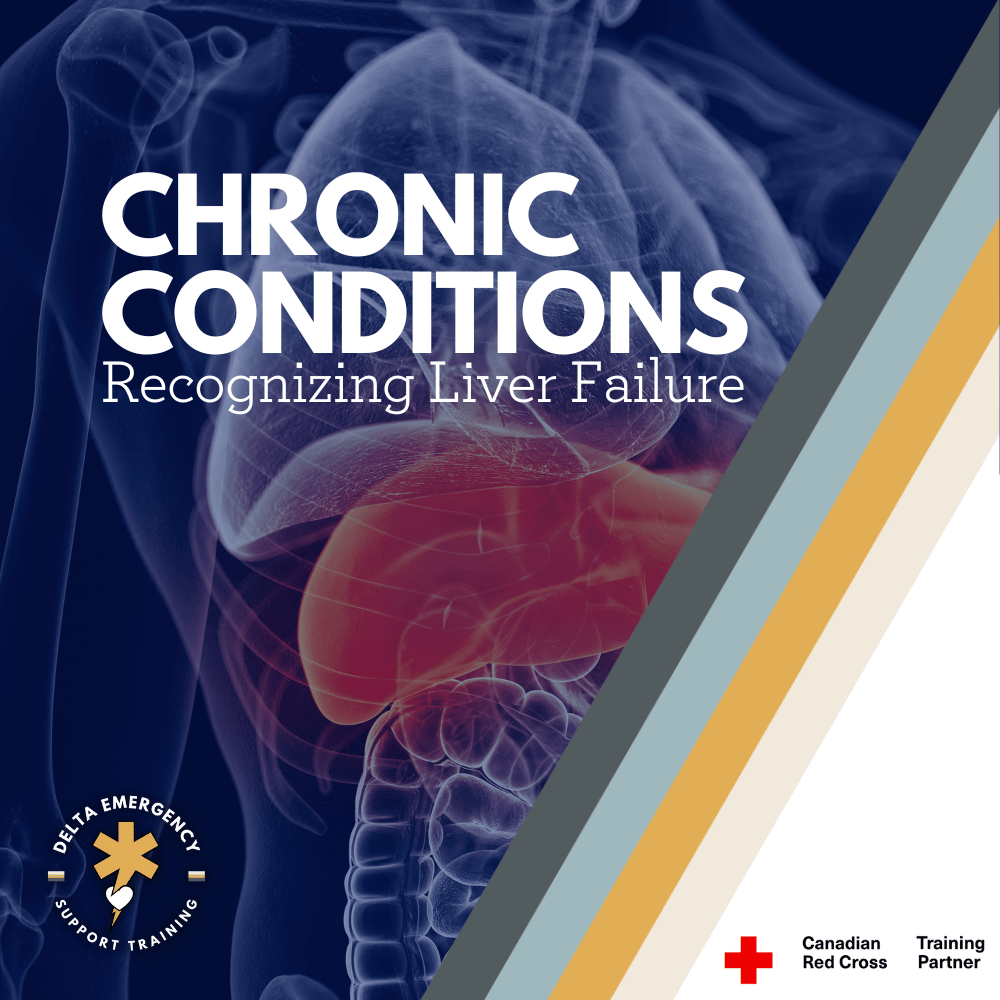
Liver Failure: What Every Future First Responder Should Know

Liver failure is a life-threatening condition that every future first responder should be able to recognize. This in-depth guide covers liver function, causes of failure, patient symptoms, and how firefighters and EMRs can respond—based on Red Cross emergency care standards.

The liver is one of the most vital organs in the human body, responsible for a wide range of essential functions. As a first responder—whether you're training as a firefighter, Emergency Medical Responder, or preparing for a healthcare career—it’s important to understand what liver failure is, how it presents, and what role you can play in early recognition and supportive care.

This blog post is designed for students and professionals taking Advanced First Aid or Red Cross EMR courses who are beginning their journey into emergency services. Whether you’re on a call with your fire crew or treating a patient as part of EMS, knowing how to recognize and respond to liver failure can save lives.

The Role of the Liver in the Human Body

The liver has more than 500 known functions. Key responsibilities include:

  • Detoxification: Filtering toxins from the blood (including medications, alcohol, and waste byproducts).

  • Metabolism: Processing carbohydrates, fats, and proteins.

  • Storage: Storing glycogen, vitamins, and iron.

  • Bile Production: Aiding digestion by producing bile for fat absorption.

  • Clotting Factors: Synthesizing proteins necessary for blood clotting.

When liver cells become damaged or overwhelmed, these processes break down—leading to liver failure, which can progress rapidly.

What Is Liver Failure?

Liver failure occurs when the liver loses its ability to function adequately. It can be acute (develops quickly over days or weeks) or chronic (progresses over months or years).

Types of Liver Failure:

  • Acute Liver Failure (ALF): Often caused by overdose, viral hepatitis, or toxins. Patients may have had no prior liver disease.

  • Chronic Liver Failure (CLF): Usually due to long-term conditions like alcoholism, hepatitis C, or nonalcoholic fatty liver disease (NAFLD).

Stages of Liver Failure

  1. Inflammation: Liver becomes swollen or inflamed.

  2. Fibrosis: Scar tissue begins to form.

  3. Cirrhosis: Scar tissue replaces healthy tissue, impeding function.

  4. End-Stage Liver Disease (ESLD): Liver stops functioning effectively.

  5. Hepatic Encephalopathy: Toxins affect brain function due to liver's inability to filter.

Common Causes of Liver Failure

  • Alcohol abuse

  • Hepatitis A, B, and C

  • Acetaminophen overdose

  • Autoimmune liver disease

  • Genetic conditions (e.g., Wilson’s disease)

  • Fatty liver disease

  • Toxin exposure (mushrooms, industrial chemicals)

Signs and Symptoms

As a first responder, here are the signs you may observe:

Early Signs:

  • Fatigue

  • Loss of appetite

  • Nausea and vomiting

  • Right upper quadrant abdominal pain

Progressing Symptoms:

  • Jaundice: Yellowing of the skin and eyes

  • Bruising or bleeding easily (due to loss of clotting factors)

  • Swelling in legs and abdomen (ascites)

  • Dark urine, pale stool

  • Confusion or personality changes (hepatic encephalopathy)

  • Fetor hepaticus: A sweet, musty breath odor

How These Patients Present to EMS:

  • Altered level of consciousness

  • Seizures or unresponsiveness in severe encephalopathy

  • Abdominal pain and distention

  • Visible jaundice or bruising

  • History of alcohol use, medication use (especially acetaminophen), or hepatitis

  • Possible GI bleeding (hematemesis or melena)

Treatment Overview

While definitive treatment often includes hospitalization, liver transplant, or intensive supportive care, first responders can play a crucial early role:

Emergency Priorities:

  • Airway, Breathing, Circulation (ABCs): Always your first step.

  • Monitor LOC: Liver failure can rapidly lead to encephalopathy and unconsciousness.

  • Manage bleeding: These patients bleed easily due to impaired clotting.

  • Prevent further harm: Minimize medications and toxins.

  • Rapid transport: Time is critical in acute liver failure.

How Firefighters, EMRs, and Paramedics Respond

For Firefighters:

  • Be aware during medical assist calls, particularly for unconscious individuals.

  • Look for signs of jaundice or a known history of liver disease.

  • Support EMS with lifting and extrication in swollen or weakened patients.

For EMRs:

  • Take a clear history if possible (alcohol, drug use, known liver issues).

  • Use primary and secondary survey techniques to identify symptoms.

  • Support airway and manage LOC as needed.

  • Understand your role in ongoing assessment and timely transport.

For Paramedics:

  • Initiate IV access if within scope.

  • Administer oxygen and prepare for airway intervention.

  • Check glucose levels—hypoglycemia is common.

  • Be prepared for seizures or altered mental status.

  • Notify receiving hospital of suspected liver failure.

Why Liver Knowledge Matters for First Responders

Liver failure is often underrecognized in the pre-hospital setting, especially in its early stages. However, responders with advanced first aid or EMR training can spot the red flags and advocate for timely care.

Understanding the liver’s role in the body, the signs of dysfunction, and how these patients deteriorate can help you:

  • Communicate effectively with paramedics and hospital staff.

  • Make informed decisions during assessment.

  • Improve outcomes by acting early.

Join the Front Lines: Train with Confidence

At Delta Emergency Support Training, we specialize in Red Cross-certified Advanced First Aid and Emergency Medical Responder (EMR) courses for individuals looking to start a career in emergency services.

Whether you're working toward a future as a paramedic, firefighter, or healthcare professional, our instructors—many of whom are active EMS providers and firefighters—are here to prepare you for real-world scenarios, including recognizing critical conditions like liver failure.

Final Thoughts

Liver failure may not be the first thing that comes to mind during a call—but for the trained eye, it's a condition that demands attention. As a first responder, being equipped with the knowledge to recognize and respond can make all the difference.

Take the first step in your emergency services career by enrolling in one of our Red Cross-certified training programs. Learn to recognize more than symptoms—learn to save lives.

Read More

Top 3 First Aid Skills Every Babysitter Should Know

Prepare for babysitting emergencies with our Red Cross Babysitter Course. Learn life-saving first aid skills such as choking first aid, using an EpiPen, and handling severe bleeds. Our course will teach you how to respond effectively and stay calm in critical situations.

Being a babysitter comes with a lot of responsibility, and while you might be prepared to entertain, play, and feed kids, there’s one crucial skill set that’s often overlooked: first aid training. Children are prone to accidents, and as a babysitter, knowing how to respond effectively can make all the difference in an emergency.

That’s why Red Cross First Aid Training is essential. The Canadian Red Cross offers courses designed to equip you with the skills to handle a wide range of emergencies — ensuring that you’re prepared and capable when a crisis strikes. In this blog, we’ll discuss the top 3 first aid skills that every babysitter should master to ensure the safety and well-being of the children in their care. These skills aren’t just important — they can be life-saving.

1. Choking First Aid: Saving a Child’s Life in Seconds

Choking is one of the most common emergencies a babysitter might encounter. Small children are naturally curious and tend to put things in their mouths, making choking a constant risk. Whether it's food, a small toy, or something else entirely, it’s essential that babysitters know the proper steps to take if a child starts choking.

What to Do:

  • For babies under 1 year old: Hold the baby face-down on your forearm, supporting the head and neck. Give 5 firm back blows between the baby’s shoulder blades. If the object isn’t dislodged, turn the baby over and give 5 chest thrusts with two fingers. Repeat back blows and chest thrusts until the object is expelled or the baby loses consciousness. If the baby loses consciousness, immediately call 911 and begin CPR (compressions and rescue breaths if trained to do so).

  • For children over 2 years old: Place the child over your knee with their head facing down. Support the front of their body with your arm, and give back blows. Repeat back blows then abdominal thrusts until the object is expelled or the child loses consciousness. If the child loses consciousness, immediately call 911 and begin CPR.

Why It’s Important:
A blocked airway can cause suffocation in just a few minutes, so knowing how to clear a child’s airway swiftly is critical. Red Cross First Aid courses will teach you these techniques to ensure that you’re ready to act in an emergency.

2. Administering an EpiPen: Treating Severe Allergic Reactions

Many children have allergies, and some reactions can be severe, even life-threatening. Allergies to food, insect stings, or medication can lead to anaphylaxis, a severe allergic reaction that requires immediate treatment. Babysitters should be familiar with how to use an EpiPen (epinephrine auto-injector) to quickly deliver life-saving medication.

What to Do:

  • Always have the EpiPen with you if you're caring for a child who has a history of severe allergic reactions.

  • Correct EpiPen technique: When ready to use, hold the EpiPen firmly with the orange tip facing the thigh. Blue to the sky, orange to the thigh (this is the phrase to help you remember). Do not place your finger on top of the EpiPen — if you inject yourself, both you and the child will need first aid.

  • Administer the injection: Inject the EpiPen into the lateral thigh (outer thigh) and hold it in place for 10 seconds. After the injection, gently rub the area for 30 seconds to help disperse the medication.

  • Call 911 immediately: After administering the EpiPen, always call 911, as anaphylactic reactions can worseneven after epinephrine is delivered. It’s important to let medical professionals take over.

  • Multiple doses may be required: EpiPens are single-use devices, and many people will need additional doses of epinephrine. If the child’s symptoms do not improve after 10-15 minutes, a second dose may be necessary, so ensure you have another pen on hand if prescribed.

Why It’s Important:
EpiPens can reverse anaphylaxis by constricting blood vessels and opening the airways, but this only offers temporary relief. Quick action is critical, and knowing how to administer the EpiPen correctly could save a child's life. Red Cross First Aid courses teach you the correct steps to safely and effectively use an EpiPen in an emergency.

3. Dealing with Life-Threatening Bleeding: Stop the Blood Flow

Severe bleeding, whether from a fall, a cut, or an accident, can be life-threatening if not managed properly. Knowing how to control bleeding is essential for babysitters, especially when caring for active or adventurous children. Self-protectionis also important, as you should avoid direct contact with blood when possible.

What to Do:

  • First, protect yourself: If possible, wear gloves or use a cloth to shield your hands from contact with blood. This helps protect you from potential bloodborne diseases.

  • Apply direct pressure: Use a clean cloth, towel, or even a shirt to apply direct pressure to the wound. If the bleeding continues and the cloth becomes soaked, add another layer on top without removing the first one. This helps the clotting process continue without disturbing it.

  • Do not remove layers: Once the cloth is applied, do not remove it. If you remove it, it may disrupt the clotting process and cause more bleeding. Simply add more layers of cloth or material if needed.

  • For life-threatening bleeds: If the bleeding doesn’t stop after several minutes of direct pressure, or if you notice signs of shock (pale skin, rapid pulse, dizziness), call 911 immediately and continue to apply pressure.

  • Avoid using a tourniquet unless directed by a professional: A tourniquet is a last resort and should only be used if you are instructed by medical professionals.

Why It’s Important:
Severe bleeding can quickly lead to shock and even death if not controlled. Knowing how to apply direct pressure and protect yourself from exposure to blood ensures that you are helping without putting yourself at risk. Red Cross First Aid courses teach the importance of quick action in controlling bleeding.

Conclusion: Confidence Through Preparation

As a babysitter, your primary responsibility is ensuring the safety and well-being of the children in your care. Accidents can happen in the blink of an eye, and knowing how to respond can make all the difference. By mastering the first three essential skills — choking first aid, administering an EpiPen, and controlling life-threatening bleeds — you’ll be prepared for some of the most common and serious emergencies that may arise.

At the Red Cross Babysitter Course, we equip soon-to-be babysitters with the knowledge and confidence to handle these situations effectively and calmly. Whether it’s a choking incident, a severe allergic reaction, or a bleeding emergency, our course covers essential first aid skills specifically designed for caring for babies and children. We not only teach you how to respond quickly but also guide you on how to stay calm during stressful situations, ensuring that both you and the children remain safe.

The Red Cross Babysitter First Aid course isn’t just about learning skills — it’s about being empowered to act confidently when it matters most. Take the time to invest in this vital training and become the best and most prepared babysitter you can be.

Read More