The Delta Dispatch
The Red Cross: Everything Aspiring First Responders Need to Know Introduction
Thinking about becoming a first responder? The Red Cross provides essential training, from Standard First Aid (SFA) with CPR/AED Level C to Advanced First Aid (AFA), Basic Life Support (BLS), and Emergency Medical Responder (EMR). At Delta Emergency Support Training, we offer all these courses, including bridge programs and recertifications, helping you stay certified and ready to respond. 🚑
If you’re looking to become a first responder or expand your emergency care knowledge, the Red Cross is one of the most recognized and respected organizations for first aid and lifesaving training. Whether you’re starting with Standard First Aid (SFA) with CPR and AED Level C or progressing to Advanced First Aid (AFA) and Basic Life Support (BLS), understanding the training pathway is essential for anyone serious about emergency response.
At Delta Emergency Support Training, we offer all of these courses, including Emergency Medical Responder (EMR), bridge courses, and recertifications to help you stay up to date and advance your skills.
Standard First Aid (SFA) – The Essential Foundation
Before you can progress to advanced emergency medical training, you’ll need a strong foundational knowledge of first aid. Standard First Aid (SFA) with CPR/AED Level C is a prerequisite for more advanced training, making it the first step for aspiring first responders.
What Does Standard First Aid (SFA) Include?
This course covers the essential lifesaving skills needed to respond to common emergencies, including:
CPR and AED (Level C): Learn how to perform Cardiopulmonary Resuscitation (CPR) on adults, children, and infants and how to use an Automated External Defibrillator (AED).
Choking Response: Techniques for assisting choking victims of all ages.
Bleeding Control: Proper wound care, including bandaging, applying direct pressure, and using tourniquets.
Shock Management: Recognizing and responding to different types of shock.
Burns and Environmental Emergencies: First aid for burns, heat exhaustion, hypothermia, and frostbite.
Head, Neck, and Spinal Injuries: How to stabilize an injured person and prevent further harm.
Medical Emergencies: Recognizing and responding to diabetic emergencies, seizures, strokes, and allergic reactions.
Why Is Standard First Aid Important?
It is a prerequisite for Advanced First Aid and EMR (AFA).
It meets workplace safety requirements for many jobs, including healthcare, security, and childcare.
It provides practical, hands-on training to build confidence in emergency situations.
At Delta Emergency Support Training, we offer recertification courses to help you maintain your certification and stay prepared.
Advanced First Aid (AFA) vs. Emergency Medical Responder (EMR)
Once you have completed Standard First Aid, you may want to continue with Advanced First Aid (AFA) or Emergency Medical Responder (EMR). Understanding the differences between these two courses is important for choosing the right path.
Advanced First Aid (AFA)
Designed for those interested in becoming a first responder as well as workplace first responders, security personnel, and safety officers.
Includes oxygen therapy, airway management, and advanced bleeding control.
Covers spinal immobilization, fractures, and extended care skills.
Focuses on scene management and multi-casualty incidents.
Emergency Medical Responder (EMR)
A more advanced course designed for those looking to work in EMS, firefighting, or law enforcement.
Includes all AFA content plus advanced medical care, such as patient assessments, pharmacology, and vital signs monitoring.
Prepares students to assist paramedics in emergency medical situations.
Required for those pursuing a career in emergency services.
At Delta Emergency Support Training, we offer both AFA and EMR, as well as bridge courses to help transition between certifications.
Basic Life Support (BLS) – For Medical Professionals and First Responders
For those pursuing a career in healthcare, paramedicine, or emergency response, Basic Life Support (BLS) is an essential certification. BLS is more intensive than standard CPR training and focuses on high-performance resuscitation techniques used by medical professionals and first responders.
What Does Basic Life Support (BLS) Cover?
High-performance CPR with a focus on teamwork.
Bag-valve mask (BVM) ventilation for respiratory support.
Two-rescuer resuscitation techniques.
Management of choking in unresponsive individuals.
Use of oxygen equipment and suctioning.
AED use in complex medical settings.
Who Needs BLS Certification?
Paramedics and emergency medical responders.
Nurses, doctors, dental hygenists and other healthcare providers.
Firefighters and law enforcement officers.
First responders working in high-risk settings.
At Delta Emergency Support Training, we offer BLS courses and recertifications to ensure first responders stay up to date with the latest life-saving techniques.
Choosing the Right Course for Your Goals
If you’re unsure which course is right for you, consider the following pathway:
Start with Standard First Aid (SFA) + CPR/AED Level C → For general emergency preparedness and workplace safety.
Move to Advanced First Aid (AFA) → If you need a higher level of training for emergency response roles.
Complete Basic Life Support (BLS) → If you are pursuing a healthcare or first responder career.
Pursue Emergency Medical Responder (EMR) → If you are looking to work in EMS
Each step builds upon the previous one, ensuring that first responders develop both knowledge and practical skills to handle a wide range of emergencies.
Conclusion
The Red Cross provides essential training for aspiring first responders, workplace safety officers, and healthcare professionals. Whether you’re beginning with Standard First Aid or advancing to AFA, BLS, or EMR, every step prepares you for real-world emergencies where your skills can make a life-saving difference.
At Delta Emergency Support Training, we offer all of these courses, including bridge programs and recertifications, ensuring that you stay trained and ready. Whether you need SFA, AFA, BLS, or EMR, we have the right course for you!
🚑 Be prepared. Get trained. Save lives.
Quick Response, Confident Action: Canadian Red Cross Basic Life Support Field Guide
The "Canadian Red Cross: Basic Life Support Field Guide" is an essential tool for anyone trained in Basic Life Support (BLS). Designed for quick reference, this compact guide provides actionable steps for CPR, choking management, and AED use, ensuring you’re ready to respond in high-pressure situations. With clear illustrations and practical examples, this guide is a must-have for healthcare professionals and anyone certified in BLS.
A Lifesaver in Your Pocket: Essential for Every Responder
In the critical moments of a medical emergency, every second counts. The "Canadian Red Cross: Basic Life Support Field Guide" is an essential resource for anyone certified in Basic Life Support (BLS), from healthcare professionals to lay responders. This compact, easy-to-use guide is designed to be a quick reference in high-pressure situations, ensuring that the fundamental skills of life support are always within reach.
Tailored for Quick Reference and Rapid Recall
This field guide distills complex CPR techniques and emergency responses into concise, actionable steps. It's structured to help you quickly refresh your memory on essential procedures, including:
High-quality chest compressions
Ventilation skills
Management of choking for adults, children, and infants
Use of automated external defibrillators (AEDs)
Each section of the guide is accompanied by clear, instructive illustrations that enhance understanding and recall, making it easier to apply the techniques in real-life scenarios.
A Must-Have for a Wide Range of Responders
Whether you're a nurse on the front lines, a paramedic in the field, or a designated first aid provider at your workplace, this guide is made for you. Its comprehensive coverage makes it invaluable not only for professional use but also for anyone trained in BLS who might need to act swiftly to save a life.
Enhancing Skills with Reliable Information
The Basic Life Support Field Guide is more than just a manual; it's a training companion that reinforces your skills through:
Scenario-based practice examples
Step-by-step guides for both expected and unexpected situations
Quick tips for maintaining composure and efficiency in emergency situations
Why Physical Copies Matter
In emergency situations, technology can fail. A physical guide ensures that the information you need is available without concern for battery life, signal, or functionality. Its durable design means it can withstand the rigors of any environment, from a hospital ward to an outdoor adventure.
Conclusion
Ready to enhance your readiness and confidence in critical situations? The Canadian Red Cross Basic Life Support Field Guide is available now at Delta Emergency Support Training. Equip yourself with the knowledge and skills that make a difference when it matters most. Visit Delta Emergency Support Training to get your copy today and stay prepared for any emergency with the best CPR techniques, emergency response tips, and life-saving skills at your fingertips.
Free Lifesaving Knowledge at Your Fingertips: Introducing Our Comprehensive Guide for First Aid & CPR
Delta Emergency Support Training is excited to offer the "Comprehensive Guide for First Aid & CPR" as a free digital resource, empowering Canadians with the skills to handle emergencies confidently. This guide covers everything from CPR techniques to injury management and legal considerations, making it a vital tool for anyone looking to be better prepared in critical situations. Download your free copy today and help create a safer, more prepared community.
Ensuring Safety and Preparedness Across Canada
In our commitment to fostering a safer and more prepared community, Delta Emergency Support Training is proud to introduce a groundbreaking resource: the "Comprehensive Guide for First Aid & CPR." This extensive, digital book is offered entirely free of charge, aimed at equipping Canadians from all walks of life with the essential skills needed to respond effectively to emergencies.
What's Inside the Guide?
Our digital guide is a thorough compilation covering all aspects of first aid and CPR. Here are just a few sections that could make a critical difference in an emergency situation:
Emergency Preparedness: Learn how to equip your home and office to handle emergencies, from basic first aid kits to understanding the signs of medical distress.
CPR Techniques: Our guide provides step-by-step instructions for performing CPR on adults, children, and infants, ensuring you can act confidently when seconds count.
Managing Medical Emergencies: Whether it's dealing with severe allergic reactions, cardiac arrests, or other medical emergencies, our guide has you covered with expert advice.
Injury Prevention and Management: From treating burns to handling fractures, learn the most effective techniques to manage and mitigate injuries.
Legal Considerations: Understand the Good Samaritan laws that protect you when providing emergency aid and the responsibilities you hold as a caregiver or first responder.
Why a Free Digital Book?
Accessibility is key in emergency preparedness. By making this guide available digitally at no cost, we ensure that every individual, family, and organization in Canada has the opportunity to learn lifesaving techniques. This initiative is part of our mission to enhance community safety and empower individuals through education.
How to Access the Guide
Getting your copy of the "Comprehensive Guide for First Aid & CPR" is easy and instant. Simply visit our website at Delta Emergency Support Training, navigate to our resources section, and download your free copy today. Keep it on your mobile devices, computers, or print it out for quick reference.
Conclusion
We believe that knowledge is power, especially when it comes to saving lives. That's why we are thrilled to offer this valuable resource for free. Whether you're a parent, teacher, professional responder, or a concerned citizen, this guide is for you. Download your free copy today, and take a significant step toward becoming a more prepared, capable, and confident member of your community. Let's work together to keep Canada safe, one informed individual at a time!
Emergency Birth as a First Responder: Postpartum Care
Dive into the realm of postpartum care during emergency births, where first responders play a vital role. Explore expert techniques, bleeding management strategies, and firsthand insights from seasoned paramedics. Elevate your capabilities as a first responder with invaluable knowledge on ensuring the well-being of both newborns and mothers in these critical moments.
Caring for the Newborn
Welcome to the second part of our comprehensive two-part series, where we continue our exploration of emergency births and the invaluable contributions of first responders. In the initial segment, we delved into the preparations and assistance offered during the childbirth process. Now, as we progress into Part 2, our focus intensifies on the pivotal steps undertaken by first responders to ensure the immediate well-being of both the newborn and the mother post-delivery.
Mother postpartum holding neonate on her chest.
This installment delves deeper into the critical aspects of post-birth care, revealing the intricate measures that first responders execute to stabilize the newborn and provide essential support to the mother. We'll navigate through the essential processes of promoting the newborn's well-being, utilizing tools like the APGAR scale to assess their condition. Simultaneously, we address the importance of postpartum care for the mother, emphasizing vigilant monitoring and timely interventions to manage postpartum bleeding.
With these multifaceted actions, first responders display their unwavering commitment to preserving life and fostering well-being during the immediate aftermath of childbirth. Join us on this journey as we uncover the intricacies of post-birth care, shedding light on the dedication and expertise that first responders bring to these unforeseen situations.
Vigorous Drying Techniques:
If the newborn does not exhibit signs of breathing or crying, immediate action is essential. Begin by employing vigorous drying techniques. Take a clean, soft towel and gently rub the baby's back, arms, and legs. This tactile stimulation often prompts a response by initiating their reflexes.
Assessing the Response:
After performing vigorous drying for approximately 30 seconds, pause and closely observe the baby's reaction. Look for any movements, breathing, or vocalizations. This assessment helps determine the baby's level of responsiveness and guides further intervention.
Using a Bag-Valve-Mask (BVM):
If the newborn remains unresponsive, it's time to provide assisted ventilation using a BVM. Ensure a proper seal by placing the mask over the baby's nose and mouth. Administer gentle breaths at a rate of 1 ventilation every 3 seconds. This method delivers a controlled supply of oxygen to the baby's lungs.
Ventilation and Pulse Assessment:
During the 30-second period of ventilation using the BVM, closely monitor the newborn's response. Afterward, assess the baby's pulse. If the pulse is below 60 BPM, it's an indication that immediate intervention is necessary.
Neonate CPR Protocol:
When the pulse remains below 60 BPM, initiate neonate CPR. Begin with 3 gentle chest compressions, followed by 1 breath using the BVM. Continue this cycle, maintaining a ratio of 3 compressions to 1 breath. As you administer CPR, be vigilant about monitoring the baby's heart rate.
Optimal Heart Rate:
A newborn's optimal heart rate typically falls between 140 and 160 BPM. Continuous heart rate monitoring informs you about the baby's response to the resuscitative efforts. Continue with primary assessment once neonates ABC’s are considered stable. Begin conducting a baseline set of vitals if possible.
APGAR Scale
The APGAR scale is a valuable tool used to assess the overall condition of a newborn immediately after birth. Named after its creator, Dr. Virginia Apgar, this assessment helps medical professionals and first responders quickly evaluate the baby's physical status and determine if any immediate interventions are required. The APGAR scale evaluates five key factors:
Appearance (Skin Color):
The baby's skin color is assessed. A newborn with a pink or rosy skin tone receives a score of 2, while pale or bluish skin results in a lower score.
Pulse (Heart Rate):
The baby's heart rate is evaluated. A heart rate of 100 to 140 BPM is considered normal and receives a score of 2. A lower heart rate receives a score of 1, and a heart rate of less than 100 BPM gets a score of 0.
Grimace Response (Reflexes):
The baby's reflexes are tested by gently stimulating their nose or feet. A newborn who responds with a sneeze, cough, or grimace (frowning) gets a score of 2. A sluggish response results in a score of 1, and no response gets a score of 0.
Activity (Muscle Tone):
The baby's muscle tone is assessed. If the baby exhibits active movement and flexion, they receive a score of 2. If the limbs are partially flexed, the score is 1. If there is minimal or no movement, the score is 0.
Respiration ( Rate and Effort):
The baby's breathing rate and effort are observed. If the baby is crying and breathing normally, they receive a score of 2. Irregular or slow breathing results in a score of 1, and no breathing receives a score of 0.
When and How the APGAR Scale is Conducted:
The APGAR assessment is typically performed twice: at 1 minute after birth and again at 5 minutes after birth. Each factor is assigned a numerical rating of 0, 1, or 2. The scores are then added together to yield a total score out of 10. The assessment helps medical professionals and first responders quickly identify any issues that require immediate attention and determine if the baby is adapting well to life outside the womb.
Caring for the Mother Post Delivery
After stabilizing the newborn, it's essential to provide comprehensive care to the mother, addressing both physical and emotional needs. Here's a closer look at postpartum care for the mother:
Encouraging Breastfeeding:
Following the stabilization of the newborn, encouraging the mother to breastfeed is a vital step. Breastfeeding stimulates the uterus to contract, which in turn helps reduce bleeding. This process, known as uterine involution, assists the mother's body in returning to its pre-pregnancy state. Moreover, breastfeeding establishes a strong bond between mother and baby and offers a multitude of benefits for both.
Placenta Handling:
In line with recommended practices, refrain from cutting the placenta from the newborn unless local protocols or medical direction dictate otherwise. Instead, carefully wrap the placenta in a plastic bag and towel for transport with the family. This approach respects the physiological connection between the placenta and the newborn and ensures a smooth transition.
Managing Postpartum Bleeding:
In cases where postpartum bleeding is a concern, gentle and non-invasive techniques are employed. Use sterile gauze or a clean towel to gently clean the mother's perineal area. This process helps slow down bleeding without resorting to any interventions that may pose risks.
Monitoring and Recognizing Excessive Bleeding:
Keeping a vigilant eye on postpartum bleeding is crucial. Differentiating between normal and excessive bleeding is essential for the mother's well-being. Excessive bleeding may result from the uterus not contracting as it should. This information will be instrumental in determining the appropriate interventions.
Addressing Shock Symptoms:
It's important to be aware that mothers might present symptoms similar to shock, which can include pale skin, rapid heartbeat, and altered mental state. In cases where these symptoms persist or worsen, rapid transportation to a medical facility becomes imperative. This is particularly crucial if bleeding remains a concern.
Through these measures, first responders offer a holistic approach to postpartum care for the mother. From promoting uterine contraction through breastfeeding to respecting placenta connection, these actions contribute to the mother's comfort and well-being. Vigilant monitoring, appropriate interventions, and the utmost sensitivity to the mother's condition reflect the dedicated commitment of first responders in ensuring the holistic health and safety of both the newborn and the mother during this critical phase.
Conclusion
Throughout this enlightening two-part series, we've unveiled the crucial role that first responders undertake in emergency births. From cultivating a sterile environment to aiding childbirth and offering essential postpartum care.
Join us in our advanced first aid class where we offer comprehensive obstetrics training. Collaborate with seasoned paramedics who have delivered babies in the field, gaining practical insights that prepare you to confidently assist during emergency births.
AEDs: The Basics
Sudden cardiac arrest (SCA) is a leading cause of death worldwide, with millions of people experiencing it each year. AEDs, or Automated External Defibrillators, are critical in treating SCA because they can deliver a life-saving shock within minutes of the onset of symptoms. This blog post will cover the basics of AEDs, including how they work, why they're important, and how to use them.
Automated External Defibrillators (AED): What You Need to Know
An Automated External Defibrillator, or AED, is a portable electronic device used to treat sudden cardiac arrest (SCA) in conjunction with Cardiopulmonary Resuscitation (CPR). AEDs are designed to be used by anyone, regardless of their level of training or experience, to help save lives in emergency situations.
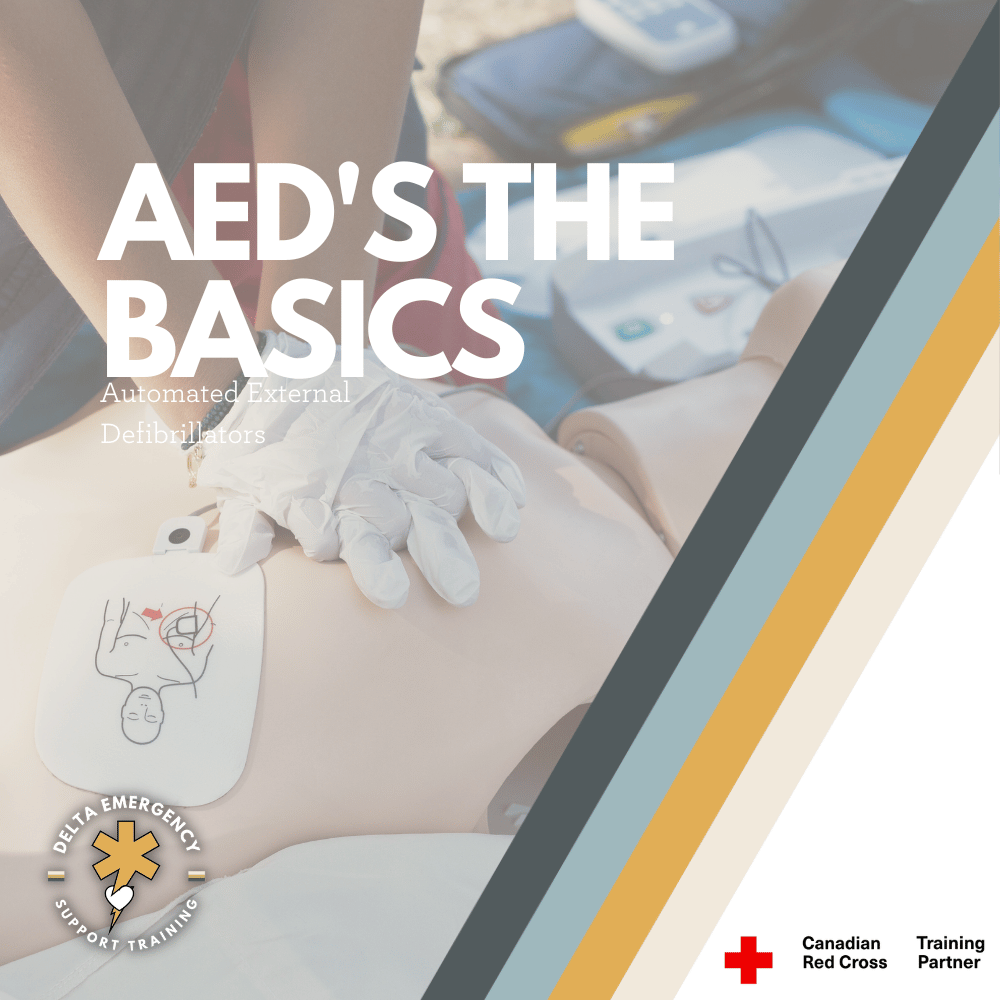
A person wearing gloves is performing first aid on a CPR dummy, while following AED directions. The person's hands are on the chest of the dummy, as if performing chest compressions. There is an AED device next to the dummy, with the pads attached to the dummy's chest.
How Does An AED Work?
AEDs work by analyzing the heart rhythm of a person experiencing SCA, and then delivering an electric shock to restore the heart's natural rhythm. The device comes with two sticky pads with attached wires, called electrodes. These pads are placed on the person's chest, and the AED's computer analyzes the heart rhythm through the electrodes. If the AED determines that the person's heart is in ventricular fibrillation or another treatable rhythm, it will prompt the user to deliver a shock. However, if the person's heart is in asystole, which is the absence of any heart rhythm, the AED will not deliver a shock. It's important to note that the use of an AED on a person with no heart rhythm (asystole) is not recommended because it is unlikely to be effective.
AED + CPR
CPR, or cardiopulmonary resuscitation, is a life-saving technique used to help someone who is in cardiac arrest. It involves a combination of chest compressions and rescue breaths to manually circulate oxygen-rich blood through the body when the heart is not beating effectively. CPR is performed when someone is unconscious, not breathing, and has no pulse.
When someone experiences sudden cardiac arrest (SCA), CPR should be performed while waiting for an AED to arrive or be retrieved. The combination of CPR and AED can significantly increase the chances of survival.
Why Are AED’s Important
Sudden cardiac arrest (SCA) is a leading cause of death worldwide, with millions of people experiencing it each year. AEDs, or Automated External Defibrillators, are critical in treating SCA because they can deliver a life-saving shock within minutes of the onset of symptoms. AEDs are easy to use, portable, and equipped with clear instructions and voice prompts. They can be stored in public places, homes, and businesses to provide quick access in case of an emergency.
Where Can I Find An AED?
AEDs are becoming more common in public places, such as airports, shopping centers, and schools. Many workplaces are also beginning to invest in AEDs for their employees and customers. It's important to know where the nearest AED is located in case of an emergency. Look for AEDs in clearly marked cabinets, often mounted on the wall. Some AEDs come with an audible alarm or flashing light to make them easier to find in an emergency. If you are unsure where an AED is located, ask your employer or contact your local fire department or ambulance service for more information.
How Can You Use An AED?
AEDs are designed to be simple and easy to use. Most devices come with clear verbal instructions and visual prompts that guide the user through the steps of using the device. Here is a brief overview of how to place AED pads on adults and children:
For adults: Place one pad on the upper right side of the chest and the other pad on the lower left side of the chest, as shown in the diagram on the AED or in the instructions. It's important to make sure the pads are placed correctly and securely on the skin.
For children: Pediatric pads should be used for children under the age of eight or weighing less than 55 pounds. These pads have a lower energy setting to avoid harm to the child. Place one pad on the center of the child's chest and the other pad on the child's back, just below the shoulder blades.
It's important to note that AEDs should not be used on a wet surface or in water. The chest should be shaved and dried if necessary to ensure good contact with the electrode pads. Sweat and other moisture can interfere with the proper function of the device.
Automated External Defibrillators are an important tool in treating sudden cardiac arrest. These devices can be used by anyone, regardless of their level of training or experience, to help save lives in emergency situations.
Saving Lives: The Vital Role of Automated External Defibrillators (AEDs) in Cardiac Emergency Response
The importance of Automated External Defibrillators (AEDs) in cardiac emergency response cannot be overstated. This powerful photo depicts a person using an AED to deliver life-saving defibrillation during a critical moment of a cardiac emergency. With a descriptive filename, alt text, and metadata that includes relevant keywords, this image serves as a powerful visual representation of the vital role of AEDs in saving lives during cardiac emergencies.
Saving Lives with Automated External Defibrillators (AEDs): What You Need to Know
The importance of Automated External Defibrillators (AEDs) in cardiac emergency response cannot be overstated. This photo depicts an AED, ready to deliver life-saving defibrillation during a critical moment of a cardiac emergency.
Cardiac arrest is a sudden and life-threatening condition that occurs when the heart suddenly stops beating effectively. Immediate intervention is critical to increase the chances of survival, and Automated External Defibrillators (AEDs) have emerged as a crucial tool in saving lives during cardiac emergencies. In this blog post, we will explore what AEDs are, how they work, and why they are essential in cardiac arrest management.
What are AEDs?
An Automated External Defibrillator (AED) is a portable electronic device that is used to diagnose and treat life-threatening cardiac arrhythmias, such as ventricular fibrillation (VF) and pulseless ventricular tachycardia (VT). AEDs are designed to be used by non-medical professionals, including laypersons, and are commonly found in public places, workplaces, airports, schools, and other high-traffic areas.
How do AEDs work?
AEDs work by delivering an electric shock to the heart to restore its normal rhythm. When a person experiences cardiac arrest, the heart's electrical activity becomes chaotic, causing the heart to quiver or fibrillate instead of pumping blood effectively. AEDs are equipped with built-in sensors and computer algorithms that analyze the heart's electrical activity through adhesive pads (called electrodes) placed on the person's chest. If a shockable rhythm, such as Ventricular Fibrillation (VF) or Ventricular Tachycardia (VT), is detected, the AED will prompt the user to deliver a shock by pressing a button or automatically deliver the shock if it is a fully automated AED.
An Automated External Defibrillator (AED) is a portable electronic device that is used to diagnose and treat life-threatening cardiac arrhythmias, such as ventricular fibrillation (VF) and pulseless ventricular tachycardia (VT).
The shock delivered by the AED is intended to stop the chaotic electrical activity in the heart and allow the heart to reset itself and resume a normal rhythm. AEDs are designed to be safe and effective, with automated features that guide the user through each step of the process, including providing voice prompts, visual instructions, and feedback on the quality of CPR (cardiopulmonary resuscitation) being performed.
Why are AEDs important?
AEDs play a crucial role in improving the chances of survival for individuals experiencing sudden cardiac arrest. According to the American Heart Association (AHA), the use of an AED, in combination with CPR, can significantly increase the survival rate of cardiac arrest victims. In fact, for every minute that passes without defibrillation, the chances of survival decrease by approximately 10%. Therefore, quick access to an AED and early defibrillation is critical to increasing the chances of survival.
An Automated External Defibrillator (AED) electricity in action, ready to provide life-saving defibrillation during a cardiac emergency.
They are designed to be used by anyone, regardless of their medical training or experience. They are user-friendly, with clear instructions and prompts that guide the user through the entire process. Many AEDs also have visual aids, such as diagrams or animations, to assist users in correct pad placement and usage. This makes AEDs accessible and empowers bystanders to take immediate action during a cardiac emergency, even before professional medical help arrives.
AEDs are also lightweight and portable, making them easy to transport and use in various settings. They are often designed with durable cases, built-in carrying handles, and sometimes even equipped with backpacks or wall-mounted cabinets for easy storage and accessibility. Many AEDs also perform regular self-checks and have indicators that show their readiness status, ensuring that they are always ready for use in an emergency.
In addition to their ease of use and portability, AEDs are cost-effective. The cost of AEDs has decreased over the years, making them more affordable and accessible for public use. Some AEDs also come with maintenance packages, including
Another important aspect of AEDs is the potential for widespread community impact. When AEDs are strategically placed in public locations, they can be easily accessed and used by bystanders in the critical minutes following a cardiac arrest. This can significantly shorten the time to defibrillation and increase the chances of survival. Many communities, workplaces, and public facilities have recognized the importance of having AEDs readily available and have implemented AED programs as part of their emergency response plans. These AED programs often include training initiatives to educate community members on how to recognize cardiac arrest, perform CPR, and use an AED effectively, further empowering the community to respond to cardiac emergencies.
In conclusion, Automated External Defibrillators (AEDs) are crucial tools in saving lives during cardiac emergencies. Their ease of use, portability, affordability, and potential for widespread community impact make them essential components of cardiac arrest management. By providing early defibrillation and increasing the chances of survival, AEDs empower bystanders to take action and make a significant difference in saving lives. If you encounter someone experiencing sudden cardiac arrest, remember to call emergency services, start CPR, and locate and use an AED as soon as possible for the best chance of survival.
Textbooks: The Foundation of Education
Absorb More Information. Improve Comprehension.
Readers of print books absorb and remember more of the plot than readers of e-books do, according to a study that was presented in Italy in 2014. Studies have also shown it’s less disruptive to turn a page than to scroll down on a tablet or a screen, so your concentration level is higher with text. Printed textbooks also allow…
Printed Textbooks Improve Comprehension
There are many reasons printed textbooks lead to better comprehension. One is that students read at a slower pace when reading from a printed textbook rather than an online version. Reading slowly gives the material more time to sink in.
Studies have also shown it’s less disruptive to turn a page than to scroll down on a tablet or a screen, so your concentration level is higher with text. Printed textbooks also allow for greater engagement with the material. Students can underline facts, highlight key ideas and make notes in the margin, and they can flip back and forth between pages to review material or enhance their learning. (source)
You absorb more information.
Readers of print books absorb and remember more of the plot than readers of e-books do, according to a study that was presented in Italy in 2014. In an earlier study, print readers also scored higher in other areas, such as empathy, immersion in the book, and understanding of the narrative. Scientists believe this effect is related to the tactile sensation of holding a book in your hands.
Seeing and feeling how much progress you’ve made in the story can help readers feel like they’re unfolding the story—both literally and figuratively. Plus, with a print book, it’s easier to go back and confirm information you may be unsure of without losing your place and having to scroll or click back on your device. (source)
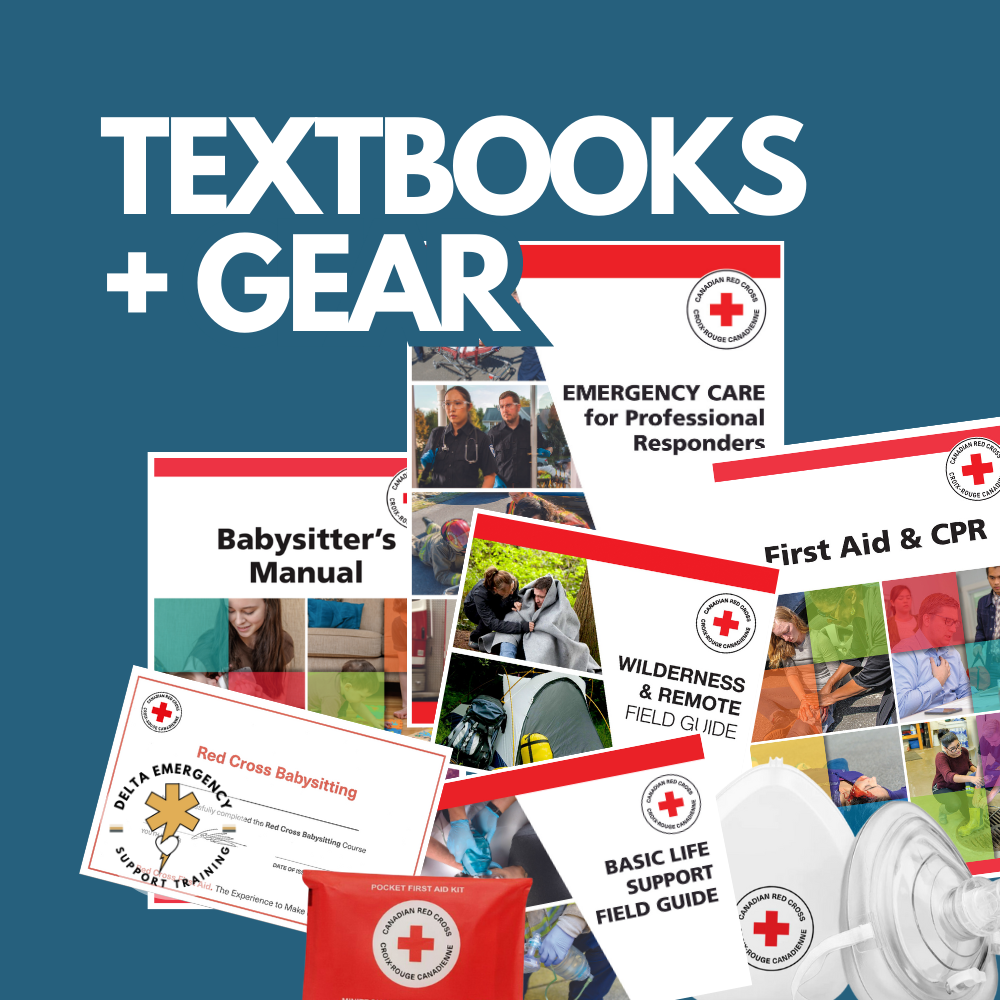
Delta Emergency Support Training offers a variety of Red Cross textbooks.
Textbooks include
● Emergency Care for Professional Responders
● Basic Life Support Field Guide
● First Aid and CPR Manual
● Babysitters Manual
● Wilderness and Remote Field Guide
As a Red Cross Training Partner, we offer a 10% discount on most of our textbooks!
Wilderness First Responder Course Package (THREE textbooks together):
Wilderness & Remote Field Guide (164 pages, 13.97cm X 11.43cm; 5.5" X 4.5"), Emergency Care for Professional Responders Reference Text (464 pages 21.5cm X 30.2cm, 8 1/2" X 10 7/8"), and Basic Life Support Field Guide (56 pages, 11.43 cm x 13.97 cm, 4.5" x 5.5").
Wilderness & Remote Field Guide:
A handy quick reference guide for first aid and CPR skills in Canadian remote and wilderness settings. Ideal for those who live or work in a wilderness or remote workplace or community, or who are outdoor recreation enthusiasts. Content includes prevention, causes, signs, assessment and treatment for minor, major and critical emergencies, and how to provide extended care for more than 24 hours including evacuation and transportation. This field guide is a great addition to any wilderness first aid kit. Coil bound on water resistant paper. (164 pages, 13.97 cm X 11.43 cm; 5.5" X 4.5").
Emergency Care for Professional Responders Reference Text:
A comprehensive all-Canadian resource for professional responders. Content organized for progressive learning, real-life scenarios, skills summary, charts and diagrams, and includes hundreds of colour photographs and bio-medical illustrations. Meets Paramedic Association of Canada National Occupational Competency Profile for Emergency Medical Responder and meets Transport Canada Training Program Standards in Marine First Aid. A new English Manual for Professional Responders regarding Emergency Care. Utilized by First Responder, Advanced First Aid, and Emergency Medical Responder course students.
Basic Life Support Field Guide:
A portable, informative guide on BLS skills. Basic Life Support Skills included in the manual are as follows; airway management, oxygen therapy, how to deliver quality CPR, AED protocol and recognition of life threatening emergencies. Coil bound on water resistant paper.
Babysitter’s Manual
A practical guide for babysitters offering checklists, activities and game ideas, sample résumé, and business cards. Presented in a youthful and energetic style, the content covers babysitting for different age-groups and is colour-coded for quick reference.
First Aid and CPR Manual
A step-by-step guide to first aid and CPR for home and work. Content includes responding to emergencies, what to look for and what to do for airway, breathing and circulation emergencies in adults, children and infants, wound care, head and spinal injuries, bone, muscle and joint injuries, sudden medical emergencies and environmental emergencies. This manual is a great addition to any home or workplace first aid kit.
Gear
Stay prepared with the proper First Aid gear. We’re about to release more items for your first aid and Fire/EMS kits, so keep your radios on! Our current gear includes:
● Pocket First Aid Kits
● CPR Masks
● Babysitter Wallet Certificate
Pocket First Aid Kits
The portable first aid kit contains first aid essentials for small wounds. Its small size and lightweight design make it ideal for handbags, backpacks or in the glove box of your car. Its price makes it the perfect give away gift and its quality and content make it desirable for all. Ideal for anyone in a childcare setting, parents and guardians, or simply the prepared individual on the go.
CPR Mask with O2 Inlet
Supplies included; CPR mask with O2 inlet and adjustable head strap, Red Cross branded clamshell and an instruction sheet. The CPR Mask with a one-way valve is used during respiratory and cardiac emergencies as a physical barrier device when administering rescue breaths to a person. The one-way valve prevents bodily fluids and airborne pathogens from reaching the rescuer. The medical-grade thermoplastic mask has a soft inflated cuff for a leakproof seal and adds to the patient’s comfort as well as an elastic head strap allowing the rescuer to secure the mask to the patient’s face. Also included, is an oxygen inlet for optional supplemental oxygen. Complete with a hard shell carrying case easy to carry in its compact size.
Babysitter Certificates
The cost of your first physical Babysitter certificate is included in the course fees. If you lose, damage, or want a second physical copy of your Wall Certificate or Wallet Card, contact us. We always print them on thick card stock! They can be at your house in about 2 weeks - and let us know if you would like a digital Babysitter Certificate in the meantime - we’re here to help.
Upcoming Wisdom Webinar
At Delta Emergency Support Training we are happy to answer any questions you may have about textbooks and gear. We provide training sessions for individuals or classes. We have options for in person, hybrid or online classes for Standard First Aid (SFA) Advanced First Aid (AFA) and Emergency Medical Responder (EMR) courses. For all inquiries please email info@deltaemergency.com
As always thank you for your support, stay safe!
Pocket Mask Requirements: First Aid Program Standards in 2021
All participants attending classroom training are required to have their own pocket resuscitation mask with single-use one-way valve.
Important changes to program standards
In the interest of public health during COVID-19 and beyond, please be advised the Canadian Red Cross program standards have been updated with respect to pocket masks in Red Cross First Aid training. All participants attending classroom training are required to have their own pocket resuscitation mask with single-use one-way valve.
Pocket masks must be new (if provided by the Training Partner) or previously owned by the participant only. While pocket masks are already used in training, they are typically decontaminated and reused along with a new one-way valve.
Purchase here: Pocket Mask
With this revised standard, the practice of decontaminating pocket resuscitation masks will be discontinued as masks may not be reused.
To ensure the safety of all students, course participants can bring their own pocket mask with a one-way valve, or they may opt to purchase one as an add-on item prior to class. Masks can be shipped to your home, or picked up on class day.
This new standard begins on March 31, 2021. Delta Emergency will adopt this new standard today, December 17, 2020. All courses that require mask ventilation training will be required to add a pocket mask at time of course purchase. If you choose not to buy a mask and do not have one on class day, you will be required to purchase one from your trainer in person before training can commence. If you refuse to purchase a mask in class, your participation will be marked as incomplete. We appreciate your understanding of this transition and we believe this will greatly reduce the risk of disease transmission for course participants.
Resources
Our COVID-19 protocols for classroom training have been revised to reflect this change. The courses this training will affect are:
Emergency First Aid
Standard First Aid
CPR A, CPR C, BLS, AED
Oxygen Therapy
Airway Management
Advanced First Aid
Please contact the Canadian Red Cross at 1-877-356-3226 with any questions regarding this new training standard.
As always, the health and safety of our partners, Instructors, and course participants is our first priority. Thank you for your support in ensuring a safe training environment.
Red Cross Online Babysitter's Course in Your Province
Canadian Red Cross Online Babysitter Couse. No matter where you live in Canada, there’s a course in your area + in your time zone at Delta Emergency. Become a Certified Babysitter and learn lifesaving skills to build your babysitting business. www.deltaemergency.com
Canadian Red Cross Online Babysitter’s Course
Delta Emergency is now offering the Red Cross online Babysitter course. This course offers basic first aid and caregiving skills for youth 11-15 years old. Participants learn how to provide care to children in a variety of age groups, and how to prevent and respond to emergencies. The course also offers youth the skills to promote themselves as babysitters to prospective families. All you need is a computer, internet, webcam, babysitter textbook 7 hours (split over 3 school nights)!
July 1st, 2021: NEW HYBRID COURSE AVAILABLE!
Course Schedule
We try to accommodate our students across Canada with babysitter courses in your time zone. Our full online babysitter certification is about 7.5 hours and taught over 3 days. We run the course from 5:30pm-8pm is Mountain Standard Time, Eastern Standard Time, and Atlantic Standard Time. No matter where you live in Canada, there’s a course in your area + in your time zone at Delta Emergency.
We are here for Life
Train with real medical professionals like Advanced Care Paramedics. Our hope is that you certify in our online babysitter course and become a cautious, competent babysitter that is prepared to save a life. If you have questions before or even after your course, we are here for you. We answer any first aid questions you may have when you certify with us, for life. Call or email us anytime. We hope to see you in our virtual classroom soon!
Don't Train on Trash
Flimsy cardboard and pillows? Why would you train CPR on the most unrealistic devices available? Find out what you’re missing by training on trash.
In the early 2000’s I worked in the Alberta oilfield. I had to constantly update my first aid and CPR certification, H2S, WHIMIS, TDG, Confined Space, Fall Protection, etc. Recertifying in first aid and CPR was always a dreaded day; or weekend! It was hard to stay awake, and sometimes the instructor’s voice was a monotonous drone. Often the equipment was old, and it always felt unrealistic. During the CPR portion of class, I felt CPR on an actual person had to feel different than a performing it on flimsy cardboard and a pillow.
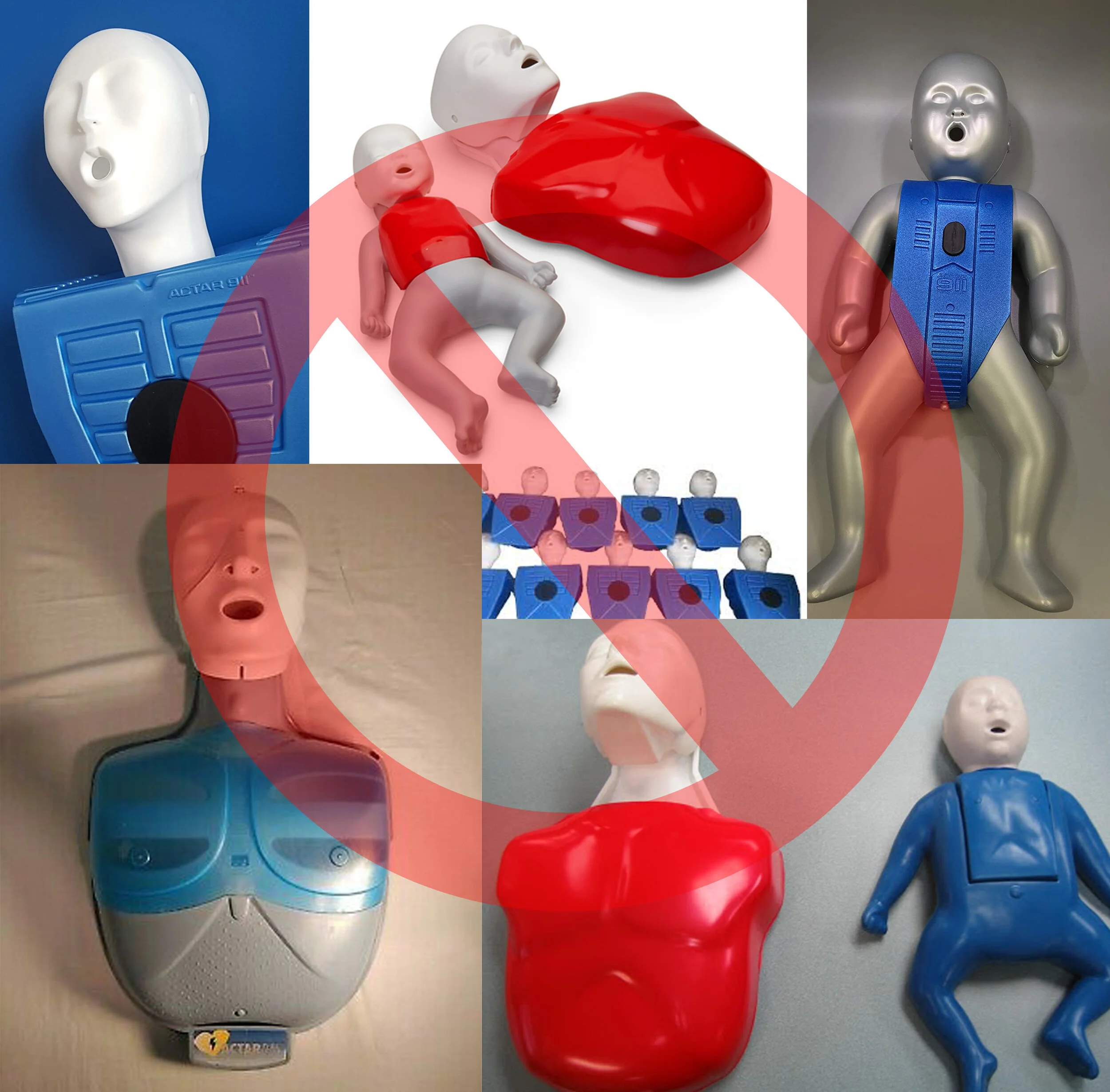
Garbage
These are types of popular CPR mannequins used in many first aid courses. If you’ve taken a first aid/CPR course with these in the past, you might as well practice CPR on a pillow.
Does it really matter?
Most people taking a first aid and CPR course are doing it for job requirements. Either for your current job, or a new career that requires first aid training. While at work, the chances of you utilizing your first aid training on a co-worker is much higher than performing CPR on them.
You can practice a leg splint or an arm sling on a classmate without much of an issue; and these simulated skills transfer pretty easily to a real life injuries.
Performing high-quality CPR is much different. You may have a perfect compression rate, and the correct compression:breath ratio, but was your mannequin effective at teaching the kinesthetics of how hard you actually need to compress the chest? Did it show you how the airway can be blocked with no head-tilt-chin-lift and blocked from tilting too far? Were you able to practice a jaw-thrust maneuver and utilize mask-mouth breathing where you visualized the chest rise?
High fidelity
We use equipment with a built in visual/tactile CPR feedback device which measures correct airway opening, compression depth/rate, and lung ventilation.
Realistic to the eye and the touch, Prestan manikins are equipped with a revolutionary ‘CPR Rate Monitor’ that allows for instant feedback to both instructor and student regarding the rate of chest compressions. The visual feedback from the CPR Rate Monitor gives students a real life feel of delivering 100-120 compressions per minute. Experience the true force needed to deliver real life chest compressions.
Features:
Advanced feedback parameters today are CPR rate, compression depth, and ventilation.
Patented face/head tilt simulates how an actual patient's head would move if they required CPR and teaches students how to properly open the airway.
Easily inserted face shield/lung bag provides visual chest rise to ensure students receive the most accurate and realistic training, also open nose holes to pinch the nose.
Located in the shoulder is a CPR Rate Monitor that provides instant visual feedback on compression rates – students know they are at the correct compression rate when two green lights illuminate. Experience the true force needed to deliver real life chest compressions.
Unique Clicker Mechanism provides an audible confirmation when the correct compression depth is reached, guiding to the appropriate force when administering CPR compressions.
The future of CPR Training
Delta Emergency Support Training has been using adult and infant Prestan Mannequins and AED trainers (more realistic as well!) from day one. They may be more expensive, but the feedback from every class about how CPR truly feels has been worth it. Everyone leaves our class more confident and comfortable knowing how to properly perform high quality CPR.
In 2021, the Heart and Stroke Foundation of Canada are making CPR Feedback Devices mandatory for all first aid/CPR courses. Prestan will be releasing an updated mannequin soon with 3 more advanced feedback parameters such as: Recoil, Ventilation and Hands Off Time, and the Bluetooth app screenshot you see above. The photos above show the mannequin, the Bluetooth app during CPR , and the physical module for the new features. When requested, we can also use a full-body mannequin simulator, and airway simulation equipment.
You may never have an opportunity to use your CPR in real life, but if you do, remember, “Perfect practice makes perfect.” - Vince Lombardi
Stay safe!
-Jarrett
AEDs for WODs
Curtis’s first thought was, “Now that we’re getting an AED, we can workout so much HARDER!” I thought he should know that AEDs can’t cure rhabdomyolysis, but he was just too excited to hear me. Haha.
July 2018: Instructor Jarrett Chisholm with CrossFit Above All owner Curtis Laughren showing off the AED purchased with funds raised from the November 2017 First Aid fundraiser.
Hi there! It’s been a while since I’ve posted about what’s been happening with Delta Emergency Support Training. Here’s a quick update on what happened from the charity Automated External Defibrillator (AED) fundraiser event last November.
Curtis Laughren, the owner of CrossFit Above All approached me about training his staff in Standard First Aid and the use of an AED in the summer of 2017. I jumped at the opportunity to teach a course at his CrossFit box, and we scheduled a course for November. I decided to make the course a charity event for purchasing an AED for his gym, because it’s one of the necessary treatments for a cardiac arrest - especially in a place with high intensity workouts with a multitude of members and visitors.
Curtis’s first thought was, “Now that we’re getting an AED, we can workout so much HARDER!” I thought he should know that AEDs can’t cure rhabdomyolysis, but he was just too excited to hear me. Haha.
The students were great, which made the day super fun. The final scenario of the day had half the class wearing fake injuries and spurting out fake blood from arterial bleeding. Some of the First Aiders seemed surprised, but they all worked together as a team and handled injuries collectively.
I donated my instructing time and all net profits from the 8 people that registered, and $787.13 was raised from course fees. I also ran a donation page through our website until the end of December, which saw people donate a total of $120.00 by the end of 2017. The grand total of funds raised for an AED was $907.13!
AEDs cost anywhere between $1500.00-$2000.00. The money raised from this event was able to cover about half of the cost of an AED. Delta Emergency Support Training delivered the funds and some AED recommendations to CrossFit Above All in January 2017. Curtis was able to find the right AED for his business for the right price a few months later, and purchased the Phillips HeartStart for his box.
I ran a blended learning course for 8 people, which included CrossFit coaches and local chiropractors from Peak Health & Performance. Blended learning allows a student complete the 8 hours of reading material at their own pace online over a month. The class day for blended learning is all about the hands-on skills. The 1 day of skills lasts between 6.5-8 hours, and everyone becomes certified in Standard First Aid + CPR/AED.
I’m happy to have been part of the movement for promoting safety at a local fitness centre.
If you’re interested in becoming certified in how to use an AED properly, send me message, or give me a call at 1-844-643-3582.
-Jarrett

