The Delta Dispatch

How Babysitters Can Handle Emergencies: When to Call 911 and What to Do

Emergencies can happen unexpectedly, and as a babysitter, knowing how to respond quickly is essential. One of the most important skills is knowing when to call 911. Whether it’s a child choking, having a seizure, or becoming unconscious, your quick action could save a life. It’s crucial to always know the address of the home you’re babysitting at, as this information can help emergency responders reach you faster. Remember, better to call 911 and not need them than to not call and need them—911 call-takers are there to guide you through the process and ensure help arrives as quickly as possible. Stay calm, stay prepared, and always trust your instincts when it comes to emergencies.
Emergencies can happen at any time, and when you're babysitting, it’s important to know how to respond quickly. Whether you're watching kids at home, looking after younger siblings, or taking care of someone else’s children, you have to be prepared for anything. Knowing when and how to call 911 is especially important because your quick action could save a life.

In this blog, we'll talk about common emergencies, how to stay calm, and why knowing your address and how to call 911 is so critical.

Why It’s So Important to Know How to Call 911

As a babysitter, you might be the first person to handle an emergency. If something happens—a child gets hurt, gets sick, or something else goes wrong—you might need to call 911 for help.

One of the most important things to remember when calling 911 is knowing where you are. If you can’t tell the dispatcher your address, it can delay help. That means it’s crucial to always know the address of the home where you’re babysitting, including the apartment number if applicable. Make sure you have this info handy in case you need it quickly!

When to Call 911: What Counts as an Emergency?

Some situations can be handled with basic first aid, but others are more serious and require immediate help. Here are some examples of when you need to call 911 without hesitation:

1. The Child is Unconscious or Not Responding

If the child or anyone you’re caring for becomes unresponsive, it’s a big emergency. If they’re not waking up, won’t talk, or are just unresponsive, you need to get help right away.

What to Do:

  • Check if the child is breathing. If they are not breathing or are gasping, call 911 immediately. If you're trained in CPR, you may be able to help the child before emergency responders arrive.

  • If they are breathing but still unconscious, gently lay them on their side (recovery position) and call 911 right away.

2. Serious Bleeding

If the child has a large cut or wound that won’t stop bleeding, that’s a serious emergency. You need to stop the bleeding and get help right away.

What to Do:

  • Apply a clean cloth or bandage to the wound and press down to stop the bleeding.

  • If the wound is really deep, or you can’t stop the bleeding, call 911 and keep pressure on the wound until help arrives.

3. Choking

Choking is a life-threatening emergency, especially if the child can’t breathe or speak. If you are trained in back blows and abdominal thrusts, you should perform these techniques as you were taught. If the child becomes unconscious, you should immediately call 911.

What to Do:

  • If you are trained in abdominal thrusts and back blows (to help expel the object blocking their airway), perform these techniques as you’ve been taught.

  • If the child becomes unconscious, call 911 immediately. If you are trained to save a choking person, you have a good chance of saving them.

  • Keep performing your life-saving techniques until the child can breathe or emergency help arrives.

4. Severe Allergic Reaction (Anaphylaxis)

Severe allergic reactions (also known as anaphylaxis) can cause swelling in the throat and make breathing difficult. Common triggers include bee stings, food allergies (like peanuts), or certain medications.

What to Do:

  • If the child has an epinephrine auto-injector (EpiPen), use it right away.

  • Then, call 911 immediately to get professional help.

5. Seizures

If the child has a seizure, especially if they’ve never had one before, you should call 911. This is important because first-time seizures can be a sign of something serious, and even if the seizure doesn’t last long, it’s better to get medical help.

What to Do:

  • Move objects out of the way to prevent injury.

  • Gently cushion their head and lay them on their side if possible.

  • If the child has never had a seizure before, or if it lasts more than a minute, call 911 right away.

6. Trouble Breathing or Chest Pain

If the child is having trouble breathing, or complains of chest pain, these could be signs of a serious medical condition like a heart attack or a severe asthma attack.

What to Do:

  • Help them sit up and stay calm.

  • If they have an inhaler, help them use it.

  • If they are still having trouble breathing or in pain, call 911 immediately.

How to Call 911: What You Need to Tell Them

When you call 911, it’s important to speak clearly and calmly. Here’s what to do:

1. Know Your Address

You must know the address where you're babysitting, including the street name, apartment number (if applicable), and any nearby landmarks. Make sure you have this info written down or memorized before the emergency happens so you can give it to 911 right away.

2. Speak Clearly

When you’re panicked, it can be hard to talk clearly. Take a deep breath, stay calm, and explain what’s going on as best as you can. Tell the dispatcher the emergency, the condition of the child, and the address where help is needed.

3. Describe the Situation

Tell the dispatcher what happened and the child’s condition. For example:

  • “The child is unconscious and not breathing.”

  • “They’re choking on food and can’t breathe.”

4. Follow the Dispatcher’s Instructions

The dispatcher might give you advice on what to do while you wait for emergency help to arrive. Listen carefully and do your best to follow their instructions.

5. Stay on the Line

Don't hang up until the dispatcher tells you it's okay. They may need more information or updates as emergency responders get closer.

When in Doubt, Call 911

If you're ever unsure whether something is an emergency, it’s always better to call 911. Better to call and not need them than to not call and need them. 911 call-takers are there to help and guide you through the situation. They won’t judge you for calling and are trained to assist you no matter what the emergency is. Trust your instincts—if you feel the child’s health or safety is at risk, don’t hesitate to call for professional help.

Conclusion: Be Prepared, Stay Calm, and Get Help

Babysitting comes with a lot of responsibility. Emergencies can happen quickly, but being prepared can make all the difference. The key is staying calm, knowing when to call 911, and having the information you need to guide emergency responders.

At Delta Emergency Support Training, we offer Red Cross Babysitting courses that cover all the important topics you need to be ready for anything. Our course is taught by paramedics and includes one session on caring for babies and another session dedicated to babysitter first aid, where you’ll learn life-saving techniques like CPR, how to handle injuries, and what to do in different emergency situations. You’ll leave our course with the skills and confidence to handle any emergency that comes your way.

Read More

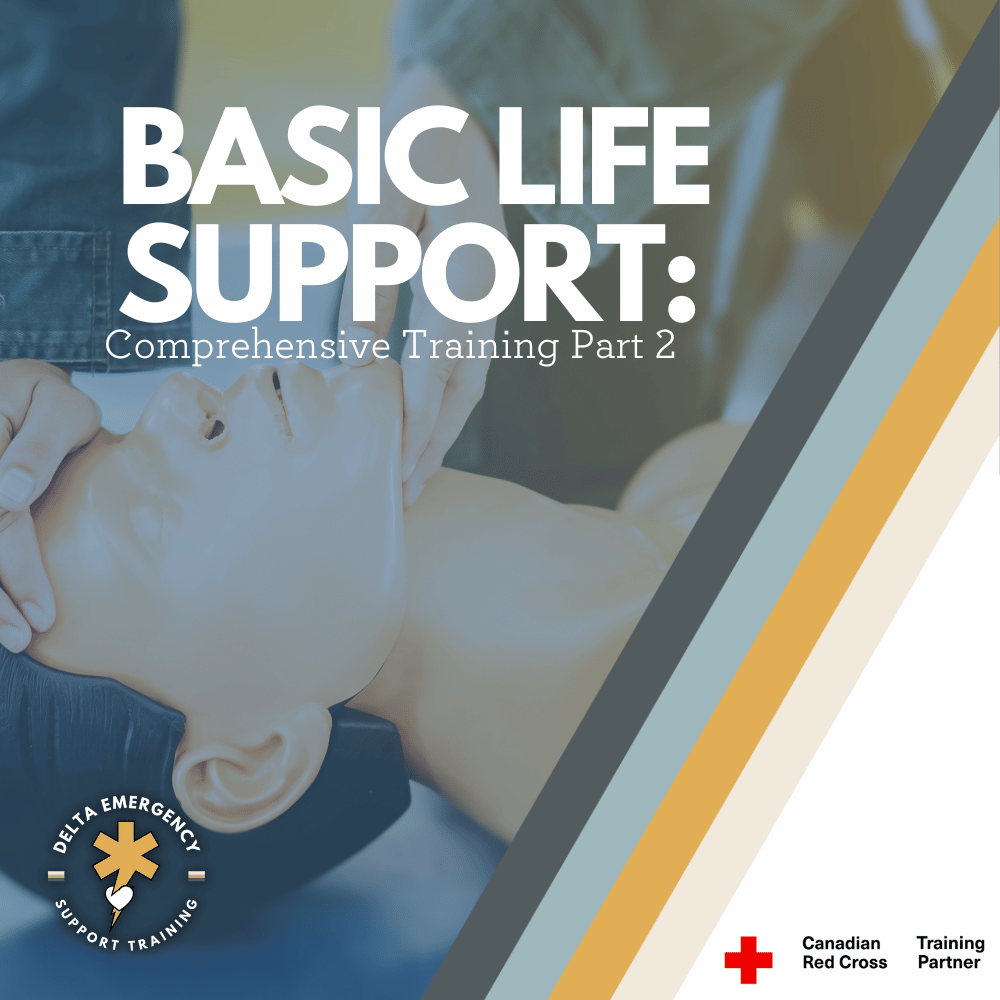
Basic Life Support Training Series: Part 2

Are you prepared to save lives during emergencies? Mastering Basic Life Support (BLS) is crucial, and understanding the key steps for assessing airway, breathing, and circulation is essential. Discover effective techniques like the head tilt-chin lift and jaw thrust for opening the airway, and learn about devices such as oropharyngeal airways (OPA) and nasal cannulas for maintaining clear breathing passages. Find out how to assess circulation through pulse checks, capillary refill, and extremity warmth. Explore these vital BLS skills and be ready to make a difference when it matters most. Boost your life-saving capabilities now!

Welcome back to the second part of our blog series on Basic Life Support (BLS). In the first blog, we discussed scene assessment, the ABC check (Airway, Breathing, and Circulation), and the proper use of CPR and AED. Now, in part two, we will delve into life-saving interventions and devices used within each step of the ABC check. Let's explore the crucial steps that can make a significant difference in saving lives.

Head tilt chin lift in basic life support training class

Life Saving Interventions: Airway

Airway management is a critical component of Basic Life Support (BLS) and plays a crucial role in ensuring the patient's ability to breathe effectively. In addition to the manual maneuvers we discussed earlier, such as the head tilt-chin lift and jaw thrust, there are other devices that can be used to secure and protect the airway. Let's explore two commonly used devices: the Oropharyngeal Airway (OPA) and the Nasopharyngeal Airway (NPA).

  1. Oropharyngeal Airway (OPA):

The oropharyngeal airway, is a curved plastic tube that is inserted into the patient's mouth to maintain the patency of the airway. It serves two main purposes:

a) Clearing Obstructions: The OPA helps to displace the tongue from the back of the throat, preventing it from obstructing the airway and impeding the passage of air. This is used for unconscious patients or those with decreased consciousness.

b) Facilitating Manual Stabilization: By providing a firm structure, the OPA allows rescuers to perform manual stabilization of the patient's head and neck, as it helps maintain the alignment of the airway.

When using an OPA, it is important to select the correct size for the patient to ensure proper placement and prevent complications. Insert the device upside down, rotating it 180 degrees as it reaches the back of the throat. Proper placement should allow the device to sit between the teeth or lips and the base of the tongue.

  1. Nasopharyngeal Airway (NPA):

The nasopharyngeal airway, or nasal airway, is a flexible tube inserted through the nostril into the back of the throat. It is particularly useful in patients who have an intact gag reflex or clenched teeth, making oral insertion difficult or risky. The NPA has several advantages:

1) Improved Comfort: The NPA is generally better tolerated by conscious or semi-conscious patients as it avoids stimulation of the gag reflex.

2) Unobstructed Oral Access: By securing the airway through the nasal passage, the mouth remains free and accessible for other procedures, such as suctioning or oral medication administration.

To insert an NPA, select the appropriate size by measuring from the tip of the nostril to the earlobe or the angle of the jaw. Lubricate the device before gently inserting it along the floor of the nasal passage, aiming towards the back of the throat. Monitor for signs of discomfort or obstruction during insertion and adjust if necessary.

It is important to note that the use of OPAs and NPAs requires proper training and an understanding of the patient's anatomy and potential contraindications. Rescuers should be cautious and attentive to the patient's response while using these devices.

By employing manual maneuvers like the head tilt-chin lift and jaw thrust, along with the use of OPAs and NPAs, rescuers can effectively secure and maintain an open airway for patients in need of Basic Life Support. Remember, accurate assessment and regular practice are essential to ensure proper airway management in emergency situations.

Life Saving Interventions: Breathing

Various devices can be used to provide oxygenation and ventilation support. Let's explore the different devices commonly used in BLS:

  1. Nasal Cannula:

The nasal cannula is a lightweight device that delivers supplemental oxygen through two small prongs inserted into the patient's nostrils. It provides a low to moderate flow rate of 1-4 liters per minute (LPM) with an oxygen concentration ranging from 25% to 45%. The nasal cannula is comfortable and allows patients to speak, and move freely while receiving oxygen.

Simple Face Mask:

The simple face mask is a mask that covers the patient's nose and mouth, delivering oxygen at a flow rate of 6-10 LPM. It provides a higher oxygen concentration compared to the nasal cannula, ranging from 40% to 60%. The simple face mask is commonly used in patients who require higher oxygen levels or when a more precise oxygen concentration is not required. However, it may impede communication and patient comfort.

Non-Rebreather:

The non-rebreather is a mask with a reservoir bag attached, ensuring the delivery of high concentrations of oxygen. It has one-way valves that prevent the patient from inhaling exhaled air and allow for a flow rate of 10-15 LPM. The non-rebreather mask can deliver an oxygen concentration of 90% or higher. It is particularly useful in patients with severe hypoxia or in cases where precise oxygen titration is necessary.

Bag-Valve-Mask (BVM):

The bag-valve-mask (BVM) device, is a manually operated resuscitator used to provide positive pressure ventilation. It consists of a self-inflating bag, a one-way valve, and a mask. The BVM is connected to an oxygen tank with a flow rate of 15 LPM, providing an oxygen concentration close to 100%. The BVM is often used in cases of respiratory distress or respiratory arrest, when the patient is not breathing adequately or requires assisted ventilation.

During assisted ventilation with a BVM, 1/3 of the bag should be compressed once every 5-6 seconds to achieve a target ventilation rate of 10-12 breaths per minute.

Newer BVM’s include a safety valve that makes a noise if you are compressing the bag too hard or fast, allowing for user friendly use.

As you provide assisted ventilation using a BVM, pay close attention to the patient's response. Look for chest rise and fall with each breath delivered. The presence of chest rise indicates that the ventilation is effectively reaching the patient's lungs.

Additionally, observe the patient's overall color. Effective ventilation should help improve the patient's skin color, with a return to a more normal or healthier appearance. If the patient's color improves, it is a positive sign that oxygenation and ventilation are being adequately supported.

It is important to note that when administering oxygen, the flow rate should be carefully adjusted based on the patient's condition and oxygen saturation levels. Oxygen therapy should be monitored closely.

Circulation assessment

Circulation assessment is a crucial step in Basic Life Support (BLS) to determine the adequacy of blood flow. While CPR remains the life-saving intervention when a pulse is not detected, let's explore other methods to assess circulation when a pulse is present.

  1. Capillary Refill: To assess capillary refill, gently press down on the patient's nail bed or the tip of their finger. Upon releasing the pressure, observe how quickly the color returns to the area. A normal capillary refill time is around 2 seconds. If color returns within this timeframe, it indicates good capillary refill and suggests adequate peripheral circulation.

  2. Extremity Warmth: Feeling the temperature of the patient's extremities, such as their hands and feet, can provide valuable information about circulation. Warm extremities indicate good blood flow, while cold extremities may suggest impaired circulation.

It's important to note that these assessments are complementary to the presence of a pulse. If there are concerns about circulation or any signs of poor perfusion, prompt medical attention should be sought.

  1. Circulatory Obstruction: Major blood loss from an injury can obstruct circulation and pose a life-threatening situation. In such cases, immediate action is crucial. If the hemorrhage is external, apply direct pressure to the bleeding site using PPE always. Maintaining pressure helps control the bleeding and promotes clot formation, thereby restoring circulation. If available, consider the use of a tourniquet for severe hemorrhage that cannot be controlled by direct pressure alone.

Remember, it is important to prioritize personal safety and seek professional medical help as soon as possible in cases of significant bleeding or other circulatory emergencies. Timely intervention can make a significant difference in patient outcomes.

Training

Mastering Basic Life Support (BLS) is crucial for healthcare professionals, including nurses, doctors, dentists, firefighters, and other first responders. Understanding the key steps for assessing and applying critical interventions for airway, breathing, and circulation is essential to deliver timely and effective care during emergencies. At Delta, we recognize the importance of BLS training, as it is often required to be completed yearly for professionals in various fields. We are dedicated to providing frequent BLS courses to equip individuals with the life-saving skills they need. Enroll in our BLS courses today and stay prepared to make a difference when it matters most.

Read More

The Impact of COPD: Symptoms and Strategies for Management

COPD is a chronic respiratory disease that affects millions of people worldwide, causing damage to the lungs and making it increasingly difficult to breathe. In this post, we will discuss the causes of COPD, the symptoms associated with the condition, and the available treatments that can help manage its symptoms.

Chronic Obstructive Pulmonary Disease (COPD): Understanding Causes, Symptoms, and Treatment

This image may be used to represent quitting smoking or the harmful effects of smoking on one's health.

a close-up view of a person's hand holding a cigarette that has been broken in half. The cigarette appears to be made of white paper with tobacco inside.

Chronic Obstructive Pulmonary Disease (COPD) is a common respiratory disease that affects millions of people worldwide. It's a progressive disease that causes damage to the lungs, making it difficult to breathe. COPD encompasses several conditions, including chronic bronchitis and emphysema. In this blog, we will discuss what COPD is, what causes it, the symptoms of COPD, and the available treatments for COPD.

What is COPD?

COPD is a progressive disease that causes damage to the lungs and makes it increasingly difficult to breathe. The main characteristic of COPD is obstruction in the airflow, which occurs due to inflammation and narrowing of the airways, as well as damage to the lung tissue itself. The damage to the lungs is irreversible, and over time, the condition worsens.

What causes COPD?

The primary cause of COPD is cigarette smoking. Other causes of COPD include exposure to air pollution, occupational dust, and chemicals. Genetics can also play a role in the development of COPD.

Symptoms of COPD

The symptoms of COPD may not appear until the condition has already caused significant damage to the lungs. COPD is characterized by several symptoms, including shortness of breath, coughing, wheezing, chest tightness, and excess mucus production. As the disease progresses, these symptoms can worsen and make it increasingly difficult to breathe. In some cases, individuals with COPD may also experience other symptoms such as fatigue, weight loss, and frequent respiratory infections.

Barrel Chest

Barrel chest is a physical characteristic that is commonly seen in individuals with COPD. It is caused by a combination of factors, including overinflation of the lungs, flattened diaphragm, and changes in the shape of the ribcage. As a result, the chest takes on a rounded, barrel-like shape. This can make it difficult for the lungs to expand fully, further exacerbating the symptoms of COPD.

Emphysema

Emphysema is a type of COPD that specifically affects the air sacs in the lungs, causing them to become damaged and lose their elasticity. This damage makes it difficult for the air sacs to empty properly, trapping air in the lungs and causing them to become overinflated. As a result, individuals with emphysema often have difficulty breathing, especially when exhaling.

Difficulty Sleeping Lying Down

Many individuals with COPD experience difficulty sleeping lying down, a condition known as orthopnea. This is because lying flat can make it more difficult for the lungs to expand fully, leading to shortness of breath and coughing. To manage this symptom, individuals may sleep with their head elevated using a wedge pillow or sleep in a recliner chair.

How is COPD diagnosed?

To diagnose COPD, healthcare providers typically start by taking a detailed medical history and conducting a physical exam. Diagnostic tests may include pulmonary function tests, chest x-rays, and CT scans. Spirometry, a simple breathing test, can be used to assess lung function and determine the severity of COPD.

Treatments for COPD

Although there is no cure for COPD, there are several treatments available that can help manage symptoms and slow the progression of the disease. These treatments include medications, lifestyle changes, and oxygen therapy.

Medications:

There are several types of medications available for treating COPD, including bronchodilators, corticosteroids, and phosphodiesterase-4 inhibitors. Bronchodilators work by relaxing the muscles around the airways, making it easier to breathe. Corticosteroids can reduce inflammation in the airways, while phosphodiesterase-4 inhibitors can reduce the frequency of COPD exacerbations.

Lifestyle changes:

Making lifestyle changes can also be beneficial for individuals with COPD. This includes quitting smoking, avoiding exposure to environmental pollutants, and getting regular exercise. Pulmonary rehabilitation programs can also help improve lung function and quality of life.

Oxygen therapy:

Oxygen therapy may be recommended for individuals with severe COPD. This involves using supplemental oxygen to help improve oxygen levels in the blood, which can help reduce shortness of breath and improve quality of life.

How COPD affects everyday life and how to help

COPD can have a significant impact on everyday life, making it difficult to perform simple tasks and reducing quality of life. Some of the ways to help individuals with COPD include:

  • Encouraging them to quit smoking

  • Helping them avoid environmental pollutants

  • Encouraging regular exercise

  • Helping them maintain a healthy diet

  • Providing emotional support and encouragement

In conclusion, COPD is a chronic respiratory condition that can significantly impact an individual's quality of life. It's essential to be aware of the symptoms of COPD and seek medical attention if they are present. Quitting smoking and making lifestyle changes, such as regular exercise and a healthy diet, can help manage the symptoms of COPD.

In our advanced first aid training class, we cover topics such as breathing management and pulmonary diseases to equip you with the knowledge and skills to provide excellent care in emergency situations.

At Delta Emergency, we are dedicated to providing you with the tools you need to confidently handle any emergency situation. If you have any questions or concerns about our training programs, please don't hesitate to contact us at info@deltaemergency.com. We're here to support you every step of the way.

Read More