The Delta Dispatch
Basic Life Support Training Series: Part 1
In part 1 of our BLS training series, we'll cover the essentials: scene survey, ABC check, CPR, and AED usage. Here's a quick overview:
Scene Survey: Assess the emergency scene for safety and determine the nature of the situation.
ABC Check: Evaluate the victim's Airway, Breathing, and Circulation. Ensure the airway is clear, check for normal breathing, and assess signs of circulation.
CPR: Perform chest compressions and rescue breaths to maintain blood flow and oxygenation. Proper technique is vital for effective compressions and oxygen delivery.
AED Usage: Learn to use an AED, a device that analyzes heart rhythm and delivers shocks if needed. Follow clear instructions and visual prompts for proper AED application.
By mastering these skills, you'll be better prepared to respond confidently during emergencies. Remember to practice regularly and stay updated on BLS guidelines for optimal readiness.
Note: BLS training equips you with life-saving techniques. Obtain proper certification and training for comprehensive proficiency.
Basic Life Support (BLS) training encompasses a wide range of essential skills, and there's so much to cover! In this multi-part series, we'll explore the extensive world of BLS in-depth. Part 1 includes scene assessment, ABC check as well as CPR + AED use.
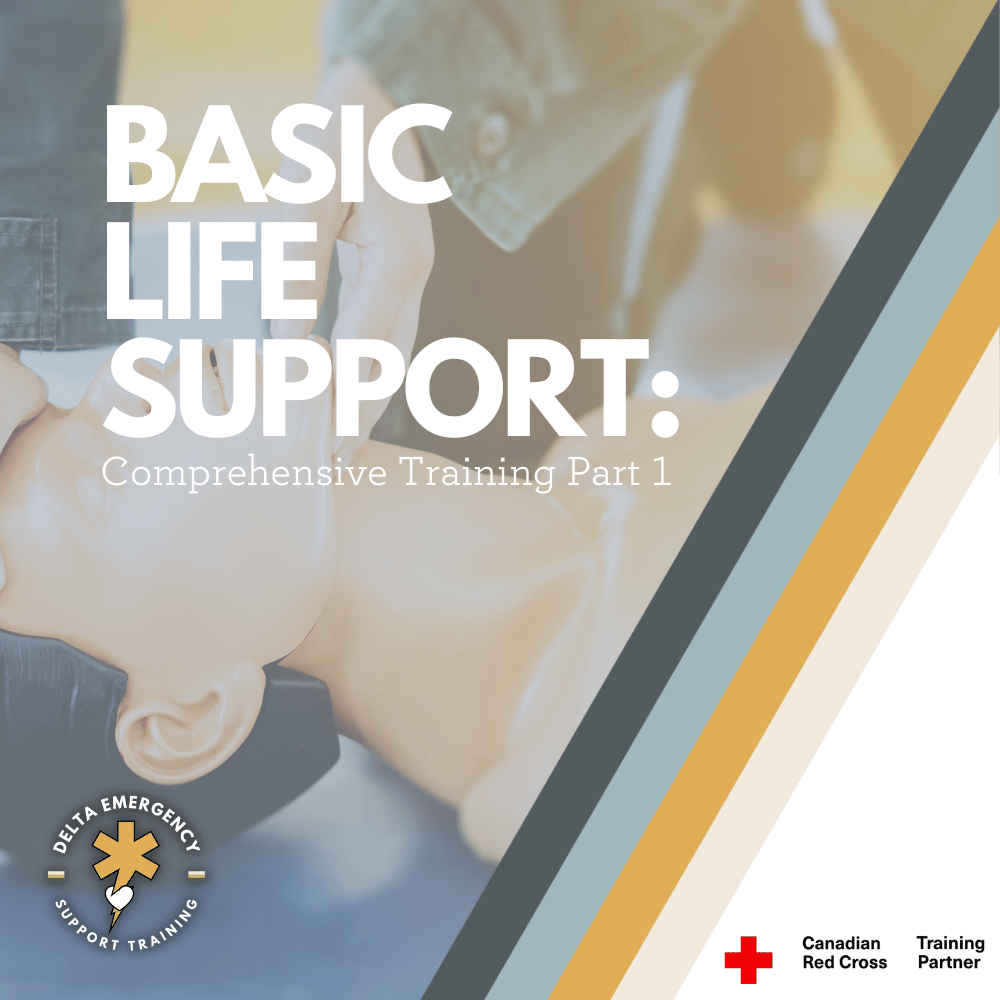
A student is practicing their Basic Life Support (BLS) skills on a mannequin. The student is performing the head tilt-chin lift maneuver to secure the airway. They are carefully holding the mannequin's head and gently tilting it back while lifting the chin upward.
In critical situations where every second counts, having the knowledge and skills of Basic Life Support (BLS) can make all the difference. Whether you're a nurse, dental hygienist, or anyone involved in healthcare or emergency response, mastering BLS is essential.
What is Basic Life Support (BLS)?
BLS (Basic Life Support) encompasses a comprehensive set of life-saving techniques and interventions performed on individuals facing various medical emergencies. These emergencies can range from airway obstructions and respiratory distress to cardiac arrest and more. The goal of BLS is to provide immediate recognition of emergency situations, administer primary assessment, perform CPR, utilize automated external defibrillators (AEDs), manage airway obstructions, provide assisted ventilation, and consider special circumstances that may require tailored approaches.
When it comes to BLS, quick recognition of emergency situations is crucial. Once the emergency is recognized, primary assessment is performed to evaluate the patient's condition, including responsiveness, breathing, and circulation. This assessment helps determine the appropriate course of action and guides subsequent interventions.
Primary Assessment
During a medical emergency, conducting a primary assessment is vital to quickly evaluate a patient's condition and determine the appropriate course of action. This assessment involves checking the patient's level of responsiveness (LOR), assessing the airway, breathing, and circulation (ABCs). Let's break down each step to ensure a thorough primary assessment.
Level of Responsiveness (LOR):
To determine the patient's level of responsiveness, start by verbally asking them if they are okay. If there is no response, gently tap the patient's shoulder and ask again. It's important to assess the patient's conscious state as it helps gauge the severity of the situation.
Airway:
If the patient is unconscious or unresponsive, assessing and securing the airway becomes crucial. The goal is to ensure that the airway is open and unobstructed. For an unconscious patient without suspected spinal injury, utilize the head tilt chin lift technique. Place one hand on the patient's forehead, gently tilt their head back, and lift the chin upward. This helps maintain an open airway by lifting the tongue away from the back of the throat.
However, if there is a possibility of a spinal injury, such as from a traumatic incident, use the jaw thrust technique instead. Place both hands on either side of the patient's jaw and lift it forward, while keeping the neck in a neutral position. This technique ensures the airway is protected while minimizing movement of the cervical spine.
Breathing and Circulation:
Once the airway is secured, it's crucial to assess breathing and circulation simultaneously. Spend about ten seconds observing the patient's chest rise and fall while listening and feeling for breath. Look for signs of normal breathing, such as chest rise and fall, and listen for any abnormal sounds like gasping or gurgling.
While assessing breathing, also check for the carotid pulse. Place your index and middle fingers on the patient's neck, alongside the windpipe, and feel for the pulse. Assessing circulation in conjunction with breathing helps determine if the patient's heart is pumping effectively.
CPR + AED
BLS (Basic Life Support) training goes hand in hand with comprehensive CPR (Cardiopulmonary Resuscitation) techniques, including the use of an AED (Automated External Defibrillator). Let's explore this essential aspect of BLS training in more detail.
CPR (Cardiopulmonary Resuscitation):
CPR is a crucial component of BLS, focusing on maintaining blood circulation and oxygenation when the heart has stopped or is not functioning properly. BLS training provides in-depth instruction on performing CPR effectively, including the following steps:
Chest Compressions:
BLS teaches the correct technique for performing chest compressions. This involves placing the heel of one hand on the center of the victim's chest (lower half of the sternum), stacking the other hand on top, interlocking the fingers, and keeping the arms straight. BLS emphasizes the importance of delivering compressions at the proper depth, typically about 2 inches for adults, with a rate of around 100-120 compressions per minute.
Rescue Breaths:
BLS training also covers rescue breaths, which involve delivering breaths into the victim's airway to supply oxygen. The ratio of chest compressions to rescue breaths may vary depending on the age group being treated. For adults, the ratio is typically 30 compressions to 2 breaths.
Chest Recoil:
BLS emphasizes the significance of allowing for complete chest recoil between compressions. This allows the heart to refill with blood before the next compression, improving the effectiveness of CPR.
AED (Automated External Defibrillator) Usage:
BLS training includes instruction on the proper use of an AED, a portable device that can analyze the heart's rhythm and deliver electrical shocks if necessary. Here's how AED usage is typically incorporated into BLS training:
AED Placement: BLS teaches the importance of quickly accessing an AED and placing it near the victim. AEDs are typically equipped with easy-to-follow visual and auditory prompts to guide the user through the process.
Electrode Pad Placement: BLS training covers the correct placement of the AED electrode pads on the victim's bare chest. One pad is usually placed on the upper right chest, just below the collarbone, while the other pad is positioned on the lower left side of the chest.
Analysis and Shock Delivery: The AED will analyze the victim's heart rhythm and prompt the user to stand clear while it delivers an electric shock if it detects a shockable rhythm such as ventricular fibrillation or ventricular tachycardia.
CPR Integration: BLS emphasizes the integration of CPR with AED usage. After each shock, it is essential to immediately resume CPR, beginning with chest compressions, as directed by the AED.
Congratulations on completing Part 1 of our comprehensive BLS training series! By exploring the foundational elements of scene survey, ABC check, CPR and AED usage, you've taken significant steps towards becoming a skilled responder in life-threatening situations. But don't worry, our BLS journey is far from over!
Stay tuned for Part 2, where we'll delve into life-saving interventions for airway obstruction, airway management, assisted ventilations, and oxygen therapy. These critical techniques will equip you with the knowledge and skills to tackle a broader range of medical emergencies confidently.
BLS Training and Certification
To take your BLS training to the next level, consider enrolling in our Delta Emergency Support Training BLS course. Our experienced instructors will guide you through hands-on training, ensuring you gain the confidence and expertise needed to make a positive impact in emergency situations. Whether you're a healthcare professional, dental hygienist, or anyone seeking to enhance their emergency response skills, our courses are tailored to meet your needs.
Don't delay in becoming a certified BLS practitioner with Delta Emergency Support Training. Reach out to us today at info@deltaemergency.com to learn more about our courses and take the first step towards becoming a capable and confident lifesaver.
First Aid Providers pay for Google Reviews?
5 Stars!: When a company has only 5-star reviews, that’s a red flag. Every company, no matter how good, is likely to have a few negative reviews. Elevate your career with honesty. Are the reviews spread over a considerable amount of time or are they compressed in a very short period of time?
Is this review for real?
You’re about to click the “Buy” button, but before you open your wallet, it’s probably a good idea to read some online consumer reviews, right? Whether it's booking a vacation, buying an audiobook or hiring a contractor, many of us look to online reviews to help us with our buying decisions. Online consumer reviews help both consumers and businesses – they provide a wealth of “unbiased” product information to help you shop smart, and they reward businesses that provide a great product or service.
Companies may encourage their employees to post reviews, they might give customers incentives to leave positive reviews, and they can even hire a firm to post fake reviews for them.
Consumer reviews often strike at the heart of a consumer’s buying decision. Shoppers trust that these reviews are from real customers, just like them. Posting fake reviews online can damage that trust and seriously erode consumer confidence.
And the scope is wide -- if you shop online, you’re a potential victim.
So, here are some ways to help you recognize, reject and report fake reviews and protect your pocket book.
How to recognize fake reviews:
Sudden spike or dip: Watch out for a sudden spike in very positive reviews or a sudden dip in very bad reviews. Are the reviews spread over a considerable amount of time or are they compressed in a very short period of time?
New reviewer: Be on the lookout for reviewers who have only recently created a user profile or have been providing positive feedback on select products or services over a short period of time. These reviewers may work for the company and they may be getting reimbursed for posting fake reviews.
Beware when a reviewer says, “It’s the best ever!!!”: Don’t always trust reviews with an overly positive or gushing tone, especially if the review does not offer specific details about why it’s so good. If a review claims a service or product is “the best ever,” the review may be fake.
And beware when a reviewer says, “It’s the worst ever!!!”: You also shouldn’t always trust very negative reviews. These could be fake reviews from a competitor, discouraging shoppers from buying one product or service and suggesting another.
5 Stars!: When a company has only 5-star reviews, that’s a red flag. Every company, no matter how good, is likely to have a few negative reviews.
Does this sound familiar? Watch out for multiple different reviewers using the same language to describe how good or bad something is. Some companies provide scripts to reviewers with suggested phrases and key words. Be cautious if you see the same buzz words coming up over and over again in reviews.
How to reject fake reviews:
Shop around: Just like you shopped for the right product or service, you should also consult several sources for independent, unbiased reviews.
Go back in time: Be sure to look at reviews over a long period of time. This will help you to spot potential patterns like a spike in positive or negative reviews.
The meat is in the middle: Read the 2-, 3- and 4-star reviews too. Someone writing a fake review is more likely to assign a rating of 1 or 5 stars, meaning you’re more likely to find balanced critique in the middle range.
Diversify: Online reviews are just one way to assess a product or service. Branch out -- ask trusted friends and family about their experiences. Consider asking the company for references.
How to report fake reviews
If you believe you have come across fake online reviews, report them to the Competition Bureau.
Source: The Government of Canada.
elevate your career with honesty. Learn babysitting, take standard first aid, certify in advanced first aid, train to be a first responder, become an emr with a real emergency medical services instructors.

