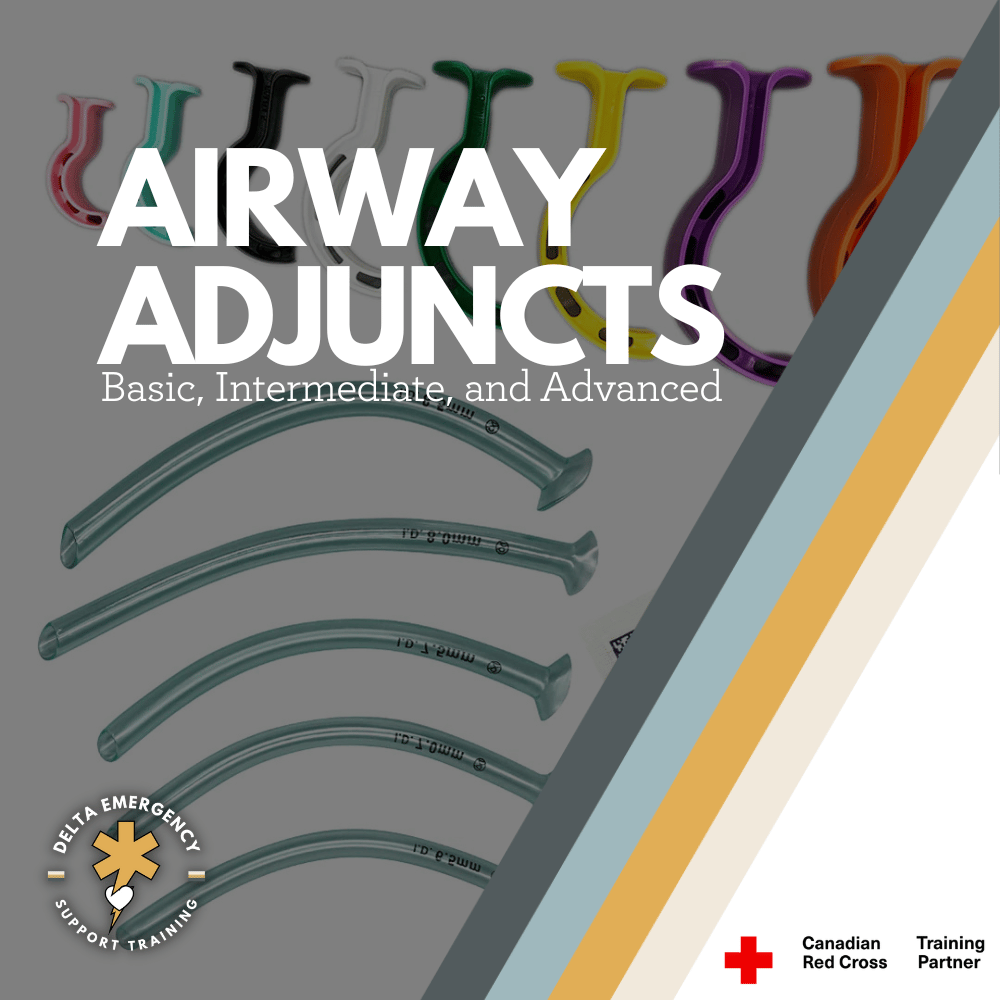
The Delta Dispatch
Understanding Basic, Intermediate, and Advanced Airway Adjuncts in Prehospital Care
Airway management is the cornerstone of emergency care. From simple oropharyngeal and nasopharyngeal airways to supraglottic devices and endotracheal intubation, prehospital providers need to know when—and how—to use each tool. This guide explains the essential skills and decision-making strategies for basic, intermediate, and advanced airway adjuncts to help responders keep patients breathing and safe.
Securing and maintaining a patient’s airway is the cornerstone of prehospital medicine. Whether you are an Emergency Medical Responder (EMR), Primary Care Paramedic (PCP), or Advanced Care Paramedic (ACP), understanding the range of airway adjuncts—and when to use them—is critical for optimal patient outcomes. Airway adjuncts are commonly grouped into three categories: basic, intermediate, and advanced.
1. Basic Airway Adjuncts
These devices are non-invasive and require minimal training, yet they can be lifesaving.
Oropharyngeal Airway (OPA)
Use: Unconscious patients without a gag reflex to keep the tongue from obstructing the airway.
Key Points: Measure from the corner of the mouth to the angle of the jaw; insert upside down then rotate 180° (or sideways with a tongue depressor in children).Nasopharyngeal Airway (NPA)
Use: Patients with an intact gag reflex or trismus (jaw clenching).
Key Points: Lubricate well; size from nostril to earlobe. Contraindicated in suspected basilar skull fractures.Suction Equipment
Use: Clears secretions, blood, or vomit to maintain a patent airway.
Clinical Pearl: Basic adjuncts buy time. Always reassess and be ready to escalate if ventilation or oxygenation remains inadequate.
2. Intermediate Airway Adjuncts
These devices provide more definitive control without requiring endotracheal intubation skills.
Supraglottic Airway Devices (SADs) such as:
Laryngeal Mask Airway (LMA)
King LT or i-gel
Use: For unconscious patients when bag-valve-mask (BVM) ventilation is inadequate or prolonged transport is expected.
Key Points: Rapid insertion, minimal training compared to intubation, and useful when laryngoscopy is not feasible.
3. Advanced Airway Adjuncts
These procedures require specialized training and are often reserved for paramedics with advanced certification or physicians.
Endotracheal Intubation (ETI)
Use: To provide definitive airway protection and control ventilation.
Key Points: Requires laryngoscopy, confirmation of tube placement (capnography is gold standard), and ongoing monitoring for dislodgement.Surgical Airway (Cricothyrotomy or Needle Cricothyrotomy)
Use: “Cannot ventilate, cannot intubate” scenarios such as severe facial trauma or airway obstruction.
Key Points: High-stakes, last-resort procedure with strict indications.
Airway Decision-Making in the Field
When deciding which airway adjunct to use, consider:
Level of provider certification and local protocols.
Patient condition: Consciousness, gag reflex, trauma, and potential for rapid deterioration.
Environment: Limited space, lighting, or access may guide your choice.
Tip: Airway management is dynamic. Start with the least invasive method and escalate as needed while continually reassessing breathing and oxygenation.
Training and Maintenance
Regular Practice: Skills such as BVM ventilation and intubation degrade quickly without use.
Equipment Checks: Verify availability, integrity, and proper sizes of adjuncts at the start of every shift.
Bottom Line
From OPAs and NPAs to supraglottic devices and endotracheal tubes, airway adjuncts form a spectrum of tools for professional responders. Mastery of their indications, insertion techniques, and limitations ensures that you can match the right device to the right patient, improving survival and reducing complications in the prehospital setting.
EMR Guide to Facial Trauma: Airway Management, Bleeding Control, and Injury Assessment
Facial trauma is a serious medical emergency that requires prompt attention. This guide for EMRs covers essential steps for managing facial injuries, including airway management, bleeding control, and fracture stabilization. Learn how to assess and treat patients with maxillofacial trauma to reduce the risk of permanent functional loss and disfigurement.
Facial Trauma - Assessment and Treatment
Tradesmen with laceration to face
Facial trauma refers to injuries involving damage to the bones or soft tissue of the face. These injuries can occur due to a variety of causes such as motor vehicle accidents, assaults (including gunshots), sports injuries, falls, chemical exposures, thermal burns, or animal bites. Because the human face is complex and contains many critical structures, such as bones, blood vessels, nerves, muscles, and sensory organs, untreated facial trauma can lead to permanent functional loss (such as problems with seeing, chewing, speaking, or swallowing) and severe disfigurement. Therefore, rapid and effective assessment and treatment are crucial in preventing long-term complications.
Facial trauma can be categorized into two primary categories: bone and soft tissue injuries. Depending on the type and severity of the trauma, the treatment and management priorities will differ. Let’s explore how to assess, treat, and what to expect when dealing with facial trauma in an emergency setting.
Key Considerations for EMRs Responding to Facial Trauma
When an EMR encounters a patient with facial trauma, the first priority is to assess the patient's airway, control bleeding, and assess for any associated injuries. This is especially critical because facial trauma can lead to airway compromise and severe bleeding, both of which are life-threatening.
Airway Management: The First Priority
One of the most critical aspects of treating facial trauma is securing the airway. The face houses the upper airway structures, and injuries to the face can easily result in obstruction. Up to 42% of patients with severe maxillofacial trauma may require intubation. If airway compromise is not addressed, it can result in hypoxia, shock, or even death.
Airway compromise in facial trauma typically occurs due to:
Soiling of the airway: Blood, vomit, or other debris can obstruct the airway, especially in patients with severe bleeding or emesis.
Obstruction: This can result from displaced soft tissue (such as the tongue), facial swelling, or foreign bodies (like dislodged teeth).
When assessing for airway compromise, EMRs should prioritize maintaining patency and anticipate potential difficulties with bag-mask ventilation due to the altered facial anatomy. For example, in Le Fort II and Le Fort III fractures, which cause significant facial displacement, it can be challenging to achieve a proper seal with a mask. If bag-mask ventilation becomes difficult, consider using a supraglottic airway device as a temporary bridge to more definitive airway management until advanced care can be provided.
Controlling Bleeding
Facial injuries, especially those involving trauma to the nose, mouth, or eyes, often result in significant bleeding. The face is highly vascular, so controlling bleeding early is vital to avoid shock and further complications. The steps to control bleeding are:
Direct Pressure: Apply direct, firm pressure over the bleeding site using sterile gauze or a clean cloth.
Elevation: If possible, elevate the patient’s head to minimize blood flow to the injury site.
Pressure Points: Use pressure points such as the carotid artery or facial artery to control hemorrhage when direct pressure is insufficient.
Hemostatic Agents: In severe cases, use hemostatic agents or dressings to assist in clotting and bleeding control.
Assessing Associated Injuries
Facial trauma often occurs as part of multi-system injuries. Once the airway is secured and bleeding is controlled, assess for other possible injuries, such as:
Head injury: Concussions, skull fractures, or intracranial hemorrhages are common in traumatic incidents that involve facial injury.
Spinal injury: Always suspect cervical spine injury in any trauma patient, especially those with altered mental status or facial fractures.
Dental injuries: Dislodged teeth or fractures to the jaw may occur in conjunction with facial trauma and may require specific management.
Eye injuries: Damage to the eyes, such as orbital fractures, corneal abrasions, or foreign bodies, should be suspected and managed accordingly.
Types of Maxillofacial Fractures
Facial fractures can be complex, and different fractures require different management strategies. Some common types of fractures include:
Le Fort Fractures:
Le Fort I: A horizontal fracture of the maxilla (upper jaw), often associated with palate and teeth displacement.
Le Fort II: A pyramidal fracture involving the maxilla, nasal bones, and orbit, which may cause significant facial deformity.
Le Fort III: A complex fracture involving the maxilla, zygomatic bones, and orbit, resulting in severe facial disfiguration and airway compromise.
Orbital Fractures: These fractures affect the bony orbit surrounding the eye. They may lead to eye injuries and double vision, requiring immediate attention to preserve vision.
Nasal Fractures: Fractures to the nasal bones are common and often associated with bleeding and airway obstruction due to the nasal passages becoming blocked with blood.
Mandible (Jaw) Fractures: Fractures of the mandible may affect the ability to chew, swallow, and speak. In some cases, the fractured jaw may obstruct the airway.
Treatment Considerations
The management of facial trauma depends on the type and severity of the injury. However, the basic principles of care involve airway management, bleeding control, and stabilization of fractures.
Airway Management
As previously mentioned, ensuring airway patency is paramount in facial trauma cases. If there is any suspicion of airway compromise, early intubation should be performed. In some cases, a supraglottic airway device may be used to bridge the gap before definitive airway management. In more severe cases, surgical airway interventions may be required.
Fracture Stabilization
Fractures, particularly those involving the mandible, maxilla, or facial bones, may need to be stabilized. The use of splints, jaw wiring, or other external fixation devices can help keep the fractures in place until surgical intervention by a plastic or maxillofacial surgeon can be performed.
Transportation
Facial trauma victims, particularly those with suspected airway compromise, require rapid transport to a hospital with appropriate resources for managing complex trauma. Transport should be done with the patient’s head elevated and airway support in place to prevent further compromise.
Conclusion
Facial trauma is a serious medical condition that requires prompt and effective intervention. As an EMR, your role in ensuring airway management, bleeding control, and assessment of associated injuries is vital in improving patient outcomes. While facial trauma may be life-threatening, the coordinated efforts of EMRs, emergency doctors, and specialists such as plastic and reconstructive surgeons can significantly reduce the risk of permanent functional loss and disfigurement. By understanding the anatomy of the face, the types of fractures, and the treatment strategies, you can provide critical care that saves lives and improves the long-term recovery of those injured in traumatic incidents.
Stay informed, stay prepared, and continue to prioritize the ABCs (Airway, Breathing, Circulation) in any trauma situation.
Quick Response, Confident Action: Canadian Red Cross Basic Life Support Field Guide
The "Canadian Red Cross: Basic Life Support Field Guide" is an essential tool for anyone trained in Basic Life Support (BLS). Designed for quick reference, this compact guide provides actionable steps for CPR, choking management, and AED use, ensuring you’re ready to respond in high-pressure situations. With clear illustrations and practical examples, this guide is a must-have for healthcare professionals and anyone certified in BLS.
A Lifesaver in Your Pocket: Essential for Every Responder
In the critical moments of a medical emergency, every second counts. The "Canadian Red Cross: Basic Life Support Field Guide" is an essential resource for anyone certified in Basic Life Support (BLS), from healthcare professionals to lay responders. This compact, easy-to-use guide is designed to be a quick reference in high-pressure situations, ensuring that the fundamental skills of life support are always within reach.
Tailored for Quick Reference and Rapid Recall
This field guide distills complex CPR techniques and emergency responses into concise, actionable steps. It's structured to help you quickly refresh your memory on essential procedures, including:
High-quality chest compressions
Ventilation skills
Management of choking for adults, children, and infants
Use of automated external defibrillators (AEDs)
Each section of the guide is accompanied by clear, instructive illustrations that enhance understanding and recall, making it easier to apply the techniques in real-life scenarios.
A Must-Have for a Wide Range of Responders
Whether you're a nurse on the front lines, a paramedic in the field, or a designated first aid provider at your workplace, this guide is made for you. Its comprehensive coverage makes it invaluable not only for professional use but also for anyone trained in BLS who might need to act swiftly to save a life.
Enhancing Skills with Reliable Information
The Basic Life Support Field Guide is more than just a manual; it's a training companion that reinforces your skills through:
Scenario-based practice examples
Step-by-step guides for both expected and unexpected situations
Quick tips for maintaining composure and efficiency in emergency situations
Why Physical Copies Matter
In emergency situations, technology can fail. A physical guide ensures that the information you need is available without concern for battery life, signal, or functionality. Its durable design means it can withstand the rigors of any environment, from a hospital ward to an outdoor adventure.
Conclusion
Ready to enhance your readiness and confidence in critical situations? The Canadian Red Cross Basic Life Support Field Guide is available now at Delta Emergency Support Training. Equip yourself with the knowledge and skills that make a difference when it matters most. Visit Delta Emergency Support Training to get your copy today and stay prepared for any emergency with the best CPR techniques, emergency response tips, and life-saving skills at your fingertips.
"Ensuring Public Safety: The Crucial Role of Professional Responders in Calgary's Emergency Medical Response System"
Advanced First Aid responders are individuals who have undergone advanced first aid training, often in addition to their regular jobs. In Alberta, they are typically found in fire departments, workplaces such as construction sites, factories, and offices where there is a higher risk…
In Calgary, Alberta, Canada, the first responder emergency medical response system is divided into three levels: First Responder, Advanced First Aid, and Emergency Medical Responder (EMR). These professional responders play a crucial role in responding to medical emergencies, providing initial care and support to the patients before they are transported to a medical facility for further treatment.
First Responders are typically the first on the scene of an emergency. They are often firefighters or police officers who have received additional training in emergency medical response. They are equipped with basic first aid equipment and are trained to provide initial care to patients until advanced medical support arrives. First responders can administer CPR, control bleeding, stabilize the spine, and perform other basic life support interventions.
Advanced First Aid responders are individuals who have undergone advanced first aid training, often in addition to their regular jobs. In Alberta, they are typically found in fire departments, workplaces such as construction sites, factories, and offices where there is a higher risk of accidents and injuries. Advanced first aid responders are equipped with additional first aid equipment and are trained to provide advanced first aid, including the administration of oxygen and the use of automated external defibrillators (AEDs).
Emergency Medical Responders (EMRs) are trained professionals who provide basic life support and emergency medical care. They are often the first medical professionals to arrive on the scene of an emergency, and they are trained to assess the patient's condition and provide necessary interventions such as administering oxygen, providing medications, Entonox for pain, and immobilizing the patient's spine. EMRs work closely with other medical professionals, including paramedics and emergency physicians, to ensure that the patient receives the appropriate level of care.
In Calgary, professional responders are trained and certified by the Canadian Red Cross - which sets standards for the education and training of medical professionals Delta Emergency Support Training ensures these standards are upheld and that all responders are well-trained, competent, and able to provide the highest level of care to patients in emergency situations.
The Alberta College of Paramedics holds the standards for EMS professions in Alberta, such as a provincially licensed EMR, PCP, ACP, and eventually, CCP.
In addition to their medical skills, professional responders in Calgary are also trained in communication and teamwork, which are essential skills in emergency response situations. They must be able to communicate effectively with patients, family members, and other medical professionals, and work together as a team to provide the best possible care.
In conclusion, professional responders play a crucial role in the emergency medical response system in Calgary. They provide initial care and support to patients in emergency situations and work closely with other medical professionals to ensure that patients receive the appropriate level of care. Their training and expertise make them an essential part of the healthcare system, and they are an integral part of the community's safety and well-being.
What is an EMR?
The first step for an EMR is to assess the situation for hazards that can harm themselves, their partners, and their patients, and determine the nature of the emergency. They need to determine the level of medical attention needed and make quick decisions…
Behind the Scenes of an Emergency Medical Responder: Saving Lives with Speed and Skill
An Emergency Medical Responder (EMR) is a healthcare professional who is trained to provide immediate medical care in emergency situations. EMRs are often the first healthcare providers to arrive on the scene of an emergency, and they work closely with other healthcare professionals to ensure that patients receive the appropriate care and treatment. EMRs are trained to provide basic life support measures, including administering CPR, controlling bleeding, treating shock, managing spinal injuries, and stabilizing fractures. They are also trained to manage patients with a variety of medical emergencies, including cardiac arrest, respiratory distress, and trauma. Here are some of the typical job functions of an EMR:
1. Assess the situation:
The first step for an EMR is to assess the situation for hazards that can harm themselves, their partners, and their patients, and determine the nature of the emergency. They need to determine the level of medical attention needed and make quick decisions based on their assessment.
2. Stabilize Patients:
EMRs are trained to stabilize patients by maintaining their airways and providing necessary interventions such as assisted ventilations, medical oxygen, life-threatening bleeding, and medication.
2. Administer First Aid:
EMRs are trained to provide basic-intermediate-advanced first aid such as CPR, wound management, and immobilization of injured patients.
4. Communicate with the medical team:
EMRs communicate vital information to the medical team, such as the patient's vital signs, symptoms, and any other relevant medical history.
5. Provide Emotional Support:
EMRs provide emotional support to patients and their families during times of crisis. They should be compassionate and empathetic, helping to ease the stress and anxiety that often come with medical emergencies.
6. Document the incident:
EMRs must document the incident, including vital signs, patient history, and any medical interventions administered.
7. Transport Patients:
EMRs are responsible for transporting patients to medical facilities safely. Overall, the role of an EMR is crucial in emergency medical situations, and they must be well-trained, quick-thinking, and compassionate individuals. EMRs work in a variety of settings, including ambulance services, fire departments, and hospitals. They play a critical role in the healthcare system by providing immediate medical care to patients in emergency situations, and their actions can often make the difference between life and death.
The road to EMR certification can be confusing. The EMR program is different in provinces like BC, Alberta, Saskatchewan, and Manitoba. The Canadian Red Cross EMR, AFA, or FR curriculum is identical across Canada but provincial standards and must be taught in respective provinces. At Delta Emergency, we understand what certifications you need for your future career, how and where to obtain them, and what type of work will be available to you when you’re fully certified. Reach out with questions!
BVM
Maintain an Airway, use HTCL or MJT, use Suction, insert an OPA or NPA, begin Ventilations and apply Oxygen. BLS, FR, AFA, and EMR
This is a basic and generalized overview of Emergency Medical Responders across North America. When in doubt, follow your local protocols! Contact us if you have any specific questions about the EMR scope of practice and career path in Alberta. We are industry experts and have been working full time in EMS for years.
At Delta Emergency Support Training we are happy to answer any questions you may have about becoming an EMR. We provide training sessions for individuals or classes. We have options for in person, hybrid or online classes for Standard First Aid (SFA) Advanced First Aid (AFA) and Emergency Medical Responder (EMR) courses. For all inquiries please email info@deltaemergency.com
Pocket Mask Requirements: First Aid Program Standards in 2021
All participants attending classroom training are required to have their own pocket resuscitation mask with single-use one-way valve.
Important changes to program standards
In the interest of public health during COVID-19 and beyond, please be advised the Canadian Red Cross program standards have been updated with respect to pocket masks in Red Cross First Aid training. All participants attending classroom training are required to have their own pocket resuscitation mask with single-use one-way valve.
Pocket masks must be new (if provided by the Training Partner) or previously owned by the participant only. While pocket masks are already used in training, they are typically decontaminated and reused along with a new one-way valve.
Purchase here: Pocket Mask
With this revised standard, the practice of decontaminating pocket resuscitation masks will be discontinued as masks may not be reused.
To ensure the safety of all students, course participants can bring their own pocket mask with a one-way valve, or they may opt to purchase one as an add-on item prior to class. Masks can be shipped to your home, or picked up on class day.
This new standard begins on March 31, 2021. Delta Emergency will adopt this new standard today, December 17, 2020. All courses that require mask ventilation training will be required to add a pocket mask at time of course purchase. If you choose not to buy a mask and do not have one on class day, you will be required to purchase one from your trainer in person before training can commence. If you refuse to purchase a mask in class, your participation will be marked as incomplete. We appreciate your understanding of this transition and we believe this will greatly reduce the risk of disease transmission for course participants.
Resources
Our COVID-19 protocols for classroom training have been revised to reflect this change. The courses this training will affect are:
Emergency First Aid
Standard First Aid
CPR A, CPR C, BLS, AED
Oxygen Therapy
Airway Management
Advanced First Aid
Please contact the Canadian Red Cross at 1-877-356-3226 with any questions regarding this new training standard.
As always, the health and safety of our partners, Instructors, and course participants is our first priority. Thank you for your support in ensuring a safe training environment.

