The Delta Dispatch

Ejection Trauma: What First Responders Need to Know About High-Impact MVCs

Ejection trauma is one of the most catastrophic outcomes of a motor vehicle collision. For first responders, understanding how to assess, stabilize, and prioritize care for these high-impact patients is critical. Here’s how to stay calm, organized, and effective in the moments that matter most.
When a person is ejected from a vehicle during a crash, the outcome is almost always severe. Ejection trauma represents one of the most catastrophic mechanisms of injury emergency responders will encounter. Whether partial or complete, being thrown from a vehicle amplifies the forces acting on the body—turning an already violent impact into a multi-system trauma event.

What Is Ejection Trauma?

Ejection trauma occurs when a vehicle occupant is completely or partially thrown out of the vehicle during a collision. This typically happens when seat belts are not worn or fail, or when the force of impact breaches the vehicle’s structure.

There are two main types:

  • Partial ejection – The patient is partially expelled, often trapped by the seat belt or vehicle frame, resulting in crushing or shearing injuries.

  • Complete ejection – The patient is fully thrown clear of the vehicle, often resulting in secondary impacts with the ground or other objects.

Mechanism of Injury (MOI)

Ejection trauma is classified as a high-mechanism MOI, and responders should immediately suspect:

  • Severe blunt trauma

  • Multiple fractures

  • Spinal, head, and internal injuries

  • Airway compromise or shock

The energy transfer doesn’t stop at the first impact—the patient often experiences multiple points of contact:

  1. The initial crash inside the vehicle

  2. Contact with the vehicle structure on exit

  3. Impact with the ground or another surface

  4. Potential secondary impact with objects (trees, poles, other vehicles)

Each of these contributes to a complex and unpredictable injury pattern.

Common Injuries Associated with Ejection

Responders should anticipate multi-system trauma, including:

  • Head and neck injuries: Concussions, skull fractures, traumatic brain injuries (TBI)

  • Spinal trauma: High risk of spinal fractures or cord damage due to rotational forces

  • Thoracic injuries: Flail chest, pneumothorax, hemothorax, cardiac contusions

  • Abdominal trauma: Liver or spleen lacerations, internal bleeding

  • Orthopedic injuries: Long bone fractures, pelvic fractures, amputations

  • Soft tissue injuries: Severe abrasions, degloving injuries, lacerations

Scene Assessment

When responding to an MVC with possible ejection, scene safety and situational awareness come first.

  • Scan the entire area—patients may be thrown significant distances or hidden in brush, ditches, or behind obstacles.

  • Note patient position relative to the vehicle; it offers key clues about trajectory and energy transfer.

  • Look for additional hazards: leaking fuel, oncoming traffic, downed power lines.

Patient Management in the Field

Ejected patients require rapid, systematic assessment and early activation of advanced care.

1. Scene Safety & Triage

  • Request additional units and air transport early.

  • Perform a global scan for multiple patients.

2. Primary Survey (Check, Call, Care)

  • Airway: Suspect spinal injury—manually stabilize head and neck, use jaw-thrust if needed.

  • Breathing: Expose the chest, check for symmetry and adequate air movement.

  • Circulation: Control major bleeding immediately. Prioritize rapid identification of life-threatening hemorrhage.

3. Secondary Survey

  • Head-to-toe assessment, noting deformities, contusions, abrasions, punctures, burns, tenderness, lacerations, and swelling (DCAP-BTLS).

  • Monitor vitals frequently—changes can indicate internal bleeding or decompensating shock.

  • Maintain spinal motion restriction (SMR) if indicated.

4. Shock Management

  • Treat for hypovolemia: position appropriately, keep warm, and prepare for rapid transport.

  • Oxygen administration and airway management should be prioritized.

The Role of Prehospital Responders

As a first responder, your calm and methodical approach can make all the difference. Recognizing the severity of ejection trauma early allows for:

  • Prioritizing rapid extrication and transport

  • Effective communication with dispatch and incoming EMS

  • Early notification of trauma centers

Ejection = Severe Trauma Until Proven Otherwise.
Never underestimate the forces involved—patients may appear stable initially but can deteriorate quickly.

Key Takeaways

  • Ejection trauma is one of the deadliest outcomes of an MVC.

  • Always assume multi-system trauma and spinal involvement.

  • Focus on airway, breathing, and circulation while minimizing movement.

  • Rapid transport and early hospital notification are essential.

  • Scene safety, teamwork, and clear communication are critical under pressure.

Final Thoughts

Every ejection call reminds responders why scene assessment and mechanism recognition matter so much. Behind every statistic is a human life—one that depends on the calm, structured, and skilled actions of those first on scene. Whether you’re an Advanced First Aider, EMR, or paramedic student, understanding ejection trauma prepares you to manage chaos with confidence and compassion.

Read More

Managing Intoxicated Patients in the Field: An EMR Guide

As an Emergency Medical Responder (EMR), you’re trained to provide care in unpredictable situations. One of the more challenging scenarios is responding to patients under the influence of alcohol or drugs. Intoxicated patients can present with unpredictable behavior, altered physiology, and a higher risk of injury—making careful assessment and management critical.

At Delta Emergency Support Training, we emphasize both safety and effective patient care. Here’s a detailed guide for EMRs on safely responding to intoxicated patients, aligned with Alberta Health Services (AHS) guidelines.

Understanding Intoxication

Intoxication can result from alcohol, prescription medications, or illicit drugs. Common effects include:

  • Altered level of consciousness

  • Slurred speech or impaired coordination

  • Agitation, aggression, or unpredictable behavior

  • Nausea, vomiting, or respiratory depression

  • Increased risk of trauma from falls, fights, or accidents

  • Masked pain: Alcohol can dull pain perception, making trauma patients unreliable reporters of injury severity

  • Mimics: Hyperglycemia or hypoglycemia can appear similar to intoxication, making blood glucose assessment crucial

Recognizing the signs early helps EMRs anticipate complications and prioritize patient and responder safety.

Safety First: Protecting Yourself and Others

Intoxicated patients can be unpredictable. Before providing care, ensure:

  • Scene safety: Survey for weapons, hazards, or bystanders that may interfere.

  • Backup: If the patient is aggressive, call law enforcement or additional responders.

  • Personal protective equipment (PPE): Gloves, eye protection, and masks may be necessary.

  • Distance and positioning: Maintain a safe stance and keep an exit route clear.

Never compromise your safety—intoxicated patients may act impulsively, and an aggressive patient can escalate quickly.

Patient Assessment

Assessment of an intoxicated patient may be complicated by their altered state. EMRs should focus on:

  1. Responsiveness: Determine if the patient is fully conscious, verbally responsive, physically responsive, or unresponsive.

  2. Airway, Breathing, Circulation (ABCs): Alcohol and drugs can depress breathing and circulation.

    • Be prepared to clear the airway using suction if the patient vomits.

    • Airway adjuncts (oropharyngeal or nasopharyngeal airway) may be required if the patient’s airway is compromised but spontaneous breathing is present.

  3. Vital signs: Monitor heart rate, blood pressure, respiratory rate, oxygen saturation, and blood glucose.

    • Hyperglycemia or hypoglycemia can mimic intoxication and significantly affect patient management.

  4. Secondary survey: Look for trauma, especially since alcohol can mask pain. A patient may not report broken bones, internal injuries, or head trauma. Monitor carefully for subtle signs.

Common Challenges and How to Manage Them

  • Aggression or agitation: Stay calm, use a non-confrontational tone, and avoid physical confrontation unless absolutely necessary.

  • Vomiting or aspiration risk: Use suction immediately if needed, and position the patient in the recovery positionif unconscious but breathing.

  • Altered decision-making: Intoxicated patients may refuse care. Document refusals and use implied consent in life-threatening situations.

  • Polysubstance use: Patients may have multiple substances in their system, complicating presentation. Monitor closely for unexpected symptoms.

  • Trauma considerations: Be extra vigilant for head injuries, internal bleeding, or fractures. Pain may be unreliable, so rely on vital signs, visual assessment, and mechanism of injury.

  • Glucose considerations: Rapidly check blood glucose in any altered patient; treating hypoglycemia or hyperglycemia may resolve the presentation entirely.

Communication Tips

  • Use simple, clear language.

  • Speak slowly and calmly to reduce confusion.

  • Avoid judgmental language—patients respond better when treated respectfully.

  • Keep bystanders informed, but focus on patient care.

Transport Considerations

  • Monitor continuously: Intoxicated patients can deteriorate rapidly.

  • Secure safely: If aggressive, use restraints only per local protocols and monitor the patient closely.

  • Communicate with receiving facility: Provide details on level of intoxication, suspected substances, vital signs, airway interventions (suction or adjuncts used), trauma concerns, and any interventions performed.

Red Flags: When to Call for Immediate Backup

  • Unresponsiveness or decreased level of consciousness

  • Difficulty breathing or abnormal airway sounds

  • Vomiting with risk of aspiration

  • Seizures or convulsions

  • Severe trauma, especially head or internal injuries

  • Aggressive or violent behavior that cannot be safely managed

  • Hypoglycemia or hyperglycemia causing altered mental status

Final Thoughts

Responding to intoxicated patients requires a balance of emergency care skills, safety awareness, and empathy. Alcohol or drug use can mask pain and complicate assessment, and abnormal blood glucose levels can mimic intoxication. With proper airway management, suction, airway adjuncts, and glucose monitoring, EMRs can provide effective care safely.

At Delta Emergency Support Training, our courses prepare responders to handle complex patient scenarios, including intoxicated and trauma patients so you can provide care with confidence, skill, and safety.

Read More

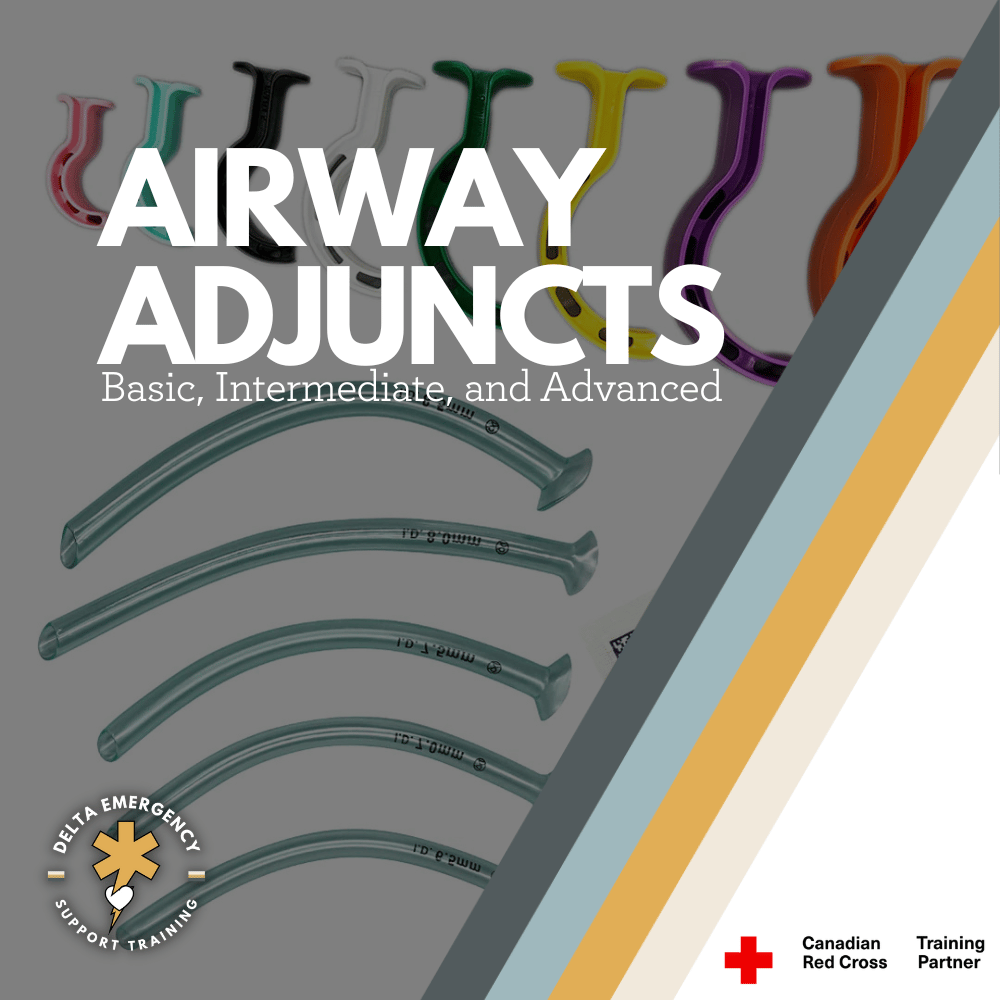
Understanding Basic, Intermediate, and Advanced Airway Adjuncts in Prehospital Care

Airway management is the cornerstone of emergency care. From simple oropharyngeal and nasopharyngeal airways to supraglottic devices and endotracheal intubation, prehospital providers need to know when—and how—to use each tool. This guide explains the essential skills and decision-making strategies for basic, intermediate, and advanced airway adjuncts to help responders keep patients breathing and safe.

Securing and maintaining a patient’s airway is the cornerstone of prehospital medicine. Whether you are an Emergency Medical Responder (EMR), Primary Care Paramedic (PCP), or Advanced Care Paramedic (ACP), understanding the range of airway adjuncts—and when to use them—is critical for optimal patient outcomes. Airway adjuncts are commonly grouped into three categories: basic, intermediate, and advanced.

1. Basic Airway Adjuncts

These devices are non-invasive and require minimal training, yet they can be lifesaving.

  • Oropharyngeal Airway (OPA)
    Use: Unconscious patients without a gag reflex to keep the tongue from obstructing the airway.
    Key Points: Measure from the corner of the mouth to the angle of the jaw; insert upside down then rotate 180° (or sideways with a tongue depressor in children).

  • Nasopharyngeal Airway (NPA)
    Use: Patients with an intact gag reflex or trismus (jaw clenching).
    Key Points: Lubricate well; size from nostril to earlobe. Contraindicated in suspected basilar skull fractures.

  • Suction Equipment
    Use: Clears secretions, blood, or vomit to maintain a patent airway.

Clinical Pearl: Basic adjuncts buy time. Always reassess and be ready to escalate if ventilation or oxygenation remains inadequate.

2. Intermediate Airway Adjuncts

These devices provide more definitive control without requiring endotracheal intubation skills.

  • Supraglottic Airway Devices (SADs) such as:

    • Laryngeal Mask Airway (LMA)

    • King LT or i-gel

    Use: For unconscious patients when bag-valve-mask (BVM) ventilation is inadequate or prolonged transport is expected.
    Key Points: Rapid insertion, minimal training compared to intubation, and useful when laryngoscopy is not feasible.

3. Advanced Airway Adjuncts

These procedures require specialized training and are often reserved for paramedics with advanced certification or physicians.

  • Endotracheal Intubation (ETI)
    Use: To provide definitive airway protection and control ventilation.
    Key Points: Requires laryngoscopy, confirmation of tube placement (capnography is gold standard), and ongoing monitoring for dislodgement.

  • Surgical Airway (Cricothyrotomy or Needle Cricothyrotomy)
    Use: “Cannot ventilate, cannot intubate” scenarios such as severe facial trauma or airway obstruction.
    Key Points: High-stakes, last-resort procedure with strict indications.

Airway Decision-Making in the Field

When deciding which airway adjunct to use, consider:

  • Level of provider certification and local protocols.

  • Patient condition: Consciousness, gag reflex, trauma, and potential for rapid deterioration.

  • Environment: Limited space, lighting, or access may guide your choice.

Tip: Airway management is dynamic. Start with the least invasive method and escalate as needed while continually reassessing breathing and oxygenation.

Training and Maintenance

  • Regular Practice: Skills such as BVM ventilation and intubation degrade quickly without use.

  • Equipment Checks: Verify availability, integrity, and proper sizes of adjuncts at the start of every shift.

Bottom Line

From OPAs and NPAs to supraglottic devices and endotracheal tubes, airway adjuncts form a spectrum of tools for professional responders. Mastery of their indications, insertion techniques, and limitations ensures that you can match the right device to the right patient, improving survival and reducing complications in the prehospital setting.

Read More