The Delta Dispatch
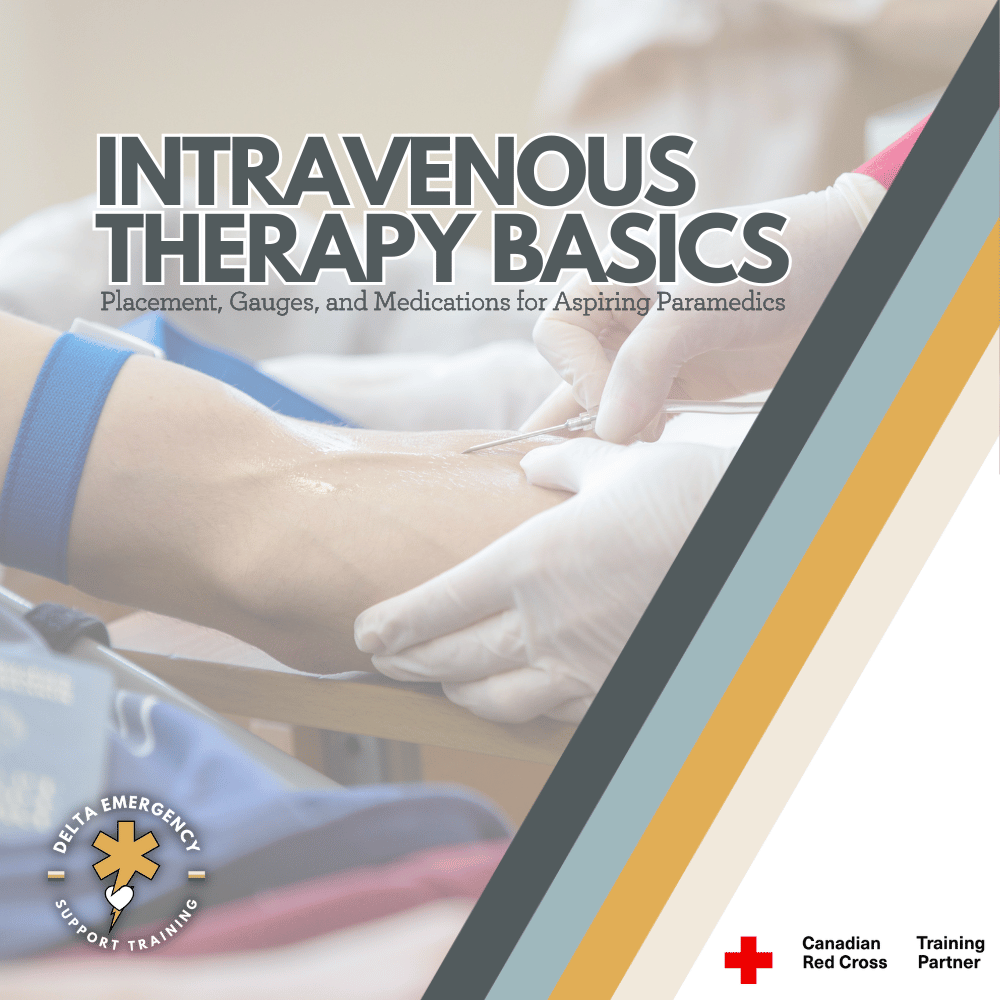
Intravenous Therapy for Beginners: Placement, Gauges & Medications
Intravenous (IV) therapy is a key skill for future paramedics and advanced responders. This beginner’s guide covers vein selection, catheter sizes, and common medications, helping you prepare for PCP training and real-world prehospital care.
For many first responders, advancing from Advanced First Aid or Emergency Medical Responder certification to Primary Care Paramedic training is an exciting milestone. It’s where your skills evolve from basic emergency management to a more advanced approach to prehospital medical care.
One of the essential new skills taught in PCP programs is intravenous (IV) therapy, a procedure that allows responders to deliver fluids and medications directly into the bloodstream for rapid, controlled treatment.
While IV initiation is not within the EMR or AFA scope of practice, understanding what it involves — and how it supports patient care — gives you a valuable head start.
What Is IV Therapy?
IV therapy involves inserting a sterile catheter into a patient’s vein to establish direct access to the circulatory system. This line can then be used to deliver fluids, medications, or draw blood samples. IV access is one of the fastest, most reliable ways to stabilize a patient in critical or emergent situations.
When Are IVs Needed?
Paramedics and advanced responders use IVs in a wide range of medical and trauma calls, such as:
Fluid resuscitation: Treating dehydration, burns, or blood loss
Medication delivery: For cardiac, allergic, or diabetic emergencies
Pain or nausea management: In controlled, monitored settings
Cardiac arrest care: To administer life-saving drugs quickly
Trauma management: When oral or intramuscular routes aren’t viable
Learning to Start an IV in PCP School
During PCP training, students learn the anatomy of veins, infection control, and catheterization techniques through classroom instruction, practice labs, and clinical placements. You’ll first work on training arms to master vein palpation, needle handling, and aseptic technique before performing supervised IV starts in clinical settings.
The process includes:
Gathering and preparing sterile equipment
Identifying a suitable vein
Cleansing the site
Inserting the catheter bevel-up
Confirming flashback and advancing the catheter
Securing the line and beginning the infusion
Common IV Insertion Sites (and Why They’re Chosen)
Vein selection is critical. Choosing the right site helps reduce complications, ensures proper flow, and keeps the patient comfortable.
Here are the most common IV entry sites used in prehospital and clinical settings:
1. Dorsal Hand Veins
These include the cephalic, basilic, and dorsal metacarpal veins on the back of the hand.
Pros: Easy to visualize and access; great for smaller catheters.
Cons: More sensitive; can be uncomfortable during movement or fluid administration.
Common Uses: General medication or fluid delivery when other veins are less accessible.
2. Forearm Veins
The cephalic and basilic veins along the forearm are often the first choice for IV starts.
Pros: Straight path, good flow rate, and easier stabilization with tape.
Cons: May roll or collapse if dehydrated; limited space for reattempts.
Common Uses: General medical and trauma patients, fluid resuscitation, medication administration.
3. Antecubital Fossa (Inner Elbow)
The median cubital, cephalic, and basilic veins in the crook of the arm are popular for rapid access.
Pros: Large veins, high flow rates — ideal for trauma or blood draws.
Cons: Restricts arm movement; prone to kinking if patient bends the elbow.
Common Uses: Emergency IV access, large-bore lines, or when rapid administration is needed.
4. External Jugular Vein (Neck)
Used in some prehospital or critical care settings when peripheral access isn’t possible.
Pros: Easy to locate in patients with difficult peripheral veins; high flow.
Cons: Requires skill and patient cooperation; greater risk if improperly managed.
Common Uses: Trauma, shock, cardiac arrest, or situations where arm veins are inaccessible.
5. Lower Extremity Veins (Dorsal Foot or Great Saphenous)
Used mainly when upper extremities are unavailable.
Pros: Alternative access in infants or patients with poor upper body veins.
Cons: Slower flow, higher infection risk, limited mobility.
Common Uses: Pediatrics, last-resort adult IV access.
Understanding IV Gauge Sizes
The gauge of an IV catheter refers to its diameter. Smaller numbers mean larger catheters.
14–16G: For trauma or massive fluid resuscitation
18G: For blood administration or major fluid replacement
20G: General adult use; medications and moderate fluid therapy
22–24G: Pediatrics, elderly, or fragile veins
Gauge choice depends on patient size, vein condition, and the urgency of the situation.
Common IV Medications in Paramedic Practice
While specific drug use depends on provincial protocols, IV therapy often supports:
Normal Saline (0.9% NaCl) – Fluid replacement or line maintenance
Dextrose (D10, D50) – Hypoglycemia management
Epinephrine – Cardiac arrest or anaphylaxis (specific concentrations)
Morphine / Fentanyl – Pain management (under standing orders)
Ondansetron – Nausea control
Nitroglycerin (IV form) – Chest pain management (advanced protocols)
Each medication requires strict dosage control, monitoring, and adherence to medical direction — something you’ll master in paramedic pharmacology.
Why IV Skills Matter
For professional responders, starting an IV isn’t just about inserting a catheter — it’s about stabilizing patients efficiently, safely, and confidently. In trauma, shock, or medical crises, IV access can mean the difference between life and death.
If you’re currently an EMR or AFA graduate considering the PCP path, familiarizing yourself with IV principles now will make your transition smoother and your training easier.
Final Thoughts
Learning to start an IV marks a major step forward in your responder journey. Though outside the AFA and EMR scope, it’s a skill that defines advanced prehospital care. As you move toward your Primary Care Paramedic program, understanding IV therapy — from vein anatomy to gauge selection — gives you a solid foundation for success.
Ejection Trauma: What First Responders Need to Know About High-Impact MVCs
Ejection trauma is one of the most catastrophic outcomes of a motor vehicle collision. For first responders, understanding how to assess, stabilize, and prioritize care for these high-impact patients is critical. Here’s how to stay calm, organized, and effective in the moments that matter most.
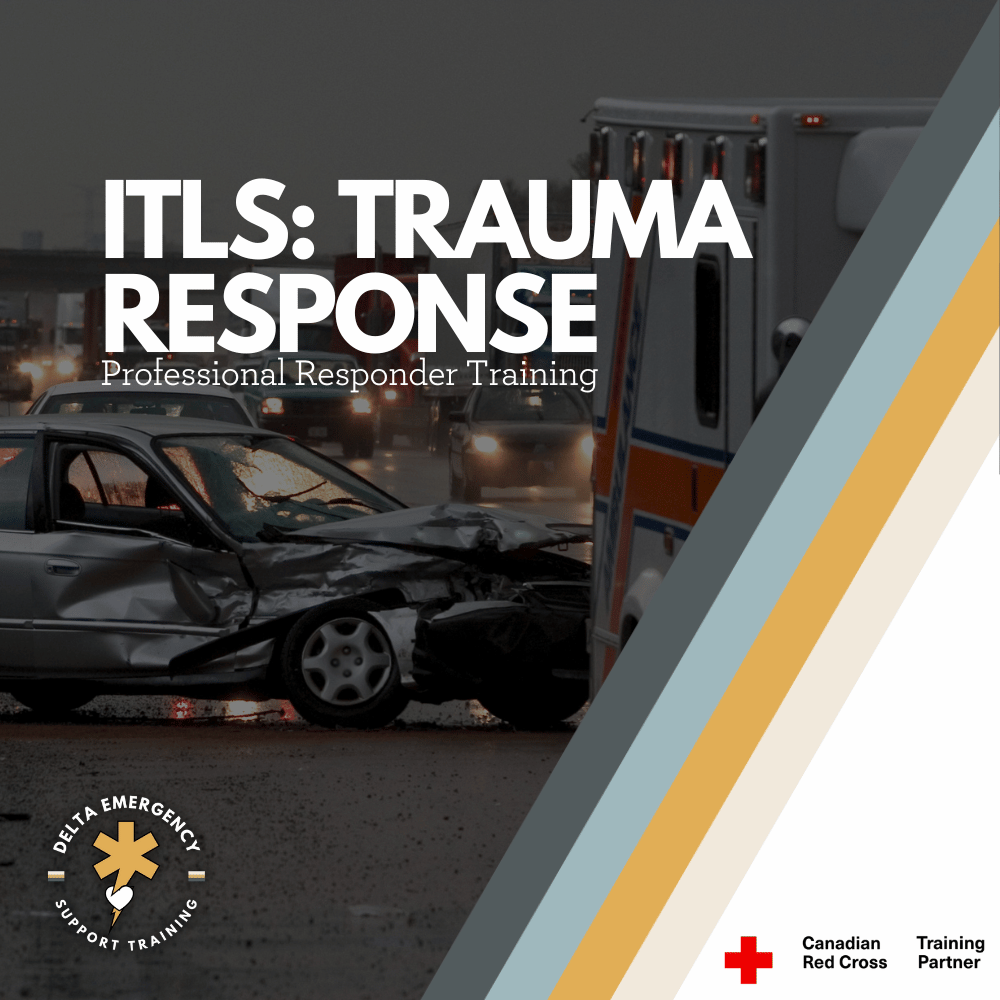
When a person is ejected from a vehicle during a crash, the outcome is almost always severe. Ejection trauma represents one of the most catastrophic mechanisms of injury emergency responders will encounter. Whether partial or complete, being thrown from a vehicle amplifies the forces acting on the body—turning an already violent impact into a multi-system trauma event.
What Is Ejection Trauma?
Ejection trauma occurs when a vehicle occupant is completely or partially thrown out of the vehicle during a collision. This typically happens when seat belts are not worn or fail, or when the force of impact breaches the vehicle’s structure.
There are two main types:
Partial ejection – The patient is partially expelled, often trapped by the seat belt or vehicle frame, resulting in crushing or shearing injuries.
Complete ejection – The patient is fully thrown clear of the vehicle, often resulting in secondary impacts with the ground or other objects.
Mechanism of Injury (MOI)
Ejection trauma is classified as a high-mechanism MOI, and responders should immediately suspect:
Severe blunt trauma
Multiple fractures
Spinal, head, and internal injuries
Airway compromise or shock
The energy transfer doesn’t stop at the first impact—the patient often experiences multiple points of contact:
The initial crash inside the vehicle
Contact with the vehicle structure on exit
Impact with the ground or another surface
Potential secondary impact with objects (trees, poles, other vehicles)
Each of these contributes to a complex and unpredictable injury pattern.
Common Injuries Associated with Ejection
Responders should anticipate multi-system trauma, including:
Head and neck injuries: Concussions, skull fractures, traumatic brain injuries (TBI)
Spinal trauma: High risk of spinal fractures or cord damage due to rotational forces
Thoracic injuries: Flail chest, pneumothorax, hemothorax, cardiac contusions
Abdominal trauma: Liver or spleen lacerations, internal bleeding
Orthopedic injuries: Long bone fractures, pelvic fractures, amputations
Soft tissue injuries: Severe abrasions, degloving injuries, lacerations
Scene Assessment
When responding to an MVC with possible ejection, scene safety and situational awareness come first.
Scan the entire area—patients may be thrown significant distances or hidden in brush, ditches, or behind obstacles.
Note patient position relative to the vehicle; it offers key clues about trajectory and energy transfer.
Look for additional hazards: leaking fuel, oncoming traffic, downed power lines.
Patient Management in the Field
Ejected patients require rapid, systematic assessment and early activation of advanced care.
1. Scene Safety & Triage
Request additional units and air transport early.
Perform a global scan for multiple patients.
2. Primary Survey (Check, Call, Care)
Airway: Suspect spinal injury—manually stabilize head and neck, use jaw-thrust if needed.
Breathing: Expose the chest, check for symmetry and adequate air movement.
Circulation: Control major bleeding immediately. Prioritize rapid identification of life-threatening hemorrhage.
3. Secondary Survey
Head-to-toe assessment, noting deformities, contusions, abrasions, punctures, burns, tenderness, lacerations, and swelling (DCAP-BTLS).
Monitor vitals frequently—changes can indicate internal bleeding or decompensating shock.
Maintain spinal motion restriction (SMR) if indicated.
4. Shock Management
Treat for hypovolemia: position appropriately, keep warm, and prepare for rapid transport.
Oxygen administration and airway management should be prioritized.
The Role of Prehospital Responders
As a first responder, your calm and methodical approach can make all the difference. Recognizing the severity of ejection trauma early allows for:
Prioritizing rapid extrication and transport
Effective communication with dispatch and incoming EMS
Early notification of trauma centers
Ejection = Severe Trauma Until Proven Otherwise.
Never underestimate the forces involved—patients may appear stable initially but can deteriorate quickly.
Key Takeaways
Ejection trauma is one of the deadliest outcomes of an MVC.
Always assume multi-system trauma and spinal involvement.
Focus on airway, breathing, and circulation while minimizing movement.
Rapid transport and early hospital notification are essential.
Scene safety, teamwork, and clear communication are critical under pressure.
Final Thoughts
Every ejection call reminds responders why scene assessment and mechanism recognition matter so much. Behind every statistic is a human life—one that depends on the calm, structured, and skilled actions of those first on scene. Whether you’re an Advanced First Aider, EMR, or paramedic student, understanding ejection trauma prepares you to manage chaos with confidence and compassion.
International Trauma Life Support: A Structural Approach to Trauma
Need to take ITLS but not sure what it entails? We’ll break it down for you. International Trauma Life Support (ITLS) gives professional responders the tools to quickly assess, stabilize, and manage trauma patients in high-stress situations. From airway management to bleeding control and spinal care, this course equips you with practical, hands-on skills that could save lives when every second counts.
When emergencies happen, paramedics, firefighters, and advanced first aid responders, having the right tools and knowledge can make the difference between life and death. International Trauma Life Support (ITLS) is a specialized training program that equips professional responders with the skills to rapidly assess, stabilize, and manage trauma patients in high-pressure situations.
If you’re a responder required to take ITLS, here’s what you need to know.
The Purpose of ITLS
ITLS focuses on a structured approach to trauma care. The goal is to give responders a proven framework for:
Quickly identifying life-threatening injuries.
Performing rapid, effective interventions.
Preventing further harm while preparing for transport.
Working within professional guidelines and medical protocols.
This training bridges the gap between classroom learning and the unpredictable realities of trauma scenes.
Core Learning in ITLS
Here’s a breakdown of the key skill areas covered in ITLS and what they mean in practice.
1. Patient Assessment & Initial Survey
Responders learn a systematic way to approach every trauma patient:
Hazards, Environment, MOI, Patient count and Assistance.
Primary survey (C-Spine, LOC, ABCs, RBS,).
Identifying life threats in the first few minutes.
Why it matters: A structured assessment ensures nothing is missed under pressure.
2. Airway Management & Adjuncts
Maintaining an open airway is priority number one. ITLS covers:
Manual maneuvers (jaw thrust, head-tilt chin-lift).
Airway adjuncts (OPA, NPA).
Advanced options (supraglottic airways, endotracheal intubation where permitted).
Recognizing and managing obstructions.
Why it matters: Without a clear airway, nothing else matters — oxygen can’t reach the body.
3. Breathing & Ventilation Support
Responders are trained to:
Recognize respiratory distress and failure.
Provide rescue breaths and ventilations with a bag-valve mask.
Use oxygen.
Identify and treat life-threatening chest injuries (tension pneumothorax, sucking chest wound).
Why it matters: Oxygen delivery is essential to survival, recognizing and treating chest trauma is lifesaving.
4. Circulation & Hemorrhage Control
Stopping major bleeding and supporting circulation includes:
Direct pressure and wound packing.
Tourniquet application.
Recognizing shock and initiating care.
Intravenous (IV) or intraosseous (IO) fluid administration (where scope allows).
Why it matters: Uncontrolled bleeding is one of the top causes of preventable trauma deaths.
5. Spinal Motion Restriction (SMR)
Trauma often comes with potential spinal injuries. ITLS emphasizes:
Patient assessment for spinal risk.
Manual stabilization and cervical collars.
Log rolls and backboard use.
Updated evidence-based approaches to SMR.
Why it matters: Proper handling prevents permanent paralysis from secondary injury.
6. Head & Chest Trauma Management
Specific scenarios covered include:
Managing traumatic brain injuries and increased intracranial pressure.
Recognizing chest trauma (flail chest, open chest wounds).
Interventions like occlusive dressings, fracture stabilization and deadly bleed control.
Why it matters: These injuries are time-sensitive and require immediate, precise intervention.
7. Protocols & Teamwork
Beyond individual skills, ITLS teaches responders to:
Work under medical protocols and established guidelines.
Communicate effectively in teams.
Prioritize transport decisions (“load and go” vs. “stay and play”).
Why it matters: Trauma care is never solo — effective teamwork saves lives.
Why Professional Responders Need ITLS
For those moving into advanced roles (Advanced First Aid, EMR, PCP, paramedic), ITLS is often a required certification. It ensures all responders use the same language, protocols, and structured assessment, which makes coordination seamless during emergencies.
With ITLS, you’re not just checking a box — you’re developing:
Confidence in high-stress scenarios.
Competence in trauma management skills.
Credibility as a trained professional who can handle life-threatening situations.
Final Takeaway
If you’re required to take ITLS, think of it as more than a course — it’s a survival toolkit for the real world of trauma response. You’ll learn how to rapidly assess patients, manage airways, stop life-threatening bleeds, stabilize spines, and follow trauma protocols effectively.
For professional responders, ITLS is not just training. It’s a commitment to ensuring that when seconds count, you can act decisively, safely, and in line with the best trauma care standards worldwide.

