The Delta Dispatch

Advanced First Aid, Alberta, Airway, Child Safety Kumari Malhotra Advanced First Aid, Alberta, Airway, Child Safety Kumari Malhotra

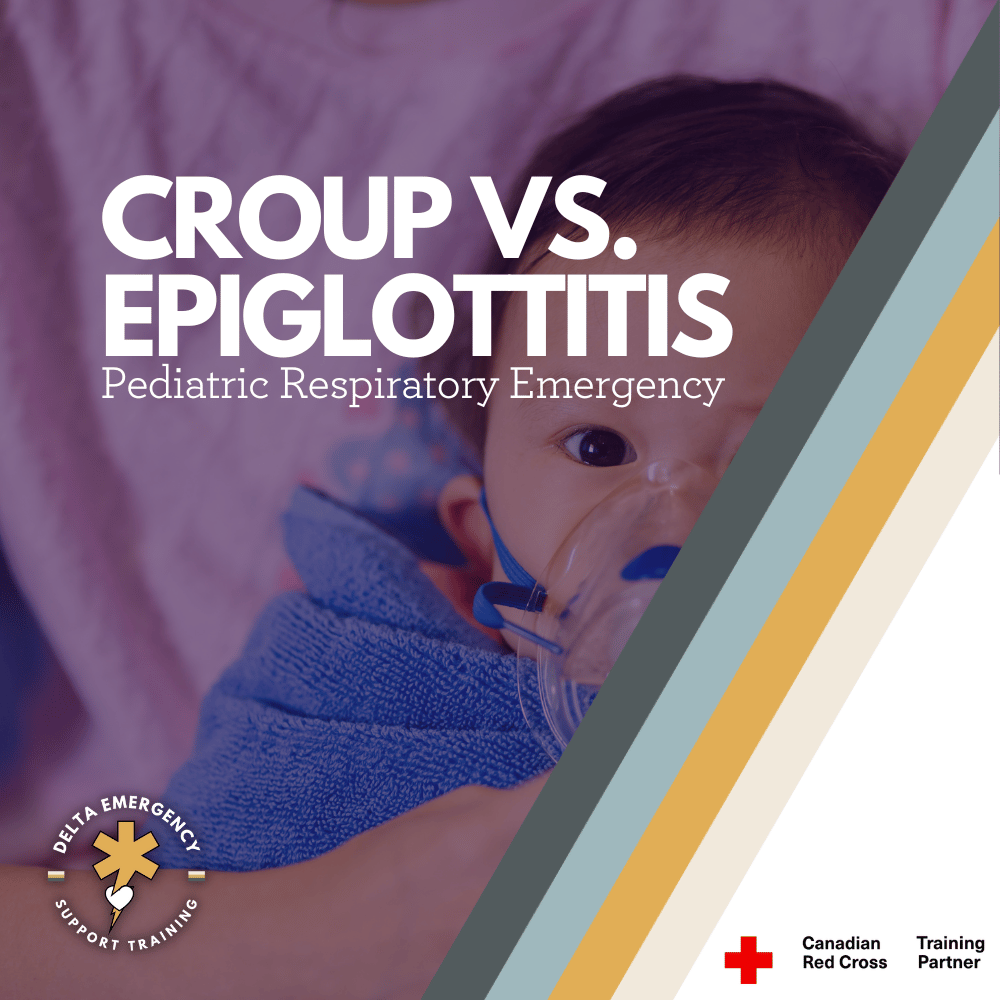
Croup vs. Epiglottitis in Children: What First Responders and Parents Need to Know

Breathing problems in children can be terrifying, and knowing the difference between croup and epiglottitis could save a life. Parents need to know the warning signs, while first responders must act quickly and carefully. Here’s how to tell them apart and what steps to take in an emergency.

When a child has trouble breathing, both parents and first responders feel the urgency. Two conditions often confused with one another are croup and epiglottitis. While both affect the airway, they differ dramatically in severity and required response. For parents, understanding the warning signs can help you know when to call for help. For first responders, recognizing the difference is critical to providing safe and effective care.

Croup: Common but Often Alarming

What it is:
Croup is a viral infection that causes swelling of the larynx and trachea, most often seen in children aged 6 months to 3 years.

Parents may notice:

  • Barking, seal-like cough (especially at night)

  • Hoarse voice

  • Stridor (high-pitched sound on inspiration) when crying or upset

  • Low-grade fever

  • Symptoms often start after a cold

First responder perspective:

  • Most cases are mild, but moderate to severe croup can cause stridor at rest, increased work of breathing (retractions, nasal flaring), or fatigue.

  • Treatment may include humidified oxygen, steroids (e.g., dexamethasone), and nebulized epinephrine in severe cases.

  • Keeping the child calm is key; agitation worsens obstruction.

Epiglottitis: A True Airway Emergency

What it is:
Epiglottitis is a bacterial infection that causes the epiglottis to swell rapidly, threatening complete airway obstruction. Thanks to Hib vaccination, it’s now rare, but still life-threatening when it occurs.

Parents may notice:

  • Sudden onset of high fever

  • Severe sore throat and difficulty swallowing

  • Drooling (child can’t swallow saliva)

  • Muffled voice

  • Child sitting forward, chin out, mouth open (“tripod position”)

  • Appearing very ill, anxious, and struggling to breathe

First responder perspective:

  • This is a do not delay, do not agitate situation.

  • Never attempt to look in the child’s throat — it can trigger complete obstruction.

  • Keep the child upright and calm.

  • Provide high-flow oxygen if tolerated.

  • Be prepared for advanced airway intervention (hospital setting or with ALS backup).

  • Rapid transport is essential.

Quick Comparison

FeatureCroup (Viral)Epiglottitis (Bacterial, Emergency)OnsetGradual, after cold symptomsSudden, rapid progressionCoughBarking, seal-likeRare or absentFeverLow-gradeHighVoiceHoarseMuffled, “hot potato” voiceSwallowingUsually ablePainful, droolingStridorCommon, louder when upsetLate, quieter, concerningSeverityUsually mild-moderateSevere, life-threatening

The Takeaway

For parents:

  • Croup is common and usually manageable, but if your child has stridor at rest, difficulty breathing, or bluish lips, call 911.

  • Epiglottitis is rare but an emergency — if you see drooling, high fever, tripod posture, or sudden severe breathing trouble, call for help immediately.

For first responders:

  • Stay calm and keep the child calm.

  • Differentiate based on history and presentation.

  • Supportive care is often enough for croup, while epiglottitis requires immediate rapid transport and careful airway management.

When it comes to pediatric airway conditions, the rule is simple: if in doubt, treat it like epiglottitis until proven otherwise. Quick recognition and action save lives.

Read More
Alberta, Advanced First Aid, Certificates Kumari Malhotra Alberta, Advanced First Aid, Certificates Kumari Malhotra

From Oilfield to Firehall: Why Tradespeople Are Switching to Emergency Services

Many tradespeople in Alberta’s oil and gas sector are transitioning to emergency services careers. At Delta Emergency Support Training in Calgary, our Advanced First Aid course provides the essential skills and certification needed to make that move with confidence.
Alberta has long been known for its oil and gas industry — and rightly so. From Fort McMurray to the foothills outside Calgary, thousands of workers have built careers in the trades, on the rigs, and in the field. But in recent years, a growing number of tradespeople are making a dramatic shift: trading in steel toes and coveralls for bunker gear and medical kits.

At Delta Emergency Support Training, based in Calgary, Alberta, we’ve seen the trend firsthand. More and more of our Advanced First Aid (AFA) students come from backgrounds in the oil patch, construction, or related trades, seeking a new path in firefighting, emergency medical services, or public safety.

Here’s why this transition is becoming so popular—and how Advanced First Aid training can be your first step from the oilfield to the firehall.

Why Tradespeople Are a Natural Fit for Emergency Services

Many of the qualities that make someone successful on a rig or in a trade are the same qualities needed in emergency response:

  • Strong work ethic and long shifts

  • Team-based environments

  • High-pressure problem solving

  • Hands-on technical skills

  • Risk awareness and safety training

  • Comfort in unpredictable or hazardous settings

If you’ve spent time working in the field, you’ve likely already experienced critical thinking during crises, emergency evacuations, or injury responses. That mindset—and real-world toughness—is highly transferable to fire and EMS careers.

Why the Shift Is Happening Now

There’s no doubt the oil and gas industry still offers high-paying work. But for many tradespeople, the physical demands, economic uncertainty, and cyclical layoffs have made them look for more stable, meaningful, or community-focused careers. Emergency services are standing out for a number of reasons:

  • Long-term stability and benefits

  • Purpose-driven work that gives back to the community

  • Opportunity to work closer to home

  • Union support and career advancement pathways

  • Strong demand for trained emergency responders in Alberta

If you're already safety-certified, used to remote work, and calm under pressure, transitioning to a fire department or EMS service might feel like a natural progression.

Advanced First Aid: Your First Step Toward a New Career

At Delta Emergency Support Training, we offer Advanced First Aid certification and recertification, designed for those ready to pursue new roles in emergency services.

Our courses, taught by experienced paramedics and firefighters, give you the skills and credentials to apply to:

  • Municipal fire departments like Calgary or Edmonton Fire

  • Industrial or wildland fire crews

  • Emergency Medical Responder (EMR) or Primary Care Paramedic (PCP) programs

  • Oil and gas site medical teams

  • Search and Rescue or auxiliary fire departments

What You’ll Learn:

Following the Canadian Red Cross curriculum, Advanced First Aid training includes:

  • Scene and patient assessment

  • CPR Level C and AED

  • Airway and breathing emergencies

  • Spinal, head, chest, abdominal, and limb injuries

  • Seizures, strokes, anaphylaxis, diabetic emergencies

  • Multiple casualty management and triage

  • Oxygen administration

  • Legal responsibilities and assisting with medications

This level of training is often the minimum requirement for entry into emergency service programs—and it builds confidence for high-stakes environments.

You're Not Starting Over—You're Building Forward

Switching careers doesn’t mean leaving your skills behind. In fact, your experience in the trades—whether it's welding, electrical, drilling, construction, or industrial safety—equips you with a unique edge.

At Delta Emergency, we’ve seen all kinds of professionals make the leap into emergency services. We’ve trained doctors, nurses, personal trainers, military personnel, and tradespeople who have successfully transitioned into fire, EMS, or rescue careers. The one thing they all had in common? A willingness to start with solid foundational training and a drive to serve.

You don’t need a medical degree or fire academy certificate to get started—just the right training and mindset.

Take the First Step with Delta Emergency Support Training

Emergency services are more than just a job—they're a calling. If you're ready to explore a career that's local, stable, and community-centered, Delta Emergency Support Training in Calgary, Alberta is here to support your journey.

Advanced First Aid is more than a certificate—it’s your starting point. Learn from real paramedics and firefighters and take the first step toward a career with purpose.

Visit our website to learn more about the program and how it can support your next move.

Read More

Cultural Differences and Language Barriers: A First Responder’s Guide to Respectful, Effective Care

Emergency calls often involve diverse cultures and languages. First responders face unique challenges in communication and cultural understanding that can impact patient care. This guide offers essential strategies to navigate language barriers respectfully, recognize cultural differences, and deliver compassionate, effective emergency care. Improve your skills and confidence with our practical tips.
As a first responder, you’re trained to act swiftly and decisively—but every emergency call is unique. One of the most important factors that can affect your response is cultural diversity. From language barriers to differing customs, beliefs, and expectations, understanding and respecting cultural differences is essential to providing compassionate and effective emergency care.

This guide explores common challenges you may encounter and offers practical strategies for navigating language barriers and cultural nuances with respect and professionalism.

1. Recognizing the Impact of Cultural Differences

Culture shapes how people perceive health, illness, pain, and emergency care. For example:

  • Some cultures prefer family involvement in medical decisions, while others expect individual autonomy.

  • Eye contact, physical touch, and personal space norms vary widely.

  • Certain gestures, language, or uniforms may be misunderstood or viewed differently.

  • Religious or cultural practices may affect treatment preferences (e.g., gender considerations, modesty, dietary restrictions).

Being aware of these factors helps you approach each situation with sensitivity.

2. Language Barriers: Challenges and Solutions

Language differences can hinder communication, delay treatment, or cause misunderstandings. Common challenges include:

  • Difficulty understanding symptoms or medical history.

  • Inability to explain procedures or gain informed consent.

  • Stress and fear amplified by lack of clear communication.

How to Overcome Language Barriers:

  • Use clear, simple language. Avoid jargon, speak slowly, and use short sentences.

  • Use non-verbal communication. Gestures, facial expressions, and demonstration can help convey meaning.

  • Employ translation tools such as phone interpretation services or translation apps if available.

  • Involve bilingual family members or community members cautiously—ensure they understand medical confidentiality.

  • Be patient and give time for responses. Don’t rush; encourage questions.

3. Showing Respect for Cultural Beliefs and Practices

Respect is the foundation of effective care. To show respect:

  • Ask permission before touching the patient—especially with cultural or religious sensitivities.

  • Respect privacy and modesty. Use same-gender responders when possible.

  • Be mindful of dietary or medical restrictions related to religion or culture.

  • Avoid assumptions or stereotypes. Every individual is unique, even within cultural groups.

  • Listen actively and validate concerns. Even if you can’t fully accommodate, acknowledging beliefs builds trust.

4. Practical Tips for First Responders

  • Prepare ahead: Learn about cultural demographics in your service area and common practices.

  • Use cultural competence training to build awareness and skills.

  • Maintain a calm and compassionate demeanor. Non-verbal cues can ease tension.

  • Clarify understanding: Repeat key information back to ensure comprehension.

  • Document any cultural considerations relevant to treatment or care.

  • Be adaptable: Some situations require flexibility while maintaining safety and protocol.

5. The Role of Empathy and Patience

Responding with empathy can bridge gaps where words fall short. Simple acts—like a reassuring tone, gentle touch (when appropriate), or attentive listening—can make a huge difference. Patience helps you navigate confusion or fear, especially when communication is tough.

6. When to Call for Assistance

If language barriers severely impair communication and immediate care decisions, or if cultural concerns affect treatment, don’t hesitate to:

  • Request professional medical interpreters.

  • Consult supervisors or cultural liaison officers if available.

  • Involve community health workers who understand cultural contexts.

7. Why Cultural Competence Matters

Respectful, culturally aware care leads to:

  • Better patient cooperation and outcomes.

  • Reduced stress and fear for patients and families.

  • Stronger community trust in emergency services.

  • Enhanced professional confidence and effectiveness.

Final Thoughts

Every call is more than just a medical emergency—it’s a human moment shaped by diverse stories and backgrounds. As a first responder, your cultural sensitivity and ability to navigate language barriers not only save lives but honor the dignity of every individual you serve.

By embracing respect, patience, and continuous learning, you make your emergency care truly inclusive and effective.

Read More

Why Medical Knowledge Is Essential for Aspiring Firefighters

In the ever-changing world of emergency response, the role of a firefighter is undergoing a profound transformation. Gone are the days when battling blazes was the primary focus; today, the majority of emergency calls involve medical situations. This shift, fueled by an unstable healthcare system and advancements in building technology, demands a new breed of firefighters – ones armed not only with traditional firefighting prowess but also with comprehensive medical training. Join us on this exploration of why the future of firefighting requires a mastery of both flames and first aid, and how adapting to these changing dynamics is crucial for those ready to answer the call of duty.

Aspiring firefighters often envision themselves tackling roaring blazes, but the landscape of emergency calls is rapidly changing. In today's world, the majority of calls received by fire departments are related to medical emergencies. This shift means that the skills needed to handle medical crises are just as crucial as those required for traditional firefighting scenarios. Recognizing this shift early on can better prepare aspiring firefighters for the dynamic nature of the job.

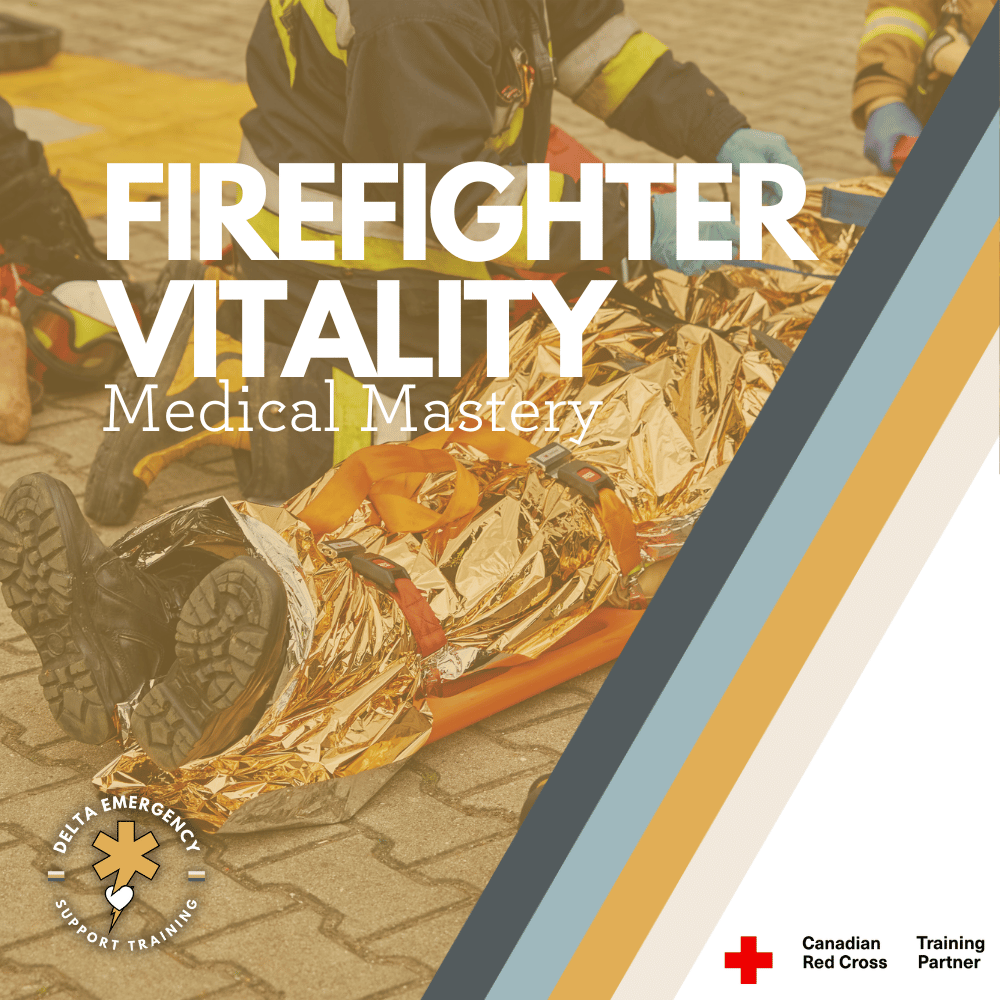
Firefighters assisting in medical emergency.

This article delves into the indispensable role of medical knowledge for future firefighters, with a focus on practical training options such as Delta Emergency Support Training's advanced first aid course.

Rising Demand for Medical Assistance

The traditional role of firefighting has transformed, emphasizing a greater focus on medical emergency responses. Aspiring firefighters must recognize the imperative need for a comprehensive understanding of medical emergencies. The escalating demand for emergency medical services stems from an unstable healthcare system, underfunded and understaffed paramedics.

Simultaneously, the frequency of fire-related calls has significantly decreased compared to four decades ago. The changing landscape highlights the necessity for future firefighters to adapt to the prevalence of medical emergencies. Understanding the complex factors influencing this shift is crucial for those entering the firefighting profession.

The Need for Speed in Response

One of the most compelling reasons for aspiring firefighters to invest in medical knowledge is the advantage of rapid response. Picture this: you're 40 miles from the nearest ambulance base, but the fire department is just 10 miles away. Geographically, the fire department can arrive at the scene significantly faster. This underscores the critical role firefighters play as first responders in medical emergencies, often getting there before EMS personnel.

Adapting to a Diversifying Role

As the role of a firefighter evolves beyond traditional expectations, it's not just a shift in duty; it's a personal evolution. Specialized training recognizes this, and programs developed by seasoned professionals, such as Delta's, ensure that you're not just learning; you're growing. You're becoming someone who can adapt to the changing face of emergencies, someone who can handle the unexpected with grace and skill.

Addressing Skepticism Towards Medical Training

Acknowledging skepticism towards medical training among aspiring firefighters, Delta's approach is rooted in practicality. The advanced first aid program bridges the gap between firefighting and medical expertise without compromising professional standards. The course is designed to instill confidence and competence in those who may initially harbor reservations towards the medical aspect of the profession.

Training and Dedication

Achieving mastery in firefighting requires a dedication to honing a diverse skill set with precision and professionalism. Delta Emergency Support Training's Advanced First Aid course embodies this ethos, serving as the prerequisite for firefighters in Alberta. Taught by seasoned first responders, this program is the brainchild of an Advanced Care Paramedic with over 15 years of experience in Emergency Medical Services. Through Delta's advanced first aid course, aspiring firefighters undergo a rigorous training regimen that emphasizes a professional approach to skill mastery. The course seamlessly integrates traditional firefighting responsibilities with the adept administration of medical interventions, ensuring that graduates emerge as well-rounded and highly capable first responders equipped to navigate the complexities of modern emergency response with confidence and proficiency.

Conclusion:

As the firefighting profession continues to evolve, aspiring firefighters must recognize the intrinsic connection between medical competence and their efficacy as first responders. Training programs like Delta Emergency Support Training's advanced first aid course epitomize a professional and strategic approach to acquiring the essential skills for contemporary emergency response. In a landscape where versatility is paramount, aspiring firefighters are encouraged to embrace a holistic training regimen that encompasses both traditional firefighting prowess and advanced medical knowledge, positioning themselves as adept and adaptable professionals in an ever-changing field.

Read More

Prioritizing Health for Aspiring First Responders: Fitness and Nutrition Essentials

Step into the world of first responders with a comprehensive guide to prioritizing health. From essential fitness routines to meal prep mastery, uncover the core elements crucial for readiness in this demanding role. Explore the secrets behind endurance, strength-building, and managing nutrition amidst unpredictable schedules. Prioritizing health isn’t just a choice; it’s the foundation for success in the impactful realm of first responders.
Stepping into the world of first responders is an incredible journey that demands not just courage and dedication but a commitment to maintaining your physical well-being. Here’s a comprehensive look at why prioritizing health is key for those aiming to become a part of this impactful community.

Running shoes, weights and bowl of healthy fruits and VEGETABLES

Fitness Foundations: The Backbone of Readiness

Physical fitness encompasses various aspects crucial for a first responder's preparedness. It includes:

Cardiovascular Health

Cardio exercises are vital for maintaining a healthy heart and improving endurance. Consider activities such as:

Running or jogging:

Excellent for building stamina and cardiovascular endurance.

Cycling:

Both outdoor biking and stationary cycling are effective for heart health.

Swimming:

Provides a full-body workout while being gentle on joints.

High-intensity interval training (HIIT):

Alternating between bursts of high-intensity exercise and rest periods for cardiovascular fitness.

Strength Training:

Building strength is essential for handling the physical demands of the job. Activities for strength training include:

Weightlifting:

Involves lifting weights to build muscle strength and endurance.

Bodyweight exercises:

Push-ups, pull-ups, squats, and planks are effective without the need for equipment.

Resistance band workouts:

Use bands to add resistance to exercises and strengthen muscles.

Functional training:

Mimicking movements needed in your role as a first responder, such as carrying equipment or lifting patients.

Fueling Success: The Power of Nutrition

Challenges of On-the-Go Nutrition

The unpredictable nature of a first responder's work schedule often poses challenges for regular, balanced meals. Long shifts and urgent calls may limit access to healthy food options, making it difficult to maintain proper nutrition. This emphasizes the importance of planning and preparation to ensure adequate fuel during demanding work hours.

Meal Prepping for Success:

Meal prepping becomes a valuable strategy for first responders. Setting aside time to prepare and pack balanced meals in advance ensures access to nutritious food during hectic schedules. Opt for meals rich in:

  • Lean proteins (chicken, fish, tofu)

  • Complex carbohydrates (whole grains, fruits, vegetables)

  • Healthy fats (avocado, nuts, seeds)

Eating Right for Endurance:

Proper nutrition is the cornerstone of sustained energy. Consuming balanced meals before shifts and carrying nutrient-dense snacks can help maintain energy levels. Emphasize foods that release energy steadily, avoiding rapid sugar crashes. Incorporating small, frequent meals rich in fiber, protein, and healthy fats supports lasting energy.

Managing Caffeine Intake:

Caffeine can be a go-to for a quick energy boost, but reliance on energy drinks or excessive coffee consumption may lead to dependency and energy crashes. Exploring alternative sources like caffeinated teas—such as matcha or Yerba mate—can provide sustained energy without the abrupt spikes and crashes associated with energy drinks.

Balancing Nutrition and Work:

Adopting a mindful approach to nutrition amidst a demanding schedule is crucial. Prioritizing meal prepping and choosing nutrient-dense options ensure a consistent intake of essential nutrients, supporting sustained energy and optimal performance during long shifts.

Conclusion

Aspiring first responders must recognize that prioritizing health isn’t just a personal commitment—it's a commitment to the community they serve. By nurturing their physical fitness and prioritizing balanced nutrition, individuals prepare themselves not just for the physical demands but also for the mental resilience necessary in their crucial roles.

In embracing a comprehensive approach to health, aspiring first responders are better equipped to serve their communities effectively, ensuring they can respond with strength, agility, and unwavering dedication.

Read More
AED trainer, BLS CPR, Cardiac, First Aid, Online Course Kumari Malhotra AED trainer, BLS CPR, Cardiac, First Aid, Online Course Kumari Malhotra

AEDs: The Basics

Sudden cardiac arrest (SCA) is a leading cause of death worldwide, with millions of people experiencing it each year. AEDs, or Automated External Defibrillators, are critical in treating SCA because they can deliver a life-saving shock within minutes of the onset of symptoms. This blog post will cover the basics of AEDs, including how they work, why they're important, and how to use them.

Automated External Defibrillators (AED): What You Need to Know

An Automated External Defibrillator, or AED, is a portable electronic device used to treat sudden cardiac arrest (SCA) in conjunction with Cardiopulmonary Resuscitation (CPR). AEDs are designed to be used by anyone, regardless of their level of training or experience, to help save lives in emergency situations.

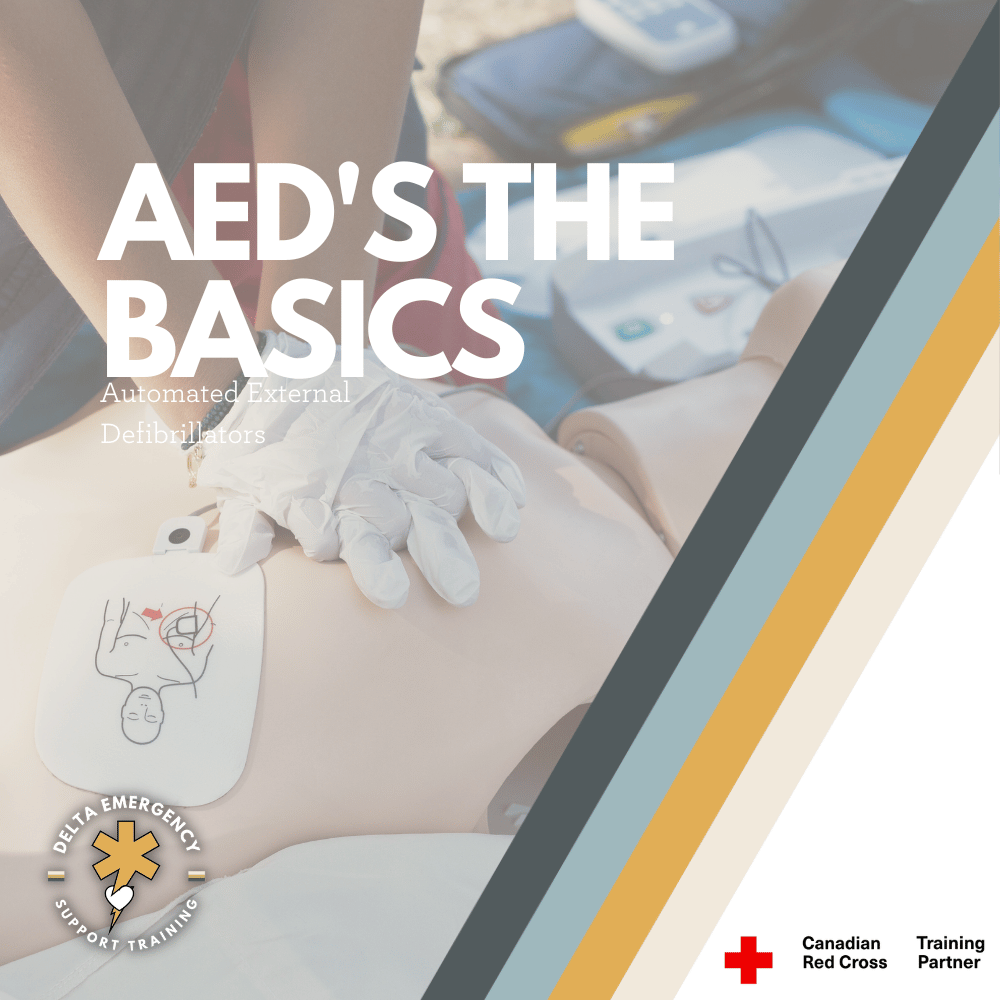
A person wearing gloves is performing first aid on a CPR dummy, while following AED directions. The person's hands are on the chest of the dummy, as if performing chest compressions. There is an AED device next to the dummy, with the pads attached to the dummy's chest.

How Does An AED Work?

AEDs work by analyzing the heart rhythm of a person experiencing SCA, and then delivering an electric shock to restore the heart's natural rhythm. The device comes with two sticky pads with attached wires, called electrodes. These pads are placed on the person's chest, and the AED's computer analyzes the heart rhythm through the electrodes. If the AED determines that the person's heart is in ventricular fibrillation or another treatable rhythm, it will prompt the user to deliver a shock. However, if the person's heart is in asystole, which is the absence of any heart rhythm, the AED will not deliver a shock. It's important to note that the use of an AED on a person with no heart rhythm (asystole) is not recommended because it is unlikely to be effective.

AED + CPR

CPR, or cardiopulmonary resuscitation, is a life-saving technique used to help someone who is in cardiac arrest. It involves a combination of chest compressions and rescue breaths to manually circulate oxygen-rich blood through the body when the heart is not beating effectively. CPR is performed when someone is unconscious, not breathing, and has no pulse.

When someone experiences sudden cardiac arrest (SCA), CPR should be performed while waiting for an AED to arrive or be retrieved. The combination of CPR and AED can significantly increase the chances of survival.

Why Are AED’s Important

Sudden cardiac arrest (SCA) is a leading cause of death worldwide, with millions of people experiencing it each year. AEDs, or Automated External Defibrillators, are critical in treating SCA because they can deliver a life-saving shock within minutes of the onset of symptoms. AEDs are easy to use, portable, and equipped with clear instructions and voice prompts. They can be stored in public places, homes, and businesses to provide quick access in case of an emergency.

Where Can I Find An AED?

AEDs are becoming more common in public places, such as airports, shopping centers, and schools. Many workplaces are also beginning to invest in AEDs for their employees and customers. It's important to know where the nearest AED is located in case of an emergency. Look for AEDs in clearly marked cabinets, often mounted on the wall. Some AEDs come with an audible alarm or flashing light to make them easier to find in an emergency. If you are unsure where an AED is located, ask your employer or contact your local fire department or ambulance service for more information.

How Can You Use An AED?

AEDs are designed to be simple and easy to use. Most devices come with clear verbal instructions and visual prompts that guide the user through the steps of using the device. Here is a brief overview of how to place AED pads on adults and children:

  • For adults: Place one pad on the upper right side of the chest and the other pad on the lower left side of the chest, as shown in the diagram on the AED or in the instructions. It's important to make sure the pads are placed correctly and securely on the skin.

  • For children: Pediatric pads should be used for children under the age of eight or weighing less than 55 pounds. These pads have a lower energy setting to avoid harm to the child. Place one pad on the center of the child's chest and the other pad on the child's back, just below the shoulder blades.

It's important to note that AEDs should not be used on a wet surface or in water. The chest should be shaved and dried if necessary to ensure good contact with the electrode pads. Sweat and other moisture can interfere with the proper function of the device.

Automated External Defibrillators are an important tool in treating sudden cardiac arrest. These devices can be used by anyone, regardless of their level of training or experience, to help save lives in emergency situations.

Read More

SMR - Spinal Motion Restriction | Professional Responder Skill Series

While SMR is generally considered a safe and effective method for preventing spinal cord injury, there are certain risks and considerations that must be taken into account, such as the potential…

"Spinal Motion Restriction: Techniques and Considerations for Prehospital Care Providers"


Spinal motion restriction (SMR) is a technique used to limit movement of the spinal cord and surrounding tissues during transport to a medical facility for further evaluation and treatment. SMR is typically performed by prehospital care providers, such as paramedics or emergency medical technicians, who are trained in the technique and can quickly assess and stabilize a patient's condition.

SMR involves the use of various devices and techniques to immobilize the spine, including cervical collars, backboards, and straps. While SMR is generally considered a safe and effective method for preventing spinal cord injury, there are certain risks and considerations that must be taken into account, such as the potential for pressure ulcers, respiratory compromise, and the need for prompt removal of SMR devices once the patient reaches a medical facility. Prehospital care providers must also be aware of the latest guidelines and protocols for SMR, as these may vary depending on the patient's condition and the severity of their injuries.

In addition to trauma patients, individuals with certain medical conditions may also require SMR. For example, individuals with spinal fractures, spinal tumors, or spinal infections may require SMR to prevent further damage to the spine and surrounding tissues.

It is important to note that SMR should only be performed by trained professionals and should be used judiciously, as excessive immobilization can lead to complications such as pressure ulcers, respiratory problems, and muscle atrophy.

Ultimately, the decision to use SMR should be made on a case-by-case basis, taking into account the patient's specific needs and the risks and benefits of this technique. In some cases, SMR may be necessary for the safety of the patient, while in other cases, alternative techniques may be more appropriate.

AHS First Responder C-Spine Protocol


This section contains a large amount of information about how we determine applying SMR to a patient. As a firefighter or first responder in Alberta, this is the protocol you will also follow. If you examine both the Canadian C-Spine rule and the AHS C-Spine Protocol, you will find they are very similar.


Background

The C-Spine Assessment Protocol is to be applied to blunt trauma patients where there is a potential for a cervical spine injury and/or the potential for pre-hospital C-spine clearance where the practitioner needs to assess the requirement for spinal motion restriction (SMR).  It is imperative that the practitioner primarily assesses the patient and not the scene or mechanism to determine the need for SMR.  To facilitate this, the Canadian C-Spine Rule has been incorporated into the protocol to aid practitioners’ decision-making.

The Canadian C-Spine Rule applies to alert (GCS of 15), cooperative, and stable adult blunt trauma patients where there is a potential for C-spine injury with neck pain and/or trauma markings above the level of the clavicles.

C-collar application and SMR are contraindicated in all cases of isolated penetrating trauma.  C-collar application and SMR are NEVER indicated in any isolated penetrating trauma.  There is documented increased mortality due to the delay to definitive care with surgical interventions as a result of increased on scene time while applying C-collar and SMR.  Of note, the long board can still be used to facilitate the extrication of the patient.

Patient Safety Considerations
SMR and C-collar application are contraindicated in cases of isolated penetrating trauma. For those patients greater than 65 years of age, take into account biological age versus chronological age. An alert, cooperative and stable patient with no neurological symptoms and no neck pain can be transported without a C-collar. The long board is not necessary for SMR


Etiology

This algorithm is designed to help the practitioner make an informed determination of the need for spinal motion restriction in the field. It is for alert (GCS of 15) and stable trauma patients where cervical spine injury is a concern.
 

  1. Perform spinal motion restriction (SMR) if any of the following are present:
     

    1. High-risk factors

      1. Fall from 1 m / 5 stairs or greater

      2. Axial load to head (e.g. diving injuries)

      3. MVC (Speed greater than 100 km/h, rollover, ejection)

      4. Motorized recreational vehicles

      5. Bicycle collision with object

      6. Medical risk factors (for example, arthritis, prolonged steroid use, degenerative bone disease, history of cervical surgery)

      7. MVC with death of other occupant in the same vehicle

      8. Collisions involving ATVs, motorbikes, and snowmobiles

      9. Pedestrian/cyclist struck by motor vehicle at greater than 15 km/h
         

    2. Altered LOC

      1. Glasgow Coma Scale 14 or less

      2. Disorientation to person, place, time, and/or event

      3. Inability to remember 3 objects after 5 minutes

      4. Delayed or inappropriate response to external stimuli

    3. Paresthesia – including any abnormal motor or sensory neurological finding (e.g. numbness, tingling, weakness)

      1. Unequal handgrip strength

      2. Inability to raise arm(s) against gravity

      3. Inability to move toes

      4. Inability to perform plantar flexion and dorsiflexion of the feet

      5. Sensory deficits such as weakness or numbness or radicular (electric or shooting) pain
         

    4. Tenderness/deformity of spine

      1. Almost all spinal injuries are associated with either pain or tenderness localized to the spine

      2. Pain felt deeply in the neck should be considered spine pain

    5. Alcohol/drugs affecting judgement
       

    6. Communication difficulties (e.g. language barrier)
       

    7. Distracting painful injury:

      1. Long bone fracture

      2. Abdominal or thoracic injury causing distress

      3. Large laceration, degloving, or crush injury

      4. Large burns

      5. Any other injury-producing acute functional impairment
         

    8. Degenerative bone disorder, ankylosing spondylitis, Down’s syndrome – assure the neutral position corresponds to the underlying medical condition
       

    9. Suspicion of spinal injury on the part of the practitioner
       

  2. If any of the following low-risk factors for spinal injury are present, evaluate patient for need for spinal motion restriction:

    1. Ambulatory at any time

    2. Absence of pain during midline palpation

    3. Delayed (not immediate) onset of neck pain

    4. Simple rear-end MVC, excluding:

      1. Pushed into oncoming traffic

      2. Hit by bus / large truck

      3. Rollover

      4. Hit by high-speed vehicle (100 km/hr or greater)

On evaluation, if unable to voluntarily rotate the neck 45° left and right, regardless of pain, use SMR.

Range of Motion Examination

  1. Ask the patient to voluntarily rotate their neck 45° to the left and right regardless of pain

  2. If the patient can rotate their neck, spinal motion restriction is not indicated\

Nerve Root | Movements

C5 | Shoulder adbuction, elbow flexion
C6 | Elbow flexion (semipronated)
C7 | Finger extension, elbow extension
C8 | Finger flexors
T1 | Small muscles of the hand
L1, L2 | Hip flexion
L3, L4 | Knee extension
L5 | Extension of great toe
S1 | Hip extension, knee flexion, plantar flexion
Don’t forget sensory — light touch/pain

Spinal motion restriction (SMR)

  • SMR is required in all patients with potential spinal injuries, with the exceptions as above (i.e. penetrating trauma)

  • Where possible, SMR should be maintained with a properly fitted C-collar and/or blanket-rolls (or a comparable commercial device) secured to the stretcher with tape when appropriate.  If a c-collar would pull the patient out of neutral alignment then it should not be applied

  • Supine positioning is the preferred position for patients requiring SMR.  However, if these patients cannot be transported supine, they should be maintained in a reasonable position of comfort with neutral alignment of the spine relative to the patient’s underlying medical condition or their current presentation

  • SMR should not take priority over management of life-threatening co-morbidities such as airway management or hemorrhage control

  • Long boards can be used for extrication or as a means of moving an immobile patient to the stretcher but is not required to achieve SMR and is contraindicated in patients who have a long transport and/or wait times (greater than 30 minutes)           

  • EMS practitioners may remove the patient from the long board and place them supine with a C-collar and head rolls/head blocks, onto an EMS stretcher (secured with stretcher seatbelts), as soon as deemed safe and practical to do so

  • In cases in which SMR is indicated as per protocol, patients with life-threatening respiratory compromise exacerbated by the supine position (i.e. head, facial/neck trauma, severe respiratory disease, body habitus), may be transported on the stretcher in semi-Fowlers or high Fowlers (maintaining SMR with a C-collar/head blocks and secured with stretcher seatbelts

  • Patients with C-collars in place should not be transferred via wheelchair or walking

  • With regard to the pillow/padding of SMR patients, the priority is maintaining neutral alignment as near as possible.  Continue with light padding or small pillows which do not alter the normal cervical alignment of patients as long as the SMR techniques still ensures appropriate control, immobilization and stabilization of the C-spine

    Once again: C-collar application and SMR are contraindicated in all cases of isolated penetrating trauma.  C-collar application and SMR are NEVER indicated in any isolated penetrating trauma.  There is documented increased mortality due to the delay to definitive care with surgical interventions as a result of increased on scene time while applying C-collar and SMR.  Of note, the long board can still be used to facilitate the extrication of the patient

The information above is opinion based and taken from different research articles, First Response training protocols, AHS EMS, and textbooks. There are no specifics given regarding an assessment or treatment modality, as SMR protocols change between different Fire/EMS systems. Follow YOUR local protocols.

At Delta Emergency Support Training we are happy to answer any questions you may have about spinal motion restriction. We provide training sessions for individuals or classes. We have options for in person, hybrid or online classes for Babysitters, Standard First Aid (SFA) Advanced First Aid (AFA) and Emergency Medical Responder (EMR)courses. For all inquiries please email info@deltaemergency.com

Read More