The Delta Dispatch
Free Lifesaving Knowledge at Your Fingertips: Introducing Our Comprehensive Guide for First Aid & CPR
Delta Emergency Support Training is excited to offer the "Comprehensive Guide for First Aid & CPR" as a free digital resource, empowering Canadians with the skills to handle emergencies confidently. This guide covers everything from CPR techniques to injury management and legal considerations, making it a vital tool for anyone looking to be better prepared in critical situations. Download your free copy today and help create a safer, more prepared community.
Ensuring Safety and Preparedness Across Canada
In our commitment to fostering a safer and more prepared community, Delta Emergency Support Training is proud to introduce a groundbreaking resource: the "Comprehensive Guide for First Aid & CPR." This extensive, digital book is offered entirely free of charge, aimed at equipping Canadians from all walks of life with the essential skills needed to respond effectively to emergencies.
What's Inside the Guide?
Our digital guide is a thorough compilation covering all aspects of first aid and CPR. Here are just a few sections that could make a critical difference in an emergency situation:
Emergency Preparedness: Learn how to equip your home and office to handle emergencies, from basic first aid kits to understanding the signs of medical distress.
CPR Techniques: Our guide provides step-by-step instructions for performing CPR on adults, children, and infants, ensuring you can act confidently when seconds count.
Managing Medical Emergencies: Whether it's dealing with severe allergic reactions, cardiac arrests, or other medical emergencies, our guide has you covered with expert advice.
Injury Prevention and Management: From treating burns to handling fractures, learn the most effective techniques to manage and mitigate injuries.
Legal Considerations: Understand the Good Samaritan laws that protect you when providing emergency aid and the responsibilities you hold as a caregiver or first responder.
Why a Free Digital Book?
Accessibility is key in emergency preparedness. By making this guide available digitally at no cost, we ensure that every individual, family, and organization in Canada has the opportunity to learn lifesaving techniques. This initiative is part of our mission to enhance community safety and empower individuals through education.
How to Access the Guide
Getting your copy of the "Comprehensive Guide for First Aid & CPR" is easy and instant. Simply visit our website at Delta Emergency Support Training, navigate to our resources section, and download your free copy today. Keep it on your mobile devices, computers, or print it out for quick reference.
Conclusion
We believe that knowledge is power, especially when it comes to saving lives. That's why we are thrilled to offer this valuable resource for free. Whether you're a parent, teacher, professional responder, or a concerned citizen, this guide is for you. Download your free copy today, and take a significant step toward becoming a more prepared, capable, and confident member of your community. Let's work together to keep Canada safe, one informed individual at a time!
Understanding Medical Terminology: A Guide to Prefixes, Suffixes, and Roots for First Responders
Mastering medical terminology is essential for first responders. Understanding common prefixes, suffixes, and roots will help you communicate more effectively, make informed decisions, and provide quicker, more effective care. In this guide, we break down essential medical terms that will boost your confidence on the job and improve patient outcomes.
In the fast-paced world of Emergency Medical Services (EMS), effective communication and quick thinking are crucial. One way to improve both is by mastering medical terminology. As a first responder, understanding the building blocks of medical terms — prefixes, suffixes, and roots — will allow you to interpret unfamiliar terms quickly, leading to better patient care and more effective communication with other healthcare professionals.
In this guide, we’ll break down the most common prefixes, suffixes, and roots in medical terminology, with a focus on how these parts come together to help you understand the language of medicine. By familiarizing yourself with these building blocks, you’ll be equipped to navigate the world of medical terminology with confidence.
What Are Prefixes, Suffixes, and Roots?
Medical terms often seem complex, but most are built from smaller components that convey specific meanings. Understanding how these components work will help you quickly decode medical terms.
Prefix: A prefix is added at the beginning of a word to modify its meaning. It typically indicates time, location, quantity, or status.
Suffix: A suffix is placed at the end of a word to alter its meaning. It often refers to a condition, disease, procedure, or part of the body.
Root Word: The root is the central part of the word that provides the core meaning. It typically refers to a body part, function, or medical concept.
By breaking down terms into these components, you can understand what a word means without needing to memorize every single term.
Why EMS Professionals Need to Understand Prefixes, Suffixes, and Roots
As a first responder, you’ll often encounter long, unfamiliar medical terms during patient care. Breaking these terms down into their prefixes, suffixes, and roots helps you:
Interpret Symptoms Faster: For example, recognizing terms like “tachypnea” (rapid breathing) or “bradycardia” (slow heart rate) allows you to quickly assess the situation and respond accordingly.
Improve Communication: Whether you’re talking to a doctor, paramedic, or other healthcare professionals, using the correct medical terminology ensures clear, efficient communication, which leads to better patient outcomes.
Streamline Documentation: Accurate medical documentation is essential in EMS. Knowing medical terms ensures you can write reports that are both precise and comprehensive.
Common Medical Prefixes Every First Responder Should Know
Here are some of the most common prefixes you’ll encounter in EMS. These prefixes provide important information about the patient's condition and can help you make quicker decisions in the field.
1. “Hyper-”
Meaning: Excessive, above normal
Example: Hypertension (high blood pressure)
2. “Hypo-”
Meaning: Below normal, deficient
Example: Hypoglycemia (low blood sugar)
3. “Brady-”
Meaning: Slow
Example: Bradycardia (slow heart rate)
4. “Tachy-”
Meaning: Fast
Example: Tachypnea (rapid breathing)
5. “Pre-”
Meaning: Before
Example: Preoperative (before surgery)
6. “Post-”
Meaning: After
Example: Post-traumatic (after trauma)
7. “Sub-”
Meaning: Under, beneath
Example: Subcutaneous (beneath the skin)
8. “Inter-”
Meaning: Between
Example: Intercostal (between the ribs)
9. “Intra-”
Meaning: Within
Example: Intravenous (within the vein)
10. “Exo-”
Meaning: Outside, outward
Example: Exoskeleton (external skeleton)
Common Medical Suffixes for EMS Professionals
Suffixes are essential for understanding the nature of a medical condition, procedure, or diagnosis. Below are key suffixes that are frequently used in EMS:
1. “-itis”
Meaning: Inflammation
Example: Arthritis (inflammation of the joints)
2. “-ectomy”
Meaning: Surgical removal
Example: Appendectomy (removal of the appendix)
3. “-algia”
Meaning: Pain
Example: Neuralgia (nerve pain)
4. “-pathy”
Meaning: Disease or condition
Example: Neuropathy (nerve disease)
5. “-emia”
Meaning: Blood condition
Example: Anemia (low red blood cell count)
6. “-plasty”
Meaning: Surgical repair
Example: Rhinoplasty (surgical repair of the nose)
7. “-scopy”
Meaning: Viewing or examination using a scope
Example: Endoscopy (examination of a body cavity)
8. “-logy”
Meaning: The study of
Example: Cardiology (study of the heart)
9. “-osis”
Meaning: Abnormal condition or disease
Example: Cirrhosis (a liver disease)
10. “-graphy”
Meaning: The process of recording
Example: Cardiography (recording heart activity)
Common Medical Roots in EMS Terminology
Roots form the core of medical terms and typically describe body parts, organs, or functions. Here are some important roots you’ll encounter in your training and practice:
1. “Cardi/o”
Meaning: Heart
Example: Cardiology (study of the heart)
2. “Gastr/o”
Meaning: Stomach
Example: Gastritis (inflammation of the stomach lining)
3. “Hemat/o”
Meaning: Blood
Example: Hemorrhage (excessive bleeding)
4. “Neuro/o”
Meaning: Nerve, nervous system
Example: Neurology (study of the nervous system)
5. “Oste/o”
Meaning: Bone
Example: Osteoarthritis (arthritis of the bone)
6. “Pulmon/o”
Meaning: Lungs
Example: Pulmonary edema (fluid buildup in the lungs)
7. “My/o”
Meaning: Muscle
Example: Myocardial (related to the heart muscle)
8. “Derm/a”
Meaning: Skin
Example: Dermatitis (inflammation of the skin)
9. “Ren/o”
Meaning: Kidney
Example: Renal failure (kidney failure)
10. “Rhin/o”
Meaning: Nose
Example: Rhinoplasty (surgical procedure on the nose)
Study Strategies for Mastering Medical Terminology
While learning prefixes, suffixes, and roots can seem overwhelming, there are several effective study techniques to help you retain and apply these concepts:
1. Use Flashcards
Flashcards are an excellent way to reinforce your understanding of prefixes, suffixes, and roots. Use physical cards or apps like Quizlet to test your knowledge on the go. Write the term on one side and its meaning on the other.
2. Create Mnemonics
To help remember terms, create memorable associations. For example, remember “tachy-” by thinking of “tachometer,” which measures speed (fast). For “brady-” (slow), think of Brady the tortoise from the classic story.
3. Break Down Terms
Whenever you encounter an unfamiliar term, break it down. Start with the root word, then look at the prefix and suffix. For example, Tachycardia:
Tachy- = fast
Cardi/o = heart
-ia = condition So, Tachycardia = a condition of a fast heart rate.
4. Group Study and Practice
Group study sessions help reinforce what you've learned. Discuss terms with classmates or colleagues and quiz each other regularly to ensure you understand the material.
5. Use Interactive Tools
Interactive quizzes and apps can make learning more engaging. Tools like Anki or MedTerm offer practice exercises that reinforce your understanding of medical terminology in a fun, interactive way.
Conclusion: Mastering Medical Terminology for EMS Professionals
In EMS, quick decision-making and clear communication can save lives. Understanding medical terminology, including prefixes, suffixes, and roots, allows you to decode complex terms on the fly and makes you a more effective responder. It’s a skill that will improve your ability to assess patients, document care, and work with your team efficiently.
At Delta Emergency Support Training, we understand the importance of a solid foundation in medical terminology. Our comprehensive Red Cross Babysitting course and First Aid training cover essential medical concepts that will set you up for success in the field. Whether you're just getting started or looking to advance your skills, mastering medical terminology is a key step in becoming a top-tier first responder.
Why Medical Knowledge Is Essential for Aspiring Firefighters
In the ever-changing world of emergency response, the role of a firefighter is undergoing a profound transformation. Gone are the days when battling blazes was the primary focus; today, the majority of emergency calls involve medical situations. This shift, fueled by an unstable healthcare system and advancements in building technology, demands a new breed of firefighters – ones armed not only with traditional firefighting prowess but also with comprehensive medical training. Join us on this exploration of why the future of firefighting requires a mastery of both flames and first aid, and how adapting to these changing dynamics is crucial for those ready to answer the call of duty.
Aspiring firefighters often envision themselves tackling roaring blazes, but the landscape of emergency calls is rapidly changing. In today's world, the majority of calls received by fire departments are related to medical emergencies. This shift means that the skills needed to handle medical crises are just as crucial as those required for traditional firefighting scenarios. Recognizing this shift early on can better prepare aspiring firefighters for the dynamic nature of the job.
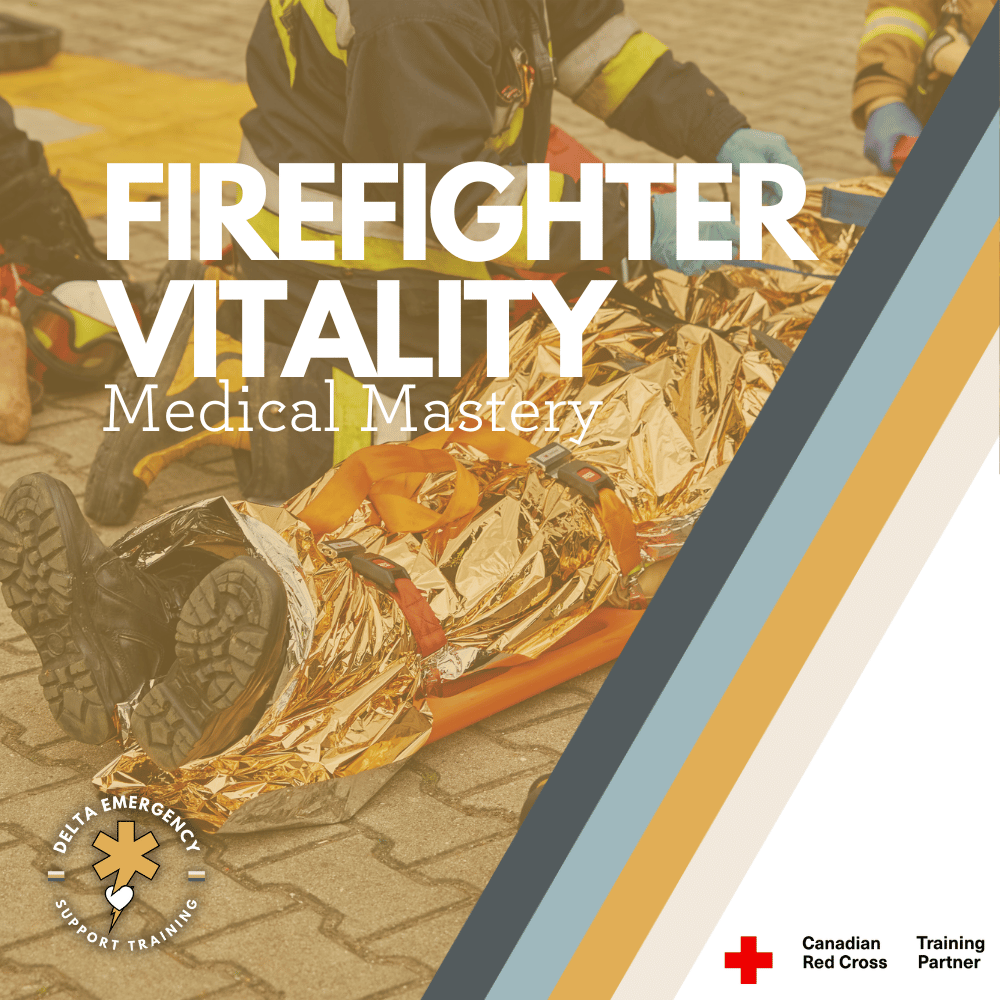
Firefighters assisting in medical emergency.
This article delves into the indispensable role of medical knowledge for future firefighters, with a focus on practical training options such as Delta Emergency Support Training's advanced first aid course.
Rising Demand for Medical Assistance
The traditional role of firefighting has transformed, emphasizing a greater focus on medical emergency responses. Aspiring firefighters must recognize the imperative need for a comprehensive understanding of medical emergencies. The escalating demand for emergency medical services stems from an unstable healthcare system, underfunded and understaffed paramedics.
Simultaneously, the frequency of fire-related calls has significantly decreased compared to four decades ago. The changing landscape highlights the necessity for future firefighters to adapt to the prevalence of medical emergencies. Understanding the complex factors influencing this shift is crucial for those entering the firefighting profession.
The Need for Speed in Response
One of the most compelling reasons for aspiring firefighters to invest in medical knowledge is the advantage of rapid response. Picture this: you're 40 miles from the nearest ambulance base, but the fire department is just 10 miles away. Geographically, the fire department can arrive at the scene significantly faster. This underscores the critical role firefighters play as first responders in medical emergencies, often getting there before EMS personnel.
Adapting to a Diversifying Role
As the role of a firefighter evolves beyond traditional expectations, it's not just a shift in duty; it's a personal evolution. Specialized training recognizes this, and programs developed by seasoned professionals, such as Delta's, ensure that you're not just learning; you're growing. You're becoming someone who can adapt to the changing face of emergencies, someone who can handle the unexpected with grace and skill.
Addressing Skepticism Towards Medical Training
Acknowledging skepticism towards medical training among aspiring firefighters, Delta's approach is rooted in practicality. The advanced first aid program bridges the gap between firefighting and medical expertise without compromising professional standards. The course is designed to instill confidence and competence in those who may initially harbor reservations towards the medical aspect of the profession.
Training and Dedication
Achieving mastery in firefighting requires a dedication to honing a diverse skill set with precision and professionalism. Delta Emergency Support Training's Advanced First Aid course embodies this ethos, serving as the prerequisite for firefighters in Alberta. Taught by seasoned first responders, this program is the brainchild of an Advanced Care Paramedic with over 15 years of experience in Emergency Medical Services. Through Delta's advanced first aid course, aspiring firefighters undergo a rigorous training regimen that emphasizes a professional approach to skill mastery. The course seamlessly integrates traditional firefighting responsibilities with the adept administration of medical interventions, ensuring that graduates emerge as well-rounded and highly capable first responders equipped to navigate the complexities of modern emergency response with confidence and proficiency.
Conclusion:
As the firefighting profession continues to evolve, aspiring firefighters must recognize the intrinsic connection between medical competence and their efficacy as first responders. Training programs like Delta Emergency Support Training's advanced first aid course epitomize a professional and strategic approach to acquiring the essential skills for contemporary emergency response. In a landscape where versatility is paramount, aspiring firefighters are encouraged to embrace a holistic training regimen that encompasses both traditional firefighting prowess and advanced medical knowledge, positioning themselves as adept and adaptable professionals in an ever-changing field.

