The Delta Dispatch

How Babysitters Can Handle Emergencies: When to Call 911 and What to Do

Emergencies can happen unexpectedly, and as a babysitter, knowing how to respond quickly is essential. One of the most important skills is knowing when to call 911. Whether it’s a child choking, having a seizure, or becoming unconscious, your quick action could save a life. It’s crucial to always know the address of the home you’re babysitting at, as this information can help emergency responders reach you faster. Remember, better to call 911 and not need them than to not call and need them—911 call-takers are there to guide you through the process and ensure help arrives as quickly as possible. Stay calm, stay prepared, and always trust your instincts when it comes to emergencies.
Emergencies can happen at any time, and when you're babysitting, it’s important to know how to respond quickly. Whether you're watching kids at home, looking after younger siblings, or taking care of someone else’s children, you have to be prepared for anything. Knowing when and how to call 911 is especially important because your quick action could save a life.

In this blog, we'll talk about common emergencies, how to stay calm, and why knowing your address and how to call 911 is so critical.

Why It’s So Important to Know How to Call 911

As a babysitter, you might be the first person to handle an emergency. If something happens—a child gets hurt, gets sick, or something else goes wrong—you might need to call 911 for help.

One of the most important things to remember when calling 911 is knowing where you are. If you can’t tell the dispatcher your address, it can delay help. That means it’s crucial to always know the address of the home where you’re babysitting, including the apartment number if applicable. Make sure you have this info handy in case you need it quickly!

When to Call 911: What Counts as an Emergency?

Some situations can be handled with basic first aid, but others are more serious and require immediate help. Here are some examples of when you need to call 911 without hesitation:

1. The Child is Unconscious or Not Responding

If the child or anyone you’re caring for becomes unresponsive, it’s a big emergency. If they’re not waking up, won’t talk, or are just unresponsive, you need to get help right away.

What to Do:

  • Check if the child is breathing. If they are not breathing or are gasping, call 911 immediately. If you're trained in CPR, you may be able to help the child before emergency responders arrive.

  • If they are breathing but still unconscious, gently lay them on their side (recovery position) and call 911 right away.

2. Serious Bleeding

If the child has a large cut or wound that won’t stop bleeding, that’s a serious emergency. You need to stop the bleeding and get help right away.

What to Do:

  • Apply a clean cloth or bandage to the wound and press down to stop the bleeding.

  • If the wound is really deep, or you can’t stop the bleeding, call 911 and keep pressure on the wound until help arrives.

3. Choking

Choking is a life-threatening emergency, especially if the child can’t breathe or speak. If you are trained in back blows and abdominal thrusts, you should perform these techniques as you were taught. If the child becomes unconscious, you should immediately call 911.

What to Do:

  • If you are trained in abdominal thrusts and back blows (to help expel the object blocking their airway), perform these techniques as you’ve been taught.

  • If the child becomes unconscious, call 911 immediately. If you are trained to save a choking person, you have a good chance of saving them.

  • Keep performing your life-saving techniques until the child can breathe or emergency help arrives.

4. Severe Allergic Reaction (Anaphylaxis)

Severe allergic reactions (also known as anaphylaxis) can cause swelling in the throat and make breathing difficult. Common triggers include bee stings, food allergies (like peanuts), or certain medications.

What to Do:

  • If the child has an epinephrine auto-injector (EpiPen), use it right away.

  • Then, call 911 immediately to get professional help.

5. Seizures

If the child has a seizure, especially if they’ve never had one before, you should call 911. This is important because first-time seizures can be a sign of something serious, and even if the seizure doesn’t last long, it’s better to get medical help.

What to Do:

  • Move objects out of the way to prevent injury.

  • Gently cushion their head and lay them on their side if possible.

  • If the child has never had a seizure before, or if it lasts more than a minute, call 911 right away.

6. Trouble Breathing or Chest Pain

If the child is having trouble breathing, or complains of chest pain, these could be signs of a serious medical condition like a heart attack or a severe asthma attack.

What to Do:

  • Help them sit up and stay calm.

  • If they have an inhaler, help them use it.

  • If they are still having trouble breathing or in pain, call 911 immediately.

How to Call 911: What You Need to Tell Them

When you call 911, it’s important to speak clearly and calmly. Here’s what to do:

1. Know Your Address

You must know the address where you're babysitting, including the street name, apartment number (if applicable), and any nearby landmarks. Make sure you have this info written down or memorized before the emergency happens so you can give it to 911 right away.

2. Speak Clearly

When you’re panicked, it can be hard to talk clearly. Take a deep breath, stay calm, and explain what’s going on as best as you can. Tell the dispatcher the emergency, the condition of the child, and the address where help is needed.

3. Describe the Situation

Tell the dispatcher what happened and the child’s condition. For example:

  • “The child is unconscious and not breathing.”

  • “They’re choking on food and can’t breathe.”

4. Follow the Dispatcher’s Instructions

The dispatcher might give you advice on what to do while you wait for emergency help to arrive. Listen carefully and do your best to follow their instructions.

5. Stay on the Line

Don't hang up until the dispatcher tells you it's okay. They may need more information or updates as emergency responders get closer.

When in Doubt, Call 911

If you're ever unsure whether something is an emergency, it’s always better to call 911. Better to call and not need them than to not call and need them. 911 call-takers are there to help and guide you through the situation. They won’t judge you for calling and are trained to assist you no matter what the emergency is. Trust your instincts—if you feel the child’s health or safety is at risk, don’t hesitate to call for professional help.

Conclusion: Be Prepared, Stay Calm, and Get Help

Babysitting comes with a lot of responsibility. Emergencies can happen quickly, but being prepared can make all the difference. The key is staying calm, knowing when to call 911, and having the information you need to guide emergency responders.

At Delta Emergency Support Training, we offer Red Cross Babysitting courses that cover all the important topics you need to be ready for anything. Our course is taught by paramedics and includes one session on caring for babies and another session dedicated to babysitter first aid, where you’ll learn life-saving techniques like CPR, how to handle injuries, and what to do in different emergency situations. You’ll leave our course with the skills and confidence to handle any emergency that comes your way.

Read More
911, First Aid Kit, First Aid Kumari Malhotra 911, First Aid Kit, First Aid Kumari Malhotra

Dealing with Deadly Bleeds: A Guide for Standard First Aiders

Deadly bleeds can happen anytime, anywhere, and being prepared to handle them can mean the difference between life and death. Standard first aiders should be equipped with the knowledge and skills to identify different types of bleeds, as well as the appropriate techniques to manage them.

As a standard first aider, it's important to be prepared to deal with all kinds of emergencies, including deadly bleeds. A deadly bleed, also known as a hemorrhage, is a type of bleeding that is severe enough to threaten a person's life. In this blog post, we'll discuss what makes a bleed deadly, what different types of bleeds look like, and what our treatment options are. We'll also explore the physiology and biology behind what produces the most life-threatening bleeds.

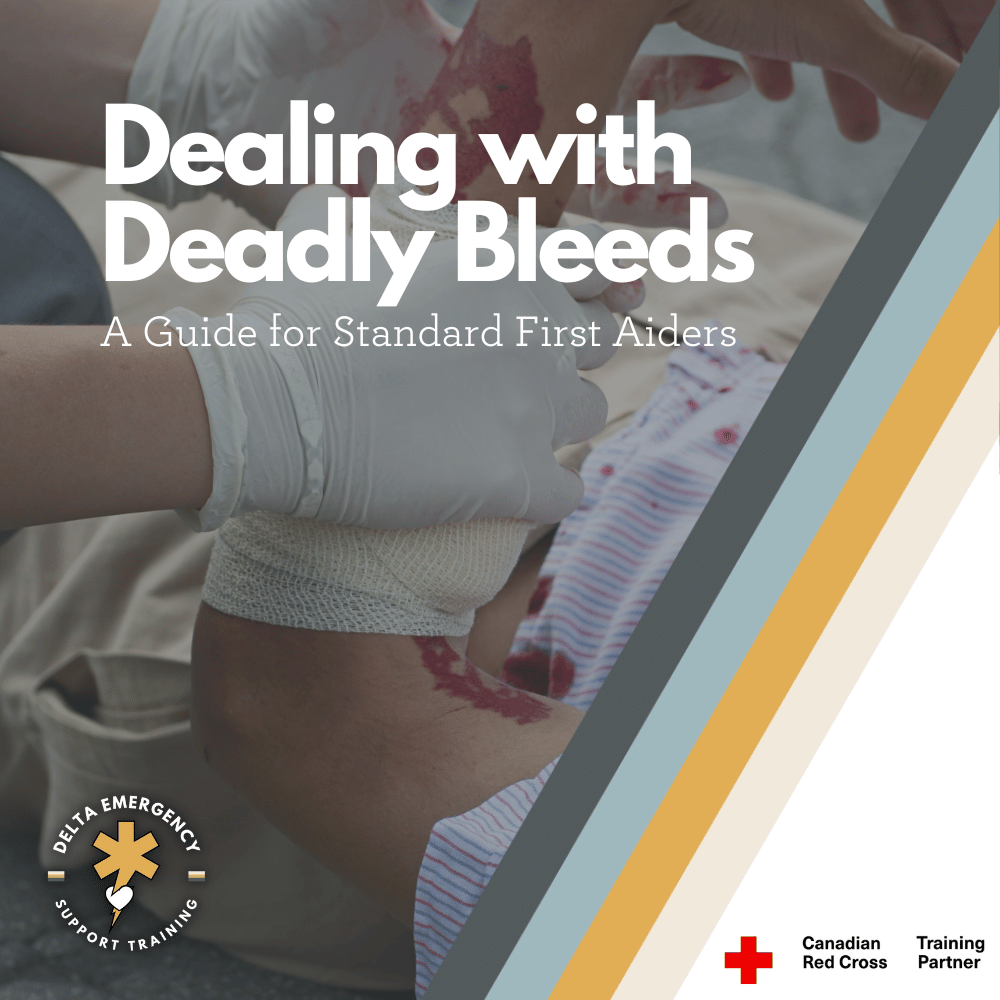
A person in first aid gear is holding a clean, white cloth over a bleeding wound on another person's arm while exerting pressure.

What makes a bleed deadly?

A deadly bleed is usually caused by a significant loss of blood from a major artery or vein. This loss of blood can lead to a drop in blood pressure and, if left untreated, can ultimately result in shock and death. There are several types of bleeds that can be life-threatening, including arterial bleeds, venous bleeds, and internal bleeds.

Arterial bleeds:

Arterial bleeds are the most life-threatening type of bleed because they involve the loss of blood from an artery. Arteries carry oxygenated blood away from the heart to the rest of the body, and a significant loss of blood from an artery can lead to a lack of oxygen in the body's tissues. This can cause damage to vital organs and tissues, and can ultimately result in shock and death. Arterial bleeds are characterized by bright red blood that spurts out of the wound in time with the person's heartbeat. The high pressure of blood flowing from an artery means that a significant amount of blood can be lost quickly, leading to rapid blood loss.

Venous bleeds:

Venous bleeds, on the other hand, involve the loss of blood from a vein. Veins carry deoxygenated blood back to the heart, and a significant loss of blood from a vein can lead to a buildup of carbon dioxide in the body's tissues. This can cause tissue damage and can also lead to shock if the bleeding is not controlled quickly. Venous bleeds have a slower flow of dark red blood compared to arterial bleeds, and the bleeding is usually easier to control than an arterial bleed.

Internal bleeds:

Internal bleeds occur inside the body and may not be visible externally. These types of bleeds can be caused by trauma or medical conditions, and can be life-threatening if left untreated. Internal bleeds can lead to organ damage and shock, and symptoms may include pain, swelling, and bruising. Treatment for internal bleeds may involve surgery or other medical interventions, and it's important to seek medical attention as soon as possible if you suspect someone has an internal bleed.

What do different types of bleeds look like?

Arterial bleeds are characterized by bright red blood that spurts out of the wound in time with the person's heartbeat. Venous bleeds, on the other hand, have a slower flow of dark red blood. Internal bleeds, which occur inside the body, may present as bruising or not be visible externally.

What are our treatment options?

If you encounter a deadly bleed, it's important to act quickly to control the bleeding and prevent further loss of blood. The first step is to apply pressure to the wound using a clean cloth or bandage. If the wound is on an arm or leg, you can also elevate the limb above the level of the heart to help slow the bleeding. If the bleeding does not stop with pressure, a tourniquet may be necessary to stop the blood flow completely. However, tourniquets should only be used as a last resort, as they can cause damage to the tissue and lead to amputation.

Biology of deadly bleeds

The most life-threatening bleeds are those that involve major arteries, such as the femoral artery in the thigh or the carotid artery in the neck. Arteries are under high pressure, which means that a significant loss of blood from an artery can lead to a rapid drop in blood pressure and shock. In addition, the body's clotting system may not be able to keep up with the rapid loss of blood from an arterial bleed.

Personal Protective Equipment

It's important for standard first aiders to have the appropriate personal protective equipment (PPE) when dealing with bleeding emergencies. PPE can include gloves, masks, and eye protection, and is essential for protecting yourself from exposure to bloodborne pathogens such as HIV and hepatitis B and C. It's important to wear PPE whenever you are in contact with blood or bodily fluids to prevent the transmission of infectious diseases. In addition to protecting yourself, wearing PPE also helps prevent the spread of infections to others who may be in the vicinity of the bleeding person. By using the appropriate PPE, standard first aiders can provide care in a safe and effective manner.

Conclusion

In conclusion, as a standard first aider, it's important to be prepared to deal with deadly bleeds. Understanding what makes a bleed life-threatening, what different types of bleeds look like, and how to treat them can help you provide top-notch care in an emergency situation. Remember to act quickly to control the bleeding and seek medical attention as soon as possible.

Training

At Delta Emergency Support Training, we understand the importance of being prepared for emergency situation. We offer a range of training sessions to help individuals and classes develop the skills and knowledge they need to respond to emergency situations. Our courses include Standard First Aid (SFA), Advanced First Aid (AFA), and Emergency Medical Responder (EMR), and we offer in-person, hybrid, and online options to suit different needs.

If you have any questions about our training sessions or deadly bleeds, please don't hesitate to reach out to us. You can contact us at info@deltaemergency.com and we'll be happy to assist you.

Read More