The Delta Dispatch
Rate, Rhythm, and Quality: How to Assess Pulse and Breathing in the Field
Assessing rate, rhythm, and quality of pulse and respirations is essential for identifying serious patient conditions. Learn how to conduct these key evaluations in the field with accuracy.
When assessing a patient, rate, rhythm, and quality are more than routine checklist items — they’re vital indicators of what’s happening beneath the surface. Whether you’re an Advanced First Aider, EMR, or future paramedic, mastering these three elements helps you recognize subtle signs of deterioration before they become life-threatening.
🩺 Assessing the Pulse
1. Rate
The rate refers to how many times the heart beats per minute (bpm).
Adult: 60–100 bpm
Child: 80–100 bpm
Infant: 100–160 bpm
Tachycardia (a rate above normal) may indicate fever, shock, pain, dehydration, or stress.
Bradycardia (a rate below normal) may appear in trained athletes, hypothermia, or head injuries affecting brain function.
👉 Field Tip: Always consider the context — a runner at rest with a pulse of 52 bpm may be fine, while a trauma patient with the same rate might be in serious trouble.
2. Rhythm
Rhythm describes whether the beats occur at regular intervals.
Regular rhythm: Evenly spaced beats (normal sinus rhythm).
Irregular rhythm: Uneven or skipping beats (possible arrhythmia).
Listen for patterns like regularly irregular or irregularly irregular, which may indicate cardiac abnormalities.
👉 Field Tip: Use your watch’s second hand or a digital timer — count for a full 60 seconds if rhythm appears irregular.
3. Quality
The quality of a pulse tells you about strength and perfusion.
Strong / bounding: Common in fever or hypertension.
Weak / thready: Seen in shock, blood loss, or dehydration.
Absent: Immediate life threat — initiate advanced interventions.
👉 Field Tip: Compare central (carotid) and peripheral (radial) pulses. A weak or absent radial pulse may signal dropping blood pressure or poor perfusion.
🌬️ Assessing Respirations
Just like the pulse, respirations are assessed for rate, rhythm, and quality.
1. Rate
Normal respiratory rates:
Adult: 12–20 breaths per minute
Child: 20–30 bpm
Infant: 30–60 bpm
Tachypnea (rapid breathing) often indicates hypoxia, shock, or anxiety.
Bradypnea (slow breathing) can suggest head injury, narcotic overdose, or severe illness.
👉 Field Tip: Always watch the chest discreetly, so patients don’t alter their breathing pattern.
2. Rhythm
Normal respirations are smooth and regular.
Irregular rhythm: May indicate neurological damage, fatigue, or shock.
Cheyne-Stokes respirations: Periods of deep breathing alternating with apnea — often seen in brain injury or end-of-life situations.
Agonal gasps: Ineffective, irregular breaths seen in cardiac arrest.
👉 Field Tip: If the rhythm looks unusual, describe exactly what you see — “deep, gasping, irregular respirations” gives dispatchers or incoming paramedics more useful information than just “irregular.”
3. Quality
Respiratory quality reflects effort, depth, and sound.
Normal: Quiet and effortless.
Shallow: May indicate pain, shock, or fatigue.
Labored: Look for use of accessory muscles, nasal flaring, or grunting.
Noisy: Listen for wheezing (airway constriction), gurgling (fluid), or stridor (upper airway obstruction).
👉 Field Tip: Note any cyanosis (bluish lips or fingertips), which can signal inadequate oxygenation.
🚑 Putting It All Together: Why It Matters
Rate, rhythm, and quality are part of every primary and secondary survey. These details guide your priorities:
Recognizing shock early by weak, rapid pulse and shallow respirations.
Identifying hypoxia through tachypnea or labored breathing.
Catching cardiac irregularities that could indicate impending arrest.
In short, these three simple checks — rate, rhythm, and quality — can reveal complex physiological problems long before advanced tools do.
💡 Key Takeaways for First Responders
Always compare findings to baseline vitals and the patient’s overall presentation.
Document what you observe, not just normal/abnormal.
Repeat assessments frequently — deterioration can happen quickly.
Communicate trends to higher-level care providers for continuity.
Final Thought
Assessing rate, rhythm, and quality isn’t about memorizing numbers — it’s about seeing the patient behind the vitals.The best responders know that a weak, irregular pulse or labored breathing tells a story. Learn to listen carefully — it could be the difference between early intervention and missed warning signs.
From Pulse to Perfusion: Cardiac Output in Prehospital Medicine
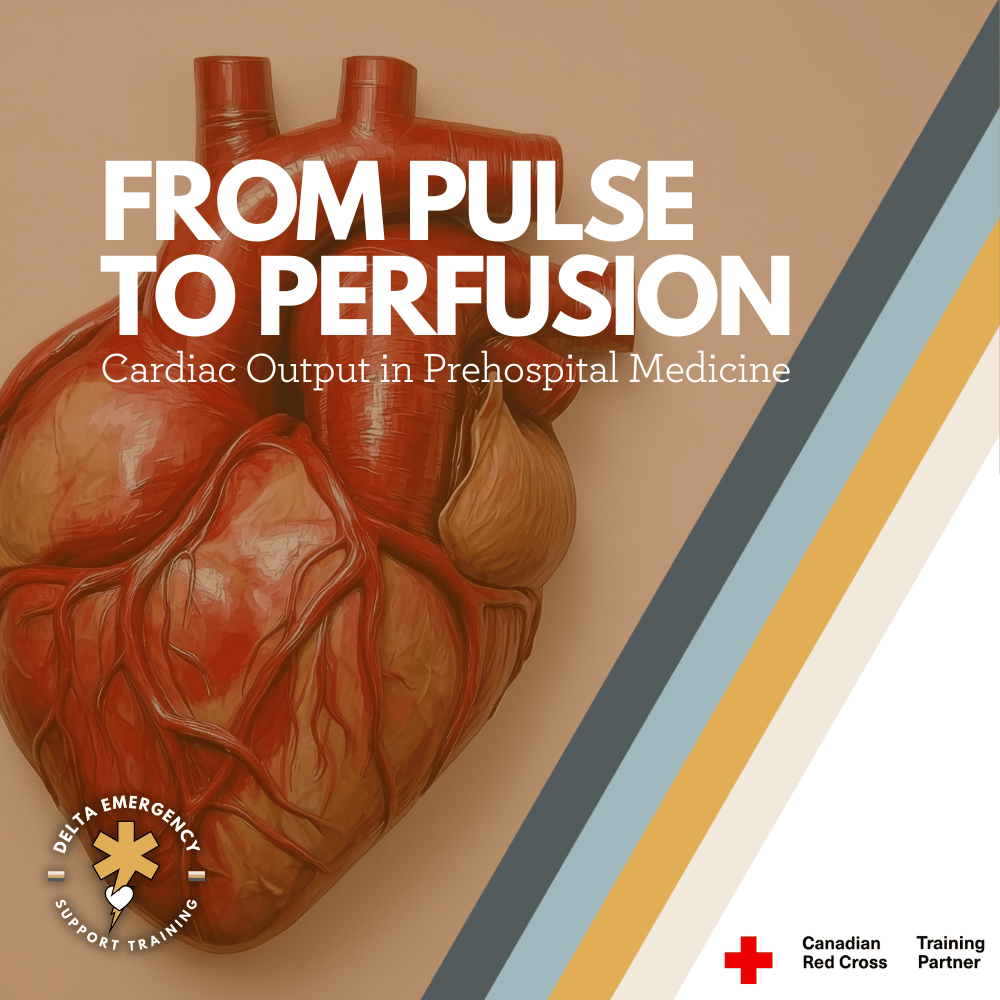
Cardiac output is the foundation of perfusion — the lifeline that keeps every organ functioning. In prehospital care, understanding how heart rate and stroke volume interact helps responders identify shock early, guide treatment, and protect vital organs. This blog breaks down cardiac output in clear, practical terms for EMRs, advanced first aiders, and anyone working in emergency response.
When assessing or treating a patient in the field, one of the most critical yet often overlooked concepts is cardiac output— the amount of blood the heart pumps in one minute. Understanding it helps prehospital providers recognize early signs of shock, guide treatment decisions, and prioritize interventions that can truly make the difference between life and death.
What Is Cardiac Output?
Cardiac Output (CO) = Heart Rate (HR) × Stroke Volume (SV)
Heart Rate (HR): The number of heartbeats per minute.
Stroke Volume (SV): The amount of blood pumped out of the left ventricle with each beat.
For example, if a patient’s heart rate is 80 bpm and stroke volume is 70 mL, their cardiac output is:
80 × 70 = 5,600 mL/min (5.6 L/min)
This means their heart pumps about 5–6 litres of blood per minute, roughly the body’s total blood volume.
Why It Matters in Prehospital Care
Cardiac output is the foundation of perfusion — how well oxygen and nutrients reach tissues. In the field, recognizing how HR and SV interact can help you determine whether a patient is compensating or decompensating.
When cardiac output drops, tissue hypoxia occurs. Cells switch to anaerobic metabolism, producing lactic acid and leading to shock.
Common causes of decreased cardiac output in the field include:
Hypovolemia (bleeding, dehydration)
Pump failure (myocardial infarction, cardiomyopathy)
Obstruction (cardiac tamponade, tension pneumothorax, pulmonary embolism)
Distributive shock (sepsis, anaphylaxis)
Heart Rate and Stroke Volume in Real-Time Assessment
Tachycardia: Often the first sign of compensation. The body increases HR to maintain CO when stroke volume drops (like in hemorrhage).
Bradycardia: Can be catastrophic in shock, as it limits overall output.
Stroke Volume Influencers:
Preload: Volume of blood returning to the heart.
Contractility: Strength of the heart’s contractions.
Afterload: Resistance the heart pumps against.
Understanding how each factor impacts stroke volume helps guide care decisions — for instance, whether a patient needs fluids, vasopressors, or advanced airway management.
In Practice: Assessing Cardiac Output Without a Monitor
Prehospital providers rarely calculate CO directly — instead, you assess it through clinical signs of perfusion:
Level of consciousness – is the brain getting enough oxygen?
Skin signs – pale, cool, diaphoretic skin suggests poor perfusion.
Capillary refill and pulse strength – quick, weak, or absent pulses can all indicate changes in CO.
Blood pressure and pulse pressure trends – narrowing pulse pressure (e.g., 90/80) may indicate a drop in stroke volume.
Your hands, eyes, and ears are your diagnostic tools before monitors confirm what you already suspect.
Improving Cardiac Output in the Field
Depending on the cause:
Fluid resuscitation restores preload in hypovolemia.
Positioning (Trendelenburg or shock position) can temporarily improve venous return.
Oxygen therapy supports oxygen delivery when perfusion is limited.
CPR and defibrillation are lifesaving when the heart fails to generate output altogether.
Remember — every intervention you perform is ultimately aimed at restoring or maintaining cardiac output to sustain vital organ perfusion.
Final Thoughts
For first responders and EMRs, cardiac output isn’t just a number — it’s the lifeline of your patient.
Understanding how heart rate, stroke volume, and perfusion interact allows you to anticipate deterioration before it becomes irreversible.
Every pulse you feel, every set of vitals you take, tells a story about how effectively the heart is doing its job.
Why First Responders Use Vital Signs: A comprehensive guide
Vital signs are measurements of the body's basic functions and are used to assess a person's overall health and wellbeing. There are four primary vital signs: body temperature, pulse rate, blood pressure, and respiratory rate. Each vital sign provides important information about a person's health and can help identify underlying health conditions or other problems.
Body temperature is a measure of the body's internal heat and is typically measured using a thermometer. A fever is generally defined as a body temperature above 100.4°F (38°C) and can indicate an infection or other underlying health condition.
Pulse rate is a measure of the heart rate, or the number of times the heart beats per minute. A rapid pulse may indicate a fever, dehydration, or an irregular heartbeat, while a slow pulse may indicate heart disease or other health conditions.
Blood pressure is a measure of the force of blood against the walls of arteries as the heart pumps blood through the body. High blood pressure, or hypertension, can increase the risk of heart disease, stroke, and other health problems.
Respiratory rate is a measure of the number of breaths a person takes per minute. A rapid respiratory rate may indicate an underlying health condition, such as asthma or pneumonia.
Monitoring vital signs is an essential part of healthcare and can help healthcare professionals and first responders make informed decisions about treatment and care.
Vital signs are measurements of basic bodily functions that are essential for assessing a person's overall health and well-being. These measurements are typically taken by healthcare professionals, but they can also be taken by trained first responders in emergency situations.
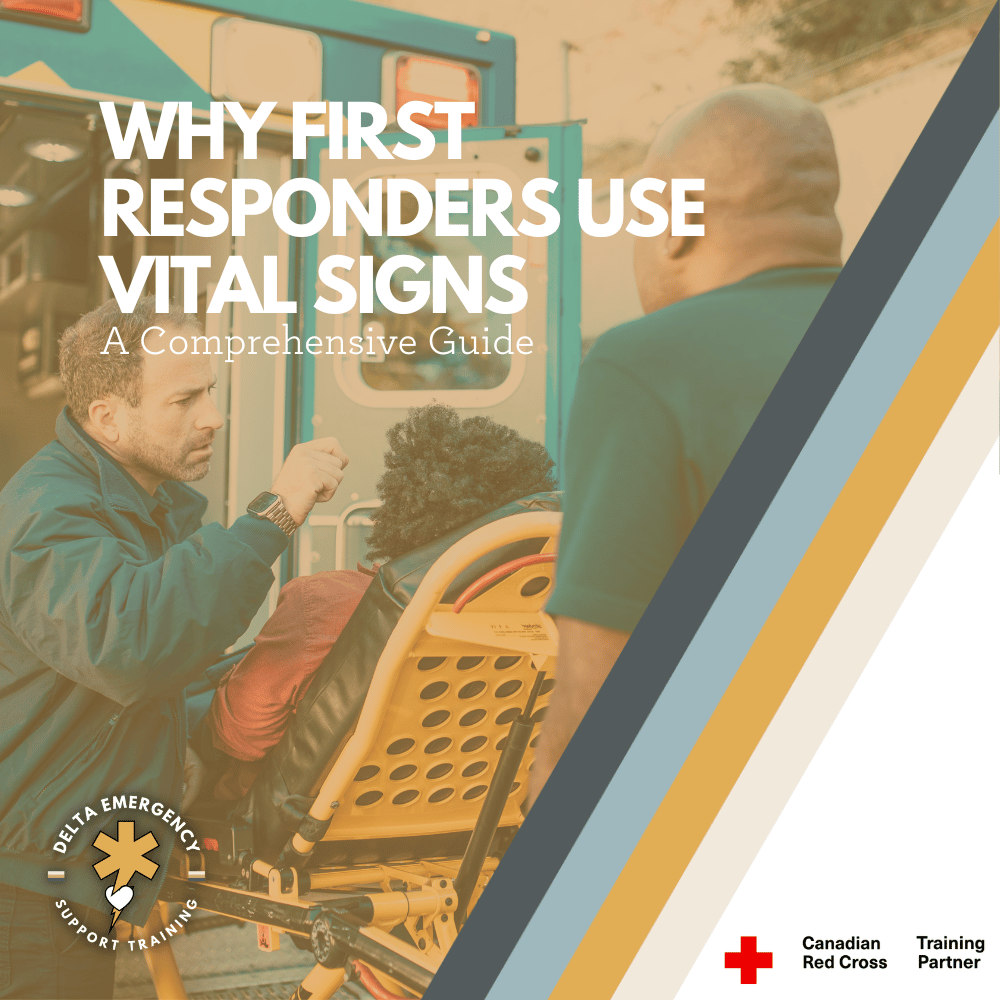
first responders attending to a patient lying on a cot outside an ambulance. One responder is checking the patient's vital signs while the other is preparing medical equipment. The patient appears to be receiving urgent medical attention, and the responders are focused and prepared to administer necessary treatment
What Are Vital Signs?
Vital signs are a set of measurements that healthcare professionals use to assess a patient's overall health status. These measurements include temperature, heart rate, blood pressure, respiratory rate, Glasgow Coma Scale (GCS), oxygen saturation (SPO2), pupils and skin.
Body Temperature:
Body temperature is an important vital sign as it can indicate whether a person is healthy or if they have a fever, which could be a sign of infection. Body temperature can be measured in several ways, including orally, rectally, or using a forehead thermometer. It is important to use the correct method and follow the manufacturer's instructions when taking a person's temperature.
Heart Rate:
Heart rate: Heart rate is the number of times the heart beats per minute and is a reflection of the heart's ability to circulate blood throughout the body. The heart rate can vary depending on age, gender, physical activity, and overall health status. A high heart rate could indicate a potential problem, such as an irregular heartbeat, dehydration, or anxiety, while a low heart rate could be a sign of a heart condition or medication side effect.
Blood Pressure:
Blood pressure is the measure of the force of blood against the walls of the arteries. It is measured in millimetres of mercury (mmHg) and consists of two numbers: the systolic pressure (the higher number) and the diastolic pressure (the lower number). A healthy blood pressure reading is typically around 120/80 mmHg. High blood pressure (hypertension) can put a strain on the heart and blood vessels, while low blood pressure (hypotension) can cause dizziness, fainting, or other symptoms.
Respiratory Rate:
Respiratory rate is the number of breaths taken per minute and is a reflection of the body's ability to take in oxygen and expel carbon dioxide. The respiratory rate can vary depending on age, physical activity, and overall health status. A high respiratory rate could indicate a potential problem, such as a lung infection or asthma, while a low respiratory rate could be a sign of respiratory depression or a medical condition that affects breathing.
Glasgow Coma Scale:
Glasgow Coma Scale or GCS measures a patient's response to verbal, motor, and eye-opening stimuli. The score ranges from 3 to 15, with a higher score indicating a higher level of consciousness. The GCS is commonly used in trauma settings to assess patients with brain injury, altered mental status, or who are sedated.
SPO2:
SPO2 is a measure of the amount of oxygen that is carried by the hemoglobin in the red blood cells. The measurement of SPO2 is non-invasive and can be performed using a pulse oximeter, which is a small device that is attached to the finger, toe, or earlobe. The pulse oximeter uses light to measure the amount of oxygen that is present in the blood.
Pupils:
Pupils can also be an important vital sign in assessing a person's neurological function. The size, shape, and reactivity of the pupils can provide valuable information about the health of the brain and nervous system. Unequal pupil size (ani or a lack of reactivity to light can be a sign of a neurological issue, such as a brain injury or nerve damage.
Skin:
Assessing skin color and moisture is important because changes in these vital signs can be indicative of underlying medical conditions. For example, changes in skin color can be a sign of poor blood flow, infection, or inflammation, while changes in skin moisture can be a sign of dehydration or certain medical conditions.
Normal Vital Sign Ranges
The normal ranges for vital signs vary depending on a person's age, gender, and health status. Here are the standard ranges:
Body Temperature:
A normal body temperature generally ranges from 36.1°C to 37.2°C, with an average of 37°C. A fever, which is typically defined as a body temperature above 38°C, can be a sign of an infection or illness. Hypothermia, in which the body's core temperature drops below 35°C, can be caused by prolonged exposure to cold temperatures or certain medical conditions. Hyperthermia, in which the body's core temperature rises above its normal range, typically above 40°C, can be caused by heatstroke, extreme physical exertion, or certain medications.
Pulse Rate:
The normal resting heart rate range for an adult is between 60 to 100 beats per minute. A higher or lower heart rate may indicate a medical condition. Healthcare professionals use heart rate to assess cardiac function, diagnose heart conditions, and monitor the effectiveness of treatments.
Blood Pressure:
The normal blood pressure for an adult is typically around 120/80 mmHg. High blood pressure, or hypertension, is defined as consistently measuring higher than 130/80 mmHg, and can increase the risk of heart disease, stroke, and other health problems. Low blood pressure, or hypotension, is less common but can also be a serious medical condition, and is typically defined as a systolic pressure of less than 90 mmHg or a diastolic pressure of less than 60 mmHg.
Respiratory Rate:
The normal respiratory rate for an adult at rest is typically between 12 and 20 breaths per minute. A higher or lower respiratory rate than this range may indicate a medical condition. The quality of breath is also important in assessing a patient's respiratory function. Shallow, labored breathing or irregular breathing patterns can indicate respiratory distress and may require immediate medical attention.
Glasgow Coma Scale:
A GCS score of 15 is considered normal, indicating that the person is fully alert and oriented. The GCS is based on three categories: eye opening, verbal response, and motor response, and each category is assigned a score from 1-4 or 1-6. A higher score indicates a higher level of consciousness, while a lower score indicates a lower level of consciousness.
SPO2
Healthy SPO2 levels are between 95% and 100%, and SPO2 levels below 90% can indicate a lack of oxygen in the body. Supplemental oxygen may be necessary to raise the patient's SPO2 levels to a healthy range, but it is important to monitor the oxygen levels carefully and avoid over-oxygenation. Healthcare professionals use SPO2 measurements to guide treatment decisions and ensure that patients are receiving the appropriate level of oxygen.
Pupils:
The normal range for pupil size is between 2-4 millimeters in diameter for both pupils, and they should be equal in size. Pupils that are larger or smaller than this range, or are unequal in size (anisocoria), can be indicative of underlying medical conditions. Additionally, pupils should react briskly to changes in light, which is known as the pupillary light reflex. A sluggish or absent pupillary light reflex can be a sign of a neurological issue, such as a brain injury or nerve damage.
Skin:
Skin can vary in color and moisture depending on a person's age, sex, ethnicity, and overall health. In general, healthy skin should have a consistent color and texture across the body, without any unusual bumps, rashes, or lesions. The normal range of skin moisture varies from person to person, but it should generally feel soft and supple, without feeling excessively dry or oily.
Why First Responders Use Vital Signs?
Interpreting vital signs can help first responders make informed decisions about the best course of action for treating a patient. Monitoring changes in vital signs over time can also help to identify trends or progression of medical conditions, and inform treatment plans for better outcomes. First responders are trained to assess and respond to changes in vital signs quickly and effectively, which is essential in emergency situations.
At Delta Emergency Support Training we are happy to answer any questions you may have about vital signs as well as training sessions for individuals or classes. We offer in person, hybrid and online classes for Standard First Aid (SFA) Advanced First Aid (AFA) and Emergency Medical Responder (EMR) courses. For all inquiries please email info@deltaemergency.com .

