The Delta Dispatch
Gestational Diabetes Explained: Prehospital Care for Expectant Mothers
Gestational diabetes isn’t just a medical term — it’s a serious condition that can affect both mother and baby. For first responders, understanding the signs, complications, and emergency care priorities can make all the difference during a call involving a pregnant patient.
When called to assist a pregnant patient, responders must recognize that not all complications are immediately visible. One condition that often hides beneath the surface — yet poses significant risk — is gestational diabetes mellitus (GDM).
While it typically develops during the second or third trimester, its effects can influence both maternal stability and fetal well-being, especially in medical emergencies. Recognizing the signs, risk factors, and potential complications can help first responders make better decisions in the field.
🚨 Understanding Gestational Diabetes
Gestational diabetes occurs when the body cannot produce enough insulin to manage the increased glucose demands during pregnancy. Placental hormones naturally create some insulin resistance, but when this becomes excessive, blood sugar levels rise.
The condition usually appears between 24 and 28 weeks of pregnancy and resolves after childbirth. However, it can still cause acute or secondary emergencies requiring prehospital attention.
⚠️ Why It Matters for First Responders
For most of pregnancy, gestational diabetes remains well managed under medical supervision. But when blood glucose levels shift too far in either direction — hypoglycemia or hyperglycemia — both the mother and the fetus are at risk.
Responders may encounter gestational diabetes as:
A primary medical call (e.g., dizziness, confusion, syncope)
A secondary complication during another event (e.g., trauma, labor)
An underlying condition worsening another emergency (e.g., dehydration, infection)
Understanding how to identify, assess, and communicate these findings can make a major difference in patient outcomes.
🧠 Scene Awareness and History Gathering
Early recognition begins with observation and questioning. If the patient is pregnant, always consider gestational diabetes as a possible factor in altered presentations.
Ask or note the following:
Gestational age (how far along is she?)
Known diagnosis of gestational diabetes
Use of insulin or oral diabetic medication
Timing of last meal and fluid intake
Recent changes in behavior or consciousness
Other complications (pre-eclampsia, infection, dehydration, trauma)
Check for medical alert jewelry, glucose monitoring equipment, or insulin pens in the patient’s bag or purse. These clues often confirm a pre-existing diagnosis.
🩸 Recognizing Abnormal Blood Glucose Presentations
Hypoglycemia (Low Blood Sugar)
Can occur due to missed meals, overuse of insulin, or increased physical activity.
Signs and symptoms may include:
Pale, cool, clammy skin
Shakiness, weakness, or dizziness
Headache or blurred vision
Confusion, irritability, or unusual behavior
Rapid pulse or diaphoresis
Possible decreased level of consciousness or seizures
Immediate care:
If the patient is alert and able to swallow, administer oral glucose as per local protocol.
If unresponsive, manage the airway, check for breathing and circulation, and prepare for rapid transport.
Notify receiving staff of the pregnancy and suspected diabetic episode.
Hyperglycemia (High Blood Sugar)
May result from missed insulin doses, illness, infection, or poor dietary control.
Signs and symptoms may include:
Warm, dry skin
Excessive thirst and urination
Nausea and vomiting
Weakness or fatigue
Fruity or acetone-like breath odor (late sign)
Altered level of consciousness
Immediate care:
Perform a full primary and secondary assessment.
Ensure airway, oxygenation, and hydration as appropriate.
Do not administer insulin in the field unless authorized under medical direction.
Transport promptly, monitoring vitals closely.
🤰 Possible Complications You May Encounter
Gestational diabetes increases the risk of several emergencies:
Pre-eclampsia (high blood pressure, headache, visual changes, edema)
Preterm labor
Fetal distress
Large-for-gestational-age infant (macrosomia) leading to labor complications
Neonatal hypoglycemia after delivery
When responding to a pregnancy-related emergency, these background risks should always inform your assessment and report to the hospital.
🧭 Responder Considerations
Monitor vitals regularly, especially blood pressure, pulse, respiratory rate, and LOC.
Check blood glucose if permitted under your scope of practice.
Position the patient on her left side to improve circulation and reduce pressure on the vena cava.
Be cautious during transport — supine positioning can worsen hypotension and fetal oxygenation.
Always consider dual patient care — every pregnant call involves both mother and baby.
🩺 Communication and Handover
Provide a thorough report that includes:
Gestational age
Known gestational diabetes diagnosis
Any glucose readings or observed symptoms
Medications taken (insulin, oral agents)
Any complications or abnormal fetal movement reports
Clear, concise information ensures continuity of care and helps hospital staff intervene quickly.
✅ Key Takeaways
Gestational diabetes is a temporary diabetic condition that develops during pregnancy.
It can cause hypoglycemia or hyperglycemia, each with distinct field presentations.
Assessment, airway management, and rapid transport are key responsibilities for first responders.
Always consider both maternal and fetal safety in decision-making.
Early recognition and communication can prevent serious complications for both patients.
🚑 Final Thought
For first responders, every pregnant patient requires careful observation and informed assessment. Gestational diabetes may not always be obvious, but understanding its potential impact — and knowing how to recognize subtle signs — can mean the difference between a routine call and a critical save.
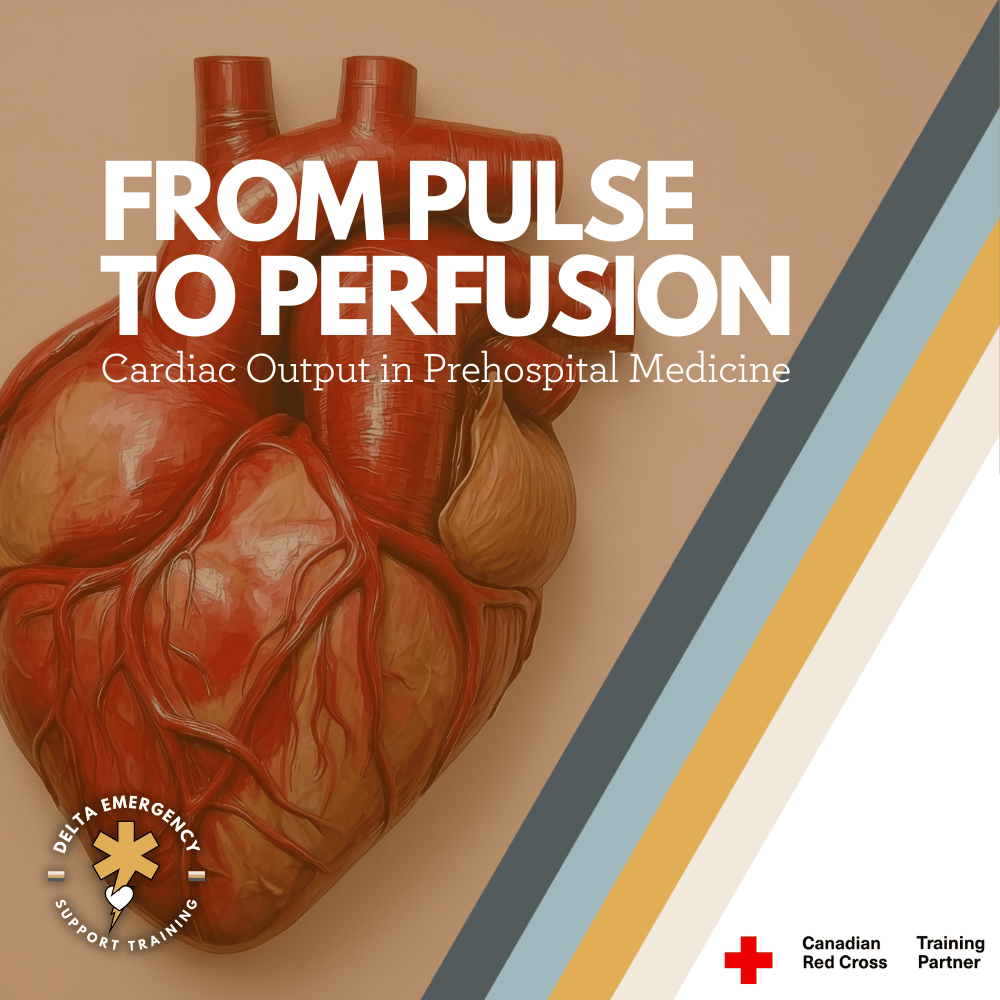
From Pulse to Perfusion: Cardiac Output in Prehospital Medicine
Cardiac output is the foundation of perfusion — the lifeline that keeps every organ functioning. In prehospital care, understanding how heart rate and stroke volume interact helps responders identify shock early, guide treatment, and protect vital organs. This blog breaks down cardiac output in clear, practical terms for EMRs, advanced first aiders, and anyone working in emergency response.
When assessing or treating a patient in the field, one of the most critical yet often overlooked concepts is cardiac output— the amount of blood the heart pumps in one minute. Understanding it helps prehospital providers recognize early signs of shock, guide treatment decisions, and prioritize interventions that can truly make the difference between life and death.
What Is Cardiac Output?
Cardiac Output (CO) = Heart Rate (HR) × Stroke Volume (SV)
Heart Rate (HR): The number of heartbeats per minute.
Stroke Volume (SV): The amount of blood pumped out of the left ventricle with each beat.
For example, if a patient’s heart rate is 80 bpm and stroke volume is 70 mL, their cardiac output is:
80 × 70 = 5,600 mL/min (5.6 L/min)
This means their heart pumps about 5–6 litres of blood per minute, roughly the body’s total blood volume.
Why It Matters in Prehospital Care
Cardiac output is the foundation of perfusion — how well oxygen and nutrients reach tissues. In the field, recognizing how HR and SV interact can help you determine whether a patient is compensating or decompensating.
When cardiac output drops, tissue hypoxia occurs. Cells switch to anaerobic metabolism, producing lactic acid and leading to shock.
Common causes of decreased cardiac output in the field include:
Hypovolemia (bleeding, dehydration)
Pump failure (myocardial infarction, cardiomyopathy)
Obstruction (cardiac tamponade, tension pneumothorax, pulmonary embolism)
Distributive shock (sepsis, anaphylaxis)
Heart Rate and Stroke Volume in Real-Time Assessment
Tachycardia: Often the first sign of compensation. The body increases HR to maintain CO when stroke volume drops (like in hemorrhage).
Bradycardia: Can be catastrophic in shock, as it limits overall output.
Stroke Volume Influencers:
Preload: Volume of blood returning to the heart.
Contractility: Strength of the heart’s contractions.
Afterload: Resistance the heart pumps against.
Understanding how each factor impacts stroke volume helps guide care decisions — for instance, whether a patient needs fluids, vasopressors, or advanced airway management.
In Practice: Assessing Cardiac Output Without a Monitor
Prehospital providers rarely calculate CO directly — instead, you assess it through clinical signs of perfusion:
Level of consciousness – is the brain getting enough oxygen?
Skin signs – pale, cool, diaphoretic skin suggests poor perfusion.
Capillary refill and pulse strength – quick, weak, or absent pulses can all indicate changes in CO.
Blood pressure and pulse pressure trends – narrowing pulse pressure (e.g., 90/80) may indicate a drop in stroke volume.
Your hands, eyes, and ears are your diagnostic tools before monitors confirm what you already suspect.
Improving Cardiac Output in the Field
Depending on the cause:
Fluid resuscitation restores preload in hypovolemia.
Positioning (Trendelenburg or shock position) can temporarily improve venous return.
Oxygen therapy supports oxygen delivery when perfusion is limited.
CPR and defibrillation are lifesaving when the heart fails to generate output altogether.
Remember — every intervention you perform is ultimately aimed at restoring or maintaining cardiac output to sustain vital organ perfusion.
Final Thoughts
For first responders and EMRs, cardiac output isn’t just a number — it’s the lifeline of your patient.
Understanding how heart rate, stroke volume, and perfusion interact allows you to anticipate deterioration before it becomes irreversible.
Every pulse you feel, every set of vitals you take, tells a story about how effectively the heart is doing its job.
Suspected Pelvic Fractures: A Guide for Advanced First Aiders
Pelvic fractures are serious injuries that can lead to life-threatening internal bleeding. This guide for advanced first aiders covers common causes such as vehicle collisions and falls from height, how to recognize signs and symptoms in the field, and step-by-step instructions for proper pelvic immobilization, including correct binder placement over the iliac crests. Learn how to provide effective prehospital care while minimizing complications and preparing for rapid transport.
Pelvic fractures are potentially life-threatening injuries that require prompt recognition and careful management in the field. While not as common as limb fractures, they can result in significant internal bleeding, organ injury, and long-term disability. For advanced first aiders, understanding the mechanisms of injury (MOIs), assessment priorities, and prehospital management strategies is critical to improving patient outcomes.
Understanding Pelvic Fractures
The pelvis is a ring-shaped bony structure that supports the spine and houses major organs, blood vessels, and nerves. Fractures can range from minor, stable cracks to severe, unstable disruptions. Because of the pelvis's proximity to major vessels, even a closed fracture can result in life-threatening hemorrhage.
Key Points for AFAs:
Pelvic fractures are high-risk injuries, often associated with significant trauma.
Internal bleeding may not be immediately visible but can lead to shock.
Early recognition and proper immobilization can save lives.
Common Mechanisms of Injury (MOIs)
Advanced first aiders should be aware of the circumstances that often lead to pelvic fractures. These include:
Motor Vehicle Collisions (MVCs)
Frontal, side, or rollover impacts can transmit high forces to the pelvis.
Pedestrians struck by vehicles are particularly susceptible.
Falls from Height
Falling from a significant height (e.g., ladders, scaffolding, or buildings) can result in vertical compression injuries.
Landing on feet or buttocks can drive force into the pelvic ring.
Crush Injuries
Heavy objects falling on the pelvis or entrapment in machinery can cause unstable fractures.
Often associated with other musculoskeletal and internal injuries.
Sports and High-Impact Activities
Extreme sports, skiing, horseback riding, or cycling accidents can occasionally result in pelvic trauma.
Industrial or Workplace Accidents
Falls, heavy machinery accidents, or scaffolding collapses are common MOIs in occupational settings.
Recognizing Pelvic Fractures
Symptoms may include:
Severe pain in the hip, groin, or lower back
Inability to bear weight or move legs
Swelling, bruising, or deformity in the pelvic area
Shortened or externally rotated leg (in cases of hip involvement)
Signs of shock (pale, clammy skin, rapid pulse, hypotension)
Red Flags for AFAs:
Hemodynamic instability (low blood pressure, rapid heart rate)
Abdominal or perineal bruising
Blood at the urethral meatus
Unexplained hypotension following trauma
Field Assessment
Advanced first aiders should prioritize scene safety, mechanism awareness, and rapid assessment:
Scene Size-Up:
Ensure the environment is safe.
Consider high-energy trauma scenarios where pelvic injury is likely.
Primary Survey (ABCs):
Assess airway, breathing, and circulation immediately.
Treat life-threatening conditions first.
Pelvic Assessment:
Avoid direct manipulation or "pushing" on the pelvis. This can worsen bleeding.
Look for external signs of injury: bruising, swelling, deformity.
Check for associated injuries (spinal, femoral, abdominal).
Pelvic Immobilization: Correct Application of a Pelvic Binder
Pelvic fractures can cause life-threatening internal bleeding. Stabilizing the pelvis with a pelvic binder is one of the most important interventions you can perform in the field. Proper placement is critical—incorrect positioning can worsen bleeding or fail to stabilize the fracture.
Why Immobilization Matters
Reduces movement of the fractured pelvic ring, minimizing further tissue and vessel damage.
Helps control internal hemorrhage by reducing pelvic volume and tamponading bleeding vessels.
Provides pain relief and prevents further injury during transport.
Step-by-Step Application of Pelvic Binding
1. Preparation:
Assess the patient and confirm suspected pelvic fracture.
If available, use a commercial pelvic binder (e.g., T-Pod). If not, an improvised binder (e.g., folded sheet) can be used.
Ensure the patient is supine on a firm surface before applying the binder.
2. Correct Positioning:
Placement should be over the bony prominences of the iliac crests..
Improper placement can fail to stabilize the pelvic ring.
The binder should wrap firmly around the pelvis, encircling the pelvis snugly.
3. Application:
Slide the binder under the patient if using a sheet or sling.
Center the binder over the iliac crests on both sides.
Tighten evenly to compress the pelvis.
4. After Application:
Reassess distal circulation and lower limb alignment.
Monitor for signs of worsening pain, numbness, or compromised circulation.
Keep the patient immobilized and transfer carefully to EMS.
Key Points for Advanced First Aiders:
Always assume high-energy trauma could involve a pelvic fracture, even if external signs are minimal.
Never manipulate or “palpate” the pelvis excessively; use stabilization devices instead.
Reassess hemodynamics continuously; immobilization helps but does not replace urgent transport and shock management.
Associated Complications
Advanced first aiders must monitor for:
Hemorrhagic shock – the leading cause of death in unstable pelvic fractures.
Urogenital injuries – bladder or urethral trauma may be present.
Neurological compromise – nerve injuries affecting lower limbs.
Long-term mobility issues – delayed or improper treatment can lead to chronic pain or gait abnormalities.
Key Takeaways for Advanced First Aiders
High-energy trauma or certain MOIs should raise suspicion of pelvic fractures.
Avoid unnecessary movement of the pelvis; stabilize with a binder.
Monitor for shock and provide supportive care.
Rapid assessment and transport save lives.
Communication with EMS and the receiving hospital is critical.
Conclusion:
Pelvic fractures are high-risk injuries with potentially life-threatening complications. For advanced first aiders, recognizing high-risk MOIs, performing a careful assessment, stabilizing the patient, and preparing for rapid transport are essential steps in the chain of survival. By understanding the complexities of pelvic trauma in the field, AFAs can play a vital role in improving patient outcomes.

