The Delta Dispatch
International Trauma Life Support: A Structural Approach to Trauma
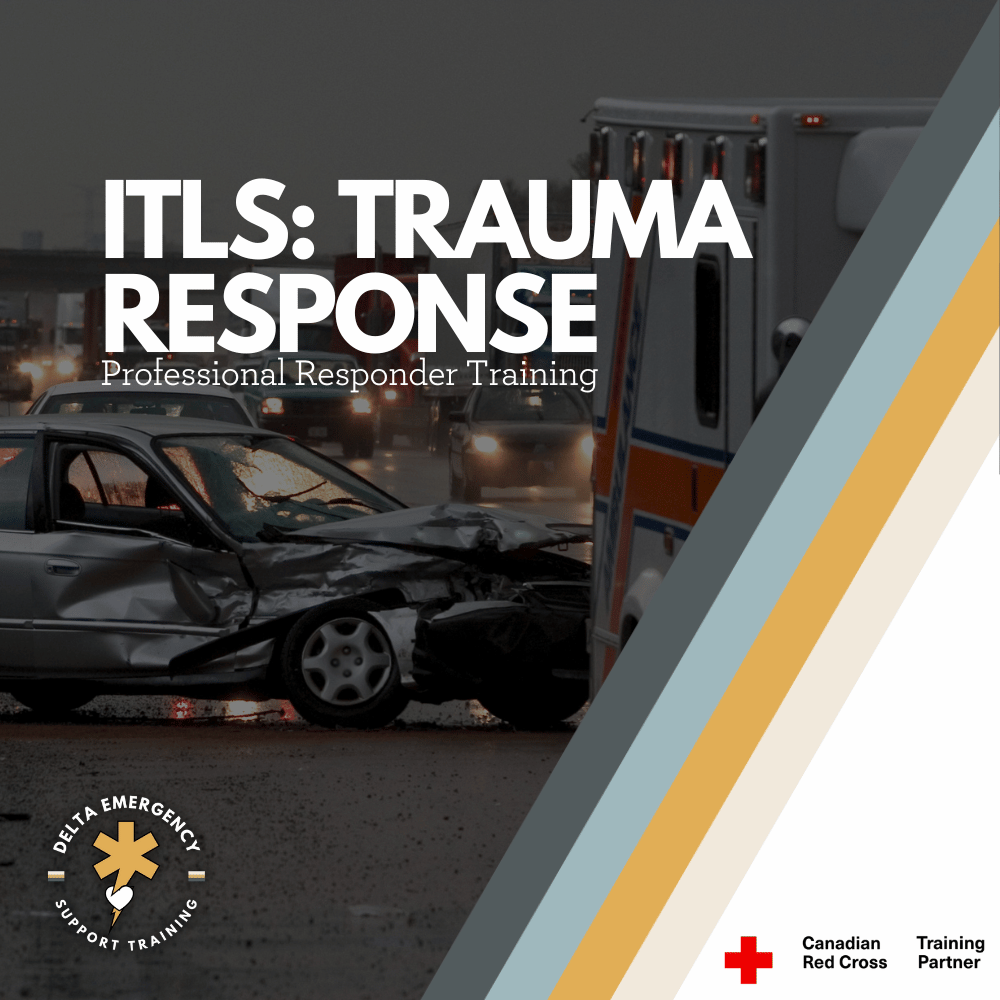
Need to take ITLS but not sure what it entails? We’ll break it down for you. International Trauma Life Support (ITLS) gives professional responders the tools to quickly assess, stabilize, and manage trauma patients in high-stress situations. From airway management to bleeding control and spinal care, this course equips you with practical, hands-on skills that could save lives when every second counts.
When emergencies happen, paramedics, firefighters, and advanced first aid responders, having the right tools and knowledge can make the difference between life and death. International Trauma Life Support (ITLS) is a specialized training program that equips professional responders with the skills to rapidly assess, stabilize, and manage trauma patients in high-pressure situations.
If you’re a responder required to take ITLS, here’s what you need to know.
The Purpose of ITLS
ITLS focuses on a structured approach to trauma care. The goal is to give responders a proven framework for:
Quickly identifying life-threatening injuries.
Performing rapid, effective interventions.
Preventing further harm while preparing for transport.
Working within professional guidelines and medical protocols.
This training bridges the gap between classroom learning and the unpredictable realities of trauma scenes.
Core Learning in ITLS
Here’s a breakdown of the key skill areas covered in ITLS and what they mean in practice.
1. Patient Assessment & Initial Survey
Responders learn a systematic way to approach every trauma patient:
Hazards, Environment, MOI, Patient count and Assistance.
Primary survey (C-Spine, LOC, ABCs, RBS,).
Identifying life threats in the first few minutes.
Why it matters: A structured assessment ensures nothing is missed under pressure.
2. Airway Management & Adjuncts
Maintaining an open airway is priority number one. ITLS covers:
Manual maneuvers (jaw thrust, head-tilt chin-lift).
Airway adjuncts (OPA, NPA).
Advanced options (supraglottic airways, endotracheal intubation where permitted).
Recognizing and managing obstructions.
Why it matters: Without a clear airway, nothing else matters — oxygen can’t reach the body.
3. Breathing & Ventilation Support
Responders are trained to:
Recognize respiratory distress and failure.
Provide rescue breaths and ventilations with a bag-valve mask.
Use oxygen.
Identify and treat life-threatening chest injuries (tension pneumothorax, sucking chest wound).
Why it matters: Oxygen delivery is essential to survival, recognizing and treating chest trauma is lifesaving.
4. Circulation & Hemorrhage Control
Stopping major bleeding and supporting circulation includes:
Direct pressure and wound packing.
Tourniquet application.
Recognizing shock and initiating care.
Intravenous (IV) or intraosseous (IO) fluid administration (where scope allows).
Why it matters: Uncontrolled bleeding is one of the top causes of preventable trauma deaths.
5. Spinal Motion Restriction (SMR)
Trauma often comes with potential spinal injuries. ITLS emphasizes:
Patient assessment for spinal risk.
Manual stabilization and cervical collars.
Log rolls and backboard use.
Updated evidence-based approaches to SMR.
Why it matters: Proper handling prevents permanent paralysis from secondary injury.
6. Head & Chest Trauma Management
Specific scenarios covered include:
Managing traumatic brain injuries and increased intracranial pressure.
Recognizing chest trauma (flail chest, open chest wounds).
Interventions like occlusive dressings, fracture stabilization and deadly bleed control.
Why it matters: These injuries are time-sensitive and require immediate, precise intervention.
7. Protocols & Teamwork
Beyond individual skills, ITLS teaches responders to:
Work under medical protocols and established guidelines.
Communicate effectively in teams.
Prioritize transport decisions (“load and go” vs. “stay and play”).
Why it matters: Trauma care is never solo — effective teamwork saves lives.
Why Professional Responders Need ITLS
For those moving into advanced roles (Advanced First Aid, EMR, PCP, paramedic), ITLS is often a required certification. It ensures all responders use the same language, protocols, and structured assessment, which makes coordination seamless during emergencies.
With ITLS, you’re not just checking a box — you’re developing:
Confidence in high-stress scenarios.
Competence in trauma management skills.
Credibility as a trained professional who can handle life-threatening situations.
Final Takeaway
If you’re required to take ITLS, think of it as more than a course — it’s a survival toolkit for the real world of trauma response. You’ll learn how to rapidly assess patients, manage airways, stop life-threatening bleeds, stabilize spines, and follow trauma protocols effectively.
For professional responders, ITLS is not just training. It’s a commitment to ensuring that when seconds count, you can act decisively, safely, and in line with the best trauma care standards worldwide.
Your Mental Checklist for Altered Level of Consciousness Calls
Altered level of consciousness (LOC) can signal everything from trauma to stroke, overdose, or diabetic emergencies. For EMRs and Advanced First Aiders, quick assessment using tools like AVPU and GCS is essential. Learn how to approach LOC calls with confidence and clinical clarity.
Altered level of consciousness (LOC) is a broad but critical presentation that can signal anything from head trauma to medical emergencies like hypoglycemia, stroke, or overdose. As an Emergency Medical Responder (EMR) or Advanced First Aider (AFA), your role in the initial assessment can directly influence the outcome for the patient.
These calls can be unpredictable, high-stress, and require fast decision-making. That’s why having structured tools like AVPU and GCS (Glasgow Coma Scale) in your mental toolbox is essential.
What Is Altered Level of Consciousness?
Altered LOC refers to any state where a person’s awareness, responsiveness, or orientation is impaired. It ranges from confusion or disorientation to full unresponsiveness.
Some common causes include:
Head trauma
Stroke or transient ischemic attack (TIA)
Seizures or postictal states
Hypoglycemia or hyperglycemia
Drug or alcohol overdose
Shock
Infection (e.g., sepsis or meningitis)
Psychiatric conditions
Because the causes are so diverse, your initial assessment plays a key role in identifying red flags, ruling out life threats, and communicating clearly with paramedics or dispatch.
Using the AVPU Scale
The AVPU scale is a quick and simple way to assess responsiveness in the field:
A – Alert: The person is awake and oriented to person, place, time, and event.
V – Verbal: The person responds to verbal stimuli but is not fully oriented.
P – Pain: The person does not respond to voice but reacts to pain (e.g., sternal rub).
U – Unresponsive: No response to voice or pain.
When to Use AVPU:
AVPU is ideal for initial assessments, especially during your primary survey. It gives you a quick snapshot of how serious the situation may be, helping prioritize transport and care.
Glasgow Coma Scale (GCS)
While AVPU is fast, the Glasgow Coma Scale provides a more detailed and objective assessment of neurological function.
The GCS evaluates three categories:
Eye Opening (E) – out of 4
Verbal Response (V) – out of 5
Motor Response (M) – out of 6
CategoryScore BreakdownEye Opening4 – Spontaneous
3 – To voice
2 – To pain
1 – NoneVerbal Response5 – Oriented
4 – Confused
3 – Inappropriate words
2 – Incomprehensible sounds
1 – NoneMotor Response6 – Obeys commands
5 – Localizes pain
4 – Withdraws from pain
3 – Flexion (decorticate)
2 – Extension (decerebrate)
1 – None
GCS Scoring:
13–15 = Mild impairment
9–12 = Moderate
≤8 = Severe; often indicates need for airway management
Even at the EMR or AFA level, familiarity with the GCS can help you provide accurate handovers and assist higher-level responders in decision-making.
Approach to the Call: LOC Management Steps
1. Scene Assessment & Safety
Scan for hazards (especially if drugs, trauma, or violent behavior suspected)
Note environmental clues (needles, alcohol, medications, crash helmets, etc.)
2. Primary Survey (ABCs)
Ensure Airway is open — unresponsive patients may need manual airway maneuvers or placement in recovery position.
Check Breathing — rate, effort, and quality.
Assess Circulation — skin signs, pulse, and potential bleeding.
3. Level of Consciousness Assessment
Use AVPU for rapid triage.
Apply GCS when appropriate and time allows.
Assess orientation to person, place, time, and event.
4. Vital Signs
Monitor pulse, respiration rate, blood pressure, temperature, SpO₂, and blood glucose (if within your scope).
5. Secondary Survey
Look for trauma (especially head/neck)
Check pupils (size, equality, reactivity)
Review SAMPLE history:
Signs and symptoms
Allergies
Medications (especially insulin, seizure meds, psych meds)
Past medical history
Last oral intake
Events leading up to incident
Communication Is Key
LOC calls often require rapid handover to EMS or transport to hospital. A strong report includes:
AVPU or GCS score
Vitals and changes in LOC
Pertinent SAMPLE history
On-scene findings (e.g., signs of overdose, trauma, seizure activity)
Using clear, clinical language shows professionalism and ensures continuity of care.
Why This Matters
Altered LOC may be the first sign of a life-threatening emergency. Whether you’re the first responder on a highway or treating someone at a workplace or remote site, your ability to assess, document, and respond effectively can help save a life—or prevent rapid deterioration.
Train with Confidence at Delta Emergency Support Training
At Delta Emergency Support Training in Calgary, our Advanced First Aid and EMR-level courses prepare students to manage complex scenes—including those involving altered LOC. Taught by experienced paramedics and firefighters, our training focuses on real-world decision-making, hands-on assessments, and scenario-based practice.
Whether you're renewing your skills or building toward a career in EMS or firefighting, we’re here to help you respond with clarity, confidence, and care.

