The Delta Dispatch

EMR, Firefighter, Medical Condition Kumari Malhotra EMR, Firefighter, Medical Condition Kumari Malhotra

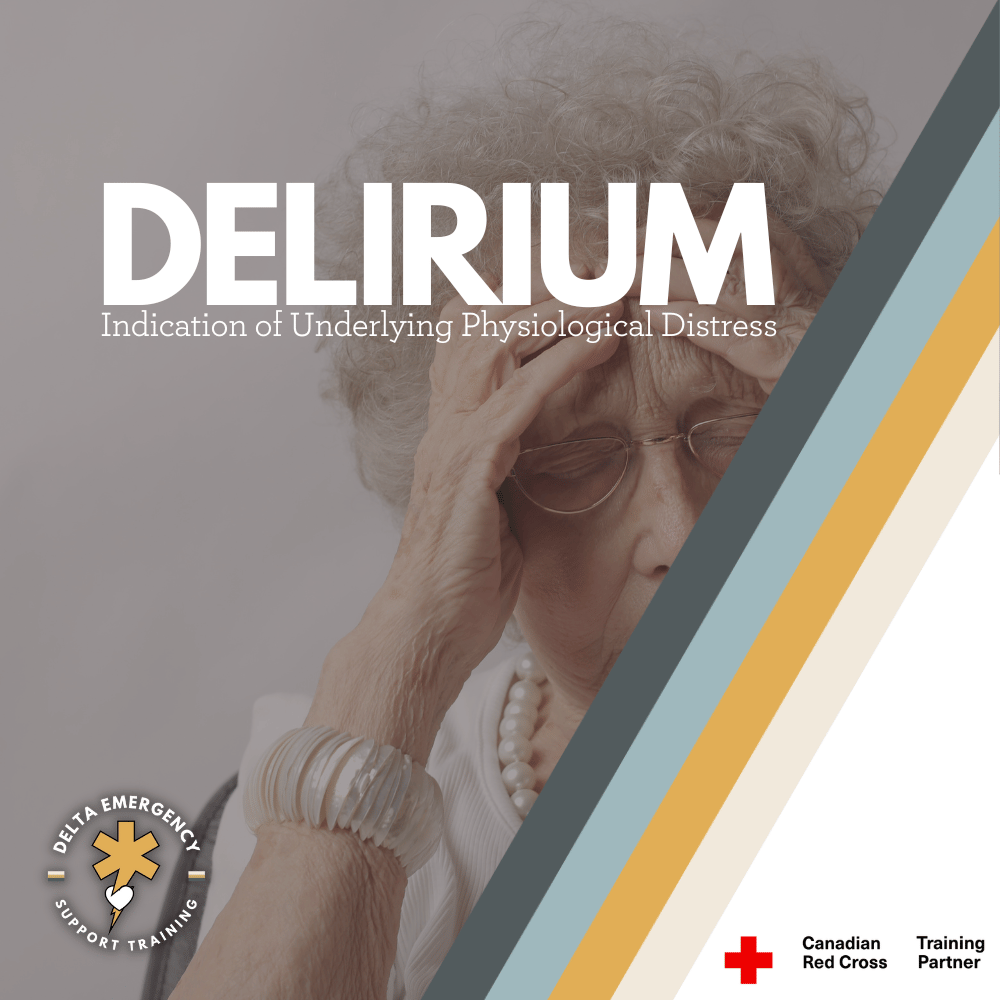
Delirium Explained: A Hidden Medical Emergency in Plain Sight

Delirium isn’t just confusion — it’s a red flag for serious underlying illness. Learn how to identify, assess, and respond to delirium in patients as a first responder or advanced first aider.

When a patient seems confused, disoriented, or agitated, it’s easy to assume they’re suffering from dementia, intoxication, or a mental health crisis. But sometimes, those same signs point to something far more dangerous — delirium, a medical emergency that demands quick recognition and intervention.

For first responders and advanced first aiders, understanding delirium can mean the difference between treating a symptom and addressing a life-threatening cause.

🔍 What Is Delirium?

Delirium is an acute, fluctuating disturbance in mental status characterized by confusion, disorientation, changes in attention, and altered consciousness. It develops rapidly — over hours or days — and usually signals an underlying medical problem that needs immediate attention.

In simple terms, delirium isn’t a disease itself — it’s a sign of something seriously wrong happening in the body or brain.

⚠️ Common Causes of Delirium

Delirium can stem from many triggers, and often multiple factors combine. Some of the most common causes include:

  • Infections (especially urinary tract infections or pneumonia in older adults)

  • Hypoxia (low oxygen levels)

  • Hypoglycemia or hyperglycemia

  • Head injury or trauma

  • Drug or alcohol intoxication or withdrawal

  • Medication reactions or polypharmacy

  • Metabolic disturbances (electrolyte imbalances, dehydration)

  • Post-surgery or ICU environments

🧠 Recognizing the Signs

Key hallmark: The patient’s condition fluctuates — they may seem fine one moment and completely disoriented the next.

🧩 Delirium vs. Dementia vs. Psychiatric Disorders

It’s crucial for responders to differentiate delirium from other conditions that can look similar.

For first responders, it’s crucial to distinguish delirium from other conditions that can appear similar, such as dementia or psychiatric illness. Although they may share signs of confusion or altered behaviour, the onset, course, and awareness level differ significantly.

Delirium

  • Onset: Develops suddenly — within hours or days.

  • Course: Fluctuates throughout the day; the patient may seem clear one moment and severely confused the next.

  • Attention: Markedly impaired; the patient is easily distracted or unable to focus.

  • Awareness and Consciousness: Reduced; patients may drift in and out of awareness.

  • Reversibility: Often reversible if the underlying cause (like infection, hypoxia, or hypoglycemia) is treated.

  • Example: An elderly patient suddenly becomes confused and agitated due to a urinary tract infection.

Dementia

  • Onset: Gradual, developing over months or years.

  • Course: Progressive and steady decline, without the daily fluctuation seen in delirium.

  • Attention: Usually preserved in the early stages, though memory and reasoning decline.

  • Awareness and Consciousness: Typically clear until the late stages of disease progression.

  • Reversibility: Generally permanent; the underlying condition (e.g., Alzheimer’s disease) causes irreversible brain changes.

  • Example: A patient with year-long memory loss, forgetting names and getting lost in familiar places.

Psychiatric Illness

  • Onset: Varies — may appear suddenly or gradually depending on the condition.

  • Course: Usually consistent or episodic rather than fluctuating within a single day.

  • Attention: Variable; may be intact or impaired depending on the episode.

  • Awareness and Consciousness: Typically clear; patients are often alert and oriented to person, place, and time.

  • Reversibility: Variable; some conditions can be managed with treatment or medication.

  • Example: A patient presenting with hallucinations or delusions consistent with schizophrenia or severe depression.

A quick mental check for responders:
🧭 If the confusion developed quickly, fluctuates, and the patient seems physically unwell — think delirium first.

🚨 Why Delirium Is a Medical Emergency

Delirium often indicates underlying physiological distress — hypoxia, infection, hypoglycemia, or organ failure. Left untreated, it can rapidly lead to permanent brain injury or death.

As a first responder or advanced first aider, your goal is to recognize delirium early, perform a rapid assessment, and ensure urgent transport for medical evaluation.

🩺 Assessment Tips for Responders

When you encounter a confused or altered patient:

  1. Check for immediate life threats:

    • Airway, breathing, circulation (ABCs).

    • Rule out hypoxia, hypoglycemia, or trauma.

  2. Assess vitals and look for clues:

    • Fever → infection

    • Low SpO₂ → hypoxia

    • Unequal pupils → neurological event

    • High heart rate → sepsis or withdrawal

  3. Ask family or caregivers:

    • “When did this start?”

    • “Is this normal for them?”

    • “Have there been any medication changes?”

  4. Observe fluctuation:

    • Does the patient drift in and out of awareness during assessment?

  5. Document and communicate:

    • Report the patient’s baseline, sudden change, and possible triggers to paramedics or hospital staff.

🧘 Approaching a Delirious Patient

  • Stay calm and reassuring. Confusion can cause fear and agitation.

  • Use simple, clear sentences. Avoid rapid or complex questioning.

  • Ensure a quiet environment. Reduce sensory overload when possible.

  • Never argue or restrain unnecessarily. Focus on safety and comfort.

Key Takeaways

  • Delirium is acute, fluctuating, and reversible — unlike dementia or chronic psychiatric conditions.

  • It is often a symptom of a life-threatening condition.

  • First responders play a critical role in recognizing and reporting early signs.

  • Always prioritize ABC assessment, vitals, and rapid transport.

🩹 Final Thought

Confusion in a patient should never be dismissed as “just old age” or “they’re acting weird.”
Delirium is the body’s alarm bell — and as a responder, hearing that alarm and acting quickly can save a life.

Read More

Your Mental Checklist for Altered Level of Consciousness Calls

Altered level of consciousness (LOC) can signal everything from trauma to stroke, overdose, or diabetic emergencies. For EMRs and Advanced First Aiders, quick assessment using tools like AVPU and GCS is essential. Learn how to approach LOC calls with confidence and clinical clarity.
Altered level of consciousness (LOC) is a broad but critical presentation that can signal anything from head trauma to medical emergencies like hypoglycemia, stroke, or overdose. As an Emergency Medical Responder (EMR) or Advanced First Aider (AFA), your role in the initial assessment can directly influence the outcome for the patient.

These calls can be unpredictable, high-stress, and require fast decision-making. That’s why having structured tools like AVPU and GCS (Glasgow Coma Scale) in your mental toolbox is essential.

What Is Altered Level of Consciousness?

Altered LOC refers to any state where a person’s awareness, responsiveness, or orientation is impaired. It ranges from confusion or disorientation to full unresponsiveness.

Some common causes include:

  • Head trauma

  • Stroke or transient ischemic attack (TIA)

  • Seizures or postictal states

  • Hypoglycemia or hyperglycemia

  • Drug or alcohol overdose

  • Shock

  • Infection (e.g., sepsis or meningitis)

  • Psychiatric conditions

Because the causes are so diverse, your initial assessment plays a key role in identifying red flags, ruling out life threats, and communicating clearly with paramedics or dispatch.

Using the AVPU Scale

The AVPU scale is a quick and simple way to assess responsiveness in the field:

  • A – Alert: The person is awake and oriented to person, place, time, and event.

  • V – Verbal: The person responds to verbal stimuli but is not fully oriented.

  • P – Pain: The person does not respond to voice but reacts to pain (e.g., sternal rub).

  • U – Unresponsive: No response to voice or pain.

When to Use AVPU:

AVPU is ideal for initial assessments, especially during your primary survey. It gives you a quick snapshot of how serious the situation may be, helping prioritize transport and care.

Glasgow Coma Scale (GCS)

While AVPU is fast, the Glasgow Coma Scale provides a more detailed and objective assessment of neurological function.

The GCS evaluates three categories:

  1. Eye Opening (E) – out of 4

  2. Verbal Response (V) – out of 5

  3. Motor Response (M) – out of 6

CategoryScore BreakdownEye Opening4 – Spontaneous
3 – To voice
2 – To pain
1 – NoneVerbal Response5 – Oriented
4 – Confused
3 – Inappropriate words
2 – Incomprehensible sounds
1 – NoneMotor Response6 – Obeys commands
5 – Localizes pain
4 – Withdraws from pain
3 – Flexion (decorticate)
2 – Extension (decerebrate)
1 – None

GCS Scoring:

  • 13–15 = Mild impairment

  • 9–12 = Moderate

  • ≤8 = Severe; often indicates need for airway management

Even at the EMR or AFA level, familiarity with the GCS can help you provide accurate handovers and assist higher-level responders in decision-making.

Approach to the Call: LOC Management Steps

1. Scene Assessment & Safety

  • Scan for hazards (especially if drugs, trauma, or violent behavior suspected)

  • Note environmental clues (needles, alcohol, medications, crash helmets, etc.)

2. Primary Survey (ABCs)

  • Ensure Airway is open — unresponsive patients may need manual airway maneuvers or placement in recovery position.

  • Check Breathing — rate, effort, and quality.

  • Assess Circulation — skin signs, pulse, and potential bleeding.

3. Level of Consciousness Assessment

  • Use AVPU for rapid triage.

  • Apply GCS when appropriate and time allows.

  • Assess orientation to person, place, time, and event.

4. Vital Signs

  • Monitor pulse, respiration rate, blood pressure, temperature, SpO₂, and blood glucose (if within your scope).

5. Secondary Survey

  • Look for trauma (especially head/neck)

  • Check pupils (size, equality, reactivity)

  • Review SAMPLE history:

    • Signs and symptoms

    • Allergies

    • Medications (especially insulin, seizure meds, psych meds)

    • Past medical history

    • Last oral intake

    • Events leading up to incident

Communication Is Key

LOC calls often require rapid handover to EMS or transport to hospital. A strong report includes:

  • AVPU or GCS score

  • Vitals and changes in LOC

  • Pertinent SAMPLE history

  • On-scene findings (e.g., signs of overdose, trauma, seizure activity)

Using clear, clinical language shows professionalism and ensures continuity of care.

Why This Matters

Altered LOC may be the first sign of a life-threatening emergency. Whether you’re the first responder on a highway or treating someone at a workplace or remote site, your ability to assess, document, and respond effectively can help save a life—or prevent rapid deterioration.

Train with Confidence at Delta Emergency Support Training

At Delta Emergency Support Training in Calgary, our Advanced First Aid and EMR-level courses prepare students to manage complex scenes—including those involving altered LOC. Taught by experienced paramedics and firefighters, our training focuses on real-world decision-making, hands-on assessments, and scenario-based practice.

Whether you're renewing your skills or building toward a career in EMS or firefighting, we’re here to help you respond with clarity, confidence, and care.

Read More

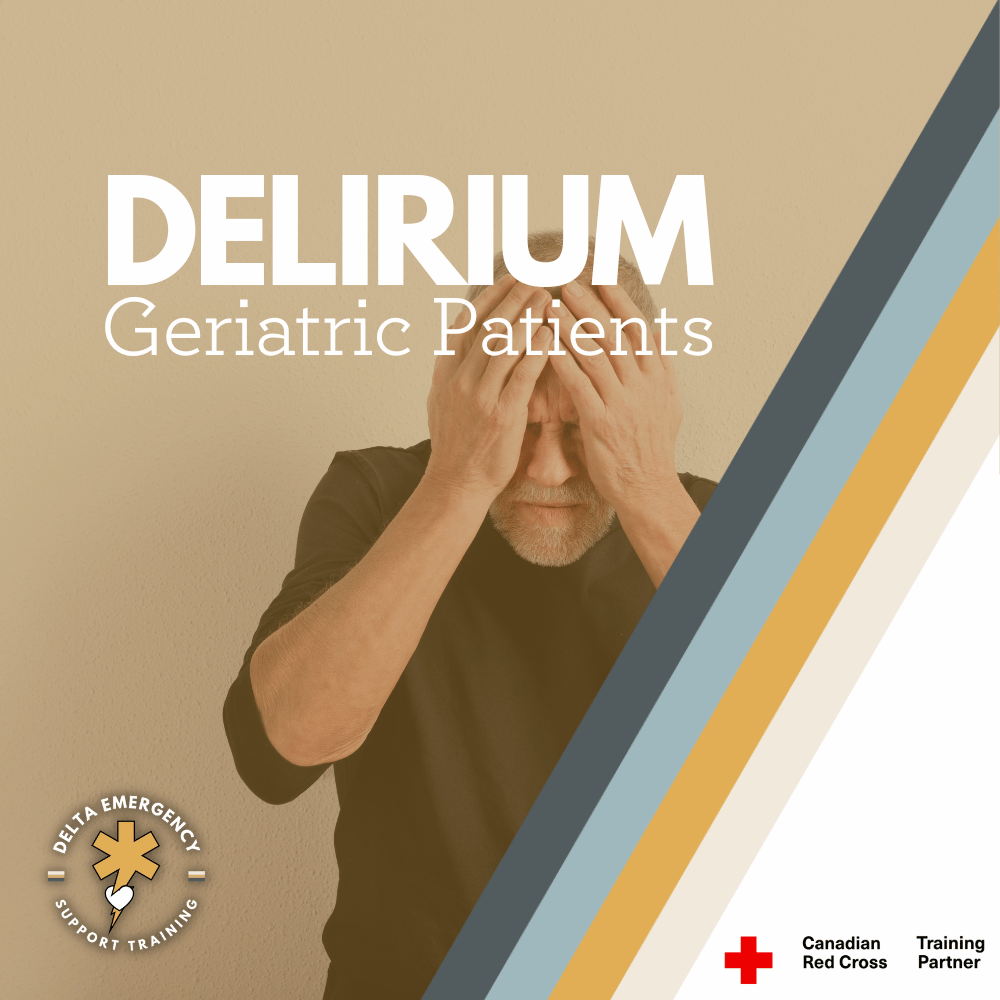
How to Manage Delirium in Geriatric Patients: Essential Skills for EMRs and Firefighters

Delirium is an acute medical condition that often affects geriatric patients, causing confusion, disorganized thinking, and altered levels of awareness. As an EMR or firefighter, it's crucial to identify delirium early and manage it effectively. This guide explains how to assess, treat, and respond to elderly patients showing signs of delirium, ensuring optimal care in critical situations.

Delirium in the Geriatric Patient: How EMRs and Firefighters Can Identify and Respond

Delirium is a serious medical condition, particularly in the elderly, and as an EMR or firefighter, it’s crucial to recognize the signs early and act swiftly. Unlike dementia, which progresses slowly over time, delirium can develop acutely and rapidly change the patient’s mental status, presenting significant challenges for first responders. In geriatric patients, delirium is a medical emergency that often requires urgent intervention.

This blog will guide you on how to recognize delirium, understand its underlying causes, and effectively manage geriatric patients experiencing it.

What is Delirium?

Delirium is defined as an acute and fluctuating onset of inattention, disorganized thinking, and/or altered levels of awareness. It differs from dementia in that it is temporary and occurs suddenly, often in response to an underlying medical condition or environmental trigger.

The symptoms of delirium typically appear suddenly and may fluctuate throughout the day. Common signs include:

  • Inattention: Difficulty maintaining focus, distracted, or unable to follow a conversation.

  • Disorganized Thinking: Incoherent or illogical speech, trouble forming coherent thoughts.

  • Altered Awareness: The patient may be either overly drowsy (hypoactive) or agitated (hyperactive). In many elderly patients, hypoactive delirium is most common and can often go undetected in emergency situations.

Why is Delirium Common in Geriatric Patients?

The elderly population is particularly susceptible to delirium for several reasons, including:

  • Age-Related Physical Changes: Aging can cause changes in the brain that make older adults more vulnerable to confusion and mental disturbances.

  • Underlying Medical Conditions: Chronic health issues like heart disease, diabetes, or kidney failure may predispose the elderly to developing delirium.

  • Medications: Certain medications, especially in combination, can trigger delirium in older patients. Common culprits include sedatives, narcotics, and anticholinergics.

  • Infections: Conditions like urinary tract infections (UTIs) and pneumonia are known triggers of delirium in the elderly.

  • Environmental Factors: Hospitalizations, changes in routine, or unfamiliar environments (e.g., new settings after an injury) can exacerbate confusion and lead to delirium.

Recognizing Delirium in the Elderly

As an EMR or firefighter, recognizing delirium is a crucial skill that can improve patient outcomes. Delirium may not be as obvious as other acute conditions, especially since the elderly are often at risk of hypoactive delirium, which can manifest as lethargy or withdrawal rather than agitation.

Key Symptoms to Look For:

  • Inability to focus: The patient may appear "spacey," unable to follow a conversation, or may forget what they were just talking about.

  • Confusion: They may be disoriented, unable to recall where they are, or confused about the time and date.

  • Fluctuating alertness: The patient's level of awareness may change rapidly, ranging from excessive sleepiness to periods of hyperactivity or aggression.

  • Hallucinations or Delusions: While less common, some patients may see or hear things that aren’t there, or they may have false beliefs (e.g., believing they’re in a completely different location).

Hypoactive Delirium: A Hidden Danger

It’s important to note that 70% of delirium cases in elderly patients are hypoactive, meaning the patient may seem unusually drowsy, withdrawn, or lethargic. This subtle form can often go undiagnosed in the emergency department (ED) or in the field because the patient may not exhibit the typical signs of agitation. As a first responder, you must be aware that any older adult exhibiting lethargy or confusion after a recent trauma or medical event could be suffering from delirium.

Common Causes of Delirium in the Geriatric Patient

Several medical conditions or factors may trigger delirium in older adults, making them more vulnerable to changes in their cognitive state. As an EMR or firefighter, understanding these causes can help you quickly identify potential underlying issues:

  1. Infections: UTIs, pneumonia, or sepsis can quickly lead to delirium in elderly patients.

  2. Dehydration and Malnutrition: Inadequate fluid or nutrition intake can significantly affect brain function.

  3. Medications: Polypharmacy, or the use of multiple medications, is common in elderly patients and can interact to cause confusion or delirium. Pay special attention to narcotics, sedatives, and antihistamines.

  4. Pain or Injury: Trauma, especially head injuries, can trigger delirium, as can untreated pain.

  5. Hospitalization: Elderly patients who are hospitalized for an acute illness or injury may experience delirium due to the stress of hospitalization, changes in routine, and medication side effects.

  6. Alcohol Withdrawal: If the elderly patient has a history of alcohol use and suddenly stops drinking, delirium may occur.

How EMRs and Firefighters Can Respond to Delirium in the Elderly

When faced with a patient exhibiting signs of delirium, quick and effective action is critical. Below are steps for managing these patients:

1. Initial Assessment

  • Ensure Safety: The first priority is ensuring the safety of the patient. Patients experiencing delirium may be disoriented or agitated, so they could put themselves or others at risk. Ensure a safe environment and avoid sudden movements that might escalate confusion.

  • Take a Comprehensive History: If possible, gather a thorough history from caregivers, family, or bystanders. Ask about the patient’s recent health changes, medications, and any prior cognitive issues.

  • Rule Out Life-Threatening Causes: Delirium can be a sign of a serious condition such as an infection, stroke, or head injury. Check vital signs and assess for any signs of a critical underlying cause (e.g., hypotension, fever, abnormal heart rate, etc.).

2. Address Underlying Causes

  • If the delirium is due to a known cause (e.g., an infection), it is critical to treat the underlying issue as soon as possible.

  • Consider the possibility of hypoxia, hypoglycemia, or medication-related causes, which can often be quickly addressed in the field.

  • If the patient is in pain or has a known medical condition that could be contributing to confusion (like dehydration), take steps to manage it immediately.

3. Monitor the Patient

  • If the patient is not yet stable, keep a close watch on their mental status. Delirium can fluctuate, so continuous assessment is key.

  • Stay calm and provide reassurance to the patient. If they are agitated, offer clear explanations and avoid confrontational responses.

  • Transport to the hospital promptly, ensuring that the medical team is aware of the patient’s delirium so they can investigate and treat the underlying cause quickly.

4. Engage Family or Caregivers

  • When possible, engage family members or caregivers to help assess the patient's baseline mental status and to provide relevant medical history, including recent changes or new medications.

Conclusion

Delirium in geriatric patients is a common, often undiagnosed condition that presents a unique challenge for EMRs and firefighters. Because it can rapidly change from one moment to the next, it's essential to recognize the signs of delirium early and manage the underlying causes. Prompt action, effective communication with medical teams, and ensuring patient safety are key components in improving patient outcomes.

As a first responder, your ability to identify delirium and intervene early can mean the difference between a successful recovery and long-term complications. By staying vigilant and informed, you can ensure that older patients receive the timely, life-saving care they need.

Delta Emergency is taught by a well-versed group of instructors and owners who are experienced paramedics. We teach you not only the necessary skills but also how to be prepared for real-life emergencies. Our hands-on training ensures you're equipped to handle any critical situation with confidence, improving both your ability to respond and your patient outcomes.

Read More