
Direct Pressure: How Hard, and For How Long
Most people press in roughly the right place, too gently, and let go too soon. Here is how direct pressure is done, and what to do when it soaks through.
Jarrett Chisholm, ACP · August 19, 2026
Where this is taught: Stop the Bleed, Intermediate First Aid and Basic First Aid.
Direct pressure is the first thing anyone learns about bleeding and the last thing most people get right. The instruction sounds too simple to fail: press on it. In practice there are four separate ways to do it badly, and between them they account for most of the bleeding control that does not work.
Image needed · hero
gloved-hands-applying-direct-pressure-to-forearm-wound.jpg
Landscape photo, close crop. Blue nitrile gloved hands pressing a folded white gauze pad into a simulated wound on a training forearm. The rescuer's arm is visibly straight and locked, shoulder above the hand, showing body weight transfer. Simulated blood present but restrained. Neutral floor mat background, even soft light, sharp focus on the gauze and knuckles.
Alt text ready: “Two gloved hands pressing a folded gauze pad firmly into a simulated forearm wound, the rescuer's arm locked straight.”
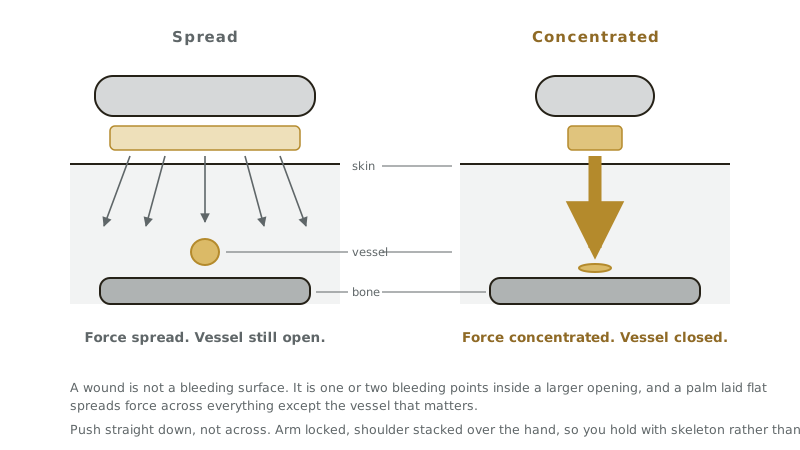
Pressure fails when it is in the wrong place. A wound is not a bleeding surface. It is usually one or two bleeding points inside a larger opening, and a palm laid flat across the whole area spreads force over everything except the vessel that matters. What stops the bleeding is force concentrated onto the point the blood is coming from.
It fails when it is too soft. Firm enough to close an artery is firm enough to hurt, and someone who has not been trained will ease off the moment the casualty flinches. Your body weight, through a straight arm, is roughly the amount required. Two fingers resting on a gauze pad is not.
And it fails when it is interrupted. Lifting the dressing to check is the most common single mistake in bleeding control, and it undoes more work than everything else on this list put together. the level where you practise this under real time pressure.
Where the pressure has to go
Find the source before you commit. That may mean moving or cutting clothing away, because pressing on fabric that is bridging the wound applies almost nothing to the vessel underneath. You are looking for where the blood is emerging from, not the middle of the visible mess.
Then put something small and firm between your hand and that point: a folded gauze pad, a wad of dressing, the heel of your hand if you have nothing else. The aim is a concentrated column of force pushing the torn vessel against the tissue or bone behind it, which is what physically closes it. A soft, thick, bulky pad spread wide feels reassuring and does the opposite, because it distributes your force and weakens the pressure exactly where you need it.
Push straight down into the wound rather than across it. Angled pressure slides tissue sideways and lets the vessel stay open underneath. Straight in, arm locked, shoulder stacked over your hand, so you are holding with skeleton rather than muscle. Muscle tires within a minute or two. A locked arm with body weight on it can be held for a very long time.
How long is long enough
Longer than you think, and without breaks. A clot that has started to form stays fragile for several minutes after the bleeding appears to stop, and the reflex to peek is what tears it. Hold, without lifting and without shifting, for at least ten minutes measured by a clock rather than by feel. Ten minutes under stress feels like thirty, which is why people who trust their own sense of time stop early almost every time.
Hold it yourself if you can. If you have to hand over, tell the next person exactly what you have done and that they are not to look, because a handover is another chance to lose the clot. When you do swap, swap the way you would swap on chest compressions: the new hand goes on before the old one comes off. bring the training to your own crew and worksite.
Elevating a bleeding limb and squeezing pressure points are both taught less than they once were, for a good reason. They distract from the thing that works. If you can raise a bleeding arm without letting go and without causing harm, there is no reason not to. If it costs you one second of pressure, it is a bad trade.
When it soaks through
Add, do not replace. Peeling off a soaked dressing takes the forming clot with it and returns you to the beginning. Put the new dressing on top of the old one and increase the force you are applying, because a dressing soaking through is telling you your pressure was not enough, not that your dressing was too small.
There is a limit to how many layers are useful. Each pad you add moves your hand further from the bleeding point and softens the force that reaches it. If you are onto a third dressing and it is still soaking, stop adding padding and change tactics. If the wound is on an arm or a leg and you cannot control it, put a tourniquet on. That is the correct next step, not a defeat. If it is somewhere a tourniquet cannot go, such as the neck, the armpit or the groin, keep firm pressure on the bleeding point and make sure EMS is coming. Packing a wound is not part of a first aid certificate at any level. It takes separate training such as Stop the Bleed, and your employer has to approve it.
Watch the casualty, not only the wound. Someone getting paler, colder, faster of pulse or vaguer in conversation while you work is still losing blood somewhere, and the bleeding you can see may not be all of it. Keep them lying down and warm, and keep talking to them, because conversation is how you notice the change at the moment it starts. our Calgary classroom and how to find it.
Quick answers
- How long should you hold direct pressure on a bleeding wound?
- Hold firm, uninterrupted pressure for at least ten minutes measured by a clock rather than by how long it feels. A new clot stays fragile for several minutes after the bleeding appears to stop, and lifting the dressing to check will tear it.
- What should you do if blood soaks through a dressing?
- Leave the soaked dressing where it is, add a fresh one on top, and press harder. Removing it strips away the clot that has begun to form and puts you back at the start, and soaking through usually means your pressure was too light rather than your dressing too small.
- Why is direct pressure not stopping the bleeding?
- Usually because the force is spread over too wide an area, is not firm enough, is angled across the wound instead of straight into it, or is being lifted to check. Clothing bridging the wound is another common culprit, since fabric absorbs most of the pressure before it reaches the vessel.