The Delta Dispatch

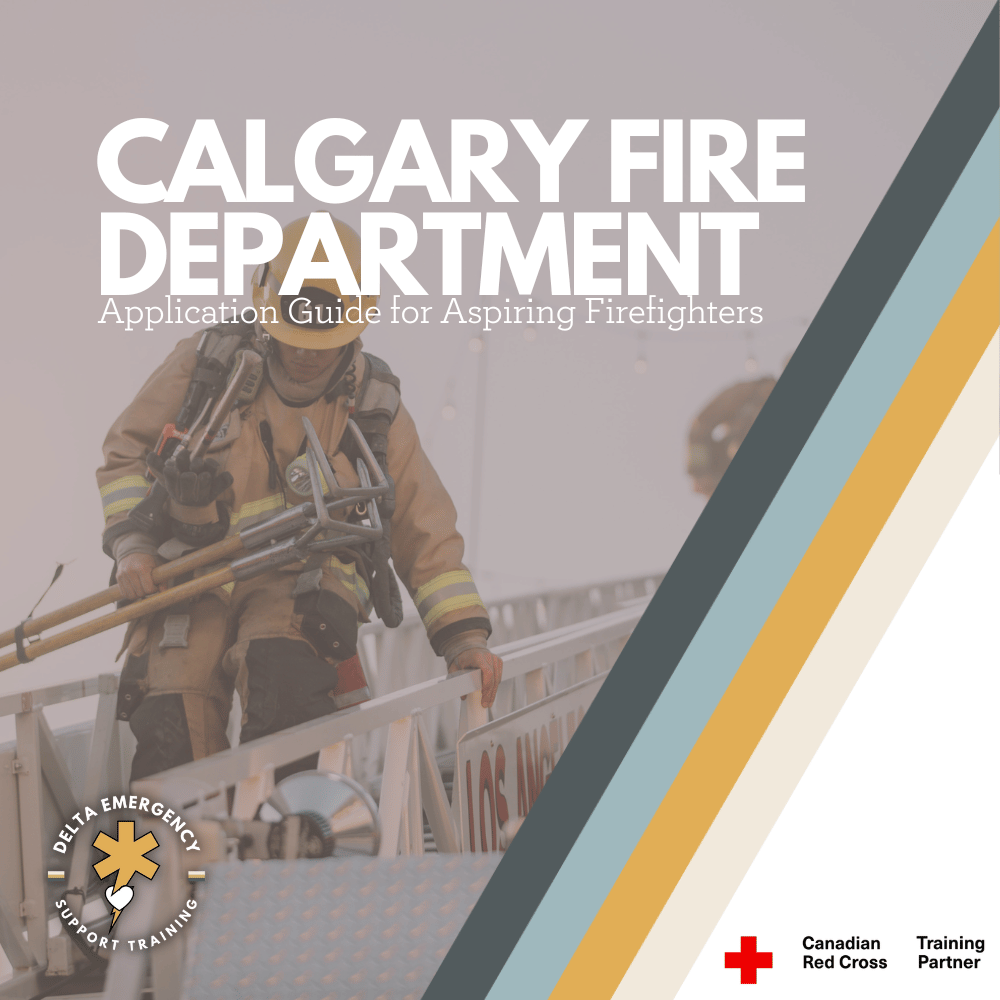
CFD Application Guide for Aspiring Firefighters

Dreaming of becoming a Calgary firefighter? This guide walks you through the CFD application process, including essential certifications, physical fitness tips, suggested courses, and how Delta Emergency Support Training can help you succeed.
If you’ve ever dreamed of wearing the Calgary Fire Department uniform, you’re not alone. Every year, countless motivated individuals from all walks of life apply to join one of Canada’s most respected firefighting teams. Whether you’re coming off the rigs, working in the trades, or ready for a meaningful career that serves your community, the CFD recruitment process is both challenging and rewarding.

At Delta Emergency Support Training, we’ve helped many students prepare for that next step, and several of our instructors are currently serving with CFD. So, if you’re serious about applying, here’s what you need to know about the process and how to set yourself up for success.

Step 1: Meeting the Basic Requirements

Before applying, make sure you meet the minimum qualifications. Applicants must:

  • Be at least 18 years old

  • Be legally entitled to work in Canada

  • Have a high school diploma or equivalent

  • Hold a valid Class 5 driver’s licence (with a clean record)

Medical fitness is crucial — you’ll need to pass a comprehensive medical assessment that ensures you can safely perform the physical demands of the job. Strong cardiovascular health, vision, and hearing are essential for operational readiness.

Step 2: Educational and Certification Requirements

To apply for CFD, you’ll need a few essential certifications. One of the most important is Advanced First Aid (AFA), which you can earn through Delta Emergency Support Training.

Our AFA course provides the hands-on medical foundation you’ll rely on every day as a firefighter — from patient assessment and airway management to emergency scene care. We’ve even built rotation-friendly schedules for those still working in camp or on the rigs, so you don’t have to put your career on hold to train.

It’s important to note that CFD does not require applicants to hold NFPA 1001 Level I and II firefighter training, which is often mandatory for many other departments across Canada. This makes CFD an ideal opportunity for motivated individuals looking to make the leap into firefighting without already having that certification.

Step 3: The Application and Testing Process

The CFD recruitment process typically includes several stages:

  • Online Application: Submit your resume, certifications, and supporting documentation.

  • Written Exam: Designed to assess problem-solving, mechanical reasoning, and situational judgment.

  • Physical Fitness Test: A demanding, firefighter-specific test that measures endurance, strength, and agility.

  • Interview: You’ll discuss your motivations, teamwork experience, and understanding of community service.

  • Background Check: Ensures candidates uphold the integrity and professionalism expected of CFD members.

The process is competitive, but with the right preparation and attitude, it’s absolutely achievable.

Step 4: How to Stand Out as an Applicant

Want to stand out in the hiring process? Focus on building the qualities that CFD values most: teamwork, communication, leadership, and resilience.

  • Physical Conditioning: Prioritize strength, endurance, and functional fitness — firefighting is demanding work.

  • Community Involvement: Volunteer with local emergency services, community programs, or charities. It demonstrates commitment and service-mindedness.

  • Communication and Leadership: Practice staying calm under pressure and leading effectively in high-stress situations.

CFD is looking for individuals who bring heart, reliability, and the willingness to learn — not just technical skill.

Step 5: Suggested Courses to Strengthen Your Resume

While CFD doesn’t require NFPA 1001 firefighter certification, there are plenty of valuable courses that can give you a competitive edge and help you hit the ground running once you’re accepted.

Consider training in areas such as:

  • Confined Space Awareness and Rescue – Learn safe entry, monitoring, and rescue techniques.

  • Rope Rescue (Basic & Advanced) – Develop technical rope-handling skills used in high-angle and low-angle rescues.

  • Hazardous Materials Awareness (HAZMAT) – Understand how to recognize and safely respond to dangerous goods incidents.

  • Transportation of Dangerous Goods (TDG) – An important credential for anyone working around hazardous substances.

  • ICS (Incident Command System) Training – Build your understanding of emergency scene management and structure.

Many of these courses are available through technical safety providers or emergency training academies — and they all show CFD that you take professional development seriously.

Step 6: Training and Career Development

Once selected, recruits undergo an intensive 16-week CFD Fire Training Academy program, covering everything from fire suppression and rescue techniques to hazardous materials response and medical care.

Graduation isn’t the end of learning — CFD firefighters continue developing through specialized courses, leadership tracks, and ongoing professional education.

How Delta Can Help You Get There

We know what it takes to succeed in the CFD process because our team has been there. At Delta Emergency Support Training, we’ve helped countless students earn their Advanced First Aid certification and gain the skills and confidence they need to take the next step.

Several of our instructors are active CFD members, offering insider guidance, mentorship, and firsthand insights into the realities of the job. Many of our graduates have successfully transitioned from oilfield work or trades into full-time firefighting careers — proving it’s never too late to make the change.

Your Firefighter Journey Starts Here

Applying for the Calgary Fire Department is a big step, but it’s one that can lead to an incredible career of purpose, teamwork, and community impact.

If you’re ready to make a change — to trade in your rotation schedule for a fire hall shift and a new sense of purpose — start today.

At Delta Emergency Support Training, we offer Advanced First Aid courses, including camp rotation-friendly schedules that fit your lifestyle. You bring the dedication — we’ll help you build the foundation.

Read More

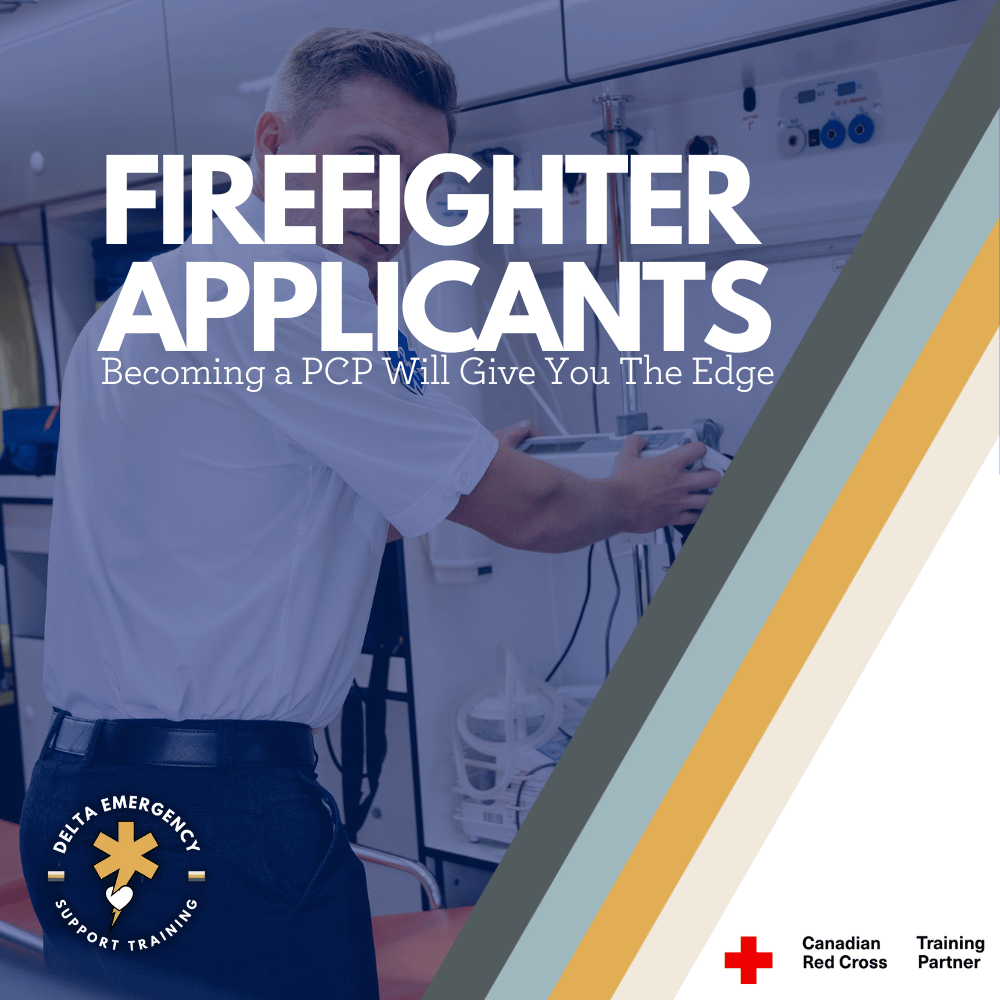
How Paramedic Training Strengthens Your Firefighter Application

Firefighting is no longer just about fire suppression. With most calls now medical in nature, departments seek applicants with paramedic training. Here’s how your Primary Care Paramedic certification can make your firefighter application stand out.

The Modern Firefighter: More Than Fire Suppression

Today’s firefighter is far more than fighting fires. Across Canada, most fire departments respond to far more medical emergencies than structure fires — in many regions, medical calls make up 80% of total responses.

This shift means departments are looking for applicants who can do more than handle a nozzle. They need people trained in patient care, triage, and prehospital decision-making — skills that come directly from Primary Care Paramedic (PCP) training.

Whether you’re pursuing municipal, industrial, or wildland fire service, holding your PCP license can dramatically strengthen your application, credibility, and readiness for the role.

1. Understanding the Overlap: Fire and EMS

The reality of modern fire service is that medical response is integrated into daily operations. Many calls involve:

  • Cardiac arrests

  • Motor vehicle collisions

  • Respiratory emergencies

  • Overdoses and poisonings

  • Falls and traumatic injuries

  • Medication administration

These situations require rapid assessment, airway management, and patient stabilization — core skills of a Primary Care Paramedic.

When fire departments deploy first, a firefighter with PCP training doesn’t just stand by until EMS arrives — they become a vital asset in those first minutes, providing interventions that can mean the difference between life and death.

2. How PCP Training Sets You Apart in the Hiring Process

Fire departments receive hundreds of applications for a handful of positions. Holding your Primary Care Paramedic certification immediately tells recruiters you’re invested, skilled, and capable of independent medical decision-making.

It demonstrates:

  • Commitment to emergency services as a career, not just a job.

  • Medical competency beyond AFA & EMR levels.

  • Ability to handle high-stress environments and maintain composure during critical incidents.

  • Strong understanding of patient care, communication, and documentation.

Departments see PCPs as well-rounded responders — individuals who understand not only rescue operations, but also the continuum of care from the moment of injury to hospital transfer.

3. Bridging Knowledge: Why Paramedic Training Translates So Well

The PCP curriculum goes far beyond what’s taught in AFA or fire recruit programs. It builds:

  • Assessment skills – Scene safety, mechanism of injury, and systematic patient evaluation.

  • Decision-making – When to move, when to treat, and when to call for advanced support.

  • Anatomy and physiology knowledge – Understanding what’s happening inside the body, not just what you see externally.

  • Communication and teamwork – Effective coordination with dispatch, partners, and hospital staff.

  • Leadership under pressure – Taking control when seconds matter.

Every one of these skills directly applies to fireground operations, rescue scenarios, and community medical calls.

When a firefighter-paramedic arrives on scene, they’re already equipped with the mindset of “scene control, patient stabilization, and structured response.”

4. Increased Employability Across Canada

Many fire departments in Canada — including Toronto Fire, Calgary Fire, Edmonton Fire, and Vancouver Fire Rescue Services — now strongly prefer or require applicants to have medical certification at the EMR or PCP level.

Holding your PCP license not only makes you a stronger candidate but also broadens your career options. You can work in EMS while waiting for fire openings, gain field experience, and keep your medical skills sharp.

It also signals to hiring panels that you’re operationally ready, physically prepared, and understand the realities of shift work, patient care, and emergency response culture.

5. Professional Credibility and Community Trust

Firefighters are often the first on scene — before ambulances, before police. The public doesn’t separate the fire service from medical response; they expect competence in both.

Having PCP-level training builds confidence in your peers, your officers, and the community. It shows that you’re not just trained to react, but to think critically and intervene effectively under pressure.

This credibility extends into leadership — many captains, chiefs, and training officers have paramedic backgrounds. Understanding that language early gives you a career-long advantage.

6. The Pathway Forward

If your goal is to become a firefighter, enrolling in a Primary Care Paramedic program is one of the most strategic steps you can take.

Here’s how to integrate it into your career plan:

  1. Earn your EMR or Advanced First Aid certification to build foundational knowledge.

  2. Enroll in an accredited PCP program through a recognized college or training institution.

  3. Register and license through your provincial regulatory body.

  4. Maintain active status — through continuing education and clinical practice hours.

  5. Highlight your PCP credentials in your fire service application and interviews.

By doing this, you’re not only meeting the evolving expectations of the fire service — you’re proving you already live and breathe emergency response.

Final Thought

Firefighting has evolved — and so have the expectations of those who wear the uniform.
Holding a Primary Care Paramedic license shows that you understand that evolution. It proves that you can respond, treat, and think critically in the same high-pressure environments firefighters face daily.

When it comes down to competitive hiring, paramedic training doesn’t just help your chances — it defines them.

Read More