Why Cold Makes a Simple Injury Serious
Cold is rarely the emergency you set out to treat. It is often the one that makes everything else worse. Here is the reasoning, and why you treat it early.
Jarrett Chisholm, ACP · September 17, 2026 · clinically reviewed by Jarrett Chisholm, ACP
Where this is taught: Wilderness First Aid, Marine Advanced First Aid and Remote First Aid.
The injury that ends badly a long way from help is very often not the injury you were treating. It is the cold that arrived alongside it. A broken ankle is a manageable problem. A broken ankle plus six hours of lying still on wet ground in a light breeze in September is a different problem entirely, and the second one is the one that harms people.
Image needed · hero
insulating-a-casualty-from-cold-ground.jpg
Wet autumn day in mountain terrain, flat grey light. A casualty lies on a full-length foam pad inside a survival bag with an insulated jacket over the top and a hat on. A second person kneels and tucks a spare jacket underneath the casualty's hips. Shoot from a low three-quarter angle so the pad underneath is unmistakably the subject. Rain beading on the fabric is welcome. No faces required.
Alt text ready: “A casualty lying on a full-length foam pad in a survival bag while a rescuer tucks a spare jacket underneath them”
Cold is easy to underrate because it does not look like an emergency. There is no bleeding to stop and no dramatic moment to respond to. The casualty is simply quiet, a little clumsy, a little slow to answer, while everyone around them is busy with the obvious thing. By the time cold looks serious it has already made everything else harder to treat.
The reasoning below is worth understanding rather than memorising, because it explains why the response is preventative. You do not wait for someone to say they feel cold. You insulate them at the moment they stop moving, which is usually the moment they were injured.
Two facts drive the whole approach: an injured body loses heat far faster than a healthy one, and cold blood does not clot properly. Those two do most of the explaining.
Why an injured person gets cold much faster
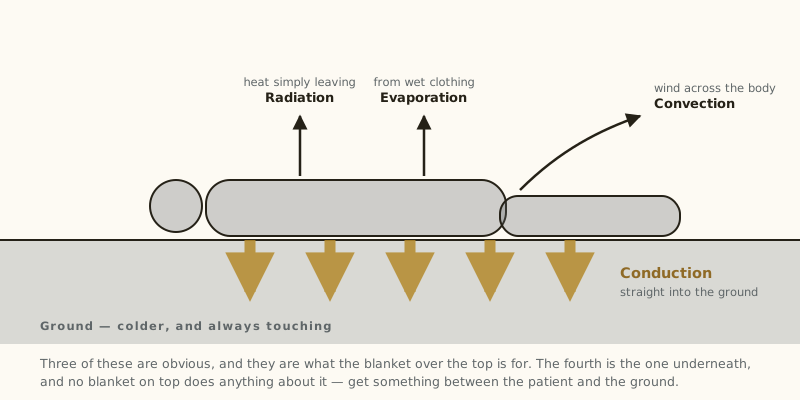
Heat production in a healthy person comes mostly from moving. An injured person stops moving, often suddenly and completely, and is usually lying on the ground, which is the fastest route for heat to leave. Conduction into cold ground pulls heat out of a person far quicker than still air does, and it is the pathway most often ignored, because a casualty in an excellent jacket lying on bare rock is still cooling steadily from underneath.
Injury itself works against temperature control as well. Significant blood loss reduces the body's ability to hold the core warm and to send blood where it is needed. Pain, fear and shock all interfere with the normal responses. Wet clothing, whether from rain, sweat, a river or blood, strips heat far faster than dry clothing, and layers that felt fine while the person was walking are frequently soaked underneath.
Shivering is the body's own heater, and it is expensive to run. It burns through energy quickly and it needs fuel to keep going. When shivering stops in someone who is still cold, that is not a sign of improvement. It generally means the core has fallen far enough that the response is failing, or the person has simply run out of fuel. A cold casualty who has gone quiet and still is more worrying than one who is complaining and shaking.
Why cold makes bleeding harder to control
Clotting is a chemistry problem, and chemistry slows down when it gets cold. The clotting cascade runs on enzymes that work best around normal body temperature, and platelets stick together less effectively when they are cold. A person who is cold bleeds more, from the same wound, than that same person warm. That is the link almost nobody is taught, and it is the reason cold quietly turns a controllable injury into an uncontrollable one.
It compounds, too. Bleeding makes the person colder, being colder makes them bleed more, and both push the body's acid balance in a direction that degrades clotting further. This is well recognised in trauma care, which is why keeping a badly injured person warm is treated as part of controlling their bleeding rather than as a comfort measure. In a hospital that is a warming blanket and warmed fluids. On a mountain it is you, a foam pad, and whatever you carried in. crews whose nearest hospital is measured in days.
Treating it early, and handling gently
The order that matters most: get them off the ground first, then get the wet layers off or seal a waterproof barrier over them, then wrap, then cover the head and neck, then add a heat source against the trunk rather than the arms and legs. Insulation underneath is worth more than another layer on top, every time. If they are fully alert and able to swallow safely, warm sweet drinks and food give the shivering something to burn, which does more than most people expect. If they are not fully alert, nothing by mouth. practise wrapping a cold casualty in weather that is not co-operating.
Handle a very cold casualty gently and keep them horizontal. A deeply cold heart is irritable and tolerates rough movement poorly, and warming the limbs hard while the core is still cold drives cold blood back towards the centre. Neither of those is a reason to hesitate about insulating someone, which is safe and useful at every stage. They are reasons to be careful about hauling, dragging and vigorous rubbing.
Everything here is an explanation of why the priority sits where it does, so that acting early feels obvious rather than premature. It is not a substitute for hands-on training with an instructor, and reading it does not certify anyone. If you have never wrapped a cold casualty in the rain with numb hands and a head torch, the gap between knowing this and doing it is wider than it currently feels. the full list of levels and dates we run.
Quick answers
- Why does hypothermia make bleeding worse?
- Clotting depends on enzymes and platelets that work poorly when cold, so a cold person bleeds more from the same wound than a warm one. The bleeding then makes them colder still, which is why keeping an injured person warm is treated as part of controlling the bleed.
- Is it a good sign when a cold person stops shivering?
- No, it is usually a bad one. Shivering is the body producing heat and it needs fuel to continue, so when it stops in someone who is still cold it generally means the core has dropped further or the person has run out of energy.
- What is the first thing to do for someone getting cold outdoors?
- Get them off the ground before anything else. Cold ground pulls heat out of a lying casualty much faster than still air, so insulation underneath is worth more than another layer on top, followed by dealing with wet clothing and covering the head.