 Image 1 of 5
 Image 2 of 5
 Image 3 of 5
 Image 4 of 5
 Image 5 of 5
Accepted for PCP school entry and many industrial roles.
Two Ways to Earn Your Emergency Medical Responder (EMR) Certification
Pathway 1: Traditional EMR Program (104 Hours, All-in-One)
Complete your Emergency Medical Responder training start to finish in a single, structured program.
Emergency Medical Responder (EMR) – 104 hours
Delivered in a traditional, fully in-person format.
Includes all required theory, skills, scenarios, and evaluations.
This pathway is ideal for learners who prefer a single continuous program with consistent pacing and instructor continuity.
Pathway 2: Modular Professional Responder Pathway
Train progressively through the Professional Responder suite before bridging to EMR.
Step 1: Standard First Aid (SFA) or Intermediate First Aid (IFA) – 16 hours
Available through any Canadian Red Cross Training Partner or equivalent.
Step 2: Advanced First Aid (AFA) – 80 hours
Forms the foundation of professional responder training and is required prior to EMR bridging. CSA Z1210-17 compliant.
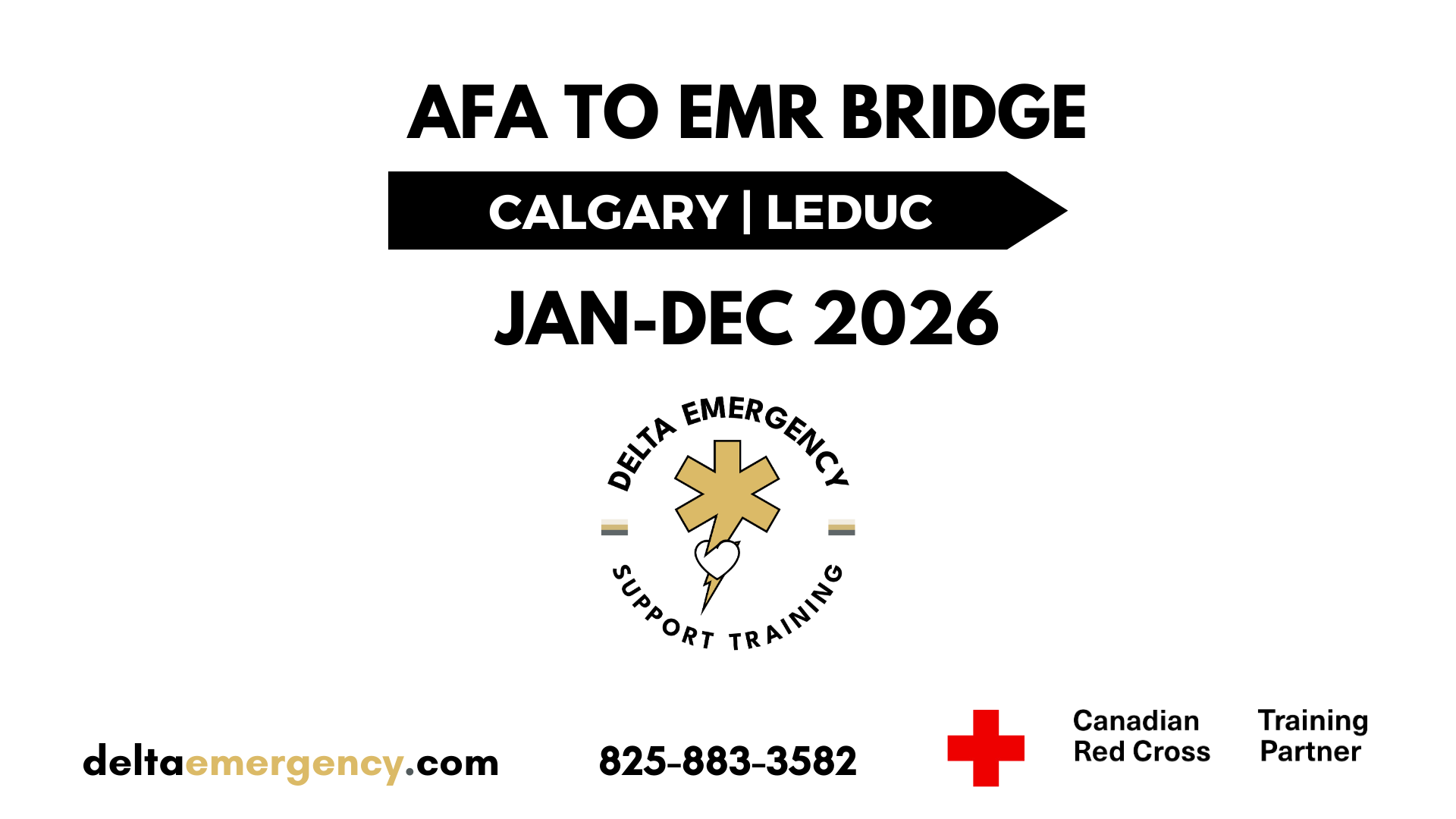
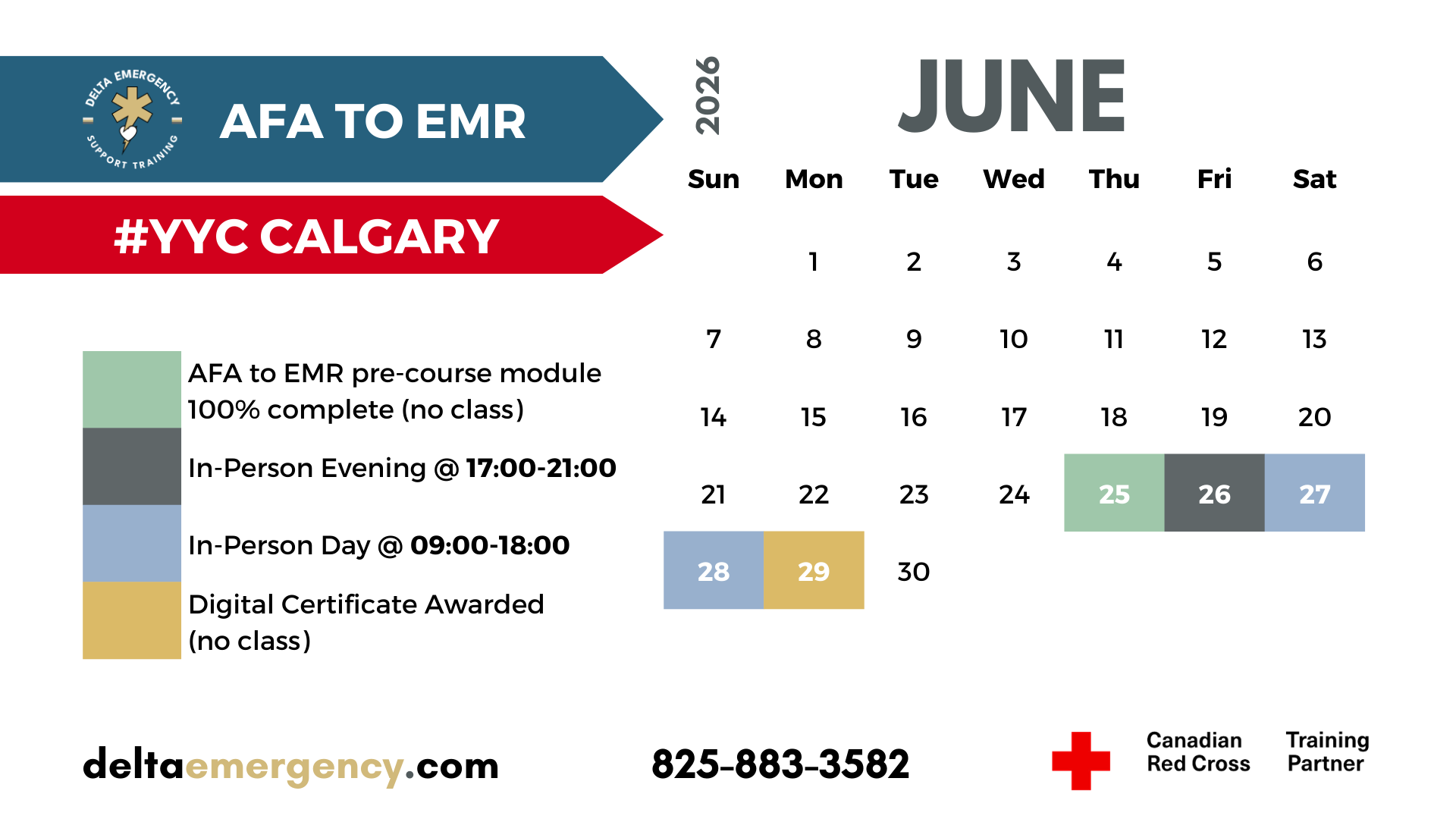
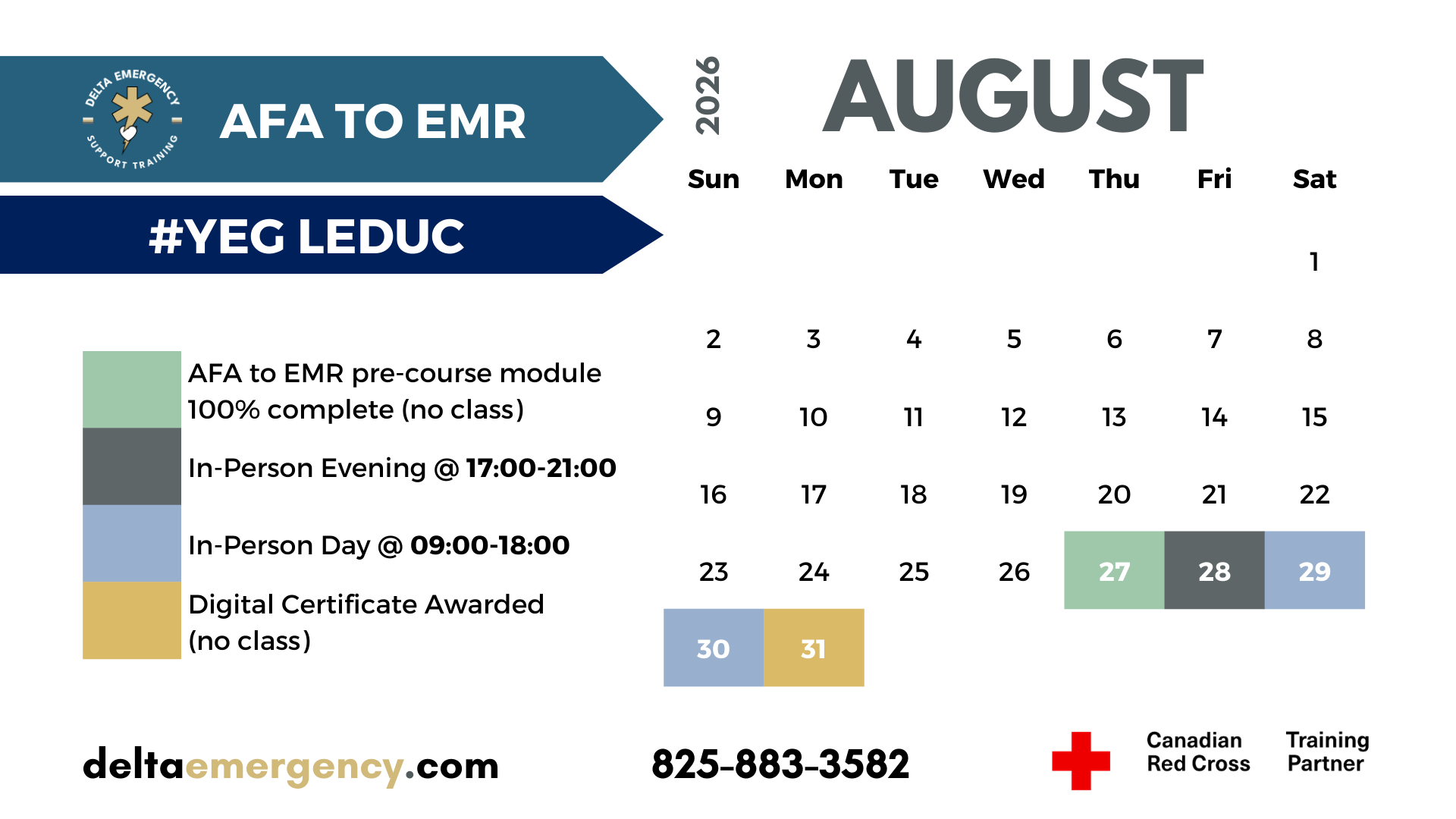
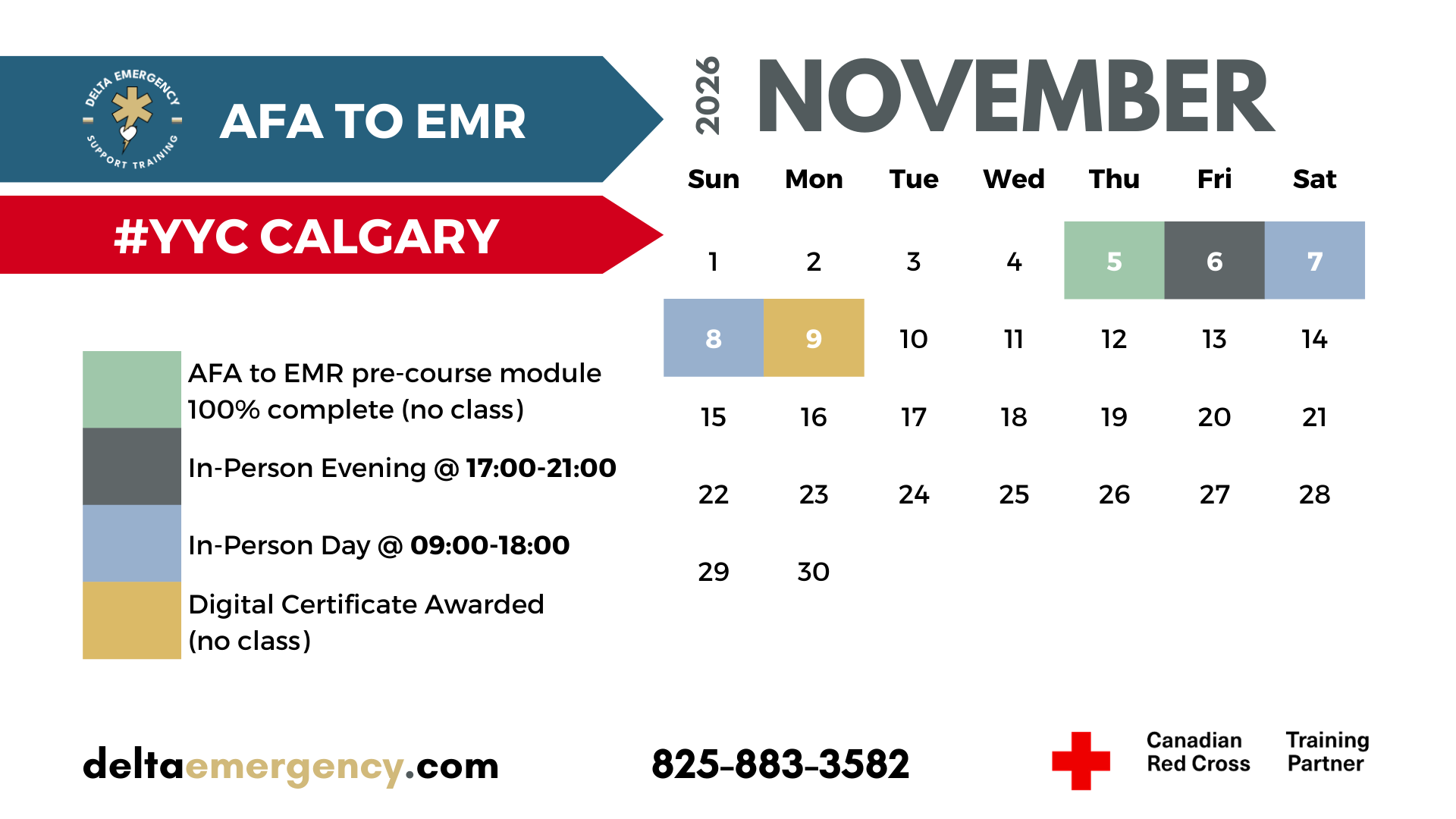
Step 3: AFA to EMR Bridge – 20 hours
Advances AFA graduates to full Emergency Medical Responder.
Includes EMR certification and BLS CPR.
Both pathways result in the same Canadian Red Cross EMR credential. This Canadian Red Cross course is a prerequisite that is accepted for Primary Care Paramedic (PCP) certification by Lakeland College (Vermilion), Emergency Services Academy (Sherwood Park), and Northern Lakes College (Slave Lake) and applications for some Alberta Fire Departments.